Sharp Programming Component Oriented Language Images, Pictures And Stock Photos

No matches for sharp programming component oriented language. Displaying results for
Only a few matches for sharp programming component oriented language. Also displaying results for

Search among 63 authentic sharp programming component oriented language stock photos, high-definition images, and pictures, or look at other silk road or largest city stock images to enhance your presentation with the perfect visual.

Software developer freelancer woman female in glasses work with program code C++ Java Javascript on wide displays at night Develops new web desktop mobile application or framework Projector background. Sharp programming component oriented language stock images, royalty-free photos and pictures
Digital illustration showcasing various coding terms and concepts related to software development. Ideal for tech-related projects and programming guides. Tessel. Sharp programming component oriented language stock images, royalty-free photos and pictures
Tbilisi is the capital and largest city of Georgia, lying on the banks of the Kura River. With around 1. 2 million inhabitants, it contains almost one third of the country's population. Tbilisi was founded in the fifth century AD by Vakhtang I of Iberia and has since served as the capital of various Georgian kingdoms and republics. Between 1801 and 1917, then part of the Russian Empire, it was the seat of the Caucasus Viceroyalty, governing both the northern and the southern sides of the Caucasus. [8][9]Because of its location at the crossroads between Europe and Asia, and its proximity to the lucrative Silk Road, throughout history, Tbilisi has been a point of contention among various global powers. To this day, the city's location ensures its position as an important transit route for energy and trade projects. Tbilisi's history is reflected in its architecture, which is a mix of medieval, neoclassical, Beaux Arts, Art Nouveau, Stalinist, and Modern structures. Historically, Tbilisi has been home to people of diverse cultural, ethnic, and religious backgrounds, though its population is overwhelmingly Eastern Orthodox Christian. Notable tourist destinations include cathedrals Sameba and Sioni, Freedom Square, Rustaveli Avenue and Agmashenebeli Avenue, medieval Narikala Fortress, the pseudo-Moorish Opera Theater, and the Georgian National Museum. The climate in Tbilisi mostly ranges from 20 to 32 °C (68 to 90 °F) in summer and? 1 to 7 °C (30 to 45 °F) in winter. Names and etymologySee also: Names of Tbilisi in different languagesThe name "Tbilisi" derives from Old Georgian Tbilisi (Asomtavruli:??????? , Mkhedruli:??????? ), and further from tpili (Modern Georgian:????? , warm, itself from Old Georgian:????? ? pili). The name Tbilisi (the place of warmth) was therefore given to the city because of the area's numerous sulfuric hot springs. Until 1936, the name of the city in English and most other languages followed the Persian pronunciation[10] Tiflis, while the Georgian name was??????? (? pilisi). [11]On 17 August 1936, by order of the Soviet leadership, the official Russian names of various cities were changed to more closely match the local language. [11] In addition, the Georgian-language form? pilisi was modernized on the basis of a proposal by Georgian linguists the ancient Georgian component????? pili, 'warm') was replaced by the newer? (tbili)????? [11] That form was the basis for the new official Russian name (. Tbilisi)??????? Most other languages have subsequently adopted the new name form, but some languages, such as Turkish, Persian, Greek, Spanish, and German, have retained a variation of Tiflis. On 20 September 2006, the Georgian parliament held a ceremony celebrating the 70th anniversary of the renaming. Sharp programming component oriented language stock images, royalty-free photos and pictures

Tbilisi Georgia balconied building. Tbilisi is the capital and largest city of Georgia, lying on the banks of the Kura River. With around 1.2 million inhabitants. Tbilisi is the capital and largest city of Georgia, lying on the banks of the Kura River. With around 1.2 million inhabitants, it contains almost one third of the country's population. Tbilisi was founded in the fifth century AD by Vakhtang I of Iberia and has since served as the capital of various Georgian kingdoms and republics. Between 1801 and 1917, then part of the Russian Empire, it was the seat of the Caucasus Viceroyalty, governing both the northern and the southern sides of the Caucasus.[8][9]Because of its location at the crossroads between Europe and Asia, and its proximity to the lucrative Silk Road, throughout history, Tbilisi has been a point of contention among various global powers. To this day, the city's location ensures its position as an important transit route for energy and trade projects. Tbilisi's history is reflected in its architecture, which is a mix of medieval, neoclassical, Beaux Arts, Art Nouveau, Stalinist, and Modern structures.Historically, Tbilisi has been home to people of diverse cultural, ethnic, and religious backgrounds, though its population is overwhelmingly Eastern Orthodox Christian. Notable tourist destinations include cathedrals Sameba and Sioni, Freedom Square, Rustaveli Avenue and Agmashenebeli Avenue, medieval Narikala Fortress, the pseudo-Moorish Opera Theater, and the Georgian National Museum. The climate in Tbilisi mostly ranges from 20 to 32 °C (68 to 90 °F) in summer and ?1 to 7 °C (30 to 45 °F) in winter.Names and etymologySee also: Names of Tbilisi in different languagesThe name "Tbilisi" derives from Old Georgian Tbilisi (Asomtavruli: ???????, Mkhedruli: ???????), and further from tpili (Modern Georgian: ?????, warm, itself from Old Georgian: ????? ?pili). The name Tbilisi (the place of warmth) was therefore given to the city because of the area's numerous sulfuric hot springs.Until 1936, the name of the city in English and most other languages followed the Persian pronunciation[10] Tiflis, while the Georgian name was ??????? (?pilisi).[11]On 17 August 1936, by order of the Soviet leadership, the official Russian names of various cities were changed to more closely match the local language.[11] In addition, the Georgian-language form ?pilisi was modernized on the basis of a proposal by Georgian linguists the ancient Georgian component ????? (?pili, 'warm') was replaced by the newer ????? (tbili).[11] That form was the basis for the new official Russian name (??????? Tbilisi). Most other languages have subsequently adopted the new name form, but some languages, such as Turkish, Persian, Greek, Spanish, and German, have retained a variation of Tiflis.On 20 September 2006, the Georgian parliament held a ceremony celebrating the 70th anniversary of the renaming.

Tbilisi is the capital and largest city of Georgia, lying on the banks of the Kura River. With around 1. 2 million inhabitants, it contains almost one third of the country's population. Tbilisi was founded in the fifth century AD by Vakhtang I of Iberia and has since served as the capital of various Georgian kingdoms and republics. Between 1801 and 1917, then part of the Russian Empire, it was the seat of the Caucasus Viceroyalty, governing both the northern and the southern sides of the Caucasus. [8][9]Because of its location at the crossroads between Europe and Asia, and its proximity to the lucrative Silk Road, throughout history, Tbilisi has been a point of contention among various global powers. To this day, the city's location ensures its position as an important transit route for energy and trade projects. Tbilisi's history is reflected in its architecture, which is a mix of medieval, neoclassical, Beaux Arts, Art Nouveau, Stalinist, and Modern structures. Historically, Tbilisi has been home to people of diverse cultural, ethnic, and religious backgrounds, though its population is overwhelmingly Eastern Orthodox Christian. Notable tourist destinations include cathedrals Sameba and Sioni, Freedom Square, Rustaveli Avenue and Agmashenebeli Avenue, medieval Narikala Fortress, the pseudo-Moorish Opera Theater, and the Georgian National Museum. The climate in Tbilisi mostly ranges from 20 to 32 °C (68 to 90 °F) in summer and? 1 to 7 °C (30 to 45 °F) in winter. Names and etymologySee also: Names of Tbilisi in different languagesThe name "Tbilisi" derives from Old Georgian Tbilisi (Asomtavruli:??????? , Mkhedruli:??????? ), and further from tpili (Modern Georgian:????? , warm, itself from Old Georgian:????? ? pili). The name Tbilisi (the place of warmth) was therefore given to the city because of the area's numerous sulfuric hot springs. Until 1936, the name of the city in English and most other languages followed the Persian pronunciation[10] Tiflis, while the Georgian name was??????? (? pilisi). [11]On 17 August 1936, by order of the Soviet leadership, the official Russian names of various cities were changed to more closely match the local language. [11] In addition, the Georgian-language form? pilisi was modernized on the basis of a proposal by Georgian linguists the ancient Georgian component????? pili, 'warm') was replaced by the newer? (tbili)????? [11] That form was the basis for the new official Russian name (. Tbilisi)??????? Most other languages have subsequently adopted the new name form, but some languages, such as Turkish, Persian, Greek, Spanish, and German, have retained a variation of Tiflis. On 20 September 2006, the Georgian parliament held a ceremony celebrating the 70th anniversary of the renaming. Sharp programming component oriented language stock images, royalty-free photos and pictures

Tbilisi Georgia at night aerial view. Tbilisi is the capital and largest city of Georgia, lying on the banks of the Kura River. With around 1.2 million. Tbilisi is the capital and largest city of Georgia, lying on the banks of the Kura River. With around 1.2 million inhabitants, it contains almost one third of the country's population. Tbilisi was founded in the fifth century AD by Vakhtang I of Iberia and has since served as the capital of various Georgian kingdoms and republics. Between 1801 and 1917, then part of the Russian Empire, it was the seat of the Caucasus Viceroyalty, governing both the northern and the southern sides of the Caucasus.[8][9]Because of its location at the crossroads between Europe and Asia, and its proximity to the lucrative Silk Road, throughout history, Tbilisi has been a point of contention among various global powers. To this day, the city's location ensures its position as an important transit route for energy and trade projects. Tbilisi's history is reflected in its architecture, which is a mix of medieval, neoclassical, Beaux Arts, Art Nouveau, Stalinist, and Modern structures.Historically, Tbilisi has been home to people of diverse cultural, ethnic, and religious backgrounds, though its population is overwhelmingly Eastern Orthodox Christian. Notable tourist destinations include cathedrals Sameba and Sioni, Freedom Square, Rustaveli Avenue and Agmashenebeli Avenue, medieval Narikala Fortress, the pseudo-Moorish Opera Theater, and the Georgian National Museum. The climate in Tbilisi mostly ranges from 20 to 32 °C (68 to 90 °F) in summer and ?1 to 7 °C (30 to 45 °F) in winter.Names and etymologySee also: Names of Tbilisi in different languagesThe name "Tbilisi" derives from Old Georgian Tbilisi (Asomtavruli: ???????, Mkhedruli: ???????), and further from tpili (Modern Georgian: ?????, warm, itself from Old Georgian: ????? ?pili). The name Tbilisi (the place of warmth) was therefore given to the city because of the area's numerous sulfuric hot springs.Until 1936, the name of the city in English and most other languages followed the Persian pronunciation[10] Tiflis, while the Georgian name was ??????? (?pilisi).[11]On 17 August 1936, by order of the Soviet leadership, the official Russian names of various cities were changed to more closely match the local language.[11] In addition, the Georgian-language form ?pilisi was modernized on the basis of a proposal by Georgian linguists the ancient Georgian component ????? (?pili, 'warm') was replaced by the newer ????? (tbili).[11] That form was the basis for the new official Russian name (??????? Tbilisi). Most other languages have subsequently adopted the new name form, but some languages, such as Turkish, Persian, Greek, Spanish, and German, have retained a variation of Tiflis.On 20 September 2006, the Georgian parliament held a ceremony celebrating the 70th anniversary of the renaming.

Tbilisi is the capital and largest city of Georgia, lying on the banks of the Kura River. With around 1. 2 million inhabitants, it contains almost one third of the country's population. Tbilisi was founded in the fifth century AD by Vakhtang I of Iberia and has since served as the capital of various Georgian kingdoms and republics. Between 1801 and 1917, then part of the Russian Empire, it was the seat of the Caucasus Viceroyalty, governing both the northern and the southern sides of the Caucasus. [8][9]Because of its location at the crossroads between Europe and Asia, and its proximity to the lucrative Silk Road, throughout history, Tbilisi has been a point of contention among various global powers. To this day, the city's location ensures its position as an important transit route for energy and trade projects. Tbilisi's history is reflected in its architecture, which is a mix of medieval, neoclassical, Beaux Arts, Art Nouveau, Stalinist, and Modern structures. Historically, Tbilisi has been home to people of diverse cultural, ethnic, and religious backgrounds, though its population is overwhelmingly Eastern Orthodox Christian. Notable tourist destinations include cathedrals Sameba and Sioni, Freedom Square, Rustaveli Avenue and Agmashenebeli Avenue, medieval Narikala Fortress, the pseudo-Moorish Opera Theater, and the Georgian National Museum. The climate in Tbilisi mostly ranges from 20 to 32 °C (68 to 90 °F) in summer and? 1 to 7 °C (30 to 45 °F) in winter. Names and etymologySee also: Names of Tbilisi in different languagesThe name "Tbilisi" derives from Old Georgian Tbilisi (Asomtavruli:??????? , Mkhedruli:??????? ), and further from tpili (Modern Georgian:????? , warm, itself from Old Georgian:????? ? pili). The name Tbilisi (the place of warmth) was therefore given to the city because of the area's numerous sulfuric hot springs. Until 1936, the name of the city in English and most other languages followed the Persian pronunciation[10] Tiflis, while the Georgian name was??????? (? pilisi). [11]On 17 August 1936, by order of the Soviet leadership, the official Russian names of various cities were changed to more closely match the local language. [11] In addition, the Georgian-language form? pilisi was modernized on the basis of a proposal by Georgian linguists the ancient Georgian component????? pili, 'warm') was replaced by the newer? (tbili)????? [11] That form was the basis for the new official Russian name (. Tbilisi)??????? Most other languages have subsequently adopted the new name form, but some languages, such as Turkish, Persian, Greek, Spanish, and German, have retained a variation of Tiflis. On 20 September 2006, the Georgian parliament held a ceremony celebrating the 70th anniversary of the renaming. Sharp programming component oriented language stock images, royalty-free photos and pictures

Tbilisi Georgia Orthodox christian church. Tbilisi is the capital and largest city of Georgia, lying on the banks of the Kura River. With around 1.2 million. Tbilisi is the capital and largest city of Georgia, lying on the banks of the Kura River. With around 1.2 million inhabitants, it contains almost one third of the country's population. Tbilisi was founded in the fifth century AD by Vakhtang I of Iberia and has since served as the capital of various Georgian kingdoms and republics. Between 1801 and 1917, then part of the Russian Empire, it was the seat of the Caucasus Viceroyalty, governing both the northern and the southern sides of the Caucasus.[8][9]Because of its location at the crossroads between Europe and Asia, and its proximity to the lucrative Silk Road, throughout history, Tbilisi has been a point of contention among various global powers. To this day, the city's location ensures its position as an important transit route for energy and trade projects. Tbilisi's history is reflected in its architecture, which is a mix of medieval, neoclassical, Beaux Arts, Art Nouveau, Stalinist, and Modern structures.Historically, Tbilisi has been home to people of diverse cultural, ethnic, and religious backgrounds, though its population is overwhelmingly Eastern Orthodox Christian. Notable tourist destinations include cathedrals Sameba and Sioni, Freedom Square, Rustaveli Avenue and Agmashenebeli Avenue, medieval Narikala Fortress, the pseudo-Moorish Opera Theater, and the Georgian National Museum. The climate in Tbilisi mostly ranges from 20 to 32 °C (68 to 90 °F) in summer and ?1 to 7 °C (30 to 45 °F) in winter.Names and etymologySee also: Names of Tbilisi in different languagesThe name "Tbilisi" derives from Old Georgian Tbilisi (Asomtavruli: ???????, Mkhedruli: ???????), and further from tpili (Modern Georgian: ?????, warm, itself from Old Georgian: ????? ?pili). The name Tbilisi (the place of warmth) was therefore given to the city because of the area's numerous sulfuric hot springs.Until 1936, the name of the city in English and most other languages followed the Persian pronunciation[10] Tiflis, while the Georgian name was ??????? (?pilisi).[11]On 17 August 1936, by order of the Soviet leadership, the official Russian names of various cities were changed to more closely match the local language.[11] In addition, the Georgian-language form ?pilisi was modernized on the basis of a proposal by Georgian linguists the ancient Georgian component ????? (?pili, 'warm') was replaced by the newer ????? (tbili).[11] That form was the basis for the new official Russian name (??????? Tbilisi). Most other languages have subsequently adopted the new name form, but some languages, such as Turkish, Persian, Greek, Spanish, and German, have retained a variation of Tiflis.On 20 September 2006, the Georgian parliament held a ceremony celebrating the 70th anniversary of the renaming.

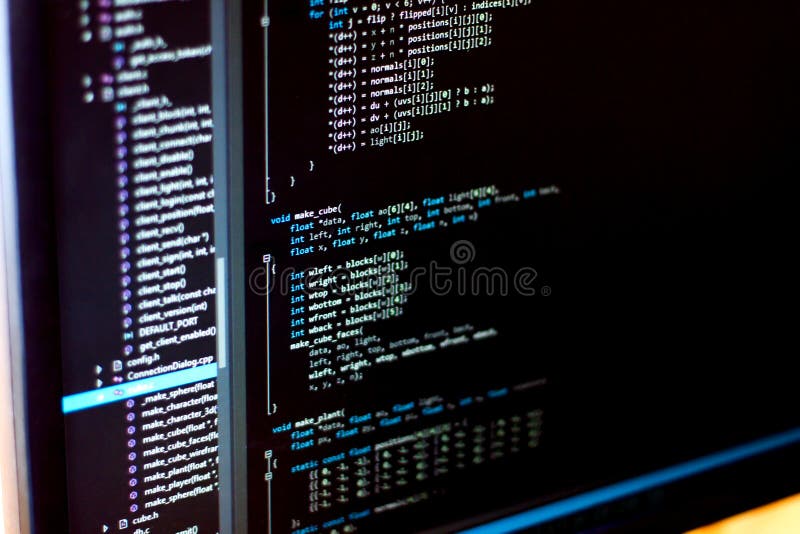
Software development or programming work with coding screen of various programming languages like HTML, , , and C brisk for new application development. Sharp programming component oriented language stock images, royalty-free photos and pictures
Low below angle view photo of it-specialist developing C code improving, system of cyber security of corporation designing company web site back-end switching laptop into his work process. Sharp programming component oriented language stock images, royalty-free photos and pictures
Software development or programming work with coding screen of various programming languages like HTML, , , and C brisk for new application development. Sharp programming component oriented language stock images, royalty-free photos and pictures
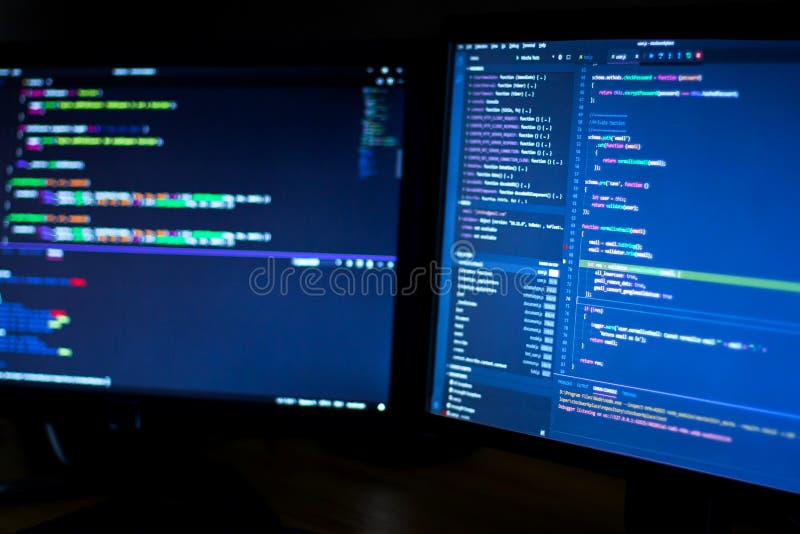
Modern blue wide displays, monitors of software developer with program code of application. Complex C++, Java, Javascript program code shows on displays. Freelancer software developer workplace. Sharp programming component oriented language stock images, royalty-free photos and pictures
Software development or programming work with coding screen of various programming languages like HTML, , , and C brisk for new application development. Sharp programming component oriented language stock images, royalty-free photos and pictures
Software developer freelancer with code reflection in glass work with program code C++ Java Javascript at night Develops new web desktop mobile application or framework Projector futuristic background. Sharp programming component oriented language stock images, royalty-free photos and pictures
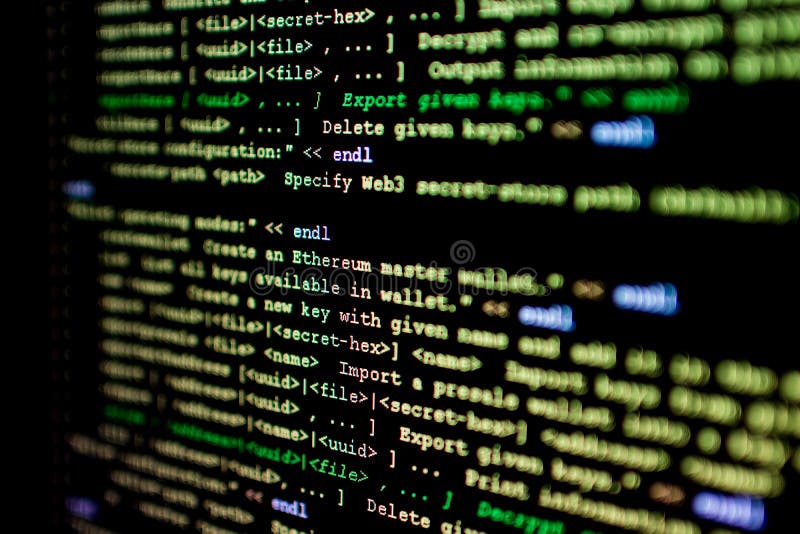
Source code of Ethereum, cryptocurrency and decentralized system of contracts for the management of smart contracts. innovative programmable blockchain developed in C ++ and Go. Open source code. Sharp programming component oriented language stock images, royalty-free photos and pictures
Software developer freelancer in glass work with program code C++, Java, Javascript on wide displays at night. Develops new web desktop mobile application or framework. Projector futuristic background. Sharp programming component oriented language stock images, royalty-free photos and pictures
Software development or programming work with coding screen of various programming languages like HTML, and C brisk for new application development. Sharp programming component oriented language stock images, royalty-free photos and pictures
Software development or programming work with coding screen of various programming languages like HTML, , , and C brisk for new application development. Sharp programming component oriented language stock images, royalty-free photos and pictures
06 OCTOBER, 2026 - Tashkent, Uzbekistan: Close-up of a computer screen displaying the C plus plus programming language website. Sharp programming component oriented language stock images, royalty-free photos and pictures
A diverse team collaborates on a software development project, showcasing teamwork with programming languages like , HTML, C, and , enhancing productivity. Trope. Sharp programming component oriented language stock images, royalty-free photos and pictures
Software development or programming work with coding screen of various programming languages like HTML, , , and C brisk for new application development. Sharp programming component oriented language stock images, royalty-free photos and pictures
A sleek laptop displays a digital programming interface featuring various coding languages like , HTML, C, and , illuminated in a dark environment. Qubit. Sharp programming component oriented language stock images, royalty-free photos and pictures
A visually striking representation of different programming languages with colorful digital code snippets showcasing HTML, , , and C against a dark backdrop. Qubit. Sharp programming component oriented language stock images, royalty-free photos and pictures
Software development or programming work with coding screen of various programming languages like HTML, , , and C brisk for new application development. Sharp programming component oriented language stock images, royalty-free photos and pictures