Search among 114 authentic stones decrease stock photos, high-definition images, and pictures, or look at other playa bonita or narrow street stock images to enhance your presentation with the perfect visual.

Sharpen, dangerous and inaccessible rocky stones upon the small lagoon and entering into the sea on the grayish cloudy day. Nature background with free copy space. Stones decrease stock images, royalty-free photos and pictures
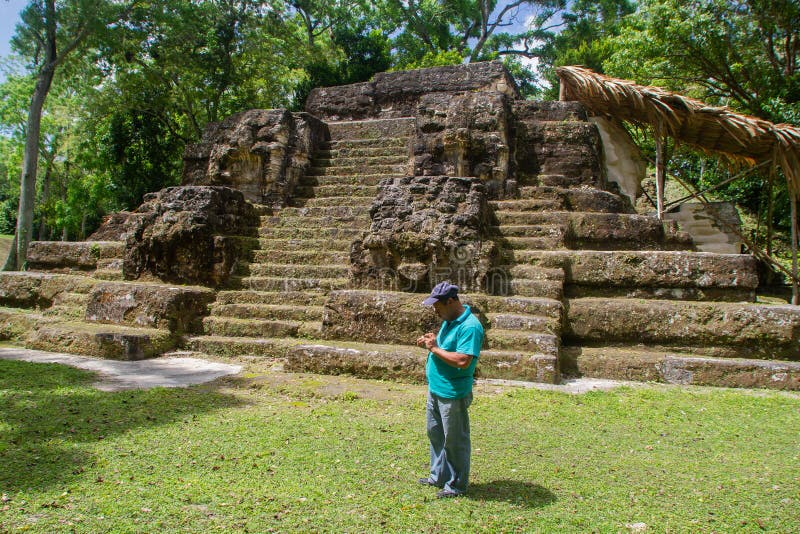
Uaxactun is an ancient sacred place of the Maya civilization, located in the Peten Basin region of the Maya lowlands, in the present-day department of Peten, Guatemala. The site lies some 12 miles 19 km north of the major center of Tikal. He coined the name from Maya words Waxac and Tun, to mean `Eight Stones`. A war between Tikal and Uaxactun, in which Uaxactun was defeated by forces led by Fire is Born Siyaj K`ak`, formerly identified as Smoking Frog, ended in 378 AD. The combined political entity of Tikal-Uaxactun dominated the region for the following 180 years. Siyaj K`ak` might have come from Teotihuacan, been the general of the Teotihuacano ruler Spearthrower Owl, and conquered Tikal earlier the same year. After the conquest, Uaxactun was still able to keep elite prerogatives of monument carving, temple erection, and rich burials during most of the Early Classic era. During the Hiatus period between Early Classic and Late Classic, Uaxactun experienced a lack of architectural activity and ceramic production, which coincided with the decline of the power of Teotihuacan and Tikal. By the middle of Late Classic, Uaxactun showed evidences of population increase, new construction, remodeling of old structures, and appearance of new residential areas, plaza groups, and buildings. There was a time of distinctive population decrease towards the end of Late Classic. By the end of Terminal Classic, Uaxactun was virtually abandoned. Stones decrease stock images, royalty-free photos and pictures

Archaeological Site Drone view: Uaxactun, ancient sacred Maya place and astronomical observatory. Uaxactun is an ancient sacred place of the Maya civilization. Uaxactun is an ancient sacred place of the Maya civilization, located in the Peten Basin region of the Maya lowlands, in the present-day department of Peten, Guatemala. The site lies some 12 miles 19 km north of the major center of Tikal. He coined the name from Maya words Waxac and Tun, to mean `Eight Stones`. A war between Tikal and Uaxactun, in which Uaxactun was defeated by forces led by Fire is Born Siyaj K`ak`, formerly identified as Smoking Frog, ended in 378 AD. The combined political entity of Tikal-Uaxactun dominated the region for the following 180 years. Siyaj K`ak` might have come from Teotihuacan, been the general of the Teotihuacano ruler Spearthrower Owl, and conquered Tikal earlier the same year. After the conquest, Uaxactun was still able to keep elite prerogatives of monument carving, temple erection, and rich burials during most of the Early Classic era. During the Hiatus period between Early Classic and Late Classic, Uaxactun experienced a lack of architectural activity and ceramic production, which coincided with the decline of the power of Teotihuacan and Tikal. By the middle of Late Classic, Uaxactun showed evidences of population increase, new construction, remodeling of old structures, and appearance of new residential areas, plaza groups, and buildings. There was a time of distinctive population decrease towards the end of Late Classic. By the end of Terminal Classic, Uaxactun was virtually abandoned.

This wide shot captures a prominent circular stepped pyramid, constructed from rough, brown stones, at the Guachimontones archaeological site in Jalisco, Mexico. The pyramid features numerous concentric tiers that gradually decrease in size towards the top, creating a distinct conical shape. A low fence or barrier, made of wooden posts and rope, encircles the base of the structure. The ground around the pyramid is dry and dusty, with sparse vegetation. In the background, rolling hills covered with dry brush and a few trees are visible under a bright blue sky with scattered white clouds. The overall scene showcases the unique architectural style and historical significance of this pre-Hispanic Mesoamerican ceremonial center in its natural setting. Stones decrease stock images, royalty-free photos and pictures
Uaxactun is an ancient sacred place of the Maya civilization, located in the Peten Basin region of the Maya lowlands, in the present-day department of Peten, Guatemala. The site lies some 12 miles 19 km north of the major center of Tikal. He coined the name from Maya words Waxac and Tun, to mean `Eight Stones`. A war between Tikal and Uaxactun, in which Uaxactun was defeated by forces led by Fire is Born Siyaj K`ak`, formerly identified as Smoking Frog, ended in 378 AD. The combined political entity of Tikal-Uaxactun dominated the region for the following 180 years. Siyaj K`ak` might have come from Teotihuacan, been the general of the Teotihuacano ruler Spearthrower Owl, and conquered Tikal earlier the same year. After the conquest, Uaxactun was still able to keep elite prerogatives of monument carving, temple erection, and rich burials during most of the Early Classic era. During the Hiatus period between Early Classic and Late Classic, Uaxactun experienced a lack of architectural activity and ceramic production, which coincided with the decline of the power of Teotihuacan and Tikal. By the middle of Late Classic, Uaxactun showed evidences of population increase, new construction, remodeling of old structures, and appearance of new residential areas, plaza groups, and buildings. There was a time of distinctive population decrease towards the end of Late Classic. By the end of Terminal Classic, Uaxactun was virtually abandoned. Stones decrease stock images, royalty-free photos and pictures

Archaeological Site: Uaxactun, ancient sacred Maya place and astronomical observatory. Uaxactun is an ancient sacred place of the Maya civilization, located in. Uaxactun is an ancient sacred place of the Maya civilization, located in the Peten Basin region of the Maya lowlands, in the present-day department of Peten, Guatemala. The site lies some 12 miles 19 km north of the major center of Tikal. He coined the name from Maya words Waxac and Tun, to mean `Eight Stones`. A war between Tikal and Uaxactun, in which Uaxactun was defeated by forces led by Fire is Born Siyaj K`ak`, formerly identified as Smoking Frog, ended in 378 AD. The combined political entity of Tikal-Uaxactun dominated the region for the following 180 years. Siyaj K`ak` might have come from Teotihuacan, been the general of the Teotihuacano ruler Spearthrower Owl, and conquered Tikal earlier the same year. After the conquest, Uaxactun was still able to keep elite prerogatives of monument carving, temple erection, and rich burials during most of the Early Classic era. During the Hiatus period between Early Classic and Late Classic, Uaxactun experienced a lack of architectural activity and ceramic production, which coincided with the decline of the power of Teotihuacan and Tikal. By the middle of Late Classic, Uaxactun showed evidences of population increase, new construction, remodeling of old structures, and appearance of new residential areas, plaza groups, and buildings. There was a time of distinctive population decrease towards the end of Late Classic. By the end of Terminal Classic, Uaxactun was virtually abandoned.

Uaxactun is an ancient sacred place of the Maya civilization, located in the Peten Basin region of the Maya lowlands, in the present-day department of Peten, Guatemala. The site lies some 12 miles 19 km north of the major center of Tikal. He coined the name from Maya words Waxac and Tun, to mean `Eight Stones`. A war between Tikal and Uaxactun, in which Uaxactun was defeated by forces led by Fire is Born Siyaj K`ak`, formerly identified as Smoking Frog, ended in 378 AD. The combined political entity of Tikal-Uaxactun dominated the region for the following 180 years. Siyaj K`ak` might have come from Teotihuacan, been the general of the Teotihuacano ruler Spearthrower Owl, and conquered Tikal earlier the same year. After the conquest, Uaxactun was still able to keep elite prerogatives of monument carving, temple erection, and rich burials during most of the Early Classic era. During the Hiatus period between Early Classic and Late Classic, Uaxactun experienced a lack of architectural activity and ceramic production, which coincided with the decline of the power of Teotihuacan and Tikal. By the middle of Late Classic, Uaxactun showed evidences of population increase, new construction, remodeling of old structures, and appearance of new residential areas, plaza groups, and buildings. There was a time of distinctive population decrease towards the end of Late Classic. By the end of Terminal Classic, Uaxactun was virtually abandoned. Stones decrease stock images, royalty-free photos and pictures

Archaeological Site Drone view: Uaxactun, ancient sacred Maya place and astronomical observatory. Uaxactun is an ancient sacred place of the Maya civilization. Uaxactun is an ancient sacred place of the Maya civilization, located in the Peten Basin region of the Maya lowlands, in the present-day department of Peten, Guatemala. The site lies some 12 miles 19 km north of the major center of Tikal. He coined the name from Maya words Waxac and Tun, to mean `Eight Stones`. A war between Tikal and Uaxactun, in which Uaxactun was defeated by forces led by Fire is Born Siyaj K`ak`, formerly identified as Smoking Frog, ended in 378 AD. The combined political entity of Tikal-Uaxactun dominated the region for the following 180 years. Siyaj K`ak` might have come from Teotihuacan, been the general of the Teotihuacano ruler Spearthrower Owl, and conquered Tikal earlier the same year. After the conquest, Uaxactun was still able to keep elite prerogatives of monument carving, temple erection, and rich burials during most of the Early Classic era. During the Hiatus period between Early Classic and Late Classic, Uaxactun experienced a lack of architectural activity and ceramic production, which coincided with the decline of the power of Teotihuacan and Tikal. By the middle of Late Classic, Uaxactun showed evidences of population increase, new construction, remodeling of old structures, and appearance of new residential areas, plaza groups, and buildings. There was a time of distinctive population decrease towards the end of Late Classic. By the end of Terminal Classic, Uaxactun was virtually abandoned.

A vertical stack of five river stones sits on a white surface against a white background. The stones range in gray and tan tones and decrease in size toward the top, creating a calm, minimal composition. Stones decrease stock images, royalty-free photos and pictures
A serene, low-angle close-up of five smooth, light-grey stones carefully stacked in perfect balance on a pebble beach. The stones decrease in size from the broad base to the tiny top piece, creating a miniature cairn or zen tower. Stones decrease stock images, royalty-free photos and pictures
A serene arrangement of smooth heated stones placed on a soft towel, surrounded by candles and green foliage. This setup creates a calming spa like atmosphere perfect for relaxation. AI Generative. Stones decrease stock images, royalty-free photos and pictures
A serene, low-angle close-up of five smooth, light-grey stones carefully stacked in perfect balance on a pebble beach. The stones decrease in size from the broad base to the tiny top piece, creating a miniature cairn or zen tower. Stones decrease stock images, royalty-free photos and pictures
The image presents a striking black and white composition featuring a pyramid of five stones. The stones, varying in size and shape, are stacked in a balanced and harmonious arrangement. The largest stone at the base anchors the pyramid, while the stones progressively decrease in size as they ascend. The image is set against a plain white background, which serves to highlight the intricate details of the stones and their arrangement. Stones decrease stock images, royalty-free photos and pictures
Place of wastewater discharge into the river of regional city in middle of summer. Catastrophic shallowing of freshwater reservoirs due to climate change, global warming and irresponsible exploitation of natural resources by mankind. Stones decrease stock images, royalty-free photos and pictures
Close-up shot of several rocks partially submerged in clear water. The image showcases the interplay of light and water, resulting in visible light refraction and ripple patterns across the surfaces of the rocks. The rocks exhibit variations in shape, size, and color, ranging from light to dark olive-green hues. The water's transparency allows for clear visibility of both the rock textures and the subtle undulations of the water itself. The overall color palette is muted, dominated by various shades of green and brown. The focus is sharp on the rocks closest to the viewer, with a gradual decrease in sharpness toward the background. The texture of the rocks appears smooth in certain areas and rougher in others. Stones decrease stock images, royalty-free photos and pictures
A high-angle, long shot captures a rustic footbridge spanning a rocky stream nestled within a dense forest. The bridge, seemingly constructed of wood, appears weathered and blends seamlessly with the surrounding environment. The stream bed is filled with large, light-colored rocks and the water is partially visible, suggesting a shallow depth. The forest is characterized by lush, dark-green foliage, creating a dense canopy overhead. The overall color palette is predominantly greens and browns, with the rocks providing subtle contrasts in lighter tones. The image exhibits a sense of depth, showcasing the natural contours of the land and the winding course of the stream. The light is diffused, indicating either an overcast day or indirect sunlight filtering through the dense canopy. The focus is sharp on the bridge and immediate foreground, with a gradual decrease in sharpness towards the background. Stones decrease stock images, royalty-free photos and pictures
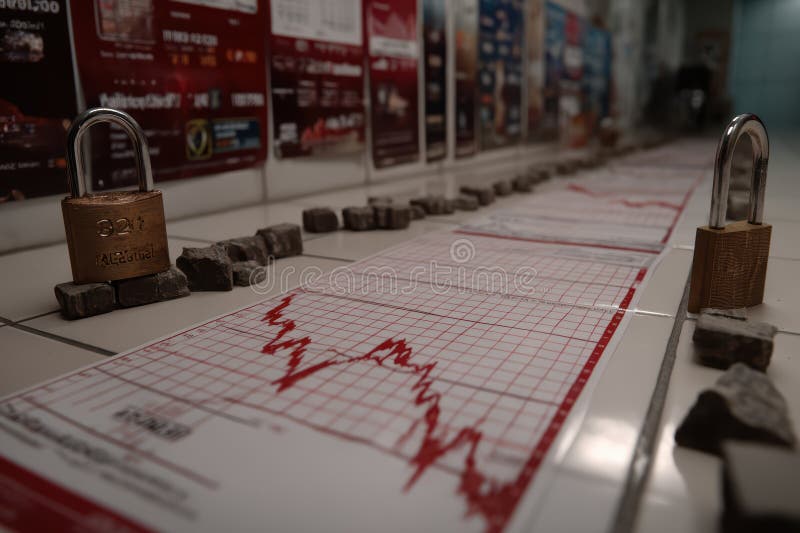
Two padlocks at both ends of a negative trend chart printed on paper sheets and placed on a tiled floor, separated by small stones, represent market restrictions due to trade wars and tariffs. Stones decrease stock images, royalty-free photos and pictures
Orange juice is a liquid extract of the orange tree fruit, produced by squeezing or reaming oranges. It comes in several different varieties, including blood orange, navel oranges, valencia orange, clementine, and tangerine. Orange juice is enjoyed around the world. It’s made by squeezing oranges to extract the juice, either by hand or using commercial methods. Orange juice is a concentrated source of vitamin C, a water-soluble vitamin that doubles as a powerful antioxidant and plays a central role in immune function, helps promote bone formation, wound healing, and gum health. Orange juice is also rich in folate, which is needed for DNA synthesis and supports fetal growth and development. it’s an excellent source of the mineral potassium, which regulates blood pressure, prevents bone loss, and protects against heart disease and stroke. Antioxidants in orange juice promote health by preventing oxidative damage — an imbalance between antioxidants and unstable molecules known as free radicals. may decrease inflammation, improve heart health and help prevent kidney stones. Stones decrease stock images, royalty-free photos and pictures
Grapefruit on wood background, tropical fruit, Vietnamese agriculture product, rich vitamin A, healthy eating, reduce cholesterol, prevent kidney stones, oxidation, anti cancer, make lose weight. Stones decrease stock images, royalty-free photos and pictures
Grapefruit on white background, tropical fruit, Vietnamese agriculture product, rich vitamin A, healthy eating, reduce cholesterol, prevent kidney stones, oxidation, anti cancer, make lose weight. Stones decrease stock images, royalty-free photos and pictures
A stack of smooth, round stones balanced on a flat surface with a blurred background of green and yellow leaves. The stones are stacked in order of decreasing size, with the largest stone on the bottom and the smallest stone on the top. The stones are all different colors, including shades of brown, gray, and white. The background is out of focus. AIG535. Stones decrease stock images, royalty-free photos and pictures
Uaxactun is an ancient sacred place of the Maya civilization, located in the Peten Basin region of the Maya lowlands, in the present-day department of Peten, Guatemala. The site lies some 12 miles 19 km north of the major center of Tikal. He coined the name from Maya words Waxac and Tun, to mean `Eight Stones`. A war between Tikal and Uaxactun, in which Uaxactun was defeated by forces led by Fire is Born Siyaj K`ak`, formerly identified as Smoking Frog, ended in 378 AD. The combined political entity of Tikal-Uaxactun dominated the region for the following 180 years. Siyaj K`ak` might have come from Teotihuacan, been the general of the Teotihuacano ruler Spearthrower Owl, and conquered Tikal earlier the same year. After the conquest, Uaxactun was still able to keep elite prerogatives of monument carving, temple erection, and rich burials during most of the Early Classic era. During the Hiatus period between Early Classic and Late Classic, Uaxactun experienced a lack of architectural activity and ceramic production, which coincided with the decline of the power of Teotihuacan and Tikal. By the middle of Late Classic, Uaxactun showed evidences of population increase, new construction, remodeling of old structures, and appearance of new residential areas, plaza groups, and buildings. There was a time of distinctive population decrease towards the end of Late Classic. By the end of Terminal Classic, Uaxactun was virtually abandoned. Stones decrease stock images, royalty-free photos and pictures

Archaeological Site: Uaxactun, ancient sacred Maya place and astronomical observatory. Uaxactun is an ancient sacred place of the Maya civilization, located in. Uaxactun is an ancient sacred place of the Maya civilization, located in the Peten Basin region of the Maya lowlands, in the present-day department of Peten, Guatemala. The site lies some 12 miles 19 km north of the major center of Tikal. He coined the name from Maya words Waxac and Tun, to mean `Eight Stones`. A war between Tikal and Uaxactun, in which Uaxactun was defeated by forces led by Fire is Born Siyaj K`ak`, formerly identified as Smoking Frog, ended in 378 AD. The combined political entity of Tikal-Uaxactun dominated the region for the following 180 years. Siyaj K`ak` might have come from Teotihuacan, been the general of the Teotihuacano ruler Spearthrower Owl, and conquered Tikal earlier the same year. After the conquest, Uaxactun was still able to keep elite prerogatives of monument carving, temple erection, and rich burials during most of the Early Classic era. During the Hiatus period between Early Classic and Late Classic, Uaxactun experienced a lack of architectural activity and ceramic production, which coincided with the decline of the power of Teotihuacan and Tikal. By the middle of Late Classic, Uaxactun showed evidences of population increase, new construction, remodeling of old structures, and appearance of new residential areas, plaza groups, and buildings. There was a time of distinctive population decrease towards the end of Late Classic. By the end of Terminal Classic, Uaxactun was virtually abandoned.

Uaxactun is an ancient sacred place of the Maya civilization, located in the Peten Basin region of the Maya lowlands, in the present-day department of Peten, Guatemala. The site lies some 12 miles 19 km north of the major center of Tikal. He coined the name from Maya words Waxac and Tun, to mean `Eight Stones`. A war between Tikal and Uaxactun, in which Uaxactun was defeated by forces led by Fire is Born Siyaj K`ak`, formerly identified as Smoking Frog, ended in 378 AD. The combined political entity of Tikal-Uaxactun dominated the region for the following 180 years. Siyaj K`ak` might have come from Teotihuacan, been the general of the Teotihuacano ruler Spearthrower Owl, and conquered Tikal earlier the same year. After the conquest, Uaxactun was still able to keep elite prerogatives of monument carving, temple erection, and rich burials during most of the Early Classic era. During the Hiatus period between Early Classic and Late Classic, Uaxactun experienced a lack of architectural activity and ceramic production, which coincided with the decline of the power of Teotihuacan and Tikal. By the middle of Late Classic, Uaxactun showed evidences of population increase, new construction, remodeling of old structures, and appearance of new residential areas, plaza groups, and buildings. There was a time of distinctive population decrease towards the end of Late Classic. By the end of Terminal Classic, Uaxactun was virtually abandoned. Stones decrease stock images, royalty-free photos and pictures

Archaeological Site: Uaxactun, ancient sacred Maya place and astronomical observatory. Uaxactun is an ancient sacred place of the Maya civilization, located in. Uaxactun is an ancient sacred place of the Maya civilization, located in the Peten Basin region of the Maya lowlands, in the present-day department of Peten, Guatemala. The site lies some 12 miles 19 km north of the major center of Tikal. He coined the name from Maya words Waxac and Tun, to mean `Eight Stones`. A war between Tikal and Uaxactun, in which Uaxactun was defeated by forces led by Fire is Born Siyaj K`ak`, formerly identified as Smoking Frog, ended in 378 AD. The combined political entity of Tikal-Uaxactun dominated the region for the following 180 years. Siyaj K`ak` might have come from Teotihuacan, been the general of the Teotihuacano ruler Spearthrower Owl, and conquered Tikal earlier the same year. After the conquest, Uaxactun was still able to keep elite prerogatives of monument carving, temple erection, and rich burials during most of the Early Classic era. During the Hiatus period between Early Classic and Late Classic, Uaxactun experienced a lack of architectural activity and ceramic production, which coincided with the decline of the power of Teotihuacan and Tikal. By the middle of Late Classic, Uaxactun showed evidences of population increase, new construction, remodeling of old structures, and appearance of new residential areas, plaza groups, and buildings. There was a time of distinctive population decrease towards the end of Late Classic. By the end of Terminal Classic, Uaxactun was virtually abandoned.