Free with trial Charles Robert Darwin. Naturalist and geologist. Black and white portrait in sketch style. Hand drawn vector illustration isolated on white background. Charles darwin white background vectors Charles Robert Darwin
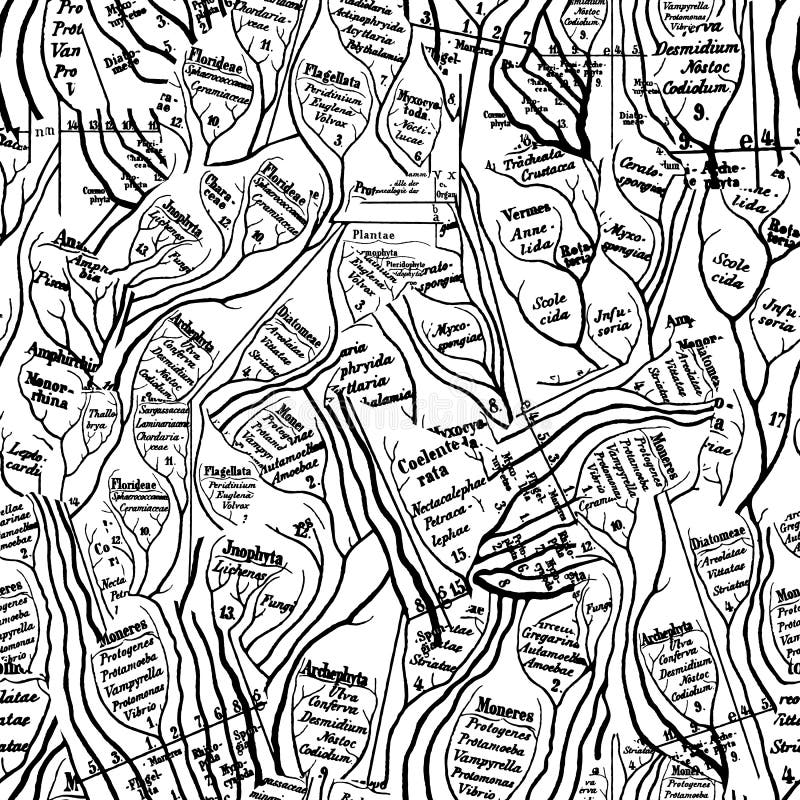
Free with trial Darwin. Seamless vector. Based on the image of an evolutionary tree of Charles Darwin. 1866. Charles darwin white background vectors Darwin (seamless vector). Darwin. Seamless vector. Based on the image of an evolutionary tree of Charles Darwin. 1866.
Free with trial Portrait of Charles Darwin and evolution of man. Hand drawn sketch style vector illustration isolated on white background. Charles darwin white background vectors Portrait of Charles Darwin
Free with trial Portrait of Charles Robert Darwin - an English naturalist, geologist and biologist, best known for his contributions to the science of evolution. Illustration of the 19th century. White background. Charles darwin white background illustrations Portrait of Charles Robert Darwin - an English naturalist, geologist and biologist
Free with trial Charles Robert Darwin, FRS FRGS FLS FZS was an English naturalist and geologist, best known for his contributions to evolutionary biology. Charles darwin white background vectors Caricature of Charles Darwin. Charles Robert Darwin, FRS FRGS FLS FZS was an English naturalist and geologist, best known for his contributions to evolutionary biology
Free with trial Scene from darwin's voyage on the beagle ship near tropical islands with scientific instruments on white background as vlkda in biology trip. Charles darwin white background illustrations Scene from darwin\'s voyage on the beagle ship near islands with instruments on white background as vlkda in biology. scene from darwin's voyage on the beagle ship near tropical islands with scientific instruments on white background as vlkda in biology trip
Free with trial International Darwin Day of Science and Humanism background template design. Vector illustration. Charles darwin white background vectors International Darwin Day of Science and Humanism background template design
Free with trial Darwin Day rubber stamp, vector Illustration. Charles darwin white background vectors Darwin Day rubber stamp
Free with trial Darwin ground finch - vector illustration sketch hand drawn with black lines, isolated on white background. Charles darwin white background vectors Darwin ground finch - vector illustration sketch hand drawn with
Free with trial Darwin ground finch on the tree - vector illustration sketch hand drawn with black lines, isolated on white background. Charles darwin white background vectors Darwin ground finch on the tree - vector illustration sketch han
Free with trial The World Darwin Day representing the evolotuion theory illustration generative ai. Charles darwin white background illustrations World Darwin Day representing the evolotuion theory illustration generative ai
Free with trial A modern, stylized cartoon illustration depicting the naturalist Charles Darwin in his later years, with his characteristic long white hair and beard. He is shown in a thoughtful pose, holding a pencil near his face with one hand and a small, light blue notebook in the other, symbolizing his work as an observer and recorder of the natural world. He is wearing a textured brown coat. The illustration is set against a clean, solid background, making it ideal for educational materials, science presentations, and content related to evolution and natural history. Charles darwin white background illustrations Stylized Caricature Illustration of Charles Darwin with a Notebook. A modern, stylized cartoon illustration depicting the naturalist Charles Darwin in his later years, with his characteristic long white hair and beard. He is shown in a thoughtful pose, holding a pencil near his face with one hand and a small, light blue notebook in the other, symbolizing his work as an observer and recorder of the natural world. He is wearing a textured brown coat. The illustration is set against a clean, solid background, making it ideal for educational materials, science presentations, and content related to evolution and natural history.
Free with trial A modern, stylized cartoon illustration depicting the naturalist Charles Darwin in his later years, with his characteristic long white hair and beard. He is shown in a thoughtful pose, holding a pencil near his face with one hand and a small, light blue notebook in the other, symbolizing his work as an observer and recorder of the natural world. He is wearing a textured brown coat. The illustration is set against a clean, solid background, making it ideal for educational materials, science presentations, and content related to evolution and natural history. Charles darwin white background illustrations Stylized Caricature Illustration of Charles Darwin with a Notebook. A modern, stylized cartoon illustration depicting the naturalist Charles Darwin in his later years, with his characteristic long white hair and beard. He is shown in a thoughtful pose, holding a pencil near his face with one hand and a small, light blue notebook in the other, symbolizing his work as an observer and recorder of the natural world. He is wearing a textured brown coat. The illustration is set against a clean, solid background, making it ideal for educational materials, science presentations, and content related to evolution and natural history.
Free with trial A modern, stylized cartoon illustration depicting the naturalist Charles Darwin in his later years, with his characteristic long white hair and beard. He is shown in a thoughtful pose, holding a pencil near his face with one hand and a small, light blue notebook in the other, symbolizing his work as an observer and recorder of the natural world. He is wearing a textured brown coat. The illustration is set against a clean, solid background, making it ideal for educational materials, science presentations, and content related to evolution and natural history. Charles darwin white background illustrations Stylized Caricature Illustration of Charles Darwin with a Notebook. A modern, stylized cartoon illustration depicting the naturalist Charles Darwin in his later years, with his characteristic long white hair and beard. He is shown in a thoughtful pose, holding a pencil near his face with one hand and a small, light blue notebook in the other, symbolizing his work as an observer and recorder of the natural world. He is wearing a textured brown coat. The illustration is set against a clean, solid background, making it ideal for educational materials, science presentations, and content related to evolution and natural history.
Free with trial Scene from darwin's voyage on the beagle ship near tropical islands with scientific instruments on white background as vlkda in biology trip. Charles darwin white background illustrations Scene from darwin\'s voyage on the beagle ship near islands with instruments on white background as vlkda in biology. scene from darwin's voyage on the beagle ship near tropical islands with scientific instruments on white background as vlkda in biology trip
Free with trial Scene from darwin's voyage on the beagle ship near tropical islands with scientific instruments on white background as vlkda in biology trip. Charles darwin white background illustrations Scene from darwin\'s voyage on the beagle ship near islands with instruments on white background as vlkda in biology. scene from darwin's voyage on the beagle ship near tropical islands with scientific instruments on white background as vlkda in biology trip
Free with trial Scene from darwin's voyage on the beagle ship near tropical islands with scientific instruments on white background as vlkda in biology trip. Charles darwin white background illustrations Scene from darwin\'s voyage on the beagle ship near islands with instruments on white background as vlkda in biology. scene from darwin's voyage on the beagle ship near tropical islands with scientific instruments on white background as vlkda in biology trip
Free with trial This scientific illustration displays multiple finch heads with distinct beak shapes, highlighting evolutionary adaptations for different food sources, all isolated on a white background. Charles darwin white background illustrations Detailed illustration of various finch beaks showcasing evolutionary adaptations isolated on white background. This scientific illustration displays multiple finch heads with distinct beak shapes, highlighting evolutionary adaptations for different food sources, all isolated on a white background
Free with trial February is International Darwin Day background template. International Day of Science and Humanism. Perfect for banners, cards, posters, and social media. Charles darwin white background vectors February is International Darwin Day background template. International Day of Science and Humanism. Perfect for banners, cards
Free with trial February is International Darwin Day background template. International Day of Science and Humanism. Perfect for banners, cards, posters, and social media. Charles darwin white background vectors February is International Darwin Day background template. International Day of Science and Humanism. Perfect for banners, cards
Free with trial Evolution with magnifier glass on white background. Charles darwin white background illustrations Evolution with magnifier glass on white
Free with trial Black background with "DARWIN DAY #3" text surrounded by science and evolution symbols including DNA, fossils, beakers, atomic models, and human evolution stages. Charles darwin white background illustrations Darwin Day illustration with evolution stages and science symbols biology. Black background with "DARWIN DAY #3" text surrounded by science and evolution symbols including DNA, fossils, beakers, atomic models, and human evolution stages
Free with trial Portrait illustration featuring an elderly man with a prominent beard and contemplative expression, set against a bold red sun background. The man's profile is detailed in black and white, contrasting with the vibrant red. The sun is depicted as a brushstroke with a flock of birds in silhouette flying in the top right corner, adding a dynamic element. The background is plain, enhancing the focus on the portrait's intricate detail and the symbolic red sun and birds. Charles darwin white background illustrations Charles darwin portrait illustration with red sun background. Portrait illustration featuring an elderly man with a prominent beard and contemplative expression, set against a bold red sun background. The man's profile is detailed in black and white, contrasting with the vibrant red. The sun is depicted as a brushstroke with a flock of birds in silhouette flying in the top right corner, adding a dynamic element. The background is plain, enhancing the focus on the portrait's intricate detail and the symbolic red sun and birds.
Free with trial International Darwin Day of Science and Humanism background template design. Vector illustration. Charles darwin white background vectors International Darwin Day of Science and Humanism background template design
Free with trial International Darwin Day of Science and Humanism background template design. Vector illustration. Charles darwin white background vectors International Darwin Day of Science and Humanism background template design
Free with trial International Darwin Day of Science and Humanism background template design. Vector illustration. Charles darwin white background vectors International Darwin Day of Science and Humanism background template design
Free with trial International Darwin Day of Science and Humanism background template design. Vector illustration. Charles darwin white background vectors International Darwin Day of Science and Humanism background template design
Free with trial Sir Charles Lyell, 1st Baronet, FRS - 14 November 1797 - 22 February 1875, was a Scottish geologist who demonstrated the power of known natural causes in explaining the earth's history. He is best known today for his association with Charles Darwin and as the author of Principles of Geology (1830-33), which presented to a wide public audience the idea that the earth was shaped by the same natural processes still in operation today, operating at similar intensities. The philosopher William Whewell dubbed this gradualistic view uniformitarianism and contrasted it with catastrophism, which had been championed by Georges Cuvier and was better accepted in Europe. The combination of evidence and eloquence in Principles convinced a wide range of readers of the significance of deep time for understanding the earth and environment. Lyell's scientific contributions included a pioneering explanation of climate change, in which shifting boundaries between oceans and continents could be used to explain long-term variations in temperature and rainfall. Lyell also gave influential explanations of earthquakes and developed the theory of gradual backed up-building of volcanoes. In stratigraphy his division of the Tertiary period into the Pliocene, Miocene, and Eocene was highly influential. He incorrectly conjectured that icebergs were the impetus behind the transport of glacial erratics, and that silty loess deposits might have settled out of flood waters. His creation of a separate period for human history, entitled the 'Recent', is widely cited as providing the foundations for the modern discussion of the Anthropocene. Building on the innovative work of James Hutton and his follower John Playfair, Lyell favoured an indefinitely long age for the earth, despite evidence suggesting an old but finite age. He was a close friend of Charles Darwin, and contributed significantly to Darwin's thinking on the processes involved in evolution. As Darwin wrote in On the Origin of Species, He who can read Sir Charles Lyell's grand work on the Principles of Geology, which the future historian will recognise as having produced a revolution in natural science, yet does not admit how incomprehensibly vast have been the past periods of time, may at once close this volume. Lyell helped to arrange the simultaneous publication in 1858 of papers by Darwin and Alfred Russel Wallace on natural selection, despite his personal religious qualms about the theory. He later published evidence from geology of the time man had existed on the earth. Charles darwin white background illustrations Sir Charles Lyell, 1st Baronet, FRS - 14 November
Free with trial Illustration for Darwin Day featuring ammonite fossils, DNA strands, atomic model, beakers, and silhouettes of human evolution from ape to human. Charles darwin white background illustrations Darwin Day celebration with evolutionary and scientific symbols science atom. Illustration for Darwin Day featuring ammonite fossils, DNA strands, atomic model, beakers, and silhouettes of human evolution from ape to human
Free with trial Darwin Day illustration featuring evolution stages DNA strands lab flasks atoms fossils ammonites and leaves in brown beige and blue tones. Charles darwin white background illustrations Darwin Day scientific illustration with evolution and D N A human evolution double helix. Darwin Day illustration featuring evolution stages DNA strands lab flasks atoms fossils ammonites and leaves in brown beige and blue tones
Free with trial Charles Robert Darwin vector illustration on white background. Charles darwin white background vectors Charles Robert Darwin vector illustration
Free with trial Doodle art illustration of a nerdy scientist or Charles Darwin with white beard done in cartoon style on isolated white background. Charles darwin white background vectors Nerdy Charles Darwin Doodle Mascot. Doodle art illustration of a nerdy scientist or Charles Darwin with white beard done in cartoon style on isolated white background
Free with trial Photograph manually colorized color of the english naturalist, geologist, and biologist, best known for his contributions to the science of evolution. Colorized manually. Charles darwin white background illustrations Hand-colouring of Charles Darwin photograph Black and white 1874. Photograph manually colorized color of the english naturalist, geologist, and biologist, best known for his contributions to the science of evolution. Colorized manually
Free with trial International Darwin day grunge rubber stamp on white background, vector illustration. Charles darwin white background vectors International Darwin day grunge rubber stamp
Free with trial Napoleon figure icon vector isolated on white background for your web and mobile app design, Napoleon figure logo concept. Charles darwin white background vectors Napoleon figure icon vector sign and symbol isolated on white background, Napoleon figure logo concept. Napoleon figure icon vector isolated on white background for your web and mobile app design, Napoleon figure logo concept
Free with trial Evolution word block on white background. Charles darwin white background illustrations Evolution word block on white
Free with trial International Darwin Day Science and Humanism Day, vector art illustration. Charles darwin white background vectors International Darwin Day Science and Humanism Day
Free with trial The lettering for International Darwin Day, which falls on February 12, is surrounded by ornamental hand sign language icons as a medium for non-verbal communication between people. Charles darwin white background vectors The lettering for International Darwin Day, which falls on February 12
Free with trial The World Darwin Day representing the evolotuion theory illustration generative ai. Charles darwin white background illustrations World Darwin Day representing the evolotuion theory illustration generative ai
Free with trial Tribal maori polynesian sketch of World Darwin Day representing the evolotuion theory illustration generative ai. Charles darwin white background illustrations World Darwin Day representing the evolotuion theory tribal maori polynesian sketch illustration generative ai. Tribal maori polynesian sketch of World Darwin Day representing the evolotuion theory illustration generative ai
Free with trial EVOLUTION red Rubber Stamp over a white background. Charles darwin white background illustrations EVOLUTION
Free with trial A pixel art style repeating pattern design of a ten pound note. Charles darwin white background illustrations Pixel Art Dollar Bill background. A pixel art style repeating pattern design of a ten pound note
 Sign in