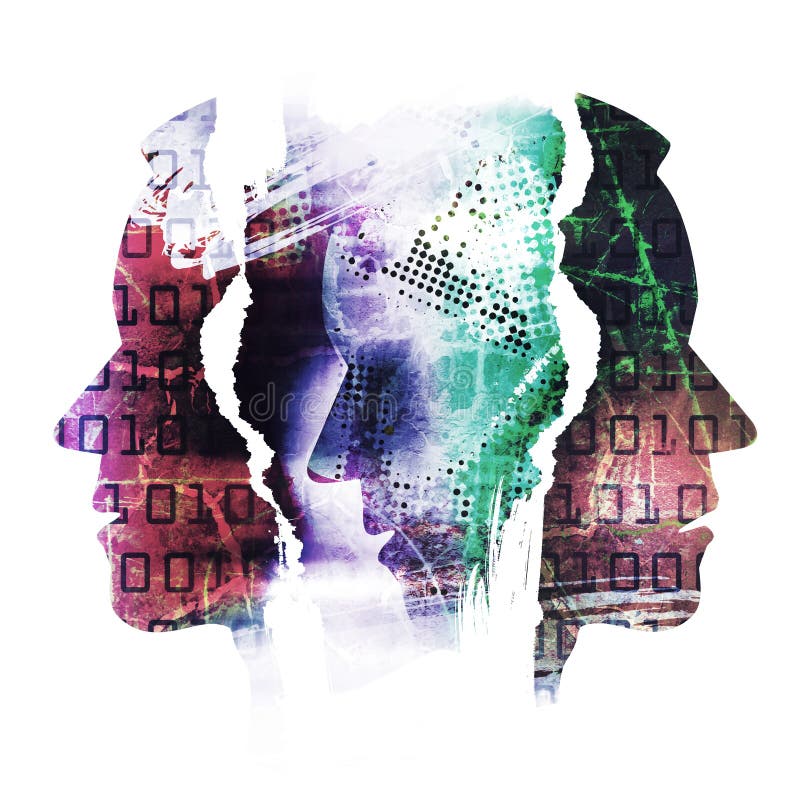
Free with trial Grunge stylized Fragments of Male heads stylized silhouettes with binary codes. Concept symbolizing schizophrenia, burn out, depression. Facial codes illustrations Schizophrenia depression, digital demention concept. Grunge stylized Fragments of Male heads stylized silhouettes with binary codes. Concept symbolizing. Grunge stylized Fragments of Male heads stylized silhouettes with binary codes. Concept symbolizing schizophrenia, burn out, depression.
Free with trial An innovative digital security interface displays biometric facial recognition technology for login authentication, complete with warning alerts and data streams for enhanced security measures. Ledger. Facial codes illustrations Digital security interface showing biometric facial recognition technology for login authentication with warning alerts. An innovative digital security interface. An innovative digital security interface displays biometric facial recognition technology for login authentication, complete with warning alerts and data streams for enhanced security measures. Ledger
Free with trial This image showcases a collection of emoticons illustrating various emotions, each paired with color codes. Emotions include sickness, surprise, confusion, sleepiness, happiness, sadness, love, and anger. Emoticons feature simple line drawings with expressive facial features such as smiles, frowns, and closed eyes. Each emotion is linked to a specific color, which is indicated in a legend at the top: sick (peach), surprised (green), confused (pink), sleepy (blue), happy (yellow), sad (grey), loved (red), angry (orange). Facial codes illustrations Emotions and Colors Learning Worksheet. This image showcases a collection of emoticons illustrating various emotions, each paired with color codes. Emotions. This image showcases a collection of emoticons illustrating various emotions, each paired with color codes. Emotions include sickness, surprise, confusion, sleepiness, happiness, sadness, love, and anger. Emoticons feature simple line drawings with expressive facial features such as smiles, frowns, and closed eyes. Each emotion is linked to a specific color, which is indicated in a legend at the top: sick (peach), surprised (green), confused (pink), sleepy (blue), happy (yellow), sad (grey), loved (red), angry (orange).
Free with trial Woman unlocking smart door with facial recognition. Nearby text displays security messages and error codes. Ideal for technology, security, smart home, digital identity, access management. Facial codes vectors Woman Using Smart Door Lock with Facial Recognition and Error Messages on Screen. Woman unlocking smart door with facial recognition. Nearby text displays. Woman unlocking smart door with facial recognition. Nearby text displays security messages and error codes. Ideal for technology, security, smart home, digital identity, access management
Free with trial 36 blue line art technology and business symbols collection set featuring a complete grid of outline graphics including AI robots, security locks, cloud storage, QR codes, wallet payments, facial recognition, networking elements, and customer support symbols. Ideal for web interface designs, mobile app layouts, software dashboards, digital presentations, tech infographics, and commercial projects. Facial codes vectors 36 Blue Line Art Technology and Business Symbols Collection Set. 36 blue line art technology and business symbols collection set featuring a complete grid of. 36 blue line art technology and business symbols collection set featuring a complete grid of outline graphics including AI robots, security locks, cloud storage, QR codes, wallet payments, facial recognition, networking elements, and customer support symbols. Ideal for web interface designs, mobile app layouts, software dashboards, digital presentations, tech infographics, and commercial projects.
Free with trial 42 blue line art technology and business symbols collection set featuring a complete grid of outline graphics including AI robots, security locks, cloud storage, QR codes, wallet payments, facial recognition, networking elements, and customer support symbols. Ideal for web interface designs, mobile app layouts, software dashboards, digital presentations, tech infographics, and commercial projects. Facial codes vectors 42 Blue Line Art Technology and Business Symbols Collection Set. 42 blue line art technology and business symbols collection set featuring a complete grid of. 42 blue line art technology and business symbols collection set featuring a complete grid of outline graphics including AI robots, security locks, cloud storage, QR codes, wallet payments, facial recognition, networking elements, and customer support symbols. Ideal for web interface designs, mobile app layouts, software dashboards, digital presentations, tech infographics, and commercial projects.
Free with trial A set of line icons depicting various mobile phone authentication methods, including fingerprint scanning, facial recognition, and password entry. The icons show hands holding smartphones with different security features, such as biometric authentication, PIN codes, and shield symbols. The illustrations are simple, yet detailed, and can be used for various digital and print applications related to mobile security, technology, and user interface design. Facial codes vectors Mobile Biometric Authentication Icons. A set of line icons depicting various mobile phone authentication methods, including fingerprint scanning, facial. A set of line icons depicting various mobile phone authentication methods, including fingerprint scanning, facial recognition, and password entry. The icons show hands holding smartphones with different security features, such as biometric authentication, PIN codes, and shield symbols. The illustrations are simple, yet detailed, and can be used for various digital and print applications related to mobile security, technology, and user interface design.
Free with trial A set of line icons depicting various mobile phone biometric authentication methods, including fingerprint scanning, facial recognition, and PIN codes. The icons show hands holding smartphones with different security features on the screens, such as fingerprints, faces, eyes, and lock symbols. The illustrations are simple, yet detailed, and can be used for various purposes, including website design, mobile app development, and marketing materials. Facial codes vectors Mobile phone biometric authentication methods. A set of line icons depicting various mobile phone biometric authentication methods, including fingerprint. A set of line icons depicting various mobile phone biometric authentication methods, including fingerprint scanning, facial recognition, and PIN codes. The icons show hands holding smartphones with different security features on the screens, such as fingerprints, faces, eyes, and lock symbols. The illustrations are simple, yet detailed, and can be used for various purposes, including website design, mobile app development, and marketing materials.
Free with trial Robot analyzing deepfake image using coding and facial recognition, pointing at evidence. Ideal for AI, cybersecurity, technology, data analysis, fraud prevention, machine learning innovation. Clear. Facial codes vectors Artificial Intelligence Detecting Deepfake Images with Coding and Analysis Framework. Robot analyzing deepfake image using coding and facial recognition. Robot analyzing deepfake image using coding and facial recognition, pointing at evidence. Ideal for AI, cybersecurity, technology, data analysis, fraud prevention, machine learning innovation. Clear
Free with trial This image showcases a modern smart door lock featuring both fingerprint and facial recognition technology. The device integrates a camera at the top for facial scanning and a fingerprint scanner below, along with a keypad for entering PIN codes. It also includes a small screen for user interaction and status notifications, likely offering enhanced security with multiple authentication methods. Facial codes illustrations Smart fingerprint and facial recognition door lock device. This image showcases a modern smart door lock featuring both fingerprint and facial recognition. This image showcases a modern smart door lock featuring both fingerprint and facial recognition technology. The device integrates a camera at the top for facial scanning and a fingerprint scanner below, along with a keypad for entering PIN codes. It also includes a small screen for user interaction and status notifications, likely offering enhanced security with multiple authentication methods
Free with trial This image illustrates the concept of Deepfake and modern cybersecurity threats. At the center is a 3D mesh model of a human face connected to biometric security symbols such as fingerprints, security keys, and PIN codes. To the right is a hand using a smartphone with a glowing digital network, symbolizing the spread of data across the internet. Yellow "Danger" signs highlight the risks of identity theft and phishing using artificial intelligence (AI) technology on mobile devices. Facial codes illustrations Deepfake Warning: AI Facial Recognition Technology, Biometric Security, and Mobile Risks. This image illustrates the concept of Deepfake and modern cybersecurity. This image illustrates the concept of Deepfake and modern cybersecurity threats. At the center is a 3D mesh model of a human face connected to biometric security symbols such as fingerprints, security keys, and PIN codes. To the right is a hand using a smartphone with a glowing digital network, symbolizing the spread of data across the internet. Yellow "Danger" signs highlight the risks of identity theft and phishing using artificial intelligence (AI) technology on mobile devices.
Free with trial A detailed, cybernetic eye scans encrypted data streams, glowing with layers of biometric security. The eye's reflection reveals intricate encryption codes, symbolizing futuristic digital protection Generative AI Illustration. Facial codes illustrations Cybernetic eyes scanning carefully encoded stream data Generative AI Illustration. A detailed, cybernetic eye scans encrypted data streams, glowing with layers. A detailed, cybernetic eye scans encrypted data streams, glowing with layers of biometric security. The eye's reflection reveals intricate encryption codes, symbolizing futuristic digital protection Generative AI Illustration
Free with trial Silhouette of a human profile composed of white, distorted, and overlapping letters against a black background. The letters vary in size and orientation, creating a textured and abstract appearance. The facial features are defined by the arrangement and density of the text, highlighting the contours of the face and head. The artwork blends typography with portraiture, exploring themes of identity and communication through visual text elements. Facial codes vectors A digital silhouette of a face created from letters and symbols. Silhouette of a human profile composed of white, distorted, and overlapping letters against a. Silhouette of a human profile composed of white, distorted, and overlapping letters against a black background. The letters vary in size and orientation, creating a textured and abstract appearance. The facial features are defined by the arrangement and density of the text, highlighting the contours of the face and head. The artwork blends typography with portraiture, exploring themes of identity and communication through visual text elements.
Free with trial Abstract futuristic concept artwork representing total surveillance and digital monitoring in modern society. The composition features a central eye resembling a camera lens surrounded by security cameras, drones, human silhouettes, QR codes, fingerprints, and complex data networks symbolizing artificial intelligence, biometric tracking, and mass data collection. Dark cyberpunk tones with glowing red and neon accents create a dystopian technological atmosphere illustrating privacy concerns, cybersecurity, and global digital control systems. This high-detail modern mixed media style illustration was generated with the help of artificial intelligence (AI) and is ideal for themes such as technology, surveillance society, data privacy, cybersecurity, artificial intelligence, and digital networks. Facial codes illustrations Abstract Total Surveillance Concept Art – Futuristic AI Monitoring Eye, CCTV Cameras, Drones and Digital Data Network. Abstract futuristic concept artwork. Abstract futuristic concept artwork representing total surveillance and digital monitoring in modern society. The composition features a central eye resembling a camera lens surrounded by security cameras, drones, human silhouettes, QR codes, fingerprints, and complex data networks symbolizing artificial intelligence, biometric tracking, and mass data collection. Dark cyberpunk tones with glowing red and neon accents create a dystopian technological atmosphere illustrating privacy concerns, cybersecurity, and global digital control systems. This high-detail modern mixed media style illustration was generated with the help of artificial intelligence (AI) and is ideal for themes such as technology, surveillance society, data privacy, cybersecurity, artificial intelligence, and digital networks.
Free with trial Illustration of a growing product personalization with a simple adjustable gear icon, a stylized face icon with different parts, and a stream of unique item codes. Vector flat icon design on a white background for a customization and tailoring illustration --chaos 30 --ar 16:9 --v 7 Job ID: d1dee066-462a-4dec-853c-86e09aeef4e1. Facial codes illustrations AI Face Recognition Verification Concept Person Data Matching with Technology. Illustration of a growing product personalization with a simple adjustable gear. Illustration of a growing product personalization with a simple adjustable gear icon, a stylized face icon with different parts, and a stream of unique item codes. Vector flat icon design on a white background for a customization and tailoring illustration --chaos 30 --ar 16:9 --v 7 Job ID: d1dee066-462a-4dec-853c-86e09aeef4e1
Free with trial Selection of icons representing digital wallets cloud security biometric authentication facial recognition qr codes and financial transactions for modern banking apps and secure online platforms set against transparent background design element for financial software interfaces. Facial codes illustrations Collection of digital wallet and online financial security system icons. Selection of icons representing digital wallets cloud security biometric authentication. Selection of icons representing digital wallets cloud security biometric authentication facial recognition qr codes and financial transactions for modern banking apps and secure online platforms set against transparent background design element for financial software interfaces
Free with trial Stylized 3D cartoon boy mascot with 8 labeled poses, facial expressions, HEX color codes and texture details. Production-ready for animation, AI video generation and children content. Facial codes illustrations 3D Cartoon Boy Mascot Character Sheet — Production-Ready Animation Reference with Expressions, Poses and HEX Color Palette. Stylized 3D cartoon boy mascot with. Stylized 3D cartoon boy mascot with 8 labeled poses, facial expressions, HEX color codes and texture details. Production-ready for animation, AI video generation and children content.
Free with trial Access home improvement technology illustration system convenient, secure identification, authorized users access home improvement technology. Facial codes illustrations Access home improvement technology. Illustration system convenient, secure identification, authorized users AI generated. access home improvement technology illustration system convenient, secure identification, authorized users access home improvement technology
Free with trial Comprehensive artistic reference sheet illustrating nose shape variations for drawing and character design. The chart displays hooked, button, aquiline, and wide nose types, each presented in profile, three-quarter, and front views with labeled codes. Decorative continuous line-art faces frame the composition, while a magnifying glass with watercolor accents emphasizes the anatomical theme. Ideal for art education, drawing tutorials, anatomy study guides, courses, character design resources, and creative learning materials for artists, students, and illustrators of all skill levels. Facial codes vectors Nose Types Reference Sheet Drawing Tutorial Variations in Form. Comprehensive artistic reference sheet illustrating nose shape variations for drawing and. Comprehensive artistic reference sheet illustrating nose shape variations for drawing and character design. The chart displays hooked, button, aquiline, and wide nose types, each presented in profile, three-quarter, and front views with labeled codes. Decorative continuous line-art faces frame the composition, while a magnifying glass with watercolor accents emphasizes the anatomical theme. Ideal for art education, drawing tutorials, anatomy study guides, courses, character design resources, and creative learning materials for artists, students, and illustrators of all skill levels.
Free with trial This captivating macro shot of a futuristic robot face unveils a potential future for cybersecurity authentication. Imagine a world where secure access isn't reliant on passwords or complex codes, but rather on unique biometric identifiers. This cutting-edge technology, showcased in this detailed image, represents a radical shift in how we verify identity. The intricate details of the robot's. Facial codes illustrations Advanced AI Cybersecurity Authentication A Futuristic Robot Face Macro Examines the Future of Secure Access. This captivating macro shot of a futuristic robot. This captivating macro shot of a futuristic robot face unveils a potential future for cybersecurity authentication. Imagine a world where secure access isn't reliant on passwords or complex codes, but rather on unique biometric identifiers. This cutting-edge technology, showcased in this detailed image, represents a radical shift in how we verify identity. The intricate details of the robot's
Free with trial Holographic crypto wallet, Ai generated image. A holographic crypto wallet interface with floating transaction visualizations and biometric security. Facial codes illustrations Holographic crypto wallet, Ai generated image. A holographic crypto wallet interface with floating transaction visualizations and biometric security
Free with trial Holographic crypto wallet, Ai generated image. A holographic crypto wallet interface with floating transaction visualizations and biometric security. Facial codes illustrations Holographic crypto wallet, Ai generated image. A holographic crypto wallet interface with floating transaction visualizations and biometric security
Free with trial Holographic crypto wallet, Ai generated image. A holographic crypto wallet interface with floating transaction visualizations and biometric security. Facial codes illustrations Holographic crypto wallet, Ai generated image. A holographic crypto wallet interface with floating transaction visualizations and biometric security
Free with trial Holographic crypto wallet, Ai generated image. A holographic crypto wallet interface with floating transaction visualizations and biometric security. Facial codes illustrations Holographic crypto wallet, Ai generated image. A holographic crypto wallet interface with floating transaction visualizations and biometric security
Free with trial Holographic crypto wallet, Ai generated image. A holographic crypto wallet interface with floating transaction visualizations and biometric security. Facial codes illustrations Holographic crypto wallet, Ai generated image. A holographic crypto wallet interface with floating transaction visualizations and biometric security
Free with trial Holographic crypto wallet, Ai generated image. A holographic crypto wallet interface with floating transaction visualizations and biometric security. Facial codes illustrations Holographic crypto wallet, Ai generated image. A holographic crypto wallet interface with floating transaction visualizations and biometric security
Free with trial Holographic crypto wallet, Ai generated image. A holographic crypto wallet interface with floating transaction visualizations and biometric security. Facial codes illustrations Holographic crypto wallet, Ai generated image. A holographic crypto wallet interface with floating transaction visualizations and biometric security
Free with trial Conceptual photo of a computer hacker looking through unzipped secret passkey codes ideal for internet online dangers etc. Facial codes illustrations Passkey code access security computers online internet danger fraud warning passwords. Conceptual photo of a computer hacker looking through unzipped secret. conceptual photo of a computer hacker looking through unzipped secret passkey codes ideal for internet online dangers etc.
Free with trial Smart car security integrates advanced technology to safeguard vehicles against various threats, ensuring the safety of occupants and preventing unauthorized access or theft. One vital aspect of smart car security is robust authentication mechanisms. Biometric sensors like fingerprint scanners or facial recognition systems authenticate drivers' identities before allowing access to the vehicle. Multi-factor authentication, combining physical keys with digital codes or mobile apps, adds an extra layer of security. Moreover, smart cars are equipped with sophisticated anti-theft features. GPS tracking enables real-time monitoring of the vehicle's location, aiding in recovery in case of theft. Immobilization systems, such as remote engine shutdown or wheel locks, prevent unauthorized use. Cybersecurity is another critical aspect. Firewalls, encryption, and secure communication protocols safeguard against hacking attempts or unauthorized access to the vehicle's systems. Regular software updates and security patches mitigate vulnerabilities and ensure ongoing protection. Smart car security also incorporates proactive alerts and notifications. Owners receive instant alerts on their smartphones in case of suspicious activities, such as unauthorized access attempts or tampering. Furthermore, remote monitoring and control features allow owners to check their vehicle's status and control functions remotely through mobile apps or web portals, enhancing convenience and security. In summary, smart car security employs a combination of advanced authentication, anti-theft measures, cybersecurity protocols, and proactive alerts to ensure comprehensive protection for vehicles and occupants. Facial codes illustrations Smart car security AI generated. Smart car security integrates advanced technology to safeguard vehicles against various threats, ensuring the safety of. Smart car security integrates advanced technology to safeguard vehicles against various threats, ensuring the safety of occupants and preventing unauthorized access or theft.One vital aspect of smart car security is robust authentication mechanisms. Biometric sensors like fingerprint scanners or facial recognition systems authenticate drivers' identities before allowing access to the vehicle. Multi-factor authentication, combining physical keys with digital codes or mobile apps, adds an extra layer of security.Moreover, smart cars are equipped with sophisticated anti-theft features. GPS tracking enables real-time monitoring of the vehicle's location, aiding in recovery in case of theft. Immobilization systems, such as remote engine shutdown or wheel locks, prevent unauthorized use.Cybersecurity is another critical aspect. Firewalls, encryption, and secure communication protocols safeguard against hacking attempts or unauthorized access to the vehicle's systems. Regular software updates and security patches mitigate vulnerabilities and ensure ongoing protection.Smart car security also incorporates proactive alerts and notifications. Owners receive instant alerts on their smartphones in case of suspicious activities, such as unauthorized access attempts or tampering.Furthermore, remote monitoring and control features allow owners to check their vehicle's status and control functions remotely through mobile apps or web portals, enhancing convenience and security.In summary, smart car security employs a combination of advanced authentication, anti-theft measures, cybersecurity protocols, and proactive alerts to ensure comprehensive protection for vehicles and occupants.
Free with trial Smart car security integrates advanced technology to safeguard vehicles against various threats, ensuring the safety of occupants and preventing unauthorized access or theft. One vital aspect of smart car security is robust authentication mechanisms. Biometric sensors like fingerprint scanners or facial recognition systems authenticate drivers' identities before allowing access to the vehicle. Multi-factor authentication, combining physical keys with digital codes or mobile apps, adds an extra layer of security. Moreover, smart cars are equipped with sophisticated anti-theft features. GPS tracking enables real-time monitoring of the vehicle's location, aiding in recovery in case of theft. Immobilization systems, such as remote engine shutdown or wheel locks, prevent unauthorized use. Cybersecurity is another critical aspect. Firewalls, encryption, and secure communication protocols safeguard against hacking attempts or unauthorized access to the vehicle's systems. Regular software updates and security patches mitigate vulnerabilities and ensure ongoing protection. Smart car security also incorporates proactive alerts and notifications. Owners receive instant alerts on their smartphones in case of suspicious activities, such as unauthorized access attempts or tampering. Furthermore, remote monitoring and control features allow owners to check their vehicle's status and control functions remotely through mobile apps or web portals, enhancing convenience and security. In summary, smart car security employs a combination of advanced authentication, anti-theft measures, cybersecurity protocols, and proactive alerts to ensure comprehensive protection for vehicles and occupants. Facial codes illustrations Smart car security AI generated. Smart car security integrates advanced technology to safeguard vehicles against various threats, ensuring the safety of. Smart car security integrates advanced technology to safeguard vehicles against various threats, ensuring the safety of occupants and preventing unauthorized access or theft.One vital aspect of smart car security is robust authentication mechanisms. Biometric sensors like fingerprint scanners or facial recognition systems authenticate drivers' identities before allowing access to the vehicle. Multi-factor authentication, combining physical keys with digital codes or mobile apps, adds an extra layer of security.Moreover, smart cars are equipped with sophisticated anti-theft features. GPS tracking enables real-time monitoring of the vehicle's location, aiding in recovery in case of theft. Immobilization systems, such as remote engine shutdown or wheel locks, prevent unauthorized use.Cybersecurity is another critical aspect. Firewalls, encryption, and secure communication protocols safeguard against hacking attempts or unauthorized access to the vehicle's systems. Regular software updates and security patches mitigate vulnerabilities and ensure ongoing protection.Smart car security also incorporates proactive alerts and notifications. Owners receive instant alerts on their smartphones in case of suspicious activities, such as unauthorized access attempts or tampering.Furthermore, remote monitoring and control features allow owners to check their vehicle's status and control functions remotely through mobile apps or web portals, enhancing convenience and security.In summary, smart car security employs a combination of advanced authentication, anti-theft measures, cybersecurity protocols, and proactive alerts to ensure comprehensive protection for vehicles and occupants.
Free with trial Smart car security integrates advanced technology to safeguard vehicles against various threats, ensuring the safety of occupants and preventing unauthorized access or theft. One vital aspect of smart car security is robust authentication mechanisms. Biometric sensors like fingerprint scanners or facial recognition systems authenticate drivers' identities before allowing access to the vehicle. Multi-factor authentication, combining physical keys with digital codes or mobile apps, adds an extra layer of security. Moreover, smart cars are equipped with sophisticated anti-theft features. GPS tracking enables real-time monitoring of the vehicle's location, aiding in recovery in case of theft. Immobilization systems, such as remote engine shutdown or wheel locks, prevent unauthorized use. Cybersecurity is another critical aspect. Firewalls, encryption, and secure communication protocols safeguard against hacking attempts or unauthorized access to the vehicle's systems. Regular software updates and security patches mitigate vulnerabilities and ensure ongoing protection. Smart car security also incorporates proactive alerts and notifications. Owners receive instant alerts on their smartphones in case of suspicious activities, such as unauthorized access attempts or tampering. Furthermore, remote monitoring and control features allow owners to check their vehicle's status and control functions remotely through mobile apps or web portals, enhancing convenience and security. In summary, smart car security employs a combination of advanced authentication, anti-theft measures, cybersecurity protocols, and proactive alerts to ensure comprehensive protection for vehicles and occupants. Facial codes illustrations Smart car security AI generated. Smart car security integrates advanced technology to safeguard vehicles against various threats, ensuring the safety of. Smart car security integrates advanced technology to safeguard vehicles against various threats, ensuring the safety of occupants and preventing unauthorized access or theft.One vital aspect of smart car security is robust authentication mechanisms. Biometric sensors like fingerprint scanners or facial recognition systems authenticate drivers' identities before allowing access to the vehicle. Multi-factor authentication, combining physical keys with digital codes or mobile apps, adds an extra layer of security.Moreover, smart cars are equipped with sophisticated anti-theft features. GPS tracking enables real-time monitoring of the vehicle's location, aiding in recovery in case of theft. Immobilization systems, such as remote engine shutdown or wheel locks, prevent unauthorized use.Cybersecurity is another critical aspect. Firewalls, encryption, and secure communication protocols safeguard against hacking attempts or unauthorized access to the vehicle's systems. Regular software updates and security patches mitigate vulnerabilities and ensure ongoing protection.Smart car security also incorporates proactive alerts and notifications. Owners receive instant alerts on their smartphones in case of suspicious activities, such as unauthorized access attempts or tampering.Furthermore, remote monitoring and control features allow owners to check their vehicle's status and control functions remotely through mobile apps or web portals, enhancing convenience and security.In summary, smart car security employs a combination of advanced authentication, anti-theft measures, cybersecurity protocols, and proactive alerts to ensure comprehensive protection for vehicles and occupants.
Free with trial Smart car security integrates advanced technology to safeguard vehicles against various threats, ensuring the safety of occupants and preventing unauthorized access or theft. One vital aspect of smart car security is robust authentication mechanisms. Biometric sensors like fingerprint scanners or facial recognition systems authenticate drivers' identities before allowing access to the vehicle. Multi-factor authentication, combining physical keys with digital codes or mobile apps, adds an extra layer of security. Moreover, smart cars are equipped with sophisticated anti-theft features. GPS tracking enables real-time monitoring of the vehicle's location, aiding in recovery in case of theft. Immobilization systems, such as remote engine shutdown or wheel locks, prevent unauthorized use. Cybersecurity is another critical aspect. Firewalls, encryption, and secure communication protocols safeguard against hacking attempts or unauthorized access to the vehicle's systems. Regular software updates and security patches mitigate vulnerabilities and ensure ongoing protection. Smart car security also incorporates proactive alerts and notifications. Owners receive instant alerts on their smartphones in case of suspicious activities, such as unauthorized access attempts or tampering. Furthermore, remote monitoring and control features allow owners to check their vehicle's status and control functions remotely through mobile apps or web portals, enhancing convenience and security. In summary, smart car security employs a combination of advanced authentication, anti-theft measures, cybersecurity protocols, and proactive alerts to ensure comprehensive protection for vehicles and occupants. Facial codes illustrations Smart car security AI generated. Smart car security integrates advanced technology to safeguard vehicles against various threats, ensuring the safety of. Smart car security integrates advanced technology to safeguard vehicles against various threats, ensuring the safety of occupants and preventing unauthorized access or theft.One vital aspect of smart car security is robust authentication mechanisms. Biometric sensors like fingerprint scanners or facial recognition systems authenticate drivers' identities before allowing access to the vehicle. Multi-factor authentication, combining physical keys with digital codes or mobile apps, adds an extra layer of security.Moreover, smart cars are equipped with sophisticated anti-theft features. GPS tracking enables real-time monitoring of the vehicle's location, aiding in recovery in case of theft. Immobilization systems, such as remote engine shutdown or wheel locks, prevent unauthorized use.Cybersecurity is another critical aspect. Firewalls, encryption, and secure communication protocols safeguard against hacking attempts or unauthorized access to the vehicle's systems. Regular software updates and security patches mitigate vulnerabilities and ensure ongoing protection.Smart car security also incorporates proactive alerts and notifications. Owners receive instant alerts on their smartphones in case of suspicious activities, such as unauthorized access attempts or tampering.Furthermore, remote monitoring and control features allow owners to check their vehicle's status and control functions remotely through mobile apps or web portals, enhancing convenience and security.In summary, smart car security employs a combination of advanced authentication, anti-theft measures, cybersecurity protocols, and proactive alerts to ensure comprehensive protection for vehicles and occupants.
Free with trial Biometric Data Encryption For Protected Information. Facial codes illustrations Biometric Data Encryption For Protected Information.
Free with trial Biometric Data Encryption For Protected Information. Facial codes illustrations Biometric Data Encryption For Protected Information.
 Sign in