Free with trial Four paper white rounded elements with linear icons and place for text inside placed one below other and connected to circle by lines. Concept of 4 features of creative process. Vector illustration. Feature selection process vectors Modern Infographic Template. Four paper white rounded elements with linear icons and place for text inside placed one below other and connected to circle by. Four paper white rounded elements with linear icons and place for text inside placed one below other and connected to circle by lines. Concept of 4 features of creative process. Vector illustration.
Free with trial Modern graph with 3 rectangular frames placed in horizontal row. Concept of three features of startup project to select. Simple infographic design template. Flat vector illustration for presentation. Feature selection process vectors Modern Infographic Options Banner. Modern graph with 3 rectangular frames placed in horizontal row. Concept of three features of startup project to select. Modern graph with 3 rectangular frames placed in horizontal row. Concept of three features of startup project to select. Simple infographic design template. Flat vector illustration for presentation.
Free with trial Modern graph with 4 rectangular frames placed in horizontal row. Concept of four features of startup project to select. Simple infographic design template. Flat vector illustration for presentation. Feature selection process vectors Modern Infographic Options Banner. Modern graph with 4 rectangular frames placed in horizontal row. Concept of four features of startup project to select. Simple. Modern graph with 4 rectangular frames placed in horizontal row. Concept of four features of startup project to select. Simple infographic design template. Flat vector illustration for presentation.
Free with trial Modern diagram with 6 square elements placed in horizontal row. Concept of six business options to choose. Simple infographic design template. Flat vector illustration for presentation, progress bar. Feature selection process vectors Modern Infographic Vector Template. Modern diagram with 6 square elements placed in horizontal row. Concept of six business options to choose. Simple infographic. Modern diagram with 6 square elements placed in horizontal row. Concept of six business options to choose. Simple infographic design template. Flat vector illustration for presentation, progress bar.
Free with trial Six square elements or buttons. Concept of menu with 6 services or business projects of company to choose. Neumorphic infographic design template. Modern simple vector illustration for presentation. Feature selection process vectors Modern Infographic Vector Template. Six square elements or buttons. Concept of menu with 6 services or business projects of company to choose. Neumorphic. Six square elements or buttons. Concept of menu with 6 services or business projects of company to choose. Neumorphic infographic design template. Modern simple vector illustration for presentation.
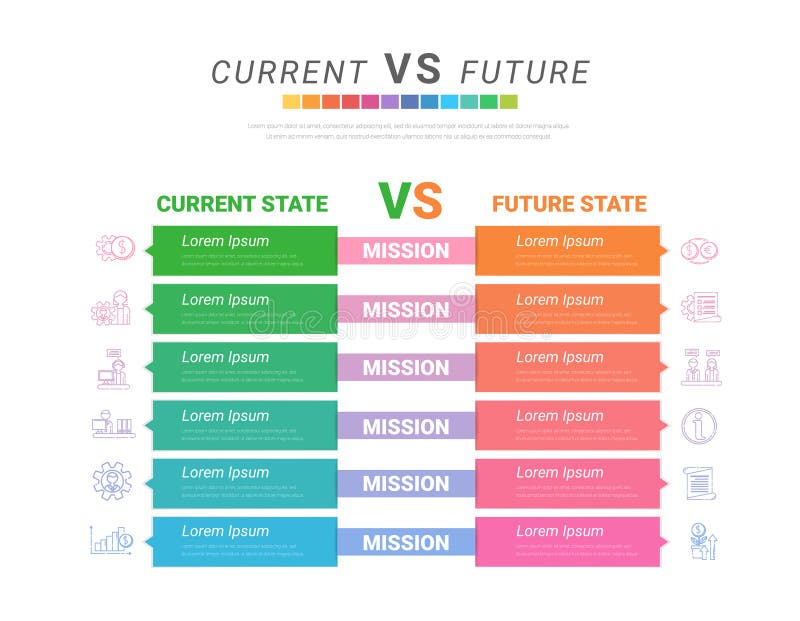
Free with trial Comparative infographic, current versus future, comparison flow chart design. Evaluation analysis, function rating review. EPS Vector. Feature selection process vectors Comparative infographic, current versus future, comparison flow chart design. Evaluation analysis, function rating review. EPS Vector
Free with trial This icon depicts the process of clustering, where data points are segmented into similar groups based on their attributes or characteristics. It symbolizes the powerful analytical process of sorting, organizing, and identifying patterns in large datasets, ultimately helping to unlock insights and drive informed decision-making. Feature selection process illustrations A Clustering icon representing the grouping of data into similar categories created with Generative AI. This icon depicts the process of clustering, where data. This icon depicts the process of clustering, where data points are segmented into similar groups based on their attributes or characteristics. It symbolizes the powerful analytical process of sorting, organizing, and identifying patterns in large datasets, ultimately helping to unlock insights and drive informed decision-making.
Free with trial A futuristic tech visualization of an advanced Automated Machine Learning (AutoML) process. This conceptual scene highlights the AI data pipeline, automated feature engineering, and hyperparameter tuning, showcasing the sophisticated evolution of automated model selection and deployment workflows. Feature selection process illustrations Advanced AutoML Process: Conceptual Visualization of AI Data Pipelines, Feature Engineering, and Model Selection Workflow. A futuristic tech visualization of an. A futuristic tech visualization of an advanced Automated Machine Learning (AutoML) process. This conceptual scene highlights the AI data pipeline, automated feature engineering, and hyperparameter tuning, showcasing the sophisticated evolution of automated model selection and deployment workflows.
Free with trial Understand ML workflow with this machine learning process infographic. Features data collection stage, data cleaning and preprocessing, feature engineering selection, model training algorithms, model validation testing, hyperparameter tuning optimization, model deployment pipeline, performance monitoring, retraining triggers, and prediction output generation. Perfect for data science teams, ML education, technical presentations, and AI onboarding materials. Feature selection process vectors Machine Learning Process Infographic Data Collection Model Training Deployment Vector. Understand ML workflow with this machine learning process infographic. Understand ML workflow with this machine learning process infographic. Features data collection stage, data cleaning and preprocessing, feature engineering selection, model training algorithms, model validation testing, hyperparameter tuning optimization, model deployment pipeline, performance monitoring, retraining triggers, and prediction output generation. Perfect for data science teams, ML education, technical presentations, and AI onboarding materials.
Free with trial Machine Learning Pipeline Icons: Data Collection, Cleaning, Feature Selection, Training, and More. AI generated. Vector made with AI. Feature selection process vectors Machine Learning Pipeline Icons: Data Collection, Cleaning, Feature Selection, Training, and More. AI generated. Vector made with AI
Free with trial This diagram illustrates the comprehensive workflow of feature engineering, starting from raw data ingestion through data cleaning, feature selection, creation, transformation, and extraction, culminating in machine learning model training, with detailed steps and methodologies such as normalization, scaling, one-hot encoding, PCA, and t-SNE visualized in a structured and color-coded layout. The. Feature selection process illustrations Detailed Feature Engineering Process Flowchart for Data Preparation and Machine Learning. This diagram illustrates the comprehensive workflow of feature. This diagram illustrates the comprehensive workflow of feature engineering, starting from raw data ingestion through data cleaning, feature selection, creation, transformation, and extraction, culminating in machine learning model training, with detailed steps and methodologies such as normalization, scaling, one-hot encoding, PCA, and t-SNE visualized in a structured and color-coded layout. The
Free with trial Infographic detailing the Artificial Intelligence workflow from data to automation. It includes four main stages 1. Data Ingestion Involves data collection cleaning and preprocessing from databases sensors and images. 2. Machine Learning Process Covers data preparation training with model selection and algorithm training and evaluation. 3. Neural Network Deep Learning Focuses on feature extraction learning algorithms and model optimization. 4. Deployment Automation Encompasses model deployment real time inference and system automation involving cloud servers and robotic arms. Feature selection process illustrations On feature extraction learning algorithms and model optimization. Infographic detailing the Artificial Intelligence workflow from data to automation. It. Infographic detailing the Artificial Intelligence workflow from data to automation. It includes four main stages 1. Data Ingestion Involves data collection cleaning and preprocessing from databases sensors and images. 2. Machine Learning Process Covers data preparation training with model selection and algorithm training and evaluation. 3. Neural Network Deep Learning Focuses on feature extraction learning algorithms and model optimization. 4. Deployment Automation Encompasses model deployment real time inference and system automation involving cloud servers and robotic arms.
Free with trial Candidates, Selected icon in modern flat outline style illustrating recruitment process, chosen applicants, hiring selection concept. Feature selection process vectors Candidates, Selected icon in modern flat outline style illustrating recruitment process, chosen applicants, and hiring selection. Candidates, Selected icon in. Candidates, Selected icon in modern flat outline style illustrating recruitment process, chosen applicants, hiring selection concept
Free with trial Illustrated icons showing steps in data feature engineering like extraction, transformation, and selection for machine learning workflows. Feature selection process illustrations Data science feature engineering process icons set. Illustrated icons showing steps in data feature engineering like extraction, transformation, and selection. Illustrated icons showing steps in data feature engineering like extraction, transformation, and selection for machine learning workflows
Free with trial This image shows a cursor clicking, symbolizing selection, activation, or interaction within a digital interface, application, or website feature. Feature selection process vectors Vector art of clicking cursor indicates a selection, activation, or interaction with a digital interface or application feature. This image shows a cursor. This image shows a cursor clicking, symbolizing selection, activation, or interaction within a digital interface, application, or website feature
Free with trial This image illustrates a 3D rendering of multiple colorful smartphone screens displaying various app interfaces. A hand is pointing to one of the screens, indicating a selection process. The phones feature different vibrant colors like blue, red, teal, and purple, each with unique app icons and layouts. This visual is ideal for concepts related to app development, user interface design, digital selection, technology, and mobile applications. Feature selection process illustrations Colorful Smartphone App Interface Design Selection Process Illustration - AI Generated. This image illustrates a 3D rendering of multiple colorful smartphone. This image illustrates a 3D rendering of multiple colorful smartphone screens displaying various app interfaces. A hand is pointing to one of the screens, indicating a selection process. The phones feature different vibrant colors like blue, red, teal, and purple, each with unique app icons and layouts. This visual is ideal for concepts related to app development, user interface design, digital selection, technology, and mobile applications.
Free with trial Candidate selection process under magnifying glass. Orange human figures in blurred background. Recruiters search best employee. Human resources, recruitment concept. New job, career. Feature selection process illustrations Candidate selection process under magnifying glass. Orange human figures in blurred background. Recruiters search best employee. Human resources, recruitment
Free with trial Car checklist with selection process, hand interacting with choices, lockable door with unlock feature, garage symbol. Ideal for car rental, security, automation, decision-making, logistics. Feature selection process vectors Digital checklist for car selection with secure access control and automated garage entry. Car checklist with selection process, hand interacting with choices. Car checklist with selection process, hand interacting with choices, lockable door with unlock feature, garage symbol. Ideal for car rental, security, automation, decision-making, logistics
Free with trial This infographic visually breaks down the seven key stages of the machine learning process, from initial data collection and preparation to feature engineering, model training, evaluation, hyperparameter tuning, and final deployment and monitoring. It uses clear illustrations and concise text to explain each step, making complex concepts accessible for educational or business purposes. Feature selection process illustrations Machine Learning Process Flow: From Data to Predictions. This infographic visually breaks down the seven key stages of the machine learning process, from initial. This infographic visually breaks down the seven key stages of the machine learning process, from initial data collection and preparation to feature engineering, model training, evaluation, hyperparameter tuning, and final deployment and monitoring. It uses clear illustrations and concise text to explain each step, making complex concepts accessible for educational or business purposes.
Free with trial Feature Engineering Icon. Minimalistic neon outline on a dark blue round background. A stylish vector illustration of data sources (people icons) entering a central gear mechanism, being filtered and processed into distinct output features (squares), symbolizing data transformation, feature selection, and preparation for machine learning models. Feature selection process vectors Feature Engineering Icon. Minimalistic neon outline. On a dark blue round background. A stylish vector illustration of data sources (people icons) entering a. Feature Engineering Icon. Minimalistic neon outline on a dark blue round background. A stylish vector illustration of data sources (people icons) entering a central gear mechanism, being filtered and processed into distinct output features (squares), symbolizing data transformation, feature selection, and preparation for machine learning models
Free with trial This flowchart visually represents a multi-step process involving various stages such as feature listing, idea rating, and final selection. The diagram includes several key components like feature listing, idea rating, idea boosting, and final ranking. Each step is connected to ensure a systematic approach to decision-making. The flowchart is designed to guide users through a structured process,. Feature selection process illustrations Flowchart illustrating process steps. This flowchart visually represents a multi-step process involving various stages such as feature listing, idea rating, and. This flowchart visually represents a multi-step process involving various stages such as feature listing, idea rating, and final selection. The diagram includes several key components like feature listing, idea rating, idea boosting, and final ranking. Each step is connected to ensure a systematic approach to decision-making. The flowchart is designed to guide users through a structured process,
Free with trial A clear and informative presentation of a machine learning workflow displayed on a whiteboard in a modern office or educational setting. The flowchart illustrates the step-by-step process of artificial intelligence development, including data collection, preprocessing, feature engineering, model selection, training, evaluation, deployment, monitoring, and inference. In the foreground, a modern laptop sits on a clean white desk alongside a wireless mouse and a mug of pens. This visual is ideal for illustrating data science concepts, AI engineering, technology tutorials, business presentations, and educational materials. Feature selection process illustrations Machine Learning Workflow Diagram on Whiteboard with Laptop. A clear and informative presentation of a machine learning workflow displayed on a whiteboard in a. A clear and informative presentation of a machine learning workflow displayed on a whiteboard in a modern office or educational setting. The flowchart illustrates the step-by-step process of artificial intelligence development, including data collection, preprocessing, feature engineering, model selection, training, evaluation, deployment, monitoring, and inference. In the foreground, a modern laptop sits on a clean white desk alongside a wireless mouse and a mug of pens. This visual is ideal for illustrating data science concepts, AI engineering, technology tutorials, business presentations, and educational materials.
Free with trial Collection of black and white icons representing feature extraction, selection, transformation, and other machine learning concepts. Feature selection process illustrations Feature engineering and machine learning data preprocessing icons set. Collection of black and white icons representing feature extraction, selection. Collection of black and white icons representing feature extraction, selection, transformation, and other machine learning concepts
Free with trial Illustration of feature engineering workflow showing data cleaning, extraction, and transformation steps with icons. Feature selection process illustrations Feature engineering process diagram with data cleaning and extraction. Illustration of feature engineering workflow showing data cleaning, extraction, and. Illustration of feature engineering workflow showing data cleaning, extraction, and transformation steps with icons
Free with trial Flowchart detailing a "Feature Engineering Process" in machine learning. It includes steps such as Data Collection, Data Cleaning, Feature Selection, Feature Extraction, and Feature Transformation. Shapes like squares and diamonds represent processes and decision points, with arrows indicating flow direction. The chart includes additional components such as Model Training, Model Scaling, and Performance Evaluation, highlighting an iterative approach. Labels in black text on colored backgrounds signify steps, creating a structured guide for enhancing data's predictive power in modeling. Feature selection process illustrations Chart includes additional components such as Model Training,. Flowchart detailing a 'Feature Engineering Process' in machine learning. It includes steps such as. Flowchart detailing a "Feature Engineering Process" in machine learning. It includes steps such as Data Collection, Data Cleaning, Feature Selection, Feature Extraction, and Feature Transformation. Shapes like squares and diamonds represent processes and decision points, with arrows indicating flow direction. The chart includes additional components such as Model Training, Model Scaling, and Performance Evaluation, highlighting an iterative approach. Labels in black text on colored backgrounds signify steps, creating a structured guide for enhancing data's predictive power in modeling.
Free with trial Flowchart illustrating the feature engineering process for AI. It includes steps like "Data Collection," "Feature Transformation," "Feature Scaling," "Feature Selection," "Feature Extraction," and "Model Training Evaluation. " Each process is connected with arrows, indicating the sequence. The chart uses geometric shapes such as rectangles for processes and diamonds labeled "STEP" for decisions, in blue and green colors. This visual represents key stages in preparing data for machine learning models, emphasizing the transformation and selection of data features. Feature selection process illustrations Represents key stages in preparing data for machine learning. Flowchart illustrating the feature engineering process for AI. It includes steps like 'Data. Flowchart illustrating the feature engineering process for AI. It includes steps like "Data Collection," "Feature Transformation," "Feature Scaling," "Feature Selection," "Feature Extraction," and "Model Training Evaluation." Each process is connected with arrows, indicating the sequence. The chart uses geometric shapes such as rectangles for processes and diamonds labeled "STEP" for decisions, in blue and green colors. This visual represents key stages in preparing data for machine learning models, emphasizing the transformation and selection of data features.
Free with trial Digital tools, quality assurance, creative process, content review, app design, user interface. Graphic showing a checkmark, photo icon and five-star rating. Quality assurance and digital tools. Feature selection process vectors User Interface Design Elements Quality Rating, Image Selection, and Verification Processes. Digital tools, quality assurance, creative process, content review. Digital tools, quality assurance, creative process, content review, app design, user interface. Graphic showing a checkmark, photo icon and five-star rating. Quality assurance and digital tools
Free with trial Recruitment process concept. Recruitment highlights candidate evaluation and decision-making. Recruitment visuals feature CVs, magnifying glass, and discussion. For HR, hiring, team selection. Feature selection process illustrations Recruitment and Candidate Evaluation Concept with Magnifying Glass, Thumbs Up, CVs, and a Question Mark. Recruitment process concept. Recruitment highlights. Recruitment process concept. Recruitment highlights candidate evaluation and decision-making. Recruitment visuals feature CVs, magnifying glass, and discussion. For HR, hiring, team selection
Free with trial Visual guide to feature prioritization frameworks including MoSCoW, Kano Model, and Prioritization Matrix for effective product development. Feature selection process illustrations Feature Prioritization Framework - MoSCoW, Kano Model, and Prioritization Matrix Explained. Visual guide to feature prioritization frameworks including MoSCoW. Visual guide to feature prioritization frameworks including MoSCoW, Kano Model, and Prioritization Matrix for effective product development
Free with trial Set of linear icons for data science and machine learning process. icons. Feature selection process illustrations Set of linear icons for data science and machine learning process. AI generated icons. Set of linear icons for data science and machine learning process. icons
Free with trial Collection of soft style digital art icons representing software functions like selection mask blend mode opacity transform and aspect ratio for editing. Feature selection process illustrations Set of pastel colored digital art and graphic design software feature icons in 3d. Collection of soft style digital art icons representing software functions. Collection of soft style digital art icons representing software functions like selection mask blend mode opacity transform and aspect ratio for editing
Free with trial An intricate digital flowchart illustrates the process of machine learning model optimization, detailing steps like feature engineering, hyperparameter tuning, and model monitoring, set against a dark, blurred technological backdrop with glowing data pathways and abstract geometric shapes, signifying advanced AI and data science concepts. Feature selection process illustrations Machine learning model optimization diagram with glowing futuristic network background. An intricate digital flowchart illustrates the process of machine. An intricate digital flowchart illustrates the process of machine learning model optimization, detailing steps like feature engineering, hyperparameter tuning, and model monitoring, set against a dark, blurred technological backdrop with glowing data pathways and abstract geometric shapes, signifying advanced AI and data science concepts
Free with trial Car rental services, productivity tools, data management, decision-making processes, task selection, notifications. Hands selecting car options from a checklist. Car rental services and productivity. Feature selection process vectors Vehicle Selection Checklist with Data Analysis and Notification Bell for Decision-Making and Productivity. Car rental services, productivity tools, data. Car rental services, productivity tools, data management, decision-making processes, task selection, notifications. Hands selecting car options from a checklist. Car rental services and productivity
Free with trial Multiple cars on a selection form with stats and completion checks, user facial recognition process, analytic icons, security, and geolocation. Ideal for technology, safety, data analysis, user. Feature selection process vectors Vehicle Comparison and User Verification Concept with Privacy and Security Features. Multiple cars on a selection form with stats and completion checks, user. Multiple cars on a selection form with stats and completion checks, user facial recognition process, analytic icons, security, and geolocation. Ideal for technology, safety, data analysis, user
Free with trial Candidate, Right People Choice icon in modern flat outline style illustrating recruitment selection, applicant evaluation, hiring decision concept. Feature selection process vectors Candidate, Right People Choice icon in modern flat outline style illustrating recruitment selection, applicant evaluation, and. Candidate, Right People Choice. Candidate, Right People Choice icon in modern flat outline style illustrating recruitment selection, applicant evaluation, hiring decision concept
Free with trial A collection of stylized illustrations depicting various aspects of the recruitment and hiring process. The images showcase concepts like resume review, candidate screening, interviewing, and team collaboration. The illustrations feature minimalist human figures interacting with documents, computers, and magnifying glasses, suggesting analysis and evaluation. These visuals are suitable for presentations, websites, articles, and marketing materials related to human resources, job searching, and employment. Feature selection process illustrations Recruitment and Hiring Process Illustration Set. A collection of stylized illustrations depicting various aspects of the recruitment and hiring process. The. A collection of stylized illustrations depicting various aspects of the recruitment and hiring process. The images showcase concepts like resume review, candidate screening, interviewing, and team collaboration. The illustrations feature minimalist human figures interacting with documents, computers, and magnifying glasses, suggesting analysis and evaluation. These visuals are suitable for presentations, websites, articles, and marketing materials related to human resources, job searching, and employment.
Free with trial This diagram illustrates the sequential steps involved in processing raw data through cleaning, feature engineering, selection, model training, and evaluation to develop an effective machine learning model. The flowchart highlights the iterative nature of feature selection and model training, emphasizing the importance of each stage in refining the data for accurate predictions and optimal. Feature selection process illustrations Data Processing Workflow for Machine Learning Model Development. This diagram illustrates the sequential steps involved in processing raw data through cleaning. This diagram illustrates the sequential steps involved in processing raw data through cleaning, feature engineering, selection, model training, and evaluation to develop an effective machine learning model. The flowchart highlights the iterative nature of feature selection and model training, emphasizing the importance of each stage in refining the data for accurate predictions and optimal
Free with trial Hands interacting with tablet showing car options, checkboxes, analytics chart, eye for insight, and location pin. Ideal for car rental, online booking, data tracking, decision making insights. Feature selection process vectors Vehicle Selection Process with Online Checklist, Analytics, and Tracking Feature Representation. Hands interacting with tablet showing car options, checkboxes. Hands interacting with tablet showing car options, checkboxes, analytics chart, eye for insight, and location pin. Ideal for car rental, online booking, data tracking, decision making insights
Free with trial Best icon in modern flat outline style illustrating top choice, excellence, preferred selection concept. Feature selection process vectors Best icon in modern flat outline style illustrating top choice, excellence, and preferred selection concept. Best icon in modern flat outline style illustrating. Best icon in modern flat outline style illustrating top choice, excellence, preferred selection concept
Free with trial Simple infographic showing stages of data preprocessing including raw data, feature selection, extraction, transformation, and dataset engineering. Feature selection process illustrations Data preprocessing steps infographic. Simple infographic showing stages of data preprocessing including raw data, feature selection, extraction, transformation. Simple infographic showing stages of data preprocessing including raw data, feature selection, extraction, transformation, and dataset engineering
Free with trial Tablet with car selection panel, laptop with cybersecurity symbols, and AI chip. Ideal for technology, AI, cybersecurity, data analysis, automation vehicle service innovation. Simple flat metaphor. Feature selection process vectors AI-Based Vehicle Selection and Cybersecurity Analysis with Smart Technology Integration. Tablet with car selection panel, laptop with cybersecurity symbols, and. Tablet with car selection panel, laptop with cybersecurity symbols, and AI chip. Ideal for technology, AI, cybersecurity, data analysis, automation vehicle service innovation. Simple flat metaphor
Free with trial A detailed infographic illustrating the steady improvement in automated machine learning model accuracy over training epochs or iterations. The graph highlights key stages: Data Preprocessing, Feature Engineering, Hyperparameter Optimization, Model Selection & Ensemble, and Model Finalization. Each phase is marked with distinct icons and labeled points, showing progressive increases in model accuracy from 70% to nearly 100%. This visualization is ideal for educational materials, tech presentations, and data science discussions, emphasizing the iterative nature of AutoML training for enhanced performance. Feature selection process illustrations Automated Machine Learning Performance Graph. A detailed infographic illustrating the steady improvement in automated machine learning model accuracy over. A detailed infographic illustrating the steady improvement in automated machine learning model accuracy over training epochs or iterations. The graph highlights key stages: Data Preprocessing, Feature Engineering, Hyperparameter Optimization, Model Selection & Ensemble, and Model Finalization. Each phase is marked with distinct icons and labeled points, showing progressive increases in model accuracy from 70% to nearly 100%. This visualization is ideal for educational materials, tech presentations, and data science discussions, emphasizing the iterative nature of AutoML training for enhanced performance.
Free with trial Selection tool on transparent background. Selection tool isolated on transparent background. Feature selection process illustrations Selection tool on transparent background. Selection tool isolated on transparent background
Free with trial A clear and concise whiteboard diagram illustrating the complete machine learning workflow lifecycle. The flowchart details key steps including data ingestion, data preprocessing, feature engineering, model training and selection, hyperparameter tuning, model evaluation, model deployment, and monitoring with feedback loops. Ideal for educational materials, presentations, technology blogs, corporate training documents, and articles discussing artificial intelligence, data science, and software engineering processes. Feature selection process illustrations Machine Learning Workflow Diagram on Whiteboard. A clear and concise whiteboard diagram illustrating the complete machine learning workflow lifecycle. The. A clear and concise whiteboard diagram illustrating the complete machine learning workflow lifecycle. The flowchart details key steps including data ingestion, data preprocessing, feature engineering, model training and selection, hyperparameter tuning, model evaluation, model deployment, and monitoring with feedback loops. Ideal for educational materials, presentations, technology blogs, corporate training documents, and articles discussing artificial intelligence, data science, and software engineering processes.
Free with trial A comprehensive flowchart illustrating the machine learning process, covering data input, cleaning, feature engineering, model training, evaluation, and prediction. Feature selection process vectors Machine Learning Workflow Diagram - From Data Input to Prediction. A comprehensive flowchart illustrating the machine learning process, covering data input. A comprehensive flowchart illustrating the machine learning process, covering data input, cleaning, feature engineering, model training, evaluation, and prediction
Free with trial A hand in a business suit selects a cube with a glowing blue person icon from a row of wooden cubes. The other cubes feature black person icons. The cubes are arranged on a wooden surface, and the background is dark, emphasizing the selection process. This concept often symbolizes choosing a standout individual or leader from a group. Feature selection process illustrations Businessman selecting a glowing blue person icon cube from a row of wooden cubes with black person icons. A hand in a business suit selects a cube with a glowing. A hand in a business suit selects a cube with a glowing blue person icon from a row of wooden cubes. The other cubes feature black person icons. The cubes are arranged on a wooden surface, and the background is dark, emphasizing the selection process. This concept often symbolizes choosing a standout individual or leader from a group.
Free with trial A minimalist flat icon featuring a green circle with a white checkmark, surrounded by two dark blue circular arrows indicating a refresh, update, or synchronization process. This graphic symbol represents successful completion, verified status, continuous improvement, or data synchronization. The clean, modern design is suitable for user interface elements, web buttons, status indicators, or business process visualizations, conveying reliability, efficiency, and positive confirmation in a professional digital context. Feature selection process vectors Green Checkmark Inside Circular Refresh Arrows Icon for Successful Process Completion. A minimalist flat icon featuring a green circle with a white checkmark. A minimalist flat icon featuring a green circle with a white checkmark, surrounded by two dark blue circular arrows indicating a refresh, update, or synchronization process. This graphic symbol represents successful completion, verified status, continuous improvement, or data synchronization. The clean, modern design is suitable for user interface elements, web buttons, status indicators, or business process visualizations, conveying reliability, efficiency, and positive confirmation in a professional digital context.
Free with trial Shuffle icon with intersecting blue arrows representing random selection or music playback feature. This clean vector-style graphic highlights shuffle, arrow, icon, random, making it suitable for business materials, websites, presentations, apps, and other design projects. Feature selection process vectors Shuffle icon with intersecting blue arrows representing random selection or music playback feature. This clean vector-style graphic highlights shuffle, arrow
Free with trial Large blue text displays Add to Cart against a clean background, highlighting the online shopping process. This feature simplifies adding products to cart for easy checkout. Feature selection process illustrations Large blue text displays Add to Cart against a clean background, highlighting the online shopping process. This feature simplifies adding products to cart for
Free with trial Creative concept for infographic. Business data visualization. Process chart. Abstract elements of graph, diagram with steps, options, parts or processes. Vector business template for presentation. Feature selection process vectors Creative concept for infographic.Business data visualization. Process chart. Abstract elements of graph, diagram with steps,. Options, parts or processes. Creative concept for infographic.Business data visualization. Process chart. Abstract elements of graph, diagram with steps, options, parts or processes. Vector business template for presentation.
Free with trial Machine learning essentials icons outline key concepts like trend analysis, process mapping, and neural processing. Outline icons set. Feature selection process vectors Machine learning essentials icons outline key concepts like trend analysis,... Machine learning essentials icons outline key concepts like trend analysis. Machine learning essentials icons outline key concepts like trend analysis, process mapping, and neural processing. Outline icons set
Free with trial A close-up view of a laptop screen during an e-commerce checkout process, showing various international shipping methods and costs. The user interface highlights options like Standard, Expedited, and Premium Express shipping, along with an order tracking feature. This professional visual represents modern digital commerce logistics and is Rendered by Ai. Feature selection process illustrations E-commerce International Shipping Selection. A close-up view of a laptop screen during an e-commerce checkout process, showing various international shipping. A close-up view of a laptop screen during an e-commerce checkout process, showing various international shipping methods and costs. The user interface highlights options like Standard, Expedited, and Premium Express shipping, along with an order tracking feature. This professional visual represents modern digital commerce logistics and is Rendered by Ai
Free with trial Modern business concept illustration visualizing feature prioritization through puzzle pieces on a clean digital background. Perfect for presentations, strategy decks, consulting firms, startups, and growth teams communicating structured decision making and scalable product strategy. Clean and professional digital illustration representing feature prioritization as interconnected puzzle pieces. Designed for marketing websites, SaaS landing pages, UX blogs, explainer content, onboarding screens, and product strategy visuals. Feature selection process illustrations Technology Strategy and Growth Puzzle. Modern business concept illustration visualizing feature prioritization through puzzle pieces on a clean digital. Modern business concept illustration visualizing feature prioritization through puzzle pieces on a clean digital background. Perfect for presentations, strategy decks, consulting firms, startups, and growth teams communicating structured decision making and scalable product strategy.Clean and professional digital illustration representing feature prioritization as interconnected puzzle pieces. Designed for marketing websites, SaaS landing pages, UX blogs, explainer content, onboarding screens, and product strategy visuals
Free with trial A simple black vector icon representing a crop tool, commonly used for image editing, resizing, and selection tasks in software interfaces. Feature selection process vectors Crop Tool Vector Icon Representing Image Editing and Resizing Functionality. A simple black vector icon representing a crop tool, commonly used for image editing. A simple black vector icon representing a crop tool, commonly used for image editing, resizing, and selection tasks in software interfaces
Free with trial Checkbox icon showing selection, task marking, and option confirmation concept. Feature selection process vectors Checkbox icon showing selection, task marking, and option confirmation concept. Checkbox icon showing selection, task marking, option confirmation concept
Free with trial Set of clay style 3d icons showing tools for digital art creation like selection mask blend mode transform and opacity in green palette. Feature selection process illustrations Collection of green and grey 3d software editing icons for digital art and layer manipulation tasks. Set of clay style 3d icons showing tools for digital art. Set of clay style 3d icons showing tools for digital art creation like selection mask blend mode transform and opacity in green palette
Free with trial Checkbox icon in modern flat outline style illustrating selection, option marking, task completion concept. Feature selection process vectors Checkbox icon in modern flat outline style illustrating selection, option marking, and task completion concept. Checkbox icon in modern flat outline style. Checkbox icon in modern flat outline style illustrating selection, option marking, task completion concept
Free with trial 3D Isometric Flat Vector Illustration of Choosing Of Alternatives, Decision-Making Process, Evaluating Options And Alternatives For Business Team Selection. Feature selection process vectors 3D Isometric Flat Vector Illustration of Choosing Of Alternatives. Decision-Making Process, Evaluating Options And Alternatives For Business Team Selection
Free with trial Choosing Trade Websites Wisely - A Newcomer\'s View on Selection. Guide for Selecting Trading Platforms - Beginner's Perspective Generative by Ai. Feature selection process illustrations Choosing Trade Websites Wisely - A Newcomer\'s View on Selection. Guide for Selecting Trading Platforms - Beginner's Perspective Generative by Ai
Free with trial Favorite Click Point icon in modern flat outline style illustrating user selection, bookmarked item, preferred interaction concept. Feature selection process vectors Favorite Click Point icon in modern flat outline style illustrating user selection, bookmarked item, and preferred interaction. Favorite Click Point icon in. Favorite Click Point icon in modern flat outline style illustrating user selection, bookmarked item, preferred interaction concept
Free with trial AI Dimensionality Reduction icon. Vector thin line illustration on a round dark blue background. Symbolizes the algorithmic process of filtering a large volume of digital data (binary code) into a smaller, essential output. Feature selection process vectors AI Dimensionality Reduction icon. Vector thin line illustration. On a round dark blue background. Symbolizes the algorithmic process of filtering a large volume. AI Dimensionality Reduction icon. Vector thin line illustration on a round dark blue background. Symbolizes the algorithmic process of filtering a large volume of digital data (binary code) into a smaller, essential output
Free with trial Charles Robert Darwin, 12 February 1809-9 April 1882, was an English naturalist, geologist, and biologist, widely known for his contributions to evolutionary biology. His proposition that all species of life have descended from a common ancestor is now generally accepted and considered a fundamental scientific concept. In a joint presentation with Alfred Russel Wallace, he introduced his scientific theory that this branching pattern of evolution resulted from a process he called natural selection, in which the struggle for existence has a similar effect to the artificial selection involved in selective breeding. Darwin has been described as one of the most influential figures in human history and was honoured by burial in Westminster Abbey. Darwin's early interest in nature led him to neglect his medical education at the University of Edinburgh instead, he helped Robert Edmond Grant to investigate marine invertebrates. His studies at the University of Cambridge's Christ's College from 1828 to 1831 encouraged his passion for natural science. However, it was his five-year voyage on HMS Beagle from 1831 to 1836 that truly established Darwin as an eminent geologist. The observations and theories he developed during his voyage supported Charles Lyell's concept of gradual geological change. Publication of his journal of the voyage made Darwin famous as a popular author. His first scientific work was The Structure and Distribution of Coral Reefs 1842. Along with his work on barnacles, it won him the Royal Medal in 1853. Puzzled by the geographical distribution of wildlife and fossils he collected on the voyage, Darwin began detailed investigations and, in 1838, devised his theory of natural selection. Although he discussed his ideas with several naturalists, he needed time for extensive research, and his geological work had priority. He was writing up his theory in 1858 when Wallace sent him an essay that described the same idea, prompting the immediate joint submission of both their theories to the Linnean Society of London. Darwin's work established evolutionary descent with modification as the dominant scientific explanation of natural diversification. Darwin published his theory of evolution with compelling evidence in On the Origin of Species 1859. He explored coevolution in Fertilisation of Orchids 1862 and human evolution and sexual selection in The Descent of Man, and Selection in Relation to Sex 1871. The Expression of the Emotions in Man and Animals 1872 was an early work of psychology, and one of the first books to feature photographs. His final book was The Formation of Vegetable Mould, through the Actions of Worms 1881. By the 1870s, the scientific community and a majority of the educated public had accepted evolution as a fact. However, many initially favoured competing explanations that gave only a minor role to natural selection. It was not until the emergence of the modern evolutionary synthesis from the 1930s to the 1950s that a broad consensus developed in which natural selection was the basic mechanism of evolution. Darwin's discovery is the unifying theory of the life sciences, explaining the unity and diversity of life. Feature selection process illustrations Charles Robert Darwin, 12 February 1809-9 April 1882, was an English naturalist. Geologist, and biologist, widely known for his contributions to evolutionary. Charles Robert Darwin, 12 February 1809-9 April 1882, was an English naturalist, geologist, and biologist, widely known for his contributions to evolutionary biology. His proposition that all species of life have descended from a common ancestor is now generally accepted and considered a fundamental scientific concept. In a joint presentation with Alfred Russel Wallace, he introduced his scientific theory that this branching pattern of evolution resulted from a process he called natural selection, in which the struggle for existence has a similar effect to the artificial selection involved in selective breeding. Darwin has been described as one of the most influential figures in human history and was honoured by burial in Westminster Abbey. Darwin's early interest in nature led him to neglect his medical education at the University of Edinburgh instead, he helped Robert Edmond Grant to investigate marine invertebrates. His studies at the University of Cambridge's Christ's College from 1828 to 1831 encouraged his passion for natural science. However, it was his five-year voyage on HMS Beagle from 1831 to 1836 that truly established Darwin as an eminent geologist. The observations and theories he developed during his voyage supported Charles Lyell's concept of gradual geological change. Publication of his journal of the voyage made Darwin famous as a popular author. His first scientific work was The Structure and Distribution of Coral Reefs 1842 . Along with his work on barnacles, it won him the Royal Medal in 1853. Puzzled by the geographical distribution of wildlife and fossils he collected on the voyage, Darwin began detailed investigations and, in 1838, devised his theory of natural selection. Although he discussed his ideas with several naturalists, he needed time for extensive research, and his geological work had priority. He was writing up his theory in 1858 when Wallace sent him an essay that described the same idea, prompting the immediate joint submission of both their theories to the Linnean Society of London. Darwin's work established evolutionary descent with modification as the dominant scientific explanation of natural diversification. Darwin published his theory of evolution with compelling evidence in On the Origin of Species 1859 . Darwin's work established evolutionary descent with modification as the dominant scientific explanation of natural diversification. He explored coevolution in Fertilisation of Orchids 1862 and human evolution and sexual selection in The Descent of Man, and Selection in Relation to Sex 1871 . The Expression of the Emotions in Man and Animals 1872 was an early work of psychology, and one of the first books to feature photographs. His final book was The Formation of Vegetable Mould, through the Actions of Worms 1881. By the 1870s, the scientific community and a majority of the educated public had accepted evolution as a fact. However, many initially favoured competing explanations that gave only a minor role to natural selection. It was not until the emergence of the modern evolutionary synthesis from the 1930s to the 1950s that a broad consensus developed in which natural selection was the basic mechanism of evolution. Darwin's discovery is the unifying theory of the life sciences, explaining the unity and diversity of life.
Free with trial Charles Robert Darwin, 12 February 1809-9 April 1882, was an English naturalist, geologist, and biologist, widely known for his contributions to evolutionary biology. His proposition that all species of life have descended from a common ancestor is now generally accepted and considered a fundamental scientific concept. In a joint presentation with Alfred Russel Wallace, he introduced his scientific theory that this branching pattern of evolution resulted from a process he called natural selection, in which the struggle for existence has a similar effect to the artificial selection involved in selective breeding. Darwin has been described as one of the most influential figures in human history and was honoured by burial in Westminster Abbey. Darwin's early interest in nature led him to neglect his medical education at the University of Edinburgh instead, he helped Robert Edmond Grant to investigate marine invertebrates. His studies at the University of Cambridge's Christ's College from 1828 to 1831 encouraged his passion for natural science. However, it was his five-year voyage on HMS Beagle from 1831 to 1836 that truly established Darwin as an eminent geologist. The observations and theories he developed during his voyage supported Charles Lyell's concept of gradual geological change. Publication of his journal of the voyage made Darwin famous as a popular author. His first scientific work was The Structure and Distribution of Coral Reefs 1842. Along with his work on barnacles, it won him the Royal Medal in 1853. Puzzled by the geographical distribution of wildlife and fossils he collected on the voyage, Darwin began detailed investigations and, in 1838, devised his theory of natural selection. Although he discussed his ideas with several naturalists, he needed time for extensive research, and his geological work had priority. He was writing up his theory in 1858 when Wallace sent him an essay that described the same idea, prompting the immediate joint submission of both their theories to the Linnean Society of London. Darwin's work established evolutionary descent with modification as the dominant scientific explanation of natural diversification. Darwin published his theory of evolution with compelling evidence in On the Origin of Species 1859. He explored coevolution in Fertilisation of Orchids 1862 and human evolution and sexual selection in The Descent of Man, and Selection in Relation to Sex 1871. The Expression of the Emotions in Man and Animals 1872 was an early work of psychology, and one of the first books to feature photographs. His final book was The Formation of Vegetable Mould, through the Actions of Worms 1881. By the 1870s, the scientific community and a majority of the educated public had accepted evolution as a fact. However, many initially favoured competing explanations that gave only a minor role to natural selection. It was not until the emergence of the modern evolutionary synthesis from the 1930s to the 1950s that a broad consensus developed in which natural selection was the basic mechanism of evolution. Darwin's discovery is the unifying theory of the life sciences, explaining the unity and diversity of life. Feature selection process illustrations Charles Robert Darwin, 12 February 1809-9 April 1882, was an English naturalist. Geologist, and biologist, widely known for his contributions to evolutionary. Charles Robert Darwin, 12 February 1809-9 April 1882, was an English naturalist, geologist, and biologist, widely known for his contributions to evolutionary biology. His proposition that all species of life have descended from a common ancestor is now generally accepted and considered a fundamental scientific concept. In a joint presentation with Alfred Russel Wallace, he introduced his scientific theory that this branching pattern of evolution resulted from a process he called natural selection, in which the struggle for existence has a similar effect to the artificial selection involved in selective breeding. Darwin has been described as one of the most influential figures in human history and was honoured by burial in Westminster Abbey. Darwin's early interest in nature led him to neglect his medical education at the University of Edinburgh instead, he helped Robert Edmond Grant to investigate marine invertebrates. His studies at the University of Cambridge's Christ's College from 1828 to 1831 encouraged his passion for natural science. However, it was his five-year voyage on HMS Beagle from 1831 to 1836 that truly established Darwin as an eminent geologist. The observations and theories he developed during his voyage supported Charles Lyell's concept of gradual geological change. Publication of his journal of the voyage made Darwin famous as a popular author. His first scientific work was The Structure and Distribution of Coral Reefs 1842 . Along with his work on barnacles, it won him the Royal Medal in 1853. Puzzled by the geographical distribution of wildlife and fossils he collected on the voyage, Darwin began detailed investigations and, in 1838, devised his theory of natural selection. Although he discussed his ideas with several naturalists, he needed time for extensive research, and his geological work had priority. He was writing up his theory in 1858 when Wallace sent him an essay that described the same idea, prompting the immediate joint submission of both their theories to the Linnean Society of London. Darwin's work established evolutionary descent with modification as the dominant scientific explanation of natural diversification. Darwin published his theory of evolution with compelling evidence in On the Origin of Species 1859 . Darwin's work established evolutionary descent with modification as the dominant scientific explanation of natural diversification. He explored coevolution in Fertilisation of Orchids 1862 and human evolution and sexual selection in The Descent of Man, and Selection in Relation to Sex 1871 . The Expression of the Emotions in Man and Animals 1872 was an early work of psychology, and one of the first books to feature photographs. His final book was The Formation of Vegetable Mould, through the Actions of Worms 1881. By the 1870s, the scientific community and a majority of the educated public had accepted evolution as a fact. However, many initially favoured competing explanations that gave only a minor role to natural selection. It was not until the emergence of the modern evolutionary synthesis from the 1930s to the 1950s that a broad consensus developed in which natural selection was the basic mechanism of evolution. Darwin's discovery is the unifying theory of the life sciences, explaining the unity and diversity of life.
Free with trial Artisanal Easter Egg Decorating Station Close up, high angle view of an artisanal Easter egg decorating station. Feature a selection of naturally dyed Easter eggs in various vibrant colors and. Feature selection process illustrations Artisanal Easter Egg Decorating Station Close up, high angle view of an artisanal Easter egg decorating station. Feature a. Selection of naturally dyed Easter. Artisanal Easter Egg Decorating Station Close up, high angle view of an artisanal Easter egg decorating station. Feature a selection of naturally dyed Easter eggs in various vibrant colors and
Free with trial Hands reviewing car options on a checklist, selecting preferences, analyzing data with a pie chart, and interacting online. Ideal for comparison, e-commerce, decision-making, research, planning user. Feature selection process illustrations Vehicle Selection Process with Checklist, Comparing Features, and Data for Smart Decision-Making. Hands reviewing car options on a checklist, selecting. Hands reviewing car options on a checklist, selecting preferences, analyzing data with a pie chart, and interacting online. Ideal for comparison, e-commerce, decision-making, research, planning user
Free with trial A hand selects a wooden cube with a lightbulb icon from a row of similar blocks, set against a simple background. The blocks feature diverse symbols: a storm cloud, a group of people, and question marks. This arrangement suggests the process of idea selection or problem-solving, with the lightbulb often symbolizing innovation or new ideas. The setting is minimalistic, emphasizing the concepts depicted on the blocks. Feature selection process illustrations Hand selecting a lightbulb cube from a set of wooden blocks. A hand selects a wooden cube with a lightbulb icon from a row of similar blocks, set against a. A hand selects a wooden cube with a lightbulb icon from a row of similar blocks, set against a simple background. The blocks feature diverse symbols: a storm cloud, a group of people, and question marks. This arrangement suggests the process of idea selection or problem-solving, with the lightbulb often symbolizing innovation or new ideas. The setting is minimalistic, emphasizing the concepts depicted on the blocks.
Free with trial Three selectable cards with confirmation checks, user avatar, and code-based authentication popup. Ideal for identity verification, security, user onboarding, access control, authorization, privacy. Feature selection process vectors User authentication and verification through code and selection in digital interface. Three selectable cards with confirmation checks, user avatar, and code. Three selectable cards with confirmation checks, user avatar, and code-based authentication popup. Ideal for identity verification, security, user onboarding, access control, authorization, privacy
Free with trial This infographic visually represents the key stages in a machine learning process, from data preprocessing and training to model evaluation and deployment. It highlights the interconnectedness of data, algorithms, and results. Feature selection process illustrations Machine Learning Process Visualization. This infographic visually represents the key stages in a machine learning process, from data preprocessing and training. This infographic visually represents the key stages in a machine learning process, from data preprocessing and training to model evaluation and deployment. It highlights the interconnectedness of data, algorithms, and results.
Free with trial This image showcases a dynamic visualization of the machine learning process. It illustrates key stages, from data collection and preprocessing to model training, evaluation, and deployment. The isometric design highlights the interconnectedness of various components involved in building and impleme. Feature selection process illustrations Machine Learning Process Visualization. This image showcases a dynamic visualization of the machine learning process. It illustrates key stages, from data. This image showcases a dynamic visualization of the machine learning process. It illustrates key stages, from data collection and preprocessing to model training, evaluation, and deployment. The isometric design highlights the interconnectedness of various components involved in building and impleme
Free with trial Hands managing car options checklist, orange car, and voice recognition feature representation. Ideal for technology, transport, decision-making, innovation, AI tools, online shopping smart. Feature selection process vectors Car Selection Process with Digital Voice Assistance and Checklist for Decision-Making. Hands managing car options checklist, orange car, and voice recognition. Hands managing car options checklist, orange car, and voice recognition feature representation. Ideal for technology, transport, decision-making, innovation, AI tools, online shopping smart
Free with trial The image depicts a hand selecting a block with a lightbulb icon, symbolizing the choice of an innovative idea. Surrounding blocks feature various icons representing different concepts such as communication, teamwork, strategy, and technology. The overall scene suggests the process of selecting and implementing the best ideas from a range of options. Feature selection process illustrations Hand picking innovation from concept blocks. The image depicts a hand selecting a block with a lightbulb icon, symbolizing the choice of an innovative idea. The image depicts a hand selecting a block with a lightbulb icon, symbolizing the choice of an innovative idea. Surrounding blocks feature various icons representing different concepts such as communication, teamwork, strategy, and technology. The overall scene suggests the process of selecting and implementing the best ideas from a range of options
Free with trial Charles Robert Darwin, 12 February 1809-9 April 1882, was an English naturalist, geologist, and biologist, widely known for his contributions to evolutionary biology. His proposition that all species of life have descended from a common ancestor is now generally accepted and considered a fundamental scientific concept. In a joint presentation with Alfred Russel Wallace, he introduced his scientific theory that this branching pattern of evolution resulted from a process he called natural selection, in which the struggle for existence has a similar effect to the artificial selection involved in selective breeding. Darwin has been described as one of the most influential figures in human history and was honoured by burial in Westminster Abbey. Darwin's early interest in nature led him to neglect his medical education at the University of Edinburgh instead, he helped Robert Edmond Grant to investigate marine invertebrates. His studies at the University of Cambridge's Christ's College from 1828 to 1831 encouraged his passion for natural science. However, it was his five-year voyage on HMS Beagle from 1831 to 1836 that truly established Darwin as an eminent geologist. The observations and theories he developed during his voyage supported Charles Lyell's concept of gradual geological change. Publication of his journal of the voyage made Darwin famous as a popular author. His first scientific work was The Structure and Distribution of Coral Reefs (1842). Along with his work on barnacles, it won him the Royal Medal in 1853. Puzzled by the geographical distribution of wildlife and fossils he collected on the voyage, Darwin began detailed investigations and, in 1838, devised his theory of natural selection. Although he discussed his ideas with several naturalists, he needed time for extensive research, and his geological work had priority. He was writing up his theory in 1858 when Wallace sent him an essay that described the same idea, prompting the immediate joint submission of both their theories to the Linnean Society of London. Darwin's work established evolutionary descent with modification as the dominant scientific explanation of natural diversification. Darwin published his theory of evolution with compelling evidence in On the Origin of Species (1859). He explored coevolution in Fertilisation of Orchids (1862) and human evolution and sexual selection in The Descent of Man, and Selection in Relation to Sex (1871). The Expression of the Emotions in Man and Animals (1872) was an early work of psychology, and one of the first books to feature photographs. His final book was The Formation of Vegetable Mould, through the Actions of Worms (1881). By the 1870s, the scientific community and a majority of the educated public had accepted evolution as a fact. However, many initially favoured competing explanations that gave only a minor role to natural selection. It was not until the emergence of the modern evolutionary synthesis from the 1930s to the 1950s that a broad consensus developed in which natural selection was the basic mechanism of evolution. Darwin's discovery is the unifying theory of the life sciences, explaining the unity and diversity of life. Feature selection process illustrations Charles Robert Darwin, 12 February 1809-9 April 1882, was an English naturalist. Geologist, and biologist, widely known for his contributions to evolutionary. Charles Robert Darwin, 12 February 1809-9 April 1882, was an English naturalist, geologist, and biologist, widely known for his contributions to evolutionary biology. His proposition that all species of life have descended from a common ancestor is now generally accepted and considered a fundamental scientific concept. In a joint presentation with Alfred Russel Wallace, he introduced his scientific theory that this branching pattern of evolution resulted from a process he called natural selection, in which the struggle for existence has a similar effect to the artificial selection involved in selective breeding. Darwin has been described as one of the most influential figures in human history and was honoured by burial in Westminster Abbey. Darwin's early interest in nature led him to neglect his medical education at the University of Edinburgh instead, he helped Robert Edmond Grant to investigate marine invertebrates. His studies at the University of Cambridge's Christ's College from 1828 to 1831 encouraged his passion for natural science. However, it was his five-year voyage on HMS Beagle from 1831 to 1836 that truly established Darwin as an eminent geologist. The observations and theories he developed during his voyage supported Charles Lyell's concept of gradual geological change. Publication of his journal of the voyage made Darwin famous as a popular author. His first scientific work was The Structure and Distribution of Coral Reefs (1842). Along with his work on barnacles, it won him the Royal Medal in 1853. Puzzled by the geographical distribution of wildlife and fossils he collected on the voyage, Darwin began detailed investigations and, in 1838, devised his theory of natural selection. Although he discussed his ideas with several naturalists, he needed time for extensive research, and his geological work had priority. He was writing up his theory in 1858 when Wallace sent him an essay that described the same idea, prompting the immediate joint submission of both their theories to the Linnean Society of London. Darwin's work established evolutionary descent with modification as the dominant scientific explanation of natural diversification. Darwin published his theory of evolution with compelling evidence in On the Origin of Species (1859). Darwin's work established evolutionary descent with modification as the dominant scientific explanation of natural diversification. He explored coevolution in Fertilisation of Orchids (1862) and human evolution and sexual selection in The Descent of Man, and Selection in Relation to Sex (1871). The Expression of the Emotions in Man and Animals (1872) was an early work of psychology, and one of the first books to feature photographs. His final book was The Formation of Vegetable Mould, through the Actions of Worms (1881). By the 1870s, the scientific community and a majority of the educated public had accepted evolution as a fact. However, many initially favoured competing explanations that gave only a minor role to natural selection. It was not until the emergence of the modern evolutionary synthesis from the 1930s to the 1950s that a broad consensus developed in which natural selection was the basic mechanism of evolution. Darwin's discovery is the unifying theory of the life sciences, explaining the unity and diversity of life.
Free with trial Charles Robert Darwin, 12 February 1809-9 April 1882, was an English naturalist, geologist, and biologist, widely known for his contributions to evolutionary biology. His proposition that all species of life have descended from a common ancestor is now generally accepted and considered a fundamental scientific concept. In a joint presentation with Alfred Russel Wallace, he introduced his scientific theory that this branching pattern of evolution resulted from a process he called natural selection, in which the struggle for existence has a similar effect to the artificial selection involved in selective breeding. Darwin has been described as one of the most influential figures in human history and was honoured by burial in Westminster Abbey. Darwin's early interest in nature led him to neglect his medical education at the University of Edinburgh instead, he helped Robert Edmond Grant to investigate marine invertebrates. His studies at the University of Cambridge's Christ's College from 1828 to 1831 encouraged his passion for natural science. However, it was his five-year voyage on HMS Beagle from 1831 to 1836 that truly established Darwin as an eminent geologist. The observations and theories he developed during his voyage supported Charles Lyell's concept of gradual geological change. Publication of his journal of the voyage made Darwin famous as a popular author. His first scientific work was The Structure and Distribution of Coral Reefs 1842. Along with his work on barnacles, it won him the Royal Medal in 1853. Puzzled by the geographical distribution of wildlife and fossils he collected on the voyage, Darwin began detailed investigations and, in 1838, devised his theory of natural selection. Although he discussed his ideas with several naturalists, he needed time for extensive research, and his geological work had priority. He was writing up his theory in 1858 when Wallace sent him an essay that described the same idea, prompting the immediate joint submission of both their theories to the Linnean Society of London. Darwin's work established evolutionary descent with modification as the dominant scientific explanation of natural diversification. Darwin published his theory of evolution with compelling evidence in On the Origin of Species 1859. He explored coevolution in Fertilisation of Orchids 1862 and human evolution and sexual selection in The Descent of Man, and Selection in Relation to Sex 1871. The Expression of the Emotions in Man and Animals 1872 was an early work of psychology, and one of the first books to feature photographs. His final book was The Formation of Vegetable Mould, through the Actions of Worms 1881. By the 1870s, the scientific community and a majority of the educated public had accepted evolution as a fact. However, many initially favoured competing explanations that gave only a minor role to natural selection. It was not until the emergence of the modern evolutionary synthesis from the 1930s to the 1950s that a broad consensus developed in which natural selection was the basic mechanism of evolution. Darwin's discovery is the unifying theory of the life sciences, explaining the unity and diversity of life. Feature selection process illustrations Charles Robert Darwin, 12 February 1809-9 April 1882, was an English naturalist. Geologist, and biologist, widely known for his contributions to evolutionary. Charles Robert Darwin, 12 February 1809-9 April 1882, was an English naturalist, geologist, and biologist, widely known for his contributions to evolutionary biology. His proposition that all species of life have descended from a common ancestor is now generally accepted and considered a fundamental scientific concept. In a joint presentation with Alfred Russel Wallace, he introduced his scientific theory that this branching pattern of evolution resulted from a process he called natural selection, in which the struggle for existence has a similar effect to the artificial selection involved in selective breeding. Darwin has been described as one of the most influential figures in human history and was honoured by burial in Westminster Abbey. Darwin's early interest in nature led him to neglect his medical education at the University of Edinburgh instead, he helped Robert Edmond Grant to investigate marine invertebrates. His studies at the University of Cambridge's Christ's College from 1828 to 1831 encouraged his passion for natural science. However, it was his five-year voyage on HMS Beagle from 1831 to 1836 that truly established Darwin as an eminent geologist. The observations and theories he developed during his voyage supported Charles Lyell's concept of gradual geological change. Publication of his journal of the voyage made Darwin famous as a popular author. His first scientific work was The Structure and Distribution of Coral Reefs 1842 . Along with his work on barnacles, it won him the Royal Medal in 1853. Puzzled by the geographical distribution of wildlife and fossils he collected on the voyage, Darwin began detailed investigations and, in 1838, devised his theory of natural selection. Although he discussed his ideas with several naturalists, he needed time for extensive research, and his geological work had priority. He was writing up his theory in 1858 when Wallace sent him an essay that described the same idea, prompting the immediate joint submission of both their theories to the Linnean Society of London. Darwin's work established evolutionary descent with modification as the dominant scientific explanation of natural diversification. Darwin published his theory of evolution with compelling evidence in On the Origin of Species 1859 . Darwin's work established evolutionary descent with modification as the dominant scientific explanation of natural diversification. He explored coevolution in Fertilisation of Orchids 1862 and human evolution and sexual selection in The Descent of Man, and Selection in Relation to Sex 1871 . The Expression of the Emotions in Man and Animals 1872 was an early work of psychology, and one of the first books to feature photographs. His final book was The Formation of Vegetable Mould, through the Actions of Worms 1881. By the 1870s, the scientific community and a majority of the educated public had accepted evolution as a fact. However, many initially favoured competing explanations that gave only a minor role to natural selection. It was not until the emergence of the modern evolutionary synthesis from the 1930s to the 1950s that a broad consensus developed in which natural selection was the basic mechanism of evolution. Darwin's discovery is the unifying theory of the life sciences, explaining the unity and diversity of life.
Free with trial Machine learning process flowchart icons set. Collection of icons illustrating key stages in machine learning workflows and model development processes. Feature selection process illustrations Machine learning process flowchart icons set. Collection of icons illustrating key stages in machine learning workflows and model development processes
Free with trial Set of 12 simple icons illustrating each step of the machine learning workflow from data collection to continuous learning. Feature selection process illustrations Machine learning process infographic icons set. Set of 12 simple icons illustrating each step of the machine learning workflow from data collection to continuous. Set of 12 simple icons illustrating each step of the machine learning workflow from data collection to continuous learning
Free with trial A collection of six color palette and gradient swatches, each showcasing different color combinations and visual effects. The swatches feature a variety of gradient styles, including radial, linear, and multi-color blends. Each swatch includes controls for color selection and adjustment, making it suitable for design, UI UX, and creative projects. The image is ideal for illustrating color theory, design tools, and digital art concepts. Feature selection process illustrations Color Palette and Gradient Swatches for Design and UI. A collection of six color palette and gradient swatches, each showcasing different color combinations and. A collection of six color palette and gradient swatches, each showcasing different color combinations and visual effects. The swatches feature a variety of gradient styles, including radial, linear, and multi-color blends. Each swatch includes controls for color selection and adjustment, making it suitable for design, UI UX, and creative projects. The image is ideal for illustrating color theory, design tools, and digital art concepts.
Free with trial Black and white icons illustrating key stages of machine learning workflow including datasets, preprocessing, cleaning, and predictions. Feature selection process illustrations Machine learning data process infographic icons set. Black and white icons illustrating key stages of machine learning workflow including datasets, preprocessing. Black and white icons illustrating key stages of machine learning workflow including datasets, preprocessing, cleaning, and predictions
Free with trial Raised hand suggests selection or interaction, profile avatar symbolizes user identity, gear implies customization or settings. Ideal for teamwork, technology, user interface, settings, strategy. Feature selection process vectors User Interaction Concept with Hand Gesture, Profile Avatar, and Gear for Functionality Design. Raised hand suggests selection or interaction, profile avatar. Raised hand suggests selection or interaction, profile avatar symbolizes user identity, gear implies customization or settings. Ideal for teamwork, technology, user interface, settings, strategy
Free with trial A collection of voting-themed icons in black and white. They include images of people with ballots, raised hands, envelopes, checklists, a calendar with a star, and a hand clicking a vote button. Other icons feature a megaphone, a thumbs-up, and a hand holding currency. The icons are arranged in neat rows, illustrating various aspects of the voting process, from participation to outcomes. Feature selection process vectors Voting Icons - Political Election, Voting Process, and Democratic Participation. A collection of voting-themed icons in black and white. They include images of. A collection of voting-themed icons in black and white. They include images of people with ballots, raised hands, envelopes, checklists, a calendar with a star, and a hand clicking a vote button. Other icons feature a megaphone, a thumbs-up, and a hand holding currency. The icons are arranged in neat rows, illustrating various aspects of the voting process, from participation to outcomes.
Free with trial A top-down view of a light wooden board featuring an aesthetic machine learning workflow diagram. The flowchart details steps including data ingestion, data preparation, exploratory data analysis, feature engineering, model selection, training, evaluation, deployment, and monitoring. The diagram is neatly illustrated with colorful icons and arrows on a rustic wooden table background, accompanied by a black marker. This conceptual image is ideal for technology, artificial intelligence, data science, education, corporate presentations, and software development projects. Feature selection process illustrations Aesthetic Machine Learning Workflow Infographic on Wooden Board. A top-down view of a light wooden board featuring an aesthetic machine learning workflow diagram. A top-down view of a light wooden board featuring an aesthetic machine learning workflow diagram. The flowchart details steps including data ingestion, data preparation, exploratory data analysis, feature engineering, model selection, training, evaluation, deployment, and monitoring. The diagram is neatly illustrated with colorful icons and arrows on a rustic wooden table background, accompanied by a black marker. This conceptual image is ideal for technology, artificial intelligence, data science, education, corporate presentations, and software development projects.
 Sign in