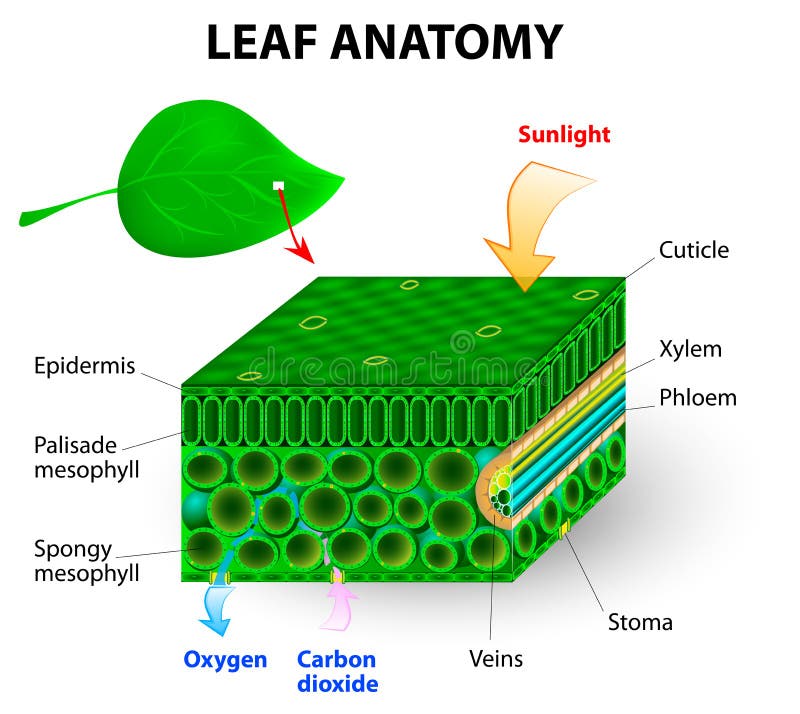
Free with trial Leaf anatomy vector diagram. photosynthesis. Chlorophyll is the molecule in leaves that uses the energy in sunlight to turn water and carbon dioxide gas into sugar and oxygen. Xylem phloem illustrations Leaf anatomy
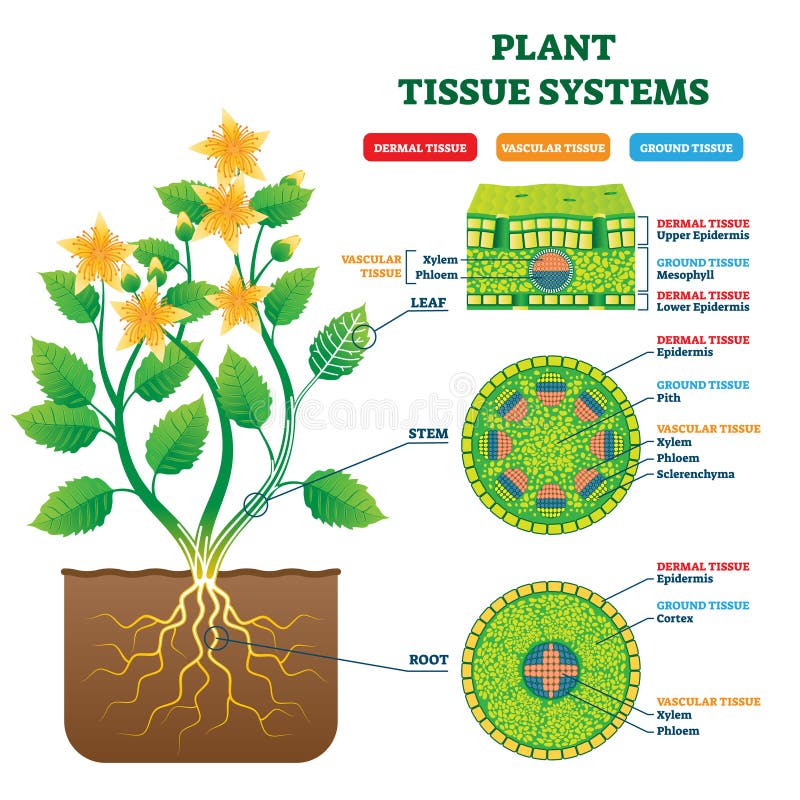
Free with trial Plant Tissue Systems vector illustration. Labeled biological structure scheme. Anatomical diagram with leaf, stem and root microscopic graphic. Plant inner vascular, dermal and ground cross section. Xylem phloem vectors Plant Tissue Systems vector illustration. Labeled biology structure scheme. Plant Tissue Systems vector illustration. Labeled biological structure scheme. Anatomical diagram with leaf, stem and root microscopic graphic. Plant inner vascular, dermal and ground cross section.
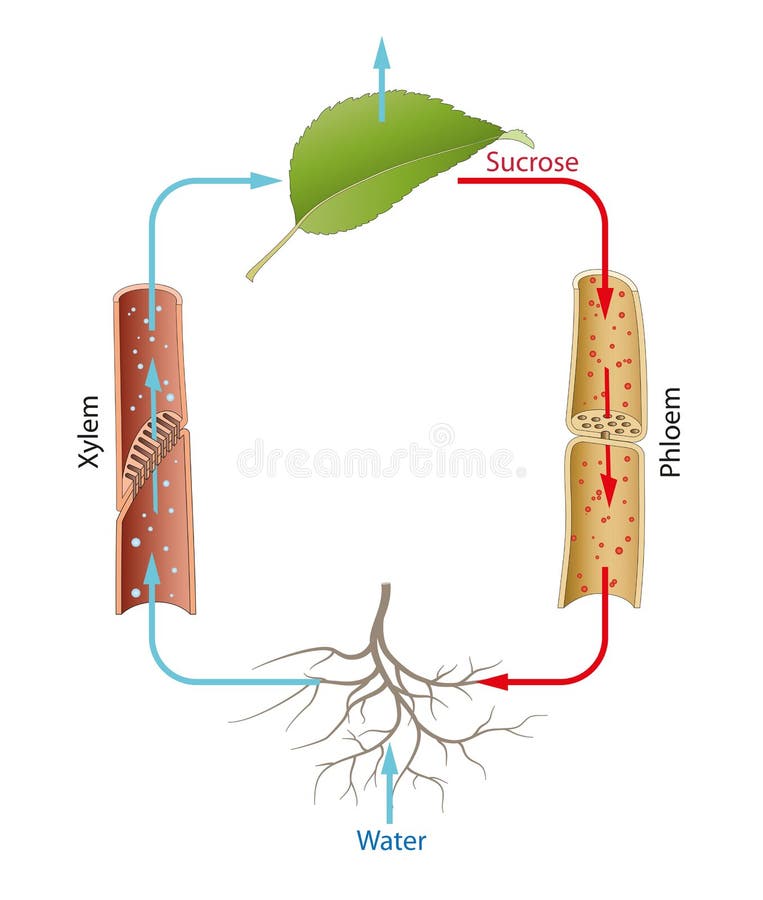
Free with trial Xylem and phloem vector illustration. Labeled water, nutrient and mineral transportation scheme. Educational graphic with biological translocation process explanation. Living tissue in vascular plants. Xylem phloem vectors Xylem and phloem vector illustration. Labeled plant transportation scheme. Xylem and phloem vector illustration. Labeled water, nutrient and mineral transportation scheme. Educational graphic with biological translocation process explanation. Living tissue in vascular plants
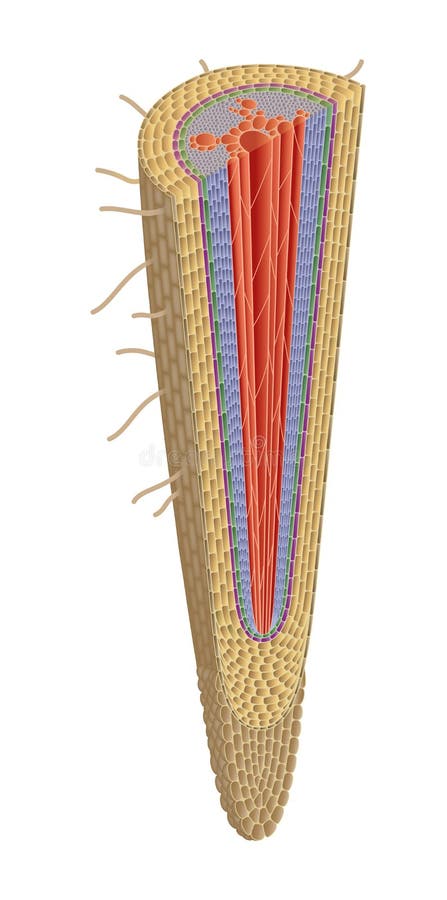
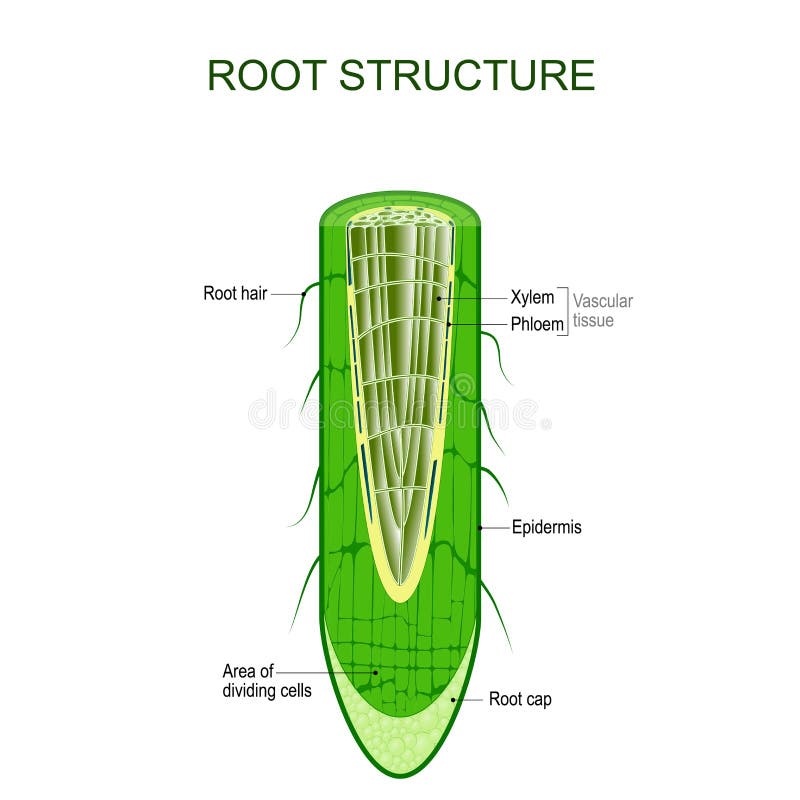
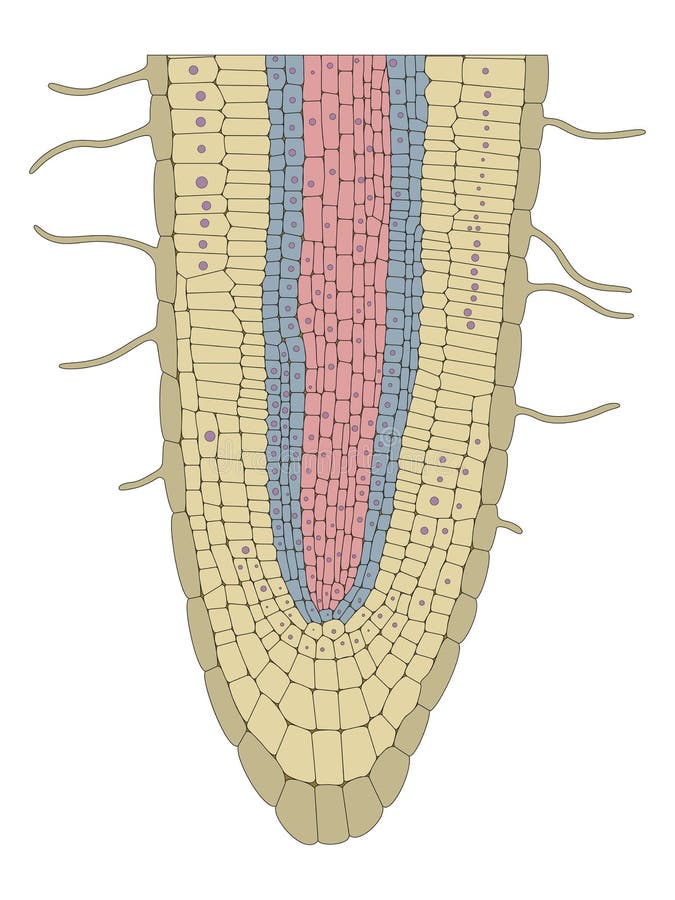
Free with trial Root structure. Plant anatomy. The cross-section of the root with area of dividing cells, Xylem, Phloem, cap, epidermis, and hairs. Vector illustration for biological, science, and educational use. Xylem phloem vectors Root structure. Plant anatomy
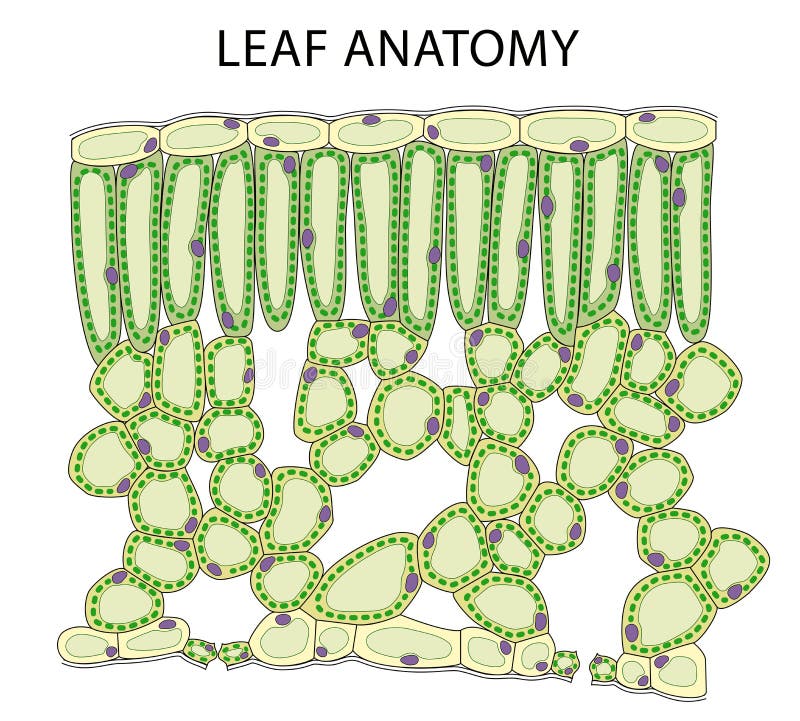
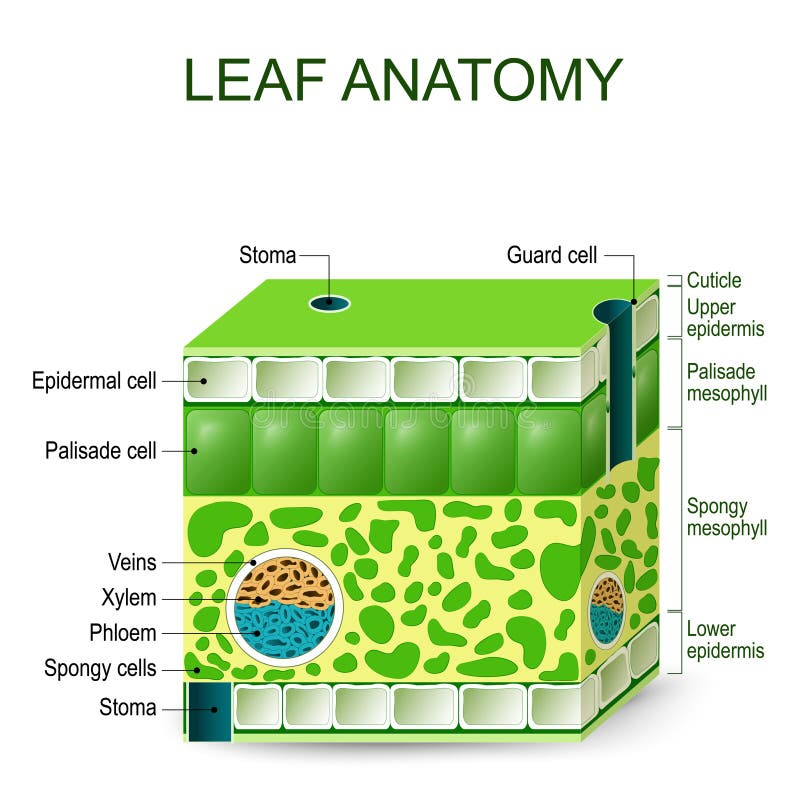
Free with trial Leaf anatomy. Vector diagram on a white background. Xylem phloem vectors Leaf anatomy. vector diagram. Leaf anatomy. Vector diagram on a white background.
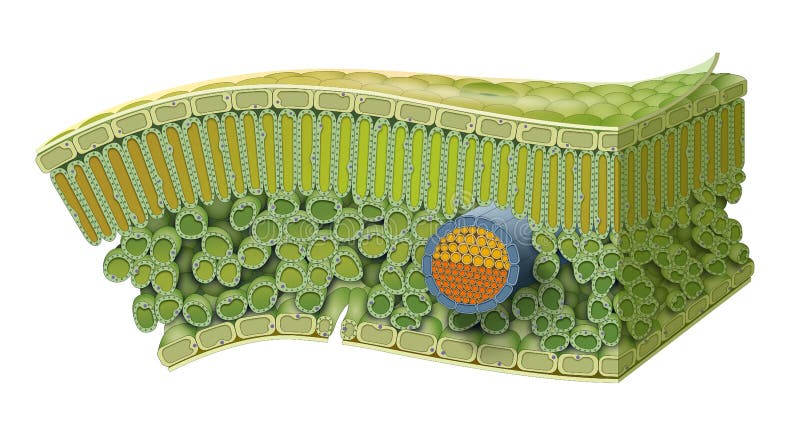
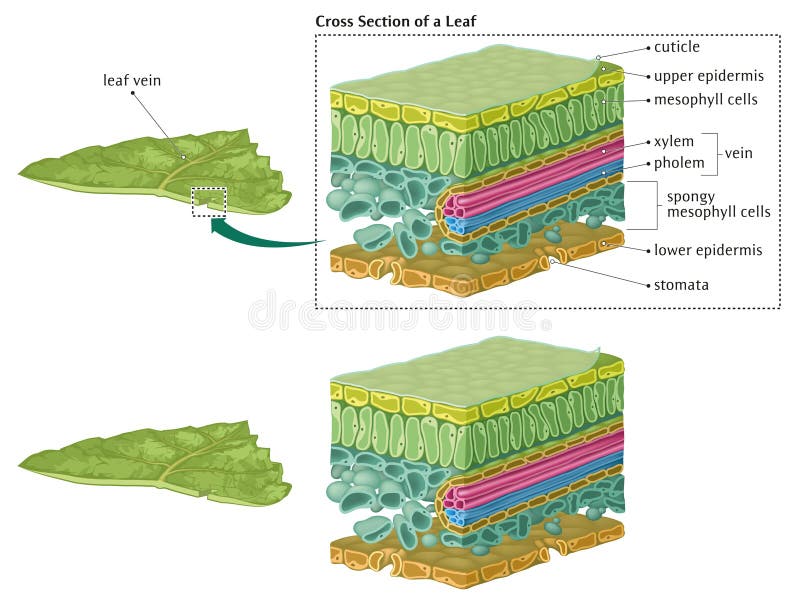
Free with trial Vector illustration of a Cross section of a Leaf anatomy. Xylem phloem vectors Leaf cross section. Vector illustration of a Cross section of a Leaf anatomy.
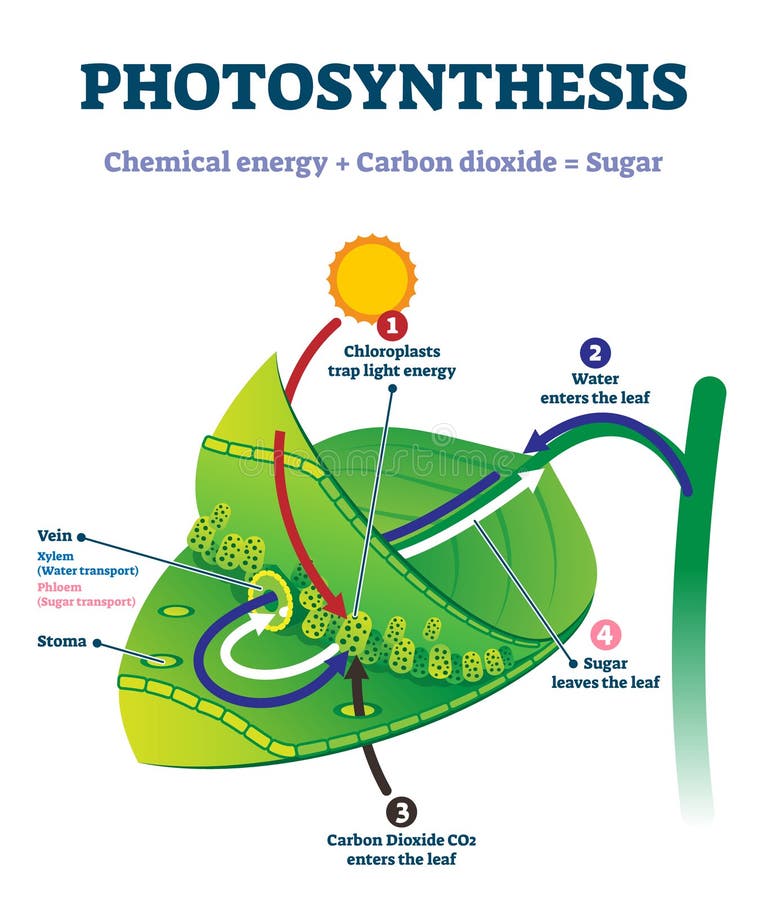
Free with trial Photosynthesis leaf vector illustration. Labeled educational scheme where light energy converts to chemical sugars. Natural botanic process visualization with stages explanation. Closeup plant system. Xylem phloem vectors Photosynthesis leaf vector illustration. Labeled educational process scheme. Photosynthesis leaf vector illustration. Labeled educational scheme where light energy converts to chemical sugars. Natural botanic process visualization with stages explanation. Closeup plant system.
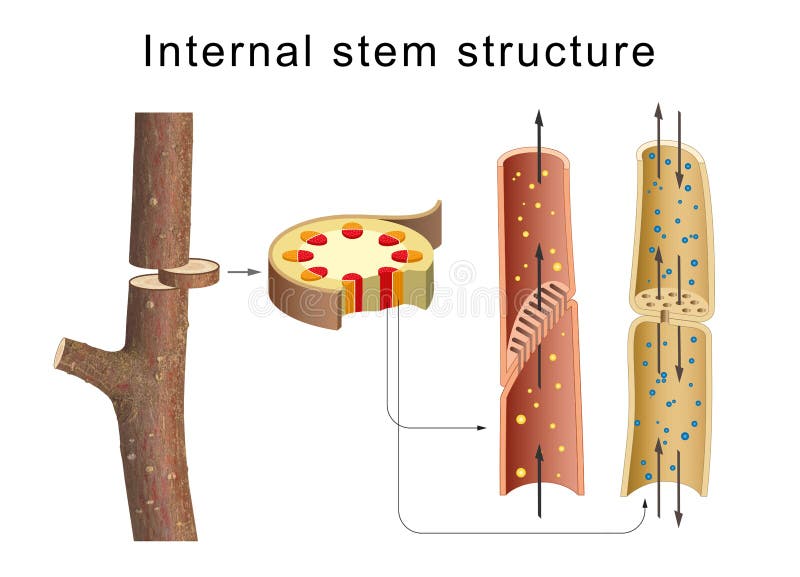
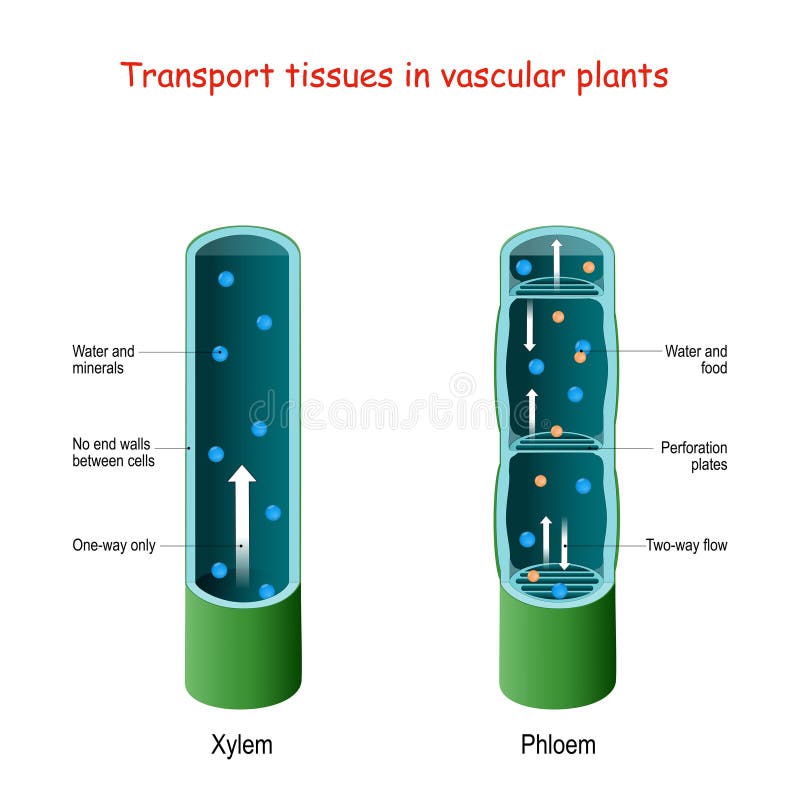
Free with trial Xylem and phloem. biological structure scheme of inner vascular in Plant. cross section. function of xylem is to transport water and nutrients from roots to stems and leaves. phloem for transport organic compounds made during photosynthesis. Xylem phloem vectors Xylem and phloem. biological structure scheme of inner vascular in Plant
Free with trial Xylem and phloem water and minerals transportation system outline diagram. Educational labeled anatomical scheme with vessel side cross section, structure and process explanation vector illustration. Xylem phloem vectors Xylem and phloem water and minerals transportation system outline diagram
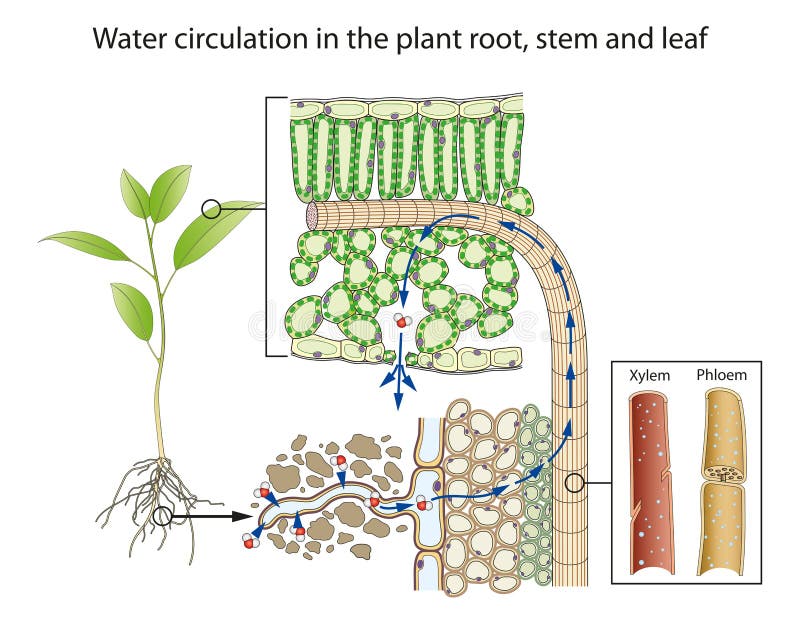
Free with trial The structure of plant roots, stems, and leaves facilitates the transport of water, nutrients, and photosynthates throughout the plant. The phloem and xylem are the main tissues responsible for this movement. Xylem phloem illustrations Water circulation in the plant root, stem and leaf. The structure of plant roots, stems, and leaves facilitates the transport of water, nutrients, and photosynthates throughout the plant. The phloem and xylem are the main tissues responsible for this movement.
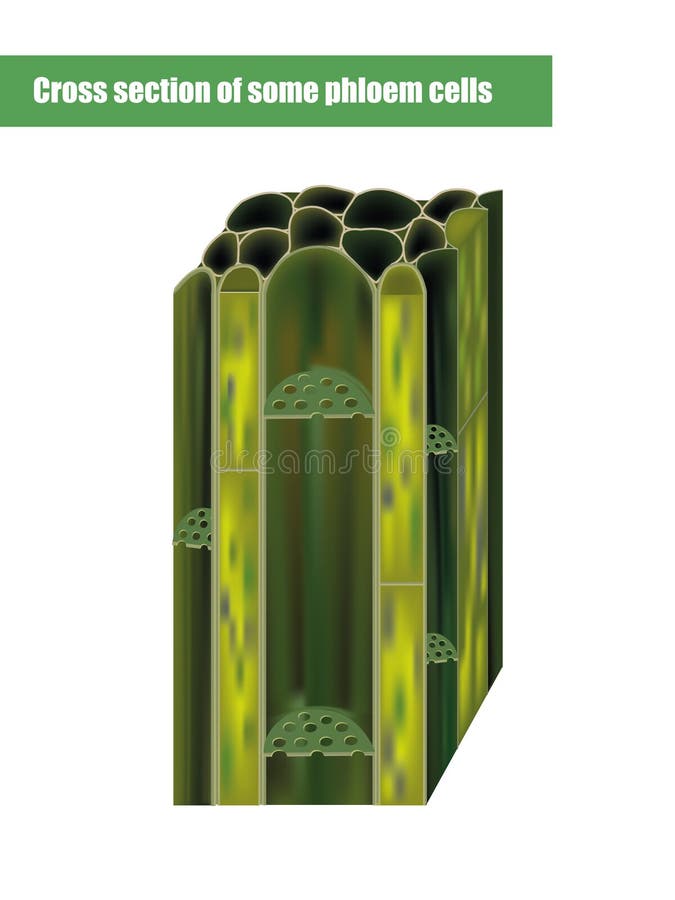
Free with trial Cross section of some phloem cells. Phloem Tissue in Plants. Xylem phloem vectors Cross section of some phloem cells.
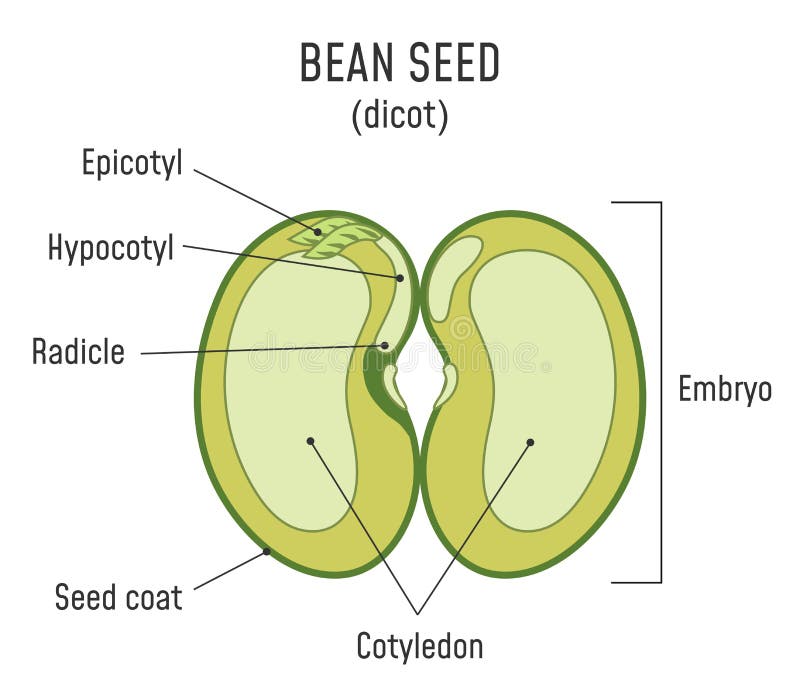
Free with trial Bean Seed Structure. Anatomy of grain. Dicot seed diagram. Xylem phloem vectors Bean Seed Structure Dicot. Bean Seed Structure. Anatomy of grain. Dicot seed diagram.
Free with trial Plant structure and cross section diagrams, botanical microbiology vector illustration schemes collection. Stem and leaves labeled closeup drawings with layers and cells. Educational biology poster. Xylem phloem vectors Plant structure and cross section botanical biology labeled diagrams collection. Plant structure and cross section diagrams, botanical microbiology vector illustration schemes collection. Stem and leaves labeled closeup drawings with layers and cells. Educational biology poster.
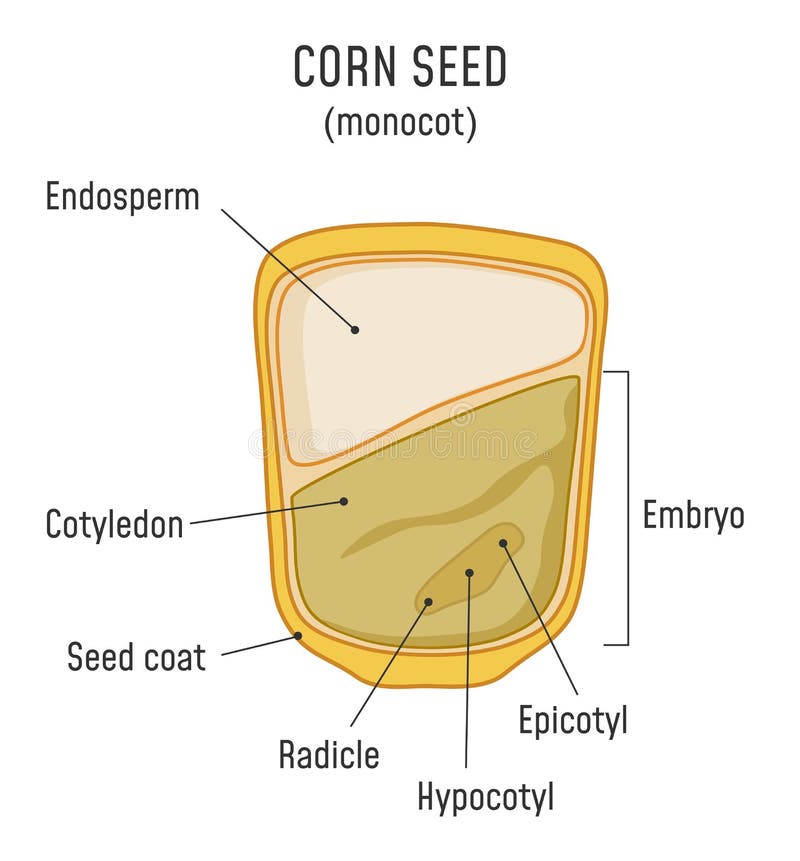
Free with trial Corn Seed Structure. Anatomy of grain. Monocot seed diagram. Xylem phloem vectors Corn Seed Structure Monocot. Corn Seed Structure. Anatomy of grain. Monocot seed diagram.
Free with trial Root hair cells black arrow pointing at one of the root hair cells are single tubular root cells. Their distinctive lateral elongation increases the surface of exchange between the plant`s root system and the soil. The main function of root hairs is the uptake of water and nutrients from the rhizosphere. Xylem phloem illustrations Plant root absorption of Water. Root hair cells black arrow pointing at one of the root hair cells are single tubular root cells. Their distinctive lateral elongation increases the surface of exchange between the plant`s root system and the soil. The main function of root hairs is the uptake of water and nutrients from the rhizosphere.
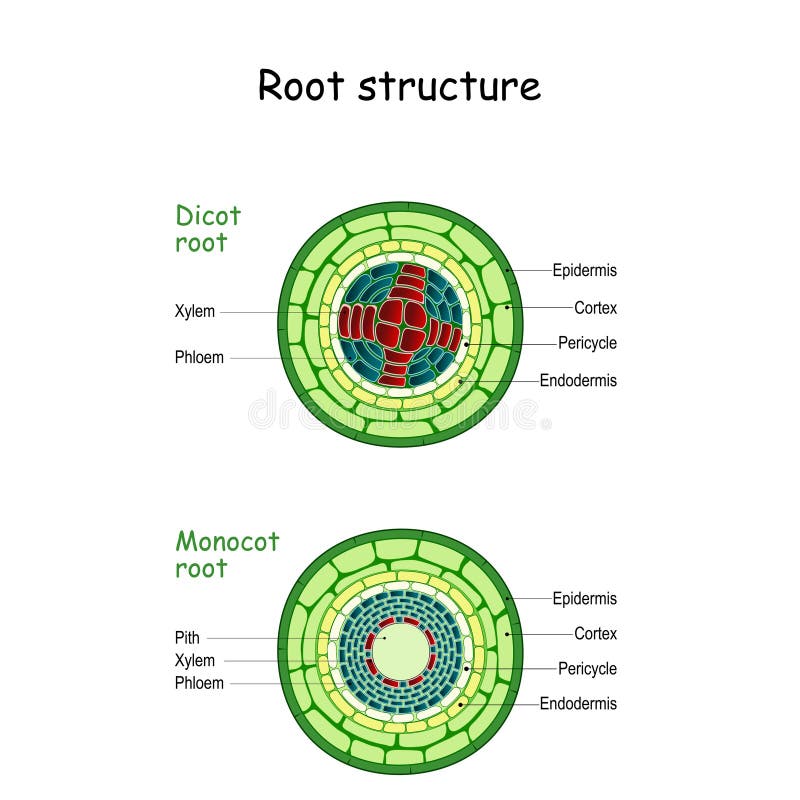
Free with trial Internal root structure. monocot and dicot stems. cross sections of plants roots. Vector diagram for educational, biological, and scientific use. Xylem phloem vectors Root structure. monocot and dicot stems
Free with trial Transpiration is the process of water movement through a plant and its evaporation from aerial parts, such as leaves, stems and flowers. ... Transpiration also cools plants, changes osmotic pressure of cells, and enables mass flow of mineral nutrients and water from roots to shoots. Xylem phloem illustrations Water circulation in the plant. Transpiration. Transpiration is the process of water movement through a plant and its evaporation from aerial parts, such as leaves, stems and flowers. ... Transpiration also cools plants, changes osmotic pressure of cells, and enables mass flow of mineral nutrients and water from roots to shoots.
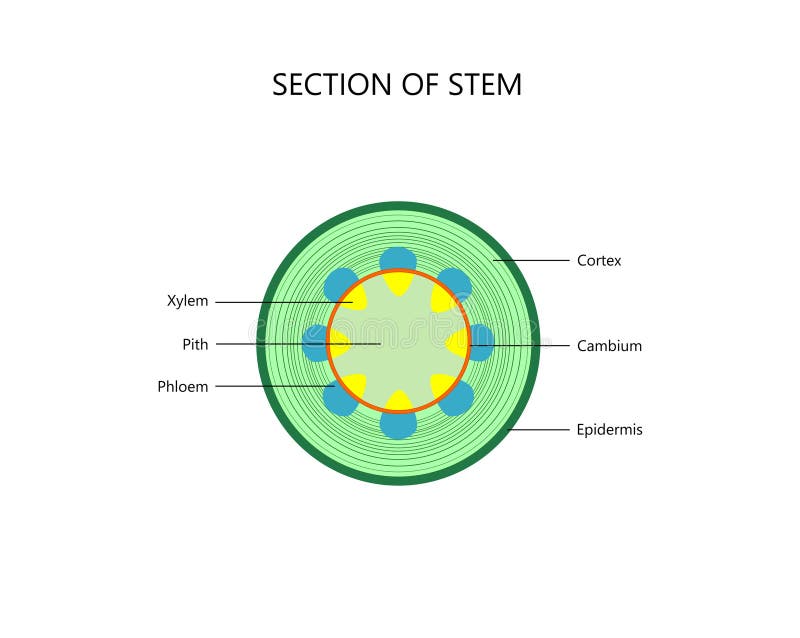
Free with trial Botanical vector illustration for for biological, science, and educational use. Xylem phloem vectors Cross section of a plant stem, dicot. Botanical vector illustration for for biological, science, and educational use.
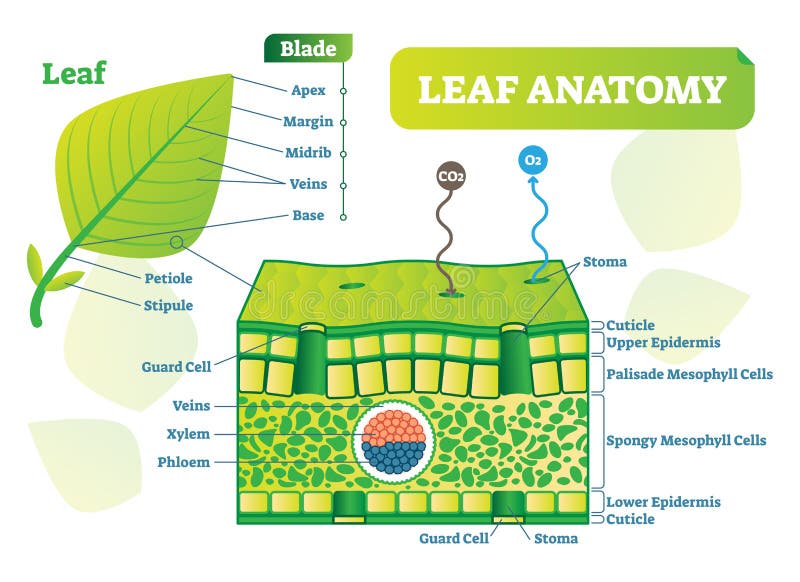
Free with trial Leaf anatomy vector illustration diagram. Biological macro scheme poster with leaf inner layers, veins and breathing oxygen exchange. Xylem phloem vectors Leaf anatomy vector illustration diagram. Biological macro scheme poster. Leaf anatomy vector illustration diagram. Biological macro scheme poster with leaf inner layers, veins and breathing oxygen exchange.
Free with trial Typical roots contain three different sections, or zones: the meristematic zone, the zone of elongation, and the zone of differentiation. ... The zone of differentiation containsmature, specialized cells, such as phloem, xylem, and root hairs. Xylem phloem illustrations Plant root structure. Typical roots contain three different sections, or zones: the meristematic zone, the zone of elongation, and the zone of differentiation. ... The zone of differentiation containsmature, specialized cells, such as phloem, xylem, and root hairs.
Free with trial A whole-plant model of movement of water and nutrients will predict growth. In this model, a plant consists of tissues; root, stem, and leaf, and each tissue has cells with compartments; apoplast, cytoplast, phloem, and xylem. Xylem phloem illustrations Metabolism and transport in plants. Transpiration. A whole-plant model of movement of water and nutrients will predict growth. In this model, a plant consists of tissues; root, stem, and leaf, and each tissue has cells with compartments; apoplast, cytoplast, phloem, and xylem.
Free with trial The structure of plant roots, stems, and leaves facilitates the transport of water, nutrients, and photosynthates throughout the plant. The phloem and xylem are the main tissues responsible for this movement. Water potential, evapotranspiration, and stomatal regulation influence how water and nutrients are transported in plants. To understand how these processes work, we must first understand the energetics of water potential. Xylem phloem illustrations Water Uptake and Transport in Vascular Plants. The structure of plant roots, stems, and leaves facilitates the transport of water, nutrients, and photosynthates throughout the plant. The phloem and xylem are the main tissues responsible for this movement. Water potential, evapotranspiration, and stomatal regulation influence how water and nutrients are transported in plants. To understand how these processes work, we must first understand the energetics of water potential.
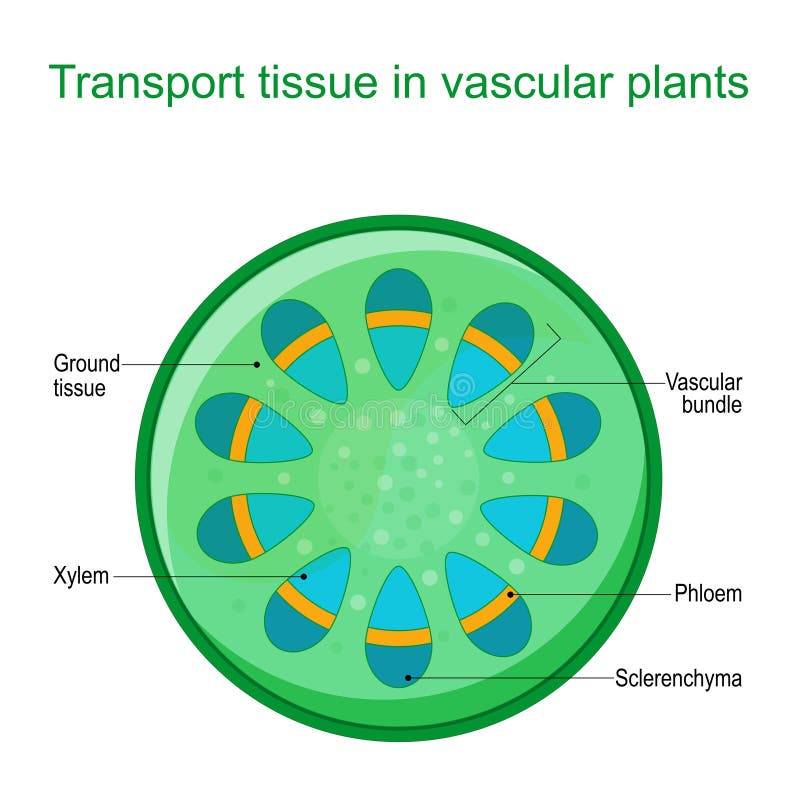
Free with trial Cross section of vascular tissue system of a plant. Dicot vascular bundles of xylem and phloem are arranged in a ring. Vector diagram for educational use. Xylem phloem vectors Vascular tissue system of plants. Cross section of vascular tissue system of a plant. Dicot vascular bundles of xylem and phloem are arranged in a ring. Vector diagram for educational use
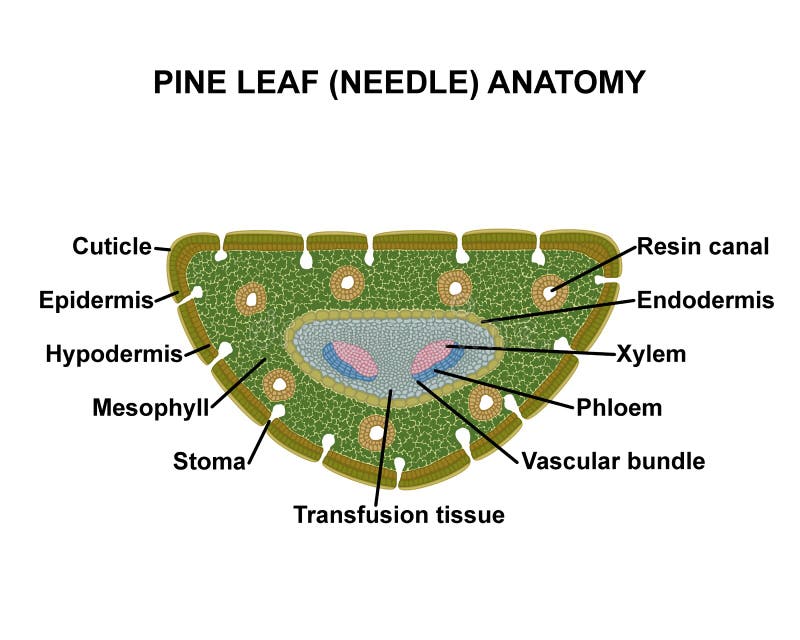
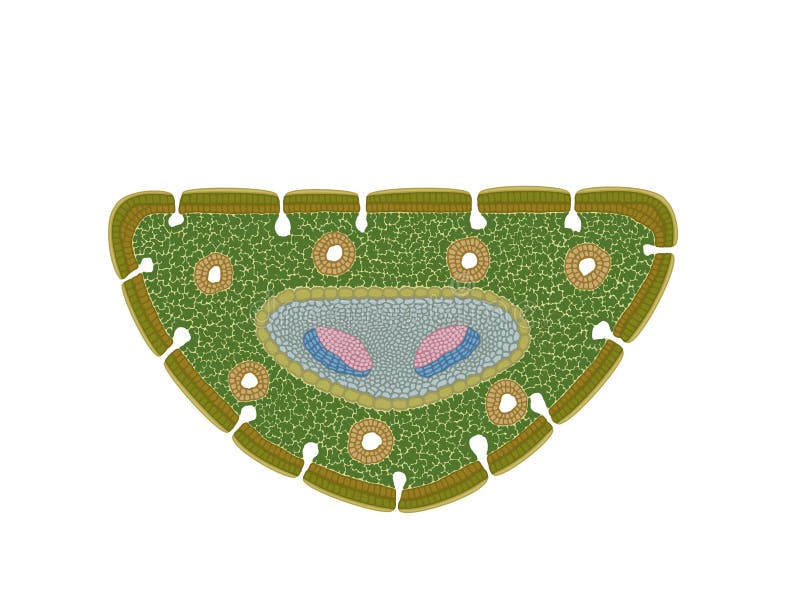
Free with trial Schematic cross section of a pine leaf (needle). Xylem phloem illustrations Pine leaf (needle) anatomy. Schematic cross section of a pine leaf (needle).
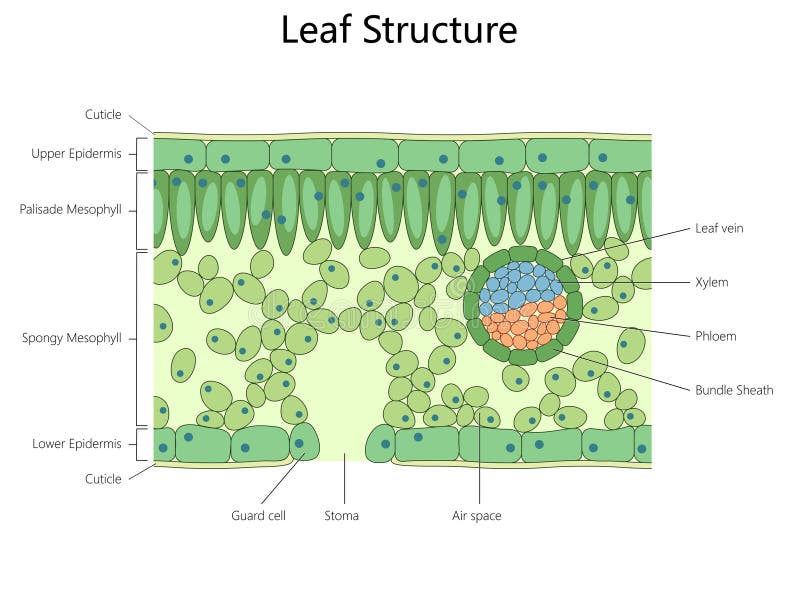
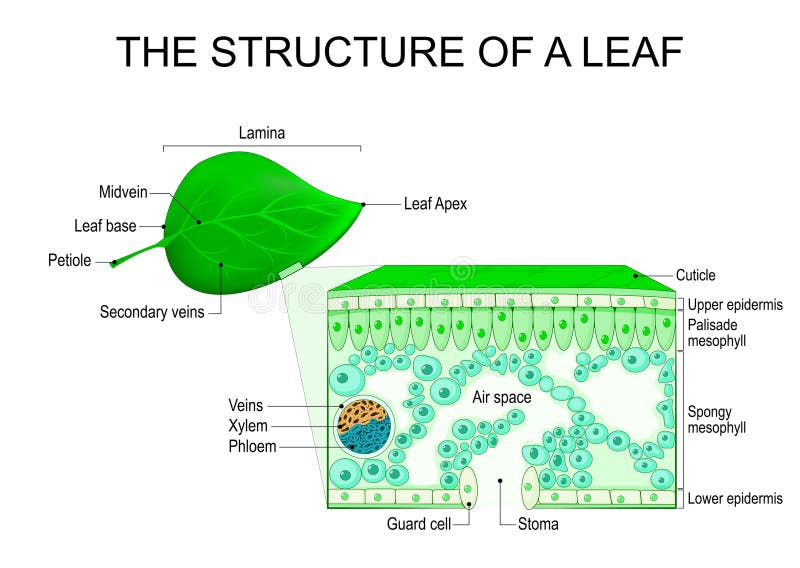
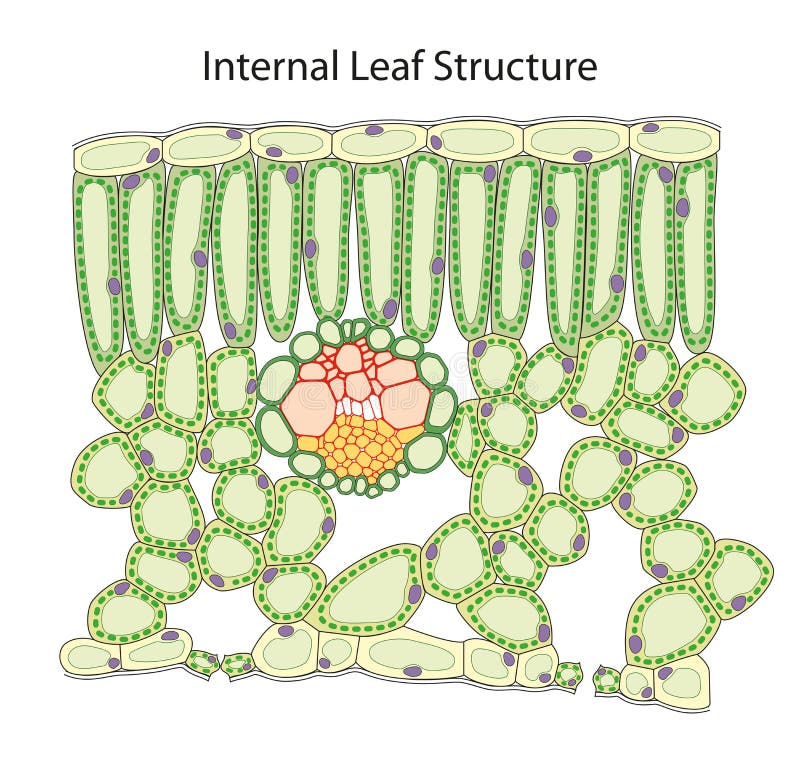
Free with trial The outermost layer of the leaf is the epidermis. It consists of the upper and lower epidermis. The epidermis aids in the regulation of gas exchange. It contains stomata, which are openings through which the exchange of gases takes place. Two guard cells surround each stoma, regulating its opening and closing. Guard cells are the only epidermal cells to contain chloroplasts. Xylem phloem illustrations Internal structure of a leaf. The outermost layer of the leaf is the epidermis. It consists of the upper and lower epidermis. The epidermis aids in the regulation of gas exchange. It contains stomata, which are openings through which the exchange of gases takes place. Two guard cells surround each stoma, regulating its opening and closing. Guard cells are the only epidermal cells to contain chloroplasts.
Free with trial Transpiration is a process that involves loss of water vapour through the stomata of plants. The loss of water vapour from the plant cools the plant down when the weather is very hot, and water from the stem and roots moves upwards or is `pulled` into the leaves. Xylem phloem illustrations Transpiration of leaf stomata illustration. Transpiration is a process that involves loss of water vapour through the stomata of plants. The loss of water vapour from the plant cools the plant down when the weather is very hot, and water from the stem and roots moves upwards or is `pulled` into the leaves.
Free with trial Structure of a pine leaf. Xylem phloem illustrations Schematic cross section of a pine leaf. Structure of a pine leaf
Free with trial Leaf anatomy. diagram of leaf structure. Xylem phloem vectors Diagram of leaf structure
Free with trial A leaf is an organ of a vascular plant and is the principal lateral appendage of the stem. [1] The leaves and stem together form the shoot. [2] Foliage is a mass noun that refers to leaves collectively. [. Xylem phloem illustrations Cross Section of a Leaf. A leaf is an organ of a vascular plant and is the principal lateral appendage of the stem.[1] The leaves and stem together form the shoot.[2] Foliage is a mass noun that refers to leaves collectively.[
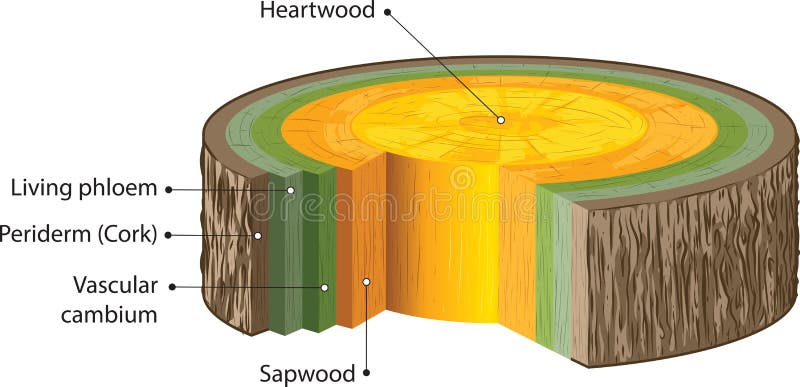
Free with trial Anatomy of a tree trunk. Tree trunk layers. Xylem phloem vectors Anatomy of a tree trunk.
Free with trial The structures of dicot and monocot seeds are shown. ... Both monocot and dicot embryos have a plumule that forms the leaves, a hypocotyl that forms the stem, and a radicle that forms the root. The embryonic axis comprises everything between the plumule and the radicle, not including the cotyledon. Xylem phloem illustrations The structure of the bean seed in dicots and monocots. The structures of dicot and monocot seeds are shown. ... Both monocot and dicot embryos have a plumule that forms the leaves, a hypocotyl that forms the stem, and a radicle that forms the root. The embryonic axis comprises everything between the plumule and the radicle, not including the cotyledon
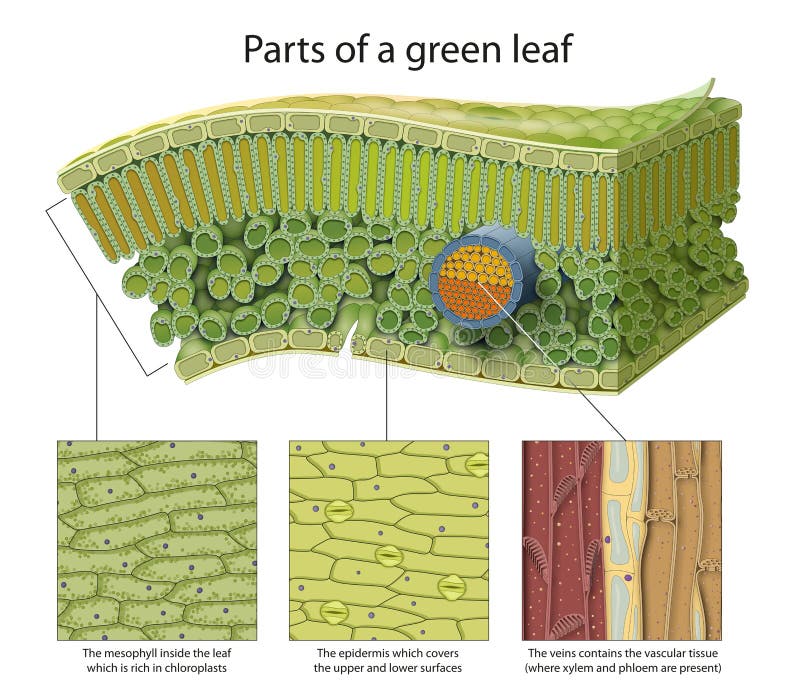
Free with trial Although a leaf looks thin, its is made up of several layers of cells. You can see these if you look at a transverse section cross-section of a leaf under a microscope. Xylem phloem illustrations Education Chart of Biology for Cross Section of Leaf Diagram. Although a leaf looks thin, its is made up of several layers of cells. You can see these if you look at a transverse section cross-section of a leaf under a microscope.
Free with trial Transport of water and minerals in plant with anatomical cell outline diagram. Educational labeled side view scheme with apoplast and symplast meaning in botany flow and movement vector illustration. Xylem phloem vectors Transport of water and minerals in plant with anatomical cell outline diagram
Free with trial Opening and closing of stoma. anatomy of stomatal complex. Structure of stomate in a plant leaf. Vector diagram for educational, science and biological use. Xylem phloem vectors Opening and closing of stoma. anatomy of stomatal complex
Free with trial Fern life cycle vector illustration. Labeled educational development process scheme. Different plant stages examples with gametophyte, rhizoids, sorus and spores. Self reproduction explanation scheme. Xylem phloem vectors Fern life cycle vector illustration. Labeled educational development process
Free with trial The outermost layer of the leaf is the epidermis. It consists of the upper and lower epidermis. The epidermis aids in the regulation of gas exchange. It contains stomata, which are openings through which the exchange of gases takes place. Two guard cells surround each stoma, regulating its opening and closing. Guard cells are the only epidermal cells to contain chloroplasts. Xylem phloem illustrations Cellular Structure of Leaf. Internal Leaf Structure a leaf is made of many layers that are sandwiched between two layers of tough. The outermost layer of the leaf is the epidermis. It consists of the upper and lower epidermis. The epidermis aids in the regulation of gas exchange. It contains stomata, which are openings through which the exchange of gases takes place. Two guard cells surround each stoma, regulating its opening and closing. Guard cells are the only epidermal cells to contain chloroplasts.
Free with trial Structure of the slice of the tree layers in cross section. Tree trunk different layers scheme. Cross section of woody stems infographics. Education biology, dendrochronology poster, illustration. Stock vector. Xylem phloem vectors Anatomy of a tree isolated on white background. Structure of the slice of the tree layers in cross section. Tree trunk different layers scheme. Cross section of woody stems infographics. Education biology, dendrochronology poster, illustration. Stock vector
Free with trial Xylem, plant vascular tissue that conveys water and dissolved minerals from the roots to the rest of the plant and also provides physical support. Xylem tissue consists of a variety of specialized, water-conducting cells known as tracheary elements. Together with phloem xylem is found in all vascular plants. Xylem phloem illustrations Cross section of a vascular bundle in the stem showing food-conducting phloem and water-conducting xylem. Xylem, plant vascular tissue that conveys water and dissolved minerals from the roots to the rest of the plant and also provides physical support. Xylem tissue consists of a variety of specialized, water-conducting cells known as tracheary elements. Together with phloem xylem is found in all vascular plants
Free with trial Vascular tissue system of plant. xylem and phloem. Cross section of plant stem. Top view and side view. Vector illustration. Xylem phloem vectors Vascular tissue system of plant. xylem and phloem
Free with trial Plant vascular tissue. Xylem and phloem. Cross section showing vascular bundles. Translocation in vascular plants. Xylem phloem vectors Plant vascular tissue. Xylem and phloem. Cross section showing vascular bundles. Translocation
Free with trial Xylem, plant vascular tissue that conveys water and dissolved minerals from the roots to the rest of the plant and also provides physical support. Xylem tissue consists of a variety of specialized, water-conducting cells known as tracheary elements. Together with phloem xylem is found in all vascular plants. Xylem phloem illustrations Cross section of a vascular bundle in the stem showing food-conducting phloem and water-conducting xylem. Xylem, plant vascular tissue that conveys water and dissolved minerals from the roots to the rest of the plant and also provides physical support. Xylem tissue consists of a variety of specialized, water-conducting cells known as tracheary elements. Together with phloem xylem is found in all vascular plants
Free with trial Illustration of biology, Xylem vessel and Phloem vessel, Transport in plants, Xylem moves water from roots to the leaves, and phloem moves food from the leaves to the rest of the plant. Xylem phloem illustrations Illustration of biology, Xylem vessel and Phloem vessel, Transport in plants
Free with trial Illustration of biology, Xylem vessel and Phloem vessel, Transport in plants, Xylem moves water from roots to the leaves, and phloem moves food from the leaves to the rest of the plant, biology. Xylem phloem illustrations Illustration of biology, Xylem vessel and Phloem vessel, Transport in plants
Free with trial Xylem and phloem water and minerals transportation system outline diagram, Scientific Designing of Xylem And Phloem Scheme, Nutrient And Mineral Transportation, plants transport nutrient and water. Xylem phloem illustrations Xylem and phloem water and minerals transportation system outline diagram, Scientific Designing of Xylem And Phloem
Free with trial Typical roots contain three different sections, or zones: the meristematic zone, the zone of elongation, and the zone of differentiation. ... The zone of differentiation containsmature, specialized cells, such as phloem, xylem, and root hairs. Xylem phloem illustrations Structure of plant root. Typical roots contain three different sections, or zones: the meristematic zone, the zone of elongation, and the zone of differentiation. ... The zone of differentiation containsmature, specialized cells, such as phloem, xylem, and root hairs.
Free with trial The xylem and phloem that make up the vascular tissue of the stem are arranged in distinct strands called vascular bundles,which run up and down the length of the stem. Xylem phloem illustrations Internal anatomy of the tree stem. The xylem and phloem that make up the vascular tissue of the stem are arranged in distinct strands called vascular bundles,which run up and down the length of the stem
Free with trial The stem is composed of three tissue systems that include the epidermis,vascular,and ground tissues,all of which are made from the simple cell types.. The xylem and phloem carry water and nutrients up and down the length of the stem and are arranged in distinct strands called vascular bundles. Xylem phloem illustrations Internal anatomy of the tree stem. The stem is composed of three tissue systems that include the epidermis,vascular,and ground tissues,all of which are made from the simple cell types.. The xylem and phloem carry water and nutrients up and down the length of the stem and are arranged in distinct strands called vascular bundles
Free with trial The xylem and phloem mainly form the vascular bundles which help in the transport of materials to different parts of the plant. Xylem conducts the water and minerals from the root to other parts of the plant while the phloem conducts the prepared food from the leaves to the other part of the plant. Xylem phloem illustrations Vascular bundles of the plant stem. The xylem and phloem mainly form the vascular bundles which help in the transport of materials to different parts of the plant. Xylem conducts the water and minerals from the root to other parts of the plant while the phloem conducts the prepared food from the leaves to the other part of the plant
Free with trial Plant vascular tissue Xylem. Cross section showing vascular bundles. Translocation in vascular plants. Xylem phloem illustrations Plant vascular tissue Xylem. Cross section showing vascular bundles. Translocation vascular plants
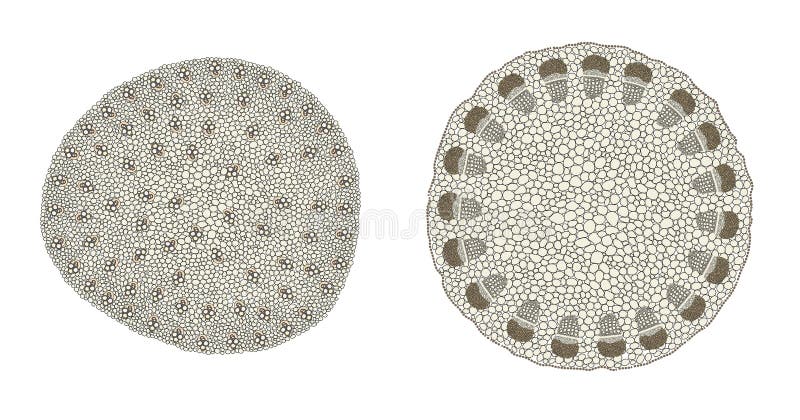
Free with trial Monocot roots, interestingly, have their vascular bundles arranged in a ring. Dicot roots have their xylem in the center of the root and phloem outside the xylem. A carrot is an example of a dicot root. Diagram illustrating the tissue layers and their organization within monocot and dicot roots. Xylem phloem illustrations Plant root comparison on monocot left and dicot right. Monocot roots, interestingly, have their vascular bundles arranged in a ring. Dicot roots have their xylem in the center of the root and phloem outside the xylem. A carrot is an example of a dicot root. Diagram illustrating the tissue layers and their organization within monocot and dicot roots.
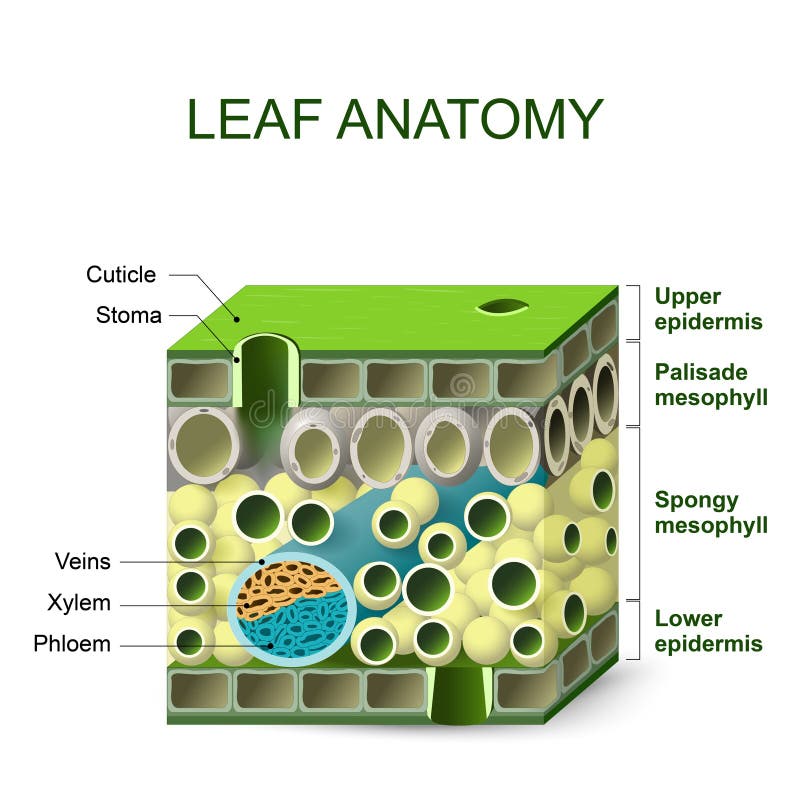
Free with trial Cross-section of a leaf showing internal structure including epidermis, mesophyll, veins, xylem, phloem, and stomata for photosynthesis diagram hand drawn schematic vector. Science educational. Xylem phloem vectors Labeled Diagram of Internal Leaf Structure Tissues. cross-section of a leaf showing internal structure including epidermis, mesophyll, veins, xylem, phloem, and stomata for photosynthesis diagram hand drawn schematic vector. Science educational
Free with trial Lignin cell wall illustration xylem phloem, pectin hemiulose, structure support lignin cell wall. Xylem phloem illustrations Lignin cell wall
Free with trial Overall, water is transported in the plant through the combined efforts of individual cells and the conductive tissues of the vascular system. It is carried upward through the xylem by transpiration, and then passed into the leaves along another water potential gradient. Xylem phloem illustrations Water transport system in plants. Overall, water is transported in the plant through the combined efforts of individual cells and the conductive tissues of the vascular system. It is carried upward through the xylem by transpiration, and then passed into the leaves along another water potential gradient.
Free with trial Cross section of leaf diagram Vector illustration useful for botanical study and scientific education. Xylem phloem vectors Leaf anatomy. Cross section of leaf diagram Vector illustration useful for botanical study and scientific education
Free with trial Chloroplasts are critical organelles that perceive and convey metabolic and stress signals to different cellular components,while remaining the seat of photosynthesis and a metabolic factory. Xylem phloem illustrations Diagram of a leaf structure. Chloroplasts are critical organelles that perceive and convey metabolic and stress signals to different cellular components,while remaining the seat of photosynthesis and a metabolic factory
Free with trial Three major types of plant tissues are dermal, ground, and vascular tissues. Dermal tissue covers the outside of a plant in a single layer of cells called the epidermis. You can think of the epidermis as the plant`s skin. It mediates most of the interactions between a plant and its environment. Xylem phloem illustrations Types of Tissue in Plants. Three major types of plant tissues are dermal, ground, and vascular tissues. Dermal tissue covers the outside of a plant in a single layer of cells called the epidermis. You can think of the epidermis as the plant`s skin. It mediates most of the interactions between a plant and its environment.
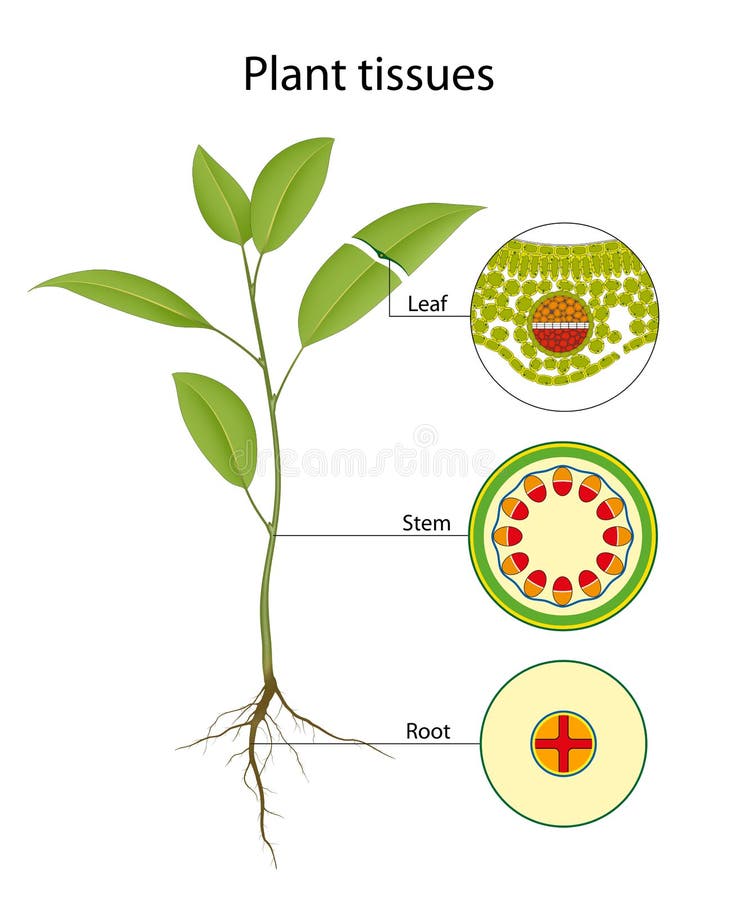
Free with trial Types of plant tissues. Anatomy of a Plant Body. Cross section of Root, stem and leaf of a green plant. Vector illustration. Poster for education and biology. Xylem phloem vectors Plant tissues. Cross section of Root, stem and leaf. Types of plant tissues. Anatomy of a Plant Body. Cross section of Root, stem and leaf of a green plant. Vector illustration. Poster for education and biology
Free with trial The outermost layer of the leaf is the epidermis. It consists of the upper and lower epidermis. The epidermis aids in the regulation of gas exchange. It contains stomata, which are openings through which the exchange of gases takes place. Two guard cells surround each stoma, regulating its opening and closing. Guard cells are the only epidermal cells to contain chloroplasts. Xylem phloem illustrations Cross section of leaf with palisade mesophyll cells. The outermost layer of the leaf is the epidermis. It consists of the upper and lower epidermis. The epidermis aids in the regulation of gas exchange. It contains stomata, which are openings through which the exchange of gases takes place. Two guard cells surround each stoma, regulating its opening and closing. Guard cells are the only epidermal cells to contain chloroplasts.
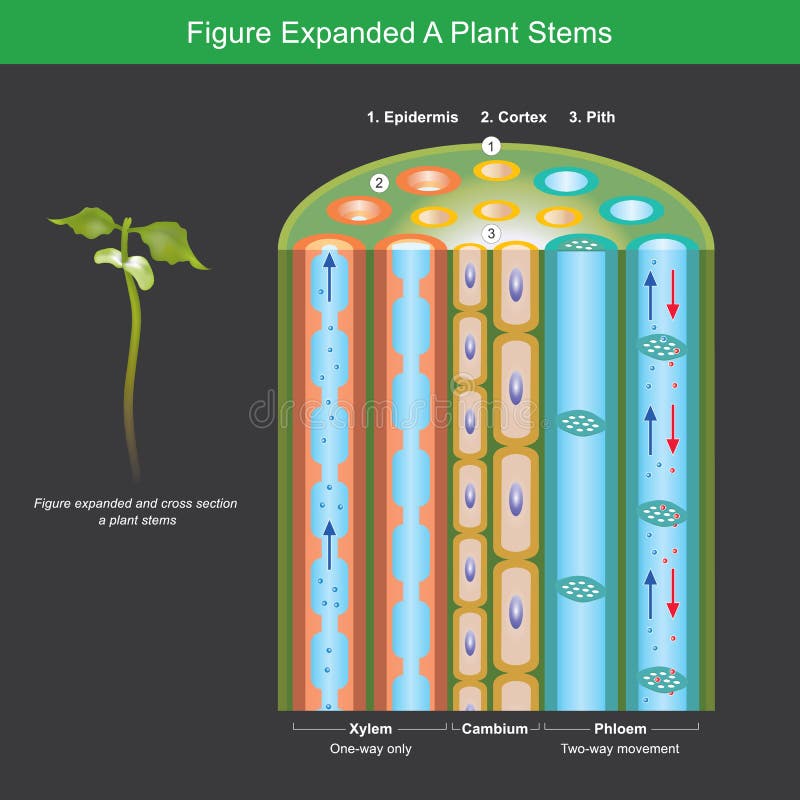
Free with trial Figure Expanded A Plant Stems. Figure expanded for explain a plants transport nutrient and water in stems. Illustration. Xylem phloem illustrations Figure Expanded A Plant Stems.
Free with trial Coralloid root is developed in Cycas. It is produced in clusters at the base of the stem and protrudes out over the ground. Xylem phloem illustrations Corollid roots. Coralloid root is developed in Cycas. It is produced in clusters at the base of the stem and protrudes out over the ground.
Free with trial Dicot stems have their vascular bundles in a ring arrangement. Monocot stems have most of their vascular bundles near the outside edge of the stem. There is no pith region in monocots. Dicot stems have bundles in a ring surrounding parenchyma cells in a pith region. Xylem phloem illustrations Plant Stem comparison on monocot left and dicot right. Dicot stems have their vascular bundles in a ring arrangement. Monocot stems have most of their vascular bundles near the outside edge of the stem. There is no pith region in monocots. Dicot stems have bundles in a ring surrounding parenchyma cells in a pith region.
Free with trial Plants with the seed having only one cotyledon are called as monocotyledons. Plants with the seed having two cotyledons are called as dicotyledons. Flower parts are present in multiples of three. The flower parts are present in multiples of four or five. Xylem phloem illustrations Difference between Monocotyledon and Dicotyledon plants. Plants with the seed having only one cotyledon are called as monocotyledons. Plants with the seed having two cotyledons are called as dicotyledons. Flower parts are present in multiples of three. The flower parts are present in multiples of four or five.
Free with trial Xylem tissue consists of a variety of specialized, water-conducting cells known as tracheary elements. Together with phloem xylem is found in all vascular plants Wood is composed principally of carbon, hydrogen, and oxygen. The elemental constituents of wood are combined into a number of organic polymers: cellulose, hemicellulose, and lignin. Xylem phloem illustrations Composition and Structure of Wood Cells. Xylem tissue consists of a variety of specialized, water-conducting cells known as tracheary elements. Together with phloem xylem is found in all vascular plants Wood is composed principally of carbon, hydrogen, and oxygen. The elemental constituents of wood are combined into a number of organic polymers: cellulose, hemicellulose, and lignin
Free with trial Metabolism - The process through which an organism`s body derives energy from food through a variety of chemical reactions. Xylem phloem illustrations Fish metabolism in the aquarium. Metabolism is the set of life-sustaining chemical reactions in organisms. Metabolism - The process through which an organism`s body derives energy from food through a variety of chemical reactions.
Free with trial The main function of a leaf is to produce food for the plant by photosynthesis. Oxygen is passed into the atmosphere through stomata—pores in the leaf surface. photosynthesis. Green plants such as trees use carbon dioxide, sunlight, and water to create sugars. Xylem phloem illustrations Photosynthesis is the process that uses energy from the sun, together with carbon dioxide and water, to make glucose and oxygen. The main function of a leaf is to produce food for the plant by photosynthesis. Oxygen is passed into the atmosphere through stomata—pores in the leaf surface. photosynthesis. Green plants such as trees use carbon dioxide, sunlight, and water to create sugars.
Free with trial Monocots differ from dicots in five distinct structural features: seeds, leaves, stems, roots and flowers. Xylem phloem illustrations Difference of Monocot and dicot plants. Monocots differ from dicots in five distinct structural features: seeds, leaves, stems, roots and flowers.
Free with trial Leaf structure and anatomy. Cross section of leaf. Close-up of Part of plant. Vector illustration. Xylem phloem vectors Leaf structure and anatomy. Cross section of leaf. Leaf structure and anatomy. Close-up of Part of plant. Cross section of leaf. Vector illustration
Free with trial The central leaf, or mesophyll, consists of soft-walled, unspecialized cells of the type known as parenchyma. As much as one-fifth of the mesophyll is composed of chlorophyll-containing chloroplasts, which absorb sunlight and, in conjunction with certain enzymes, use the radiant energy in decomposing water into its elements,. Xylem phloem illustrations Cellular Structure of Leaf. Internal Leaf Structure a leaf is made of many layers that are sandwiched between two layers of tough. The central leaf, or mesophyll, consists of soft-walled, unspecialized cells of the type known as parenchyma. As much as one-fifth of the mesophyll is composed of chlorophyll-containing chloroplasts, which absorb sunlight and, in conjunction with certain enzymes, use the radiant energy in decomposing water into its elements,
Free with trial Function of a stoma. Pore in the epidermis of leaves. leaf pores and plant respiration. Vector illustration. Xylem phloem vectors Function of a stoma. leaf pores and plant respiration. Function of a stoma. Pore in the epidermis of leaves. leaf pores and plant respiration. Vector illustration
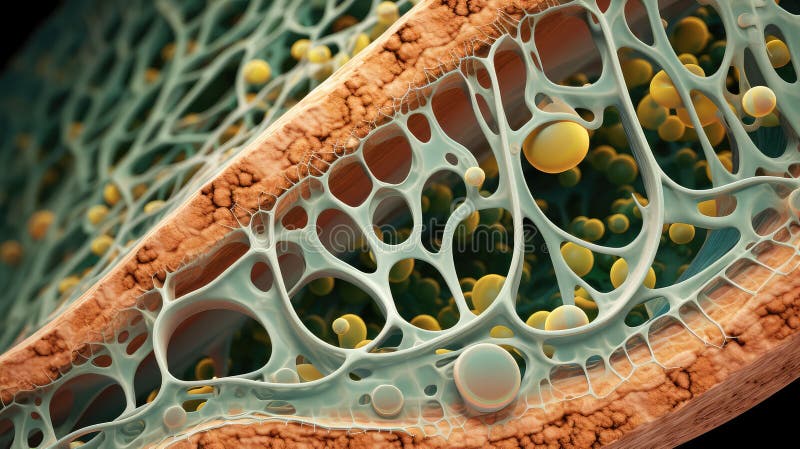
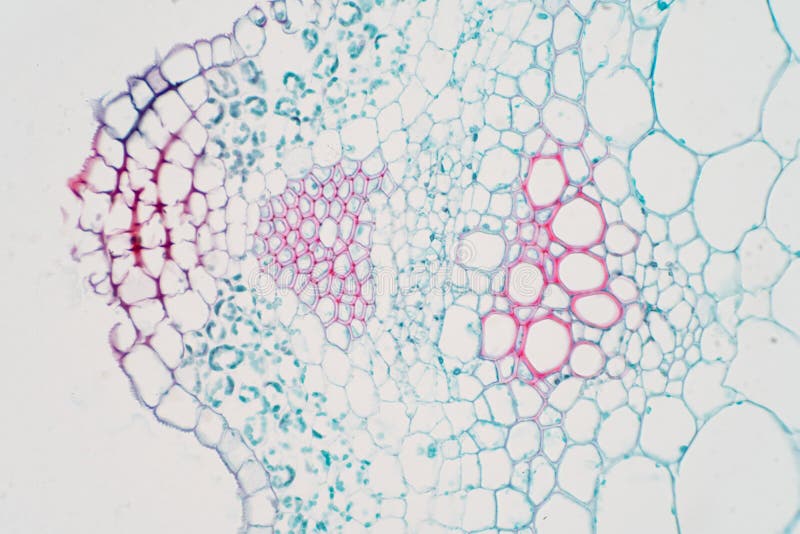
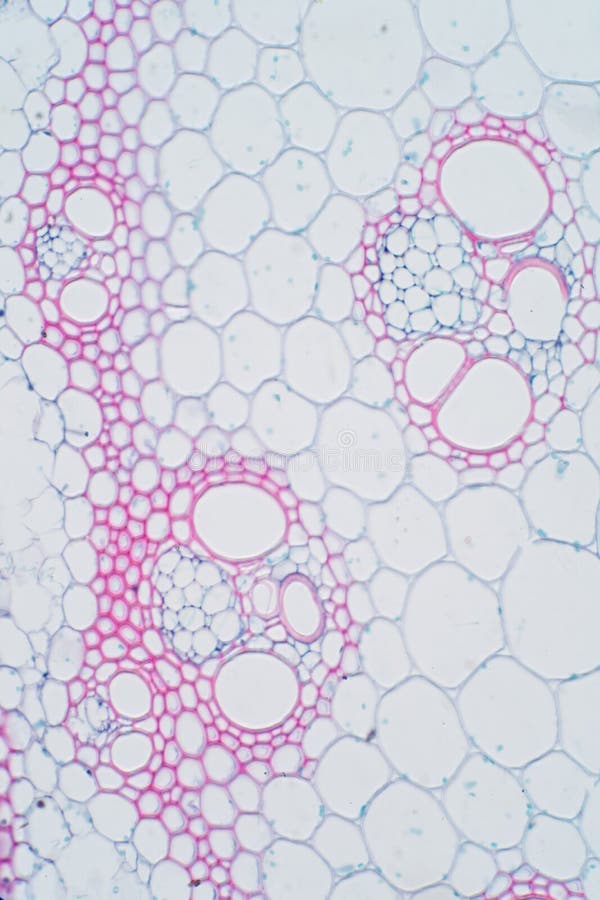
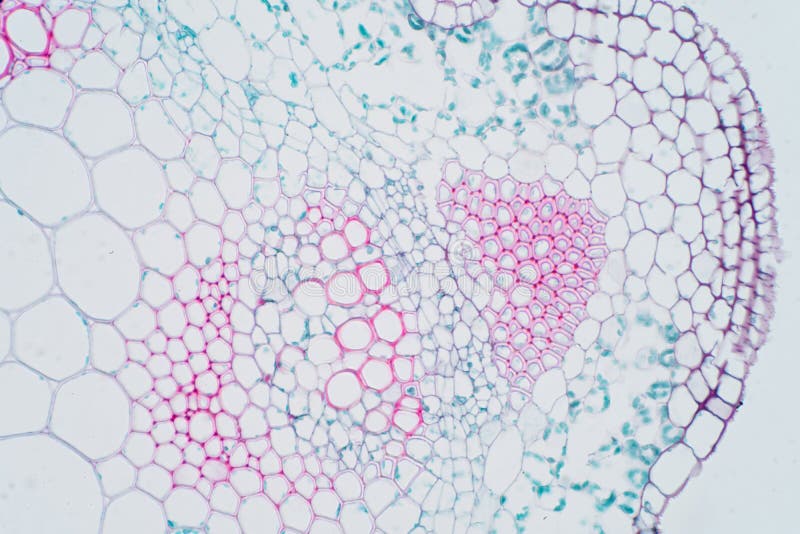
Free with trial Plant vascular tissue under microscope view for education. Xylem phloem illustrations Plant vascular tissue under microscope view
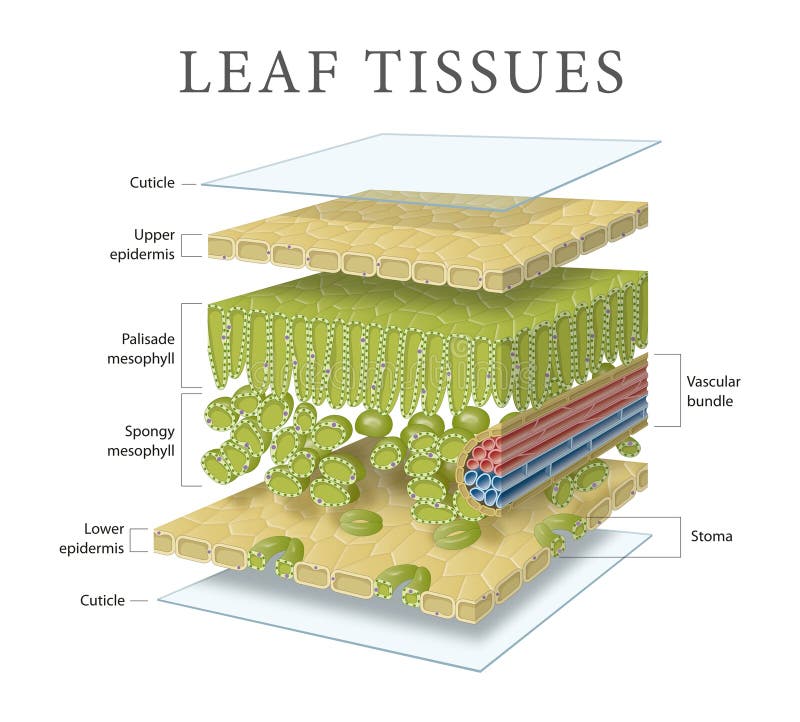
Free with trial In palisade, the mesophyll is the site of photosynthesis and is therefore located on the upper surface of the leaf. The spongy mesophyll is the main site of gas exchange and is therefore located on the lower surface of the leaf. Stomata are on the underside of the leaf. The upper surface of the leaf is covered by a thick, waxy cuticle. Vascular bundles are centrally located for optimal access to all leaf cells. Xylem phloem illustrations Leaf tissues and cell layers. In palisade, the mesophyll is the site of photosynthesis and is therefore located on the upper surface of the leaf. The spongy mesophyll is the main site of gas exchange and is therefore located on the lower surface of the leaf. Stomata are on the underside of the leaf. The upper surface of the leaf is covered by a thick, waxy cuticle. Vascular bundles are centrally located for optimal access to all leaf cells.
Free with trial Animal cells are generally smaller than plant cells. Animal cells range from 10 to 30 micrometers in length, while plant cells range from 10 and 100 micrometers in length. Animal cells come in various sizes and tend to have round or irregular shapes. Plant cells are more similar in size and are typically rectangular or cube shaped. Xylem phloem illustrations Comparing animal and plant cells. Animal cells are generally smaller than plant cells. Animal cells range from 10 to 30 micrometers in length, while plant cells range from 10 and 100 micrometers in length. Animal cells come in various sizes and tend to have round or irregular shapes. Plant cells are more similar in size and are typically rectangular or cube shaped
Free with trial Lichens do not have a waxy cuticle like plants have on their leaves, nor do they have vascular tissue such as xylem and phloem to move nutrients and water around their thalli as a plant does. Everything in the lichen’s environment is absorbed into the lichen`s structure. Lichens get their water and nutrients from their surrounding environment via air and rain. Xylem phloem illustrations Types of lichen. Cladonia rangiferina,Reindeer lichen. Evernia prunastri, Oakmoss. Xanthoria parietina. Foliose, or Leafy. Lichens do not have a waxy cuticle like plants have on their leaves, nor do they have vascular tissue such as xylem and phloem to move nutrients and water around their thalli as a plant does. Everything in the lichen’s environment is absorbed into the lichen`s structure. Lichens get their water and nutrients from their surrounding environment via air and rain.
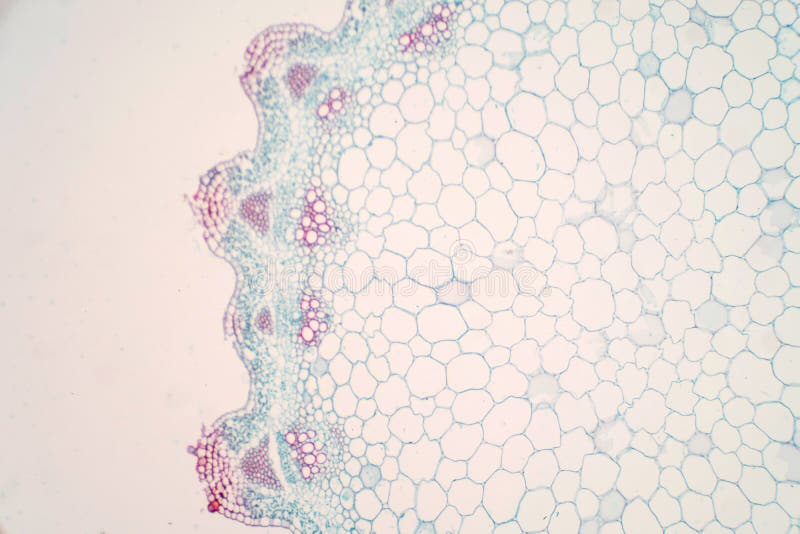
Free with trial Cross sections of plant stem under microscope view for education plant physiology. Xylem phloem illustrations Cross sections of plant stem under microscope view
Free with trial Plant vascular tissue under microscope view for education. Xylem phloem illustrations Plant vascular tissue under microscope view
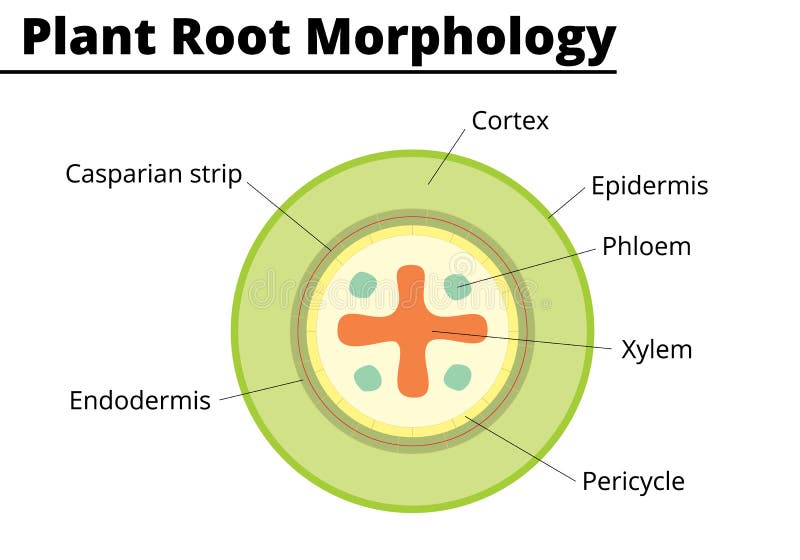
Free with trial Plant root morphology diagram. Structures presents on a vegetable root. Vector illustration. Didatic illustration. Xylem phloem vectors Plant root morphology diagram. Structures presents on a vegetable root.
Free with trial Plant vascular tissue under microscope view for education. Xylem phloem illustrations Plant vascular tissue under microscope view
Free with trial Plant vascular tissue under microscope view for education. Xylem phloem illustrations Plant vascular tissue under microscope view
Free with trial Plant vascular tissue under microscope view for education. Xylem phloem illustrations Plant vascular tissue under microscope view
 Sign in









![A leaf is an organ of a vascular plant and is the principal lateral appendage of the stem. [1] The leaves and stem together form the shoot. [2] Foliage is a mass noun that refers to leaves collectively. [. Xylem phloem illustrations](https://thumbs.dreamstime.com/b/cross-section-leaf-organ-vascular-plant-principal-lateral-appendage-stem-leaves-stem-together-49323297.jpg)