Search among 43 authentic cuneiform letters stock photos, high-definition images, and pictures, or look at other stairway facade or cuneiform detail stock images to enhance your presentation with the perfect visual.

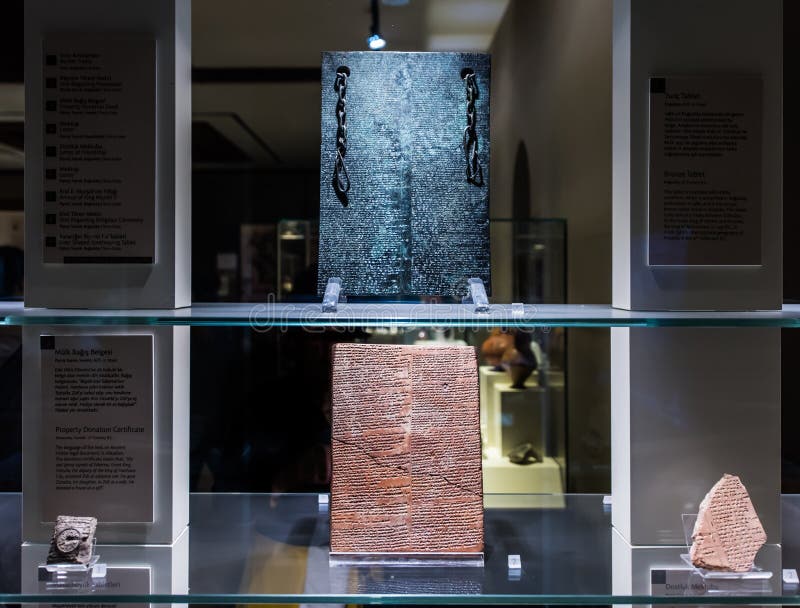
A Bronze Slab Letter from the 13 century before Christ in the Museum of Anatolian Civilizations, Ankara, Turkey. Inscribed with Hittite cuneiform, text of treaty between Great King of Hittite and Kurunta, King of Tarhuntassa. Cuneiform letters stock images, royalty-free photos and pictures
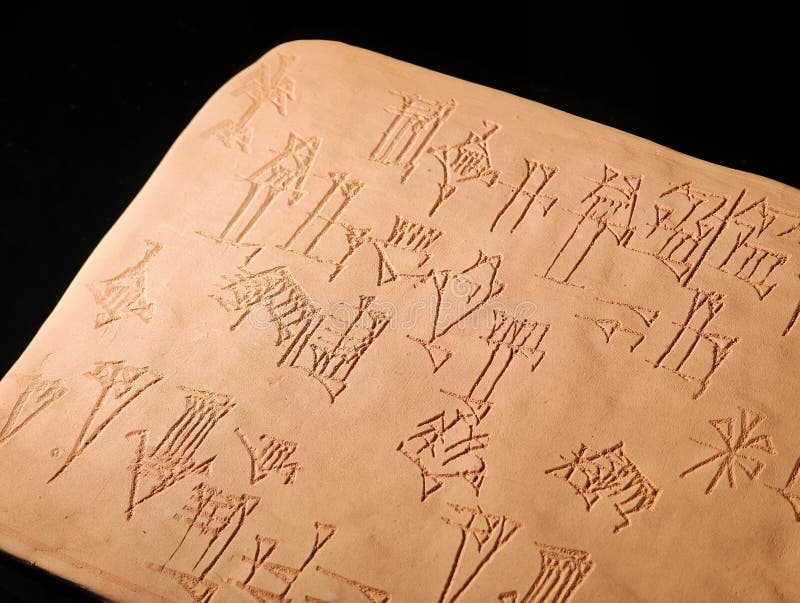
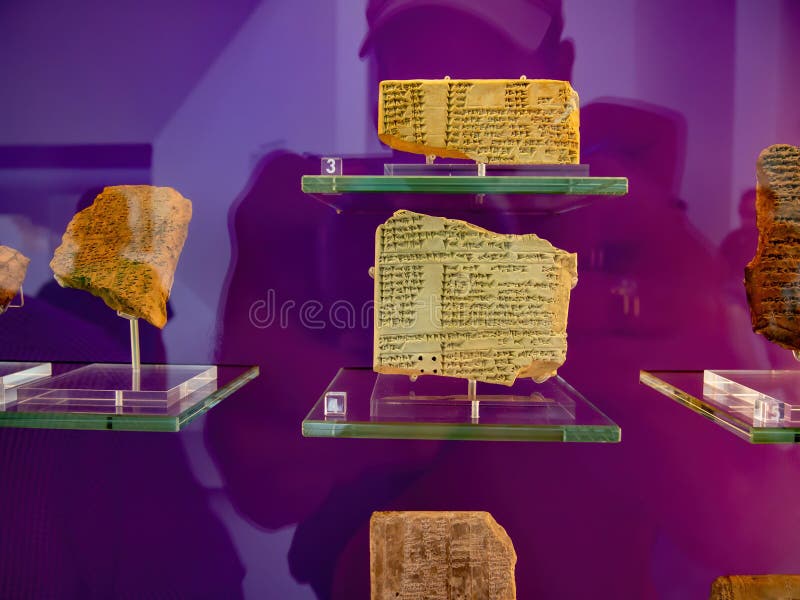
Clay tablet engraved with cuneiform script, ancient mesopotamian writing system artifact with sumerian and akkadian characters, archeological museum object on black background, macro closeup detail. Cuneiform letters stock images, royalty-free photos and pictures
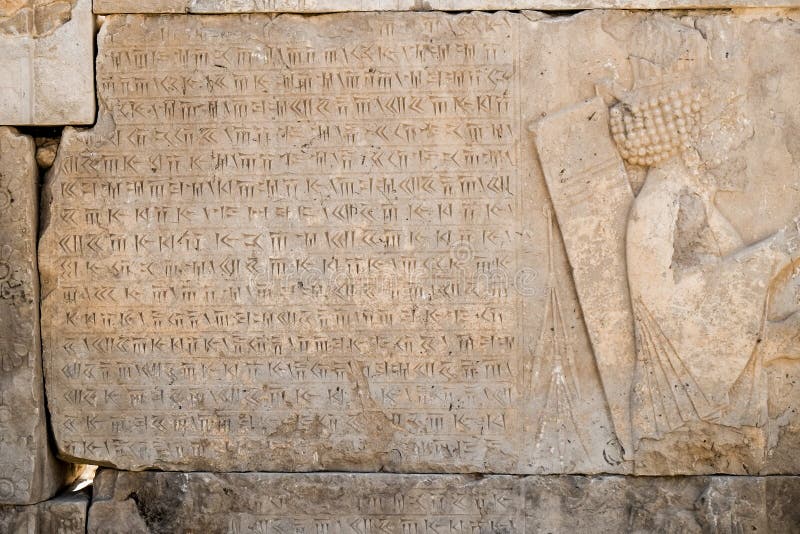
A close-up shot of an ancient stone tablet etched with intricate inscriptions. The weathered surface and deep carvings suggest a historical artifact. The image captures the texture and detail of the stone, highlighting the precision of the ancient writing. Ideal for illustrating history, archeology, language, and cultural heritage. The lighting emphasizes the depth and form of the carved characters. Cuneiform letters stock images, royalty-free photos and pictures
Beirut ) is the capital and largest city of Lebanon. As of 2014, Greater Beirut has a population of 2. 5 million, just under half of Lebanon's population,[5] which makes it the third-largest city in the Levant region and the sixteenth-largest in the Arab world. The city is situated on a peninsula at the midpoint of Lebanon's Mediterranean coast. Beirut has been inhabited for more than 5,000 years, making it one of the oldest cities in the world. Beirut is Lebanon's seat of government and plays a central role in the Lebanese economy, with many banks and corporations based in the city. Beirut is an important seaport for the country and region, and rated a Beta + World City by the Globalization and World Cities Research Network. [6] Beirut was severely damaged by the Lebanese Civil War, the 2006 Lebanon War, and the 2020 massive explosion in the Port of Beirut. Its architectural and demographic structure underwent major change in recent decades. [7][8][9][10]EtymologyThe English name Beirut is an early transcription of the Arabic name Bayr? t (????? ). The same name's transcription into French is Beyrouth, which was sometimes used during Lebanon's French mandate. The Arabic name derives from Phoenician b?? r? b?????????????????? rt)? This was a modification of the Canaanite and Phoenician word b. t later b?? t, meaning "wells", in reference to the site's accessible water table? [11][12] The name is first attested in the 14th century BC, when it was mentioned in three Akkadian cuneiform[12] tablets of the Amarna letters,[13] letters sent by King Ammunira of Biruta[14] to Amenhotep III or Amenhotep IV of Egypt?? [15] Biruta was also mentioned in the Amarna letters from King Rib-Hadda of Byblos? [16]The Greeks hellenised the name as B. ryt�s (Ancient Greek:. ), which the Romans latinised as Berytus. [a] When it attained the status of a Roman colony, it was notionally refounded and its official name was emended to Colonia Iulia Augusta Felix Berytus to include its imperial sponsors? At the time of the crusades, the city was known in French as Barut or Baruth???????. Cuneiform letters stock images, royalty-free photos and pictures
Beirut ) is the capital and largest city of Lebanon. As of 2014, Greater Beirut has a population of 2. 5 million, just under half of Lebanon's population,[5] which makes it the third-largest city in the Levant region and the sixteenth-largest in the Arab world. The city is situated on a peninsula at the midpoint of Lebanon's Mediterranean coast. Beirut has been inhabited for more than 5,000 years, making it one of the oldest cities in the world. Beirut is Lebanon's seat of government and plays a central role in the Lebanese economy, with many banks and corporations based in the city. Beirut is an important seaport for the country and region, and rated a Beta + World City by the Globalization and World Cities Research Network. [6] Beirut was severely damaged by the Lebanese Civil War, the 2006 Lebanon War, and the 2020 massive explosion in the Port of Beirut. Its architectural and demographic structure underwent major change in recent decades. [7][8][9][10]EtymologyThe English name Beirut is an early transcription of the Arabic name Bayr? t (????? ). The same name's transcription into French is Beyrouth, which was sometimes used during Lebanon's French mandate. The Arabic name derives from Phoenician b?? r? b?????????????????? rt)? This was a modification of the Canaanite and Phoenician word b. t later b?? t, meaning "wells", in reference to the site's accessible water table? [11][12] The name is first attested in the 14th century BC, when it was mentioned in three Akkadian cuneiform[12] tablets of the Amarna letters,[13] letters sent by King Ammunira of Biruta[14] to Amenhotep III or Amenhotep IV of Egypt?? [15] Biruta was also mentioned in the Amarna letters from King Rib-Hadda of Byblos? [16]The Greeks hellenised the name as B. ryts (Ancient Greek:. ), which the Romans latinised as Berytus. [a] When it attained the status of a Roman colony, it was notionally refounded and its official name was emended to Colonia Iulia Augusta Felix Berytus to include its imperial sponsors? At the time of the crusades, the city was known in French as Barut or Baruth???????. Cuneiform letters stock images, royalty-free photos and pictures

Beirut Lebanon skyline and beach at night. Beirut ) is the capital and largest city of Lebanon. As of 2014, Greater Beirut has a population of 2.5 million, just under half of Lebanon's population,[5] which makes it the third-largest city in the Levant region and the sixteenth-largest in the Arab world. The city is situated on a peninsula at the midpoint of Lebanon's Mediterranean coast. Beirut has been inhabited for more than 5,000 years, making it one of the oldest cities in the world.Beirut is Lebanon's seat of government and plays a central role in the Lebanese economy, with many banks and corporations based in the city. Beirut is an important seaport for the country and region, and rated a Beta + World City by the Globalization and World Cities Research Network.[6] Beirut was severely damaged by the Lebanese Civil War, the 2006 Lebanon War, and the 2020 massive explosion in the Port of Beirut. Its architectural and demographic structure underwent major change in recent decades.[7][8][9][10]EtymologyThe English name Beirut is an early transcription of the Arabic name Bayr?t (?????). The same name's transcription into French is Beyrouth, which was sometimes used during Lebanon's French mandate. The Arabic name derives from Phoenician b??r?t (?????????????????? b?rt). This was a modification of the Canaanite and Phoenician word b??r?t later b??r?t, meaning "wells", in reference to the site's accessible water table.[11][12] The name is first attested in the 14th century BC, when it was mentioned in three Akkadian cuneiform[12] tablets of the Amarna letters,[13] letters sent by King Ammunira of Biruta[14] to Amenhotep III or Amenhotep IV of Egypt.[15] Biruta was also mentioned in the Amarna letters from King Rib-Hadda of Byblos.[16]The Greeks hellenised the name as B?ryts (Ancient Greek: ???????), which the Romans latinised as Berytus.[a] When it attained the status of a Roman colony, it was notionally refounded and its official name was emended to Colonia Iulia Augusta Felix Berytus to include its imperial sponsors.At the time of the crusades, the city was known in French as Barut or Baruth.

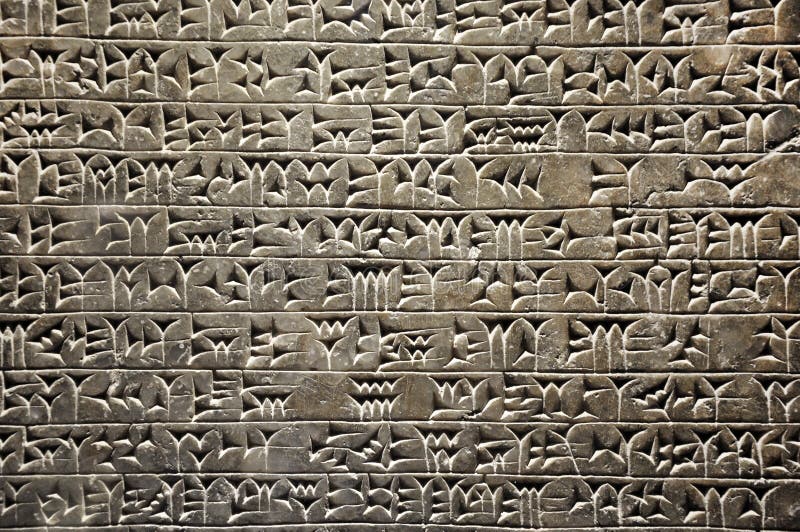
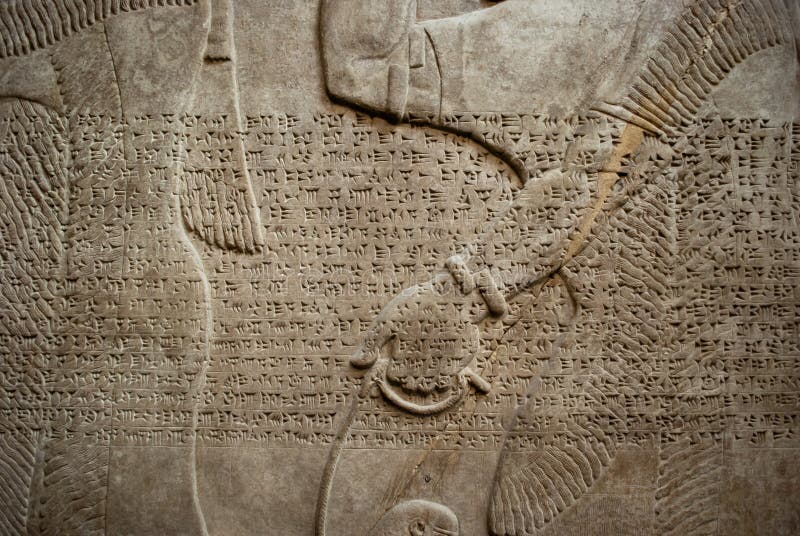
Cuneiform is a logo-syllabic script that was used to write several languages of the Ancient Near East. Cuneiform originally developed to write the Sumerian language of southern Mesopotamia modern day Iraq. Along with Egyptian hieroglyphs, it is one of the earliest writing systems. This example is photographed in the Louvre Museum, Paris, France. Cuneiform letters stock images, royalty-free photos and pictures
A Bronze Slab Letter from the 13 century before Christ in the Museum of Anatolian Civilizations, Ankara, Turkey. Inscribed with Hittite cuneiform, text of treaty between Great King of Hittite and Kurunta, King of Tarhuntassa. Cuneiform letters stock images, royalty-free photos and pictures
CLOSE UP: Beautiful shot of detailed symbols carefully carved into an ancient clay wall from Sumerian times. Intricate calligraphy written on a historic slab of stone. Spectacular museum exhibit. Cuneiform letters stock images, royalty-free photos and pictures