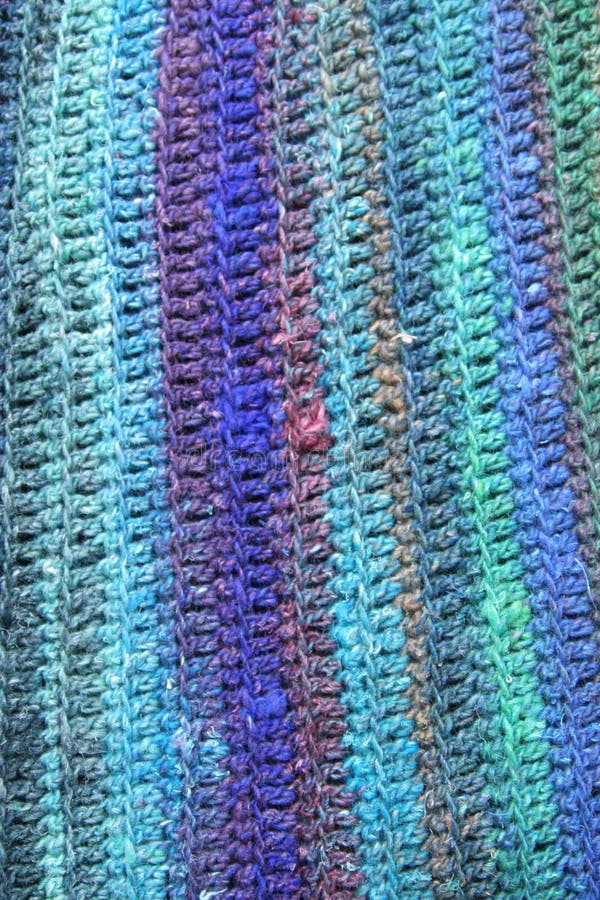
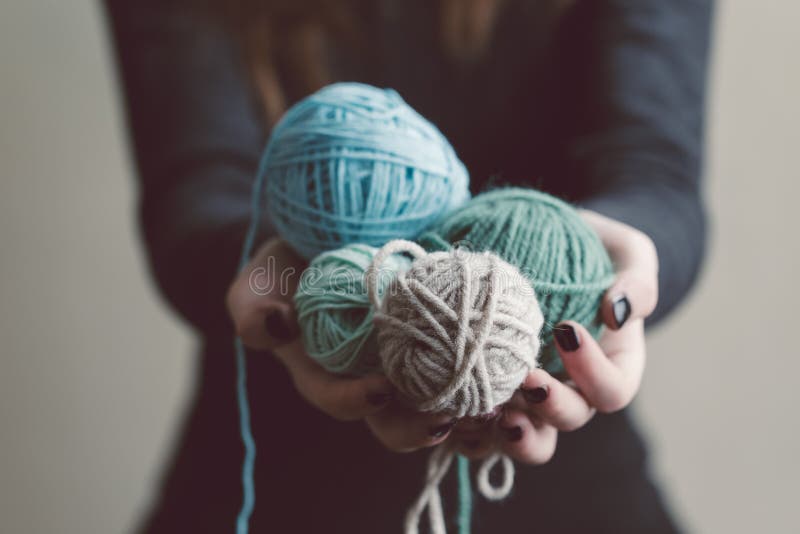
Search among 974 authentic different yarns stock photos, high-definition images, and pictures, or look at other single type or craft projects stock images to enhance your presentation with the perfect visual.
Knit red sweater with love. Knitting is a method by which thread or yarn may be turned into cloth. Knitting consists of loops called stitches pulled through each other. The active stitches are held on a needle until another loop can be passed through them. Knitting may be done by hand or by machine. By hand, there are numerous styles and methods. Flat knitting, which is done on two straight needles, produces a length of cloth, while circular knitting, which is done on circular or double-pointed needles, produces a seamless tube. Different yarns and knitting needles may be used to achieve different end products, by giving the final piece different color, texture, weight, or integrity. Different yarns stock images, royalty-free photos and pictures
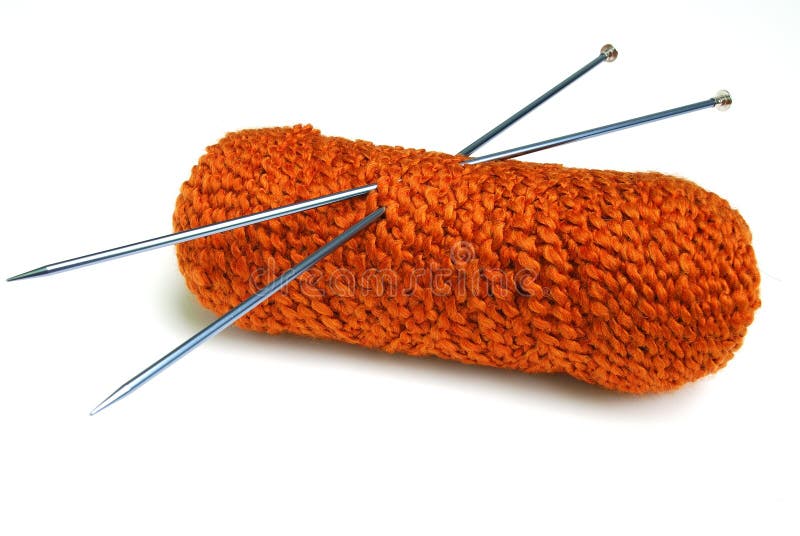
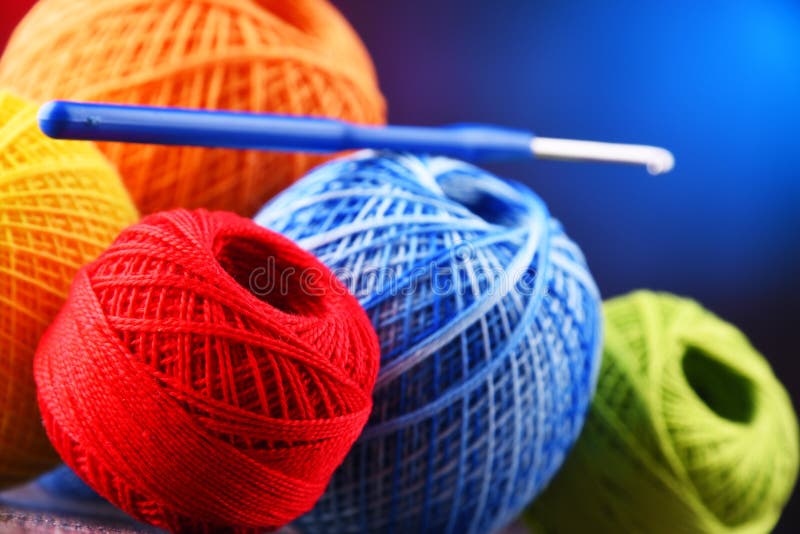
Orange home spun woolen yarn with blue knitting needles for your hand craft projects. Spun yarn is made by twisting or otherwise bonding staple fibers together to make a cohesive thread. Twisting fibers into yarn in the process called spinning can be dated back to the Upper Paleolithic, and yarn spinning was one of the very first processes to be industrialized. Spun yarns may contain a single type of fiber, or be a blend of various types. Combining synthetic fibers (which have high strength, artificial lustre, and fire retardant qualities) with natural fibers (which have good water absorbance and skin comforting qualities) is very common. The most widely used blends are cotton-polyester and wool-acrylic fiber blends. Blends of different natural fibers are common too, especially with more expensive fibers such as angora and cashmere. Different yarns stock images, royalty-free photos and pictures
Home spun green and orange woolen yarn for your gorgeous hand craft projects. Spun yarn is made by twisting or otherwise bonding staple fibers together to make a cohesive thread. Twisting fibers into yarn in the process called spinning can be dated back to the Upper Paleolithic, and yarn spinning was one of the very first processes to be industrialized. Spun yarns may contain a single type of fiber, or be a blend of various types. Combining synthetic fibers (which have high strength, artificial lustre, and fire retardant qualities) with natural fibers (which have good water absorbance and skin comforting qualities) is very common. The most widely used blends are cotton-polyester and wool-acrylic fiber blends. Blends of different natural fibers are common too, especially with more expensive fibers such as angora and cashmere. Different yarns stock images, royalty-free photos and pictures
Dark green and orange home spun woolen yarn for your hand craft projects. Spun yarn is made by twisting or otherwise bonding staple fibers together to make a cohesive thread. Twisting fibers into yarn in the process called spinning can be dated back to the Upper Paleolithic, and yarn spinning was one of the very first processes to be industrialized. Spun yarns may contain a single type of fiber, or be a blend of various types. Combining synthetic fibers (which have high strength, artificial lustre, and fire retardant qualities) with natural fibers (which have good water absorbance and skin comforting qualities) is very common. The most widely used blends are cotton-polyester and wool-acrylic fiber blends. Blends of different natural fibers are common too, especially with more expensive fibers such as angora and cashmere. Different yarns stock images, royalty-free photos and pictures
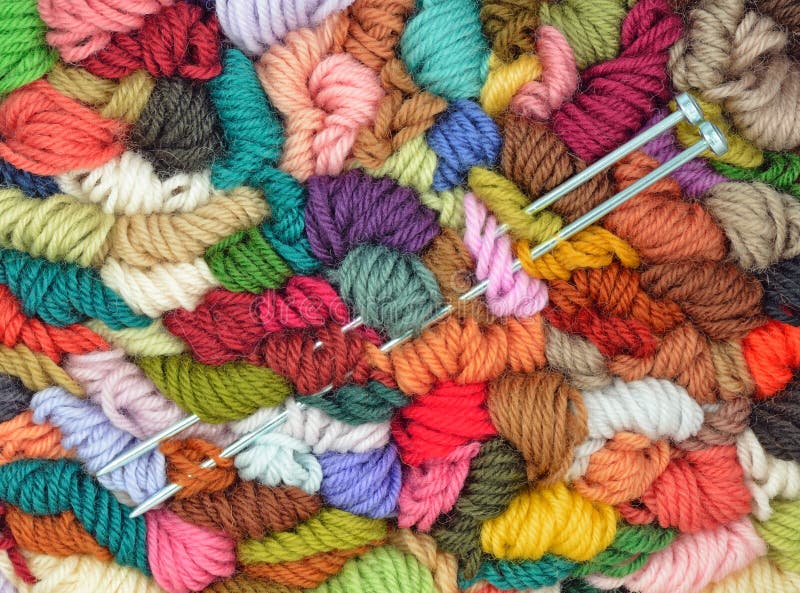
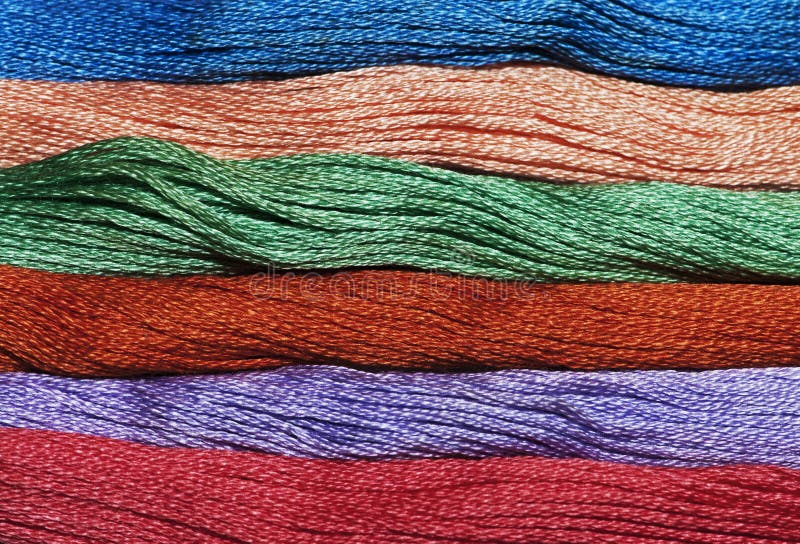
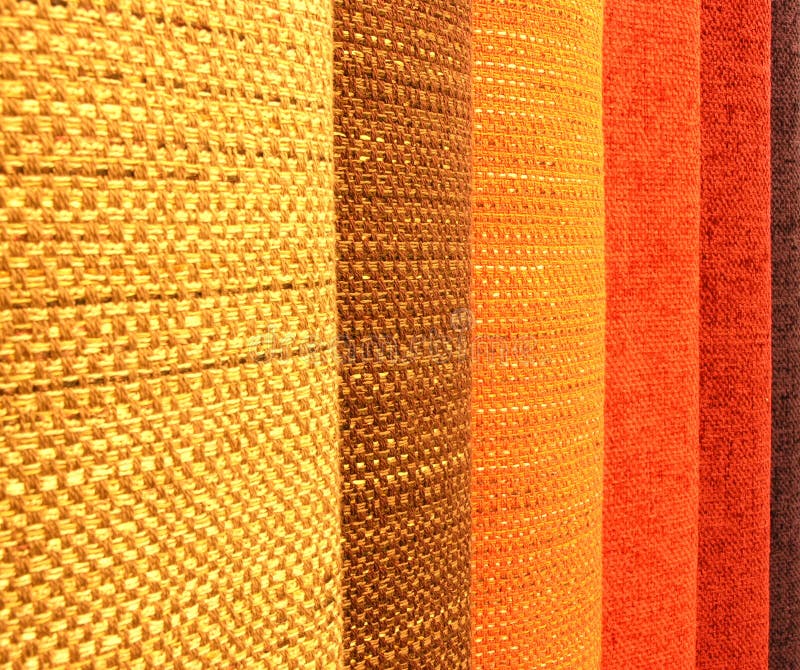
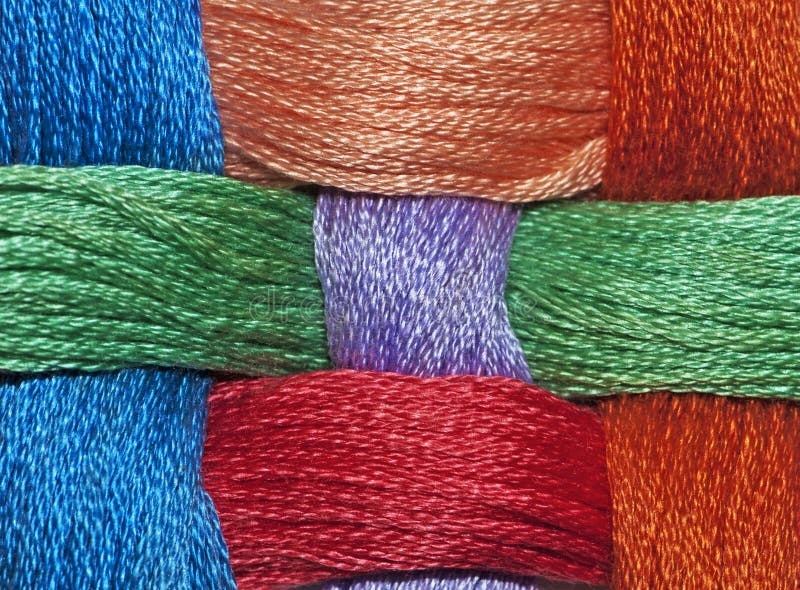
Miscellaneous ribbons, fabrics and yarns woven together of various different colors. Red, orange, yellow, green, blue, purple, pink and violet. This was taken at the Holiday Folk Fair International in Milwaukee, WI. Different yarns stock images, royalty-free photos and pictures
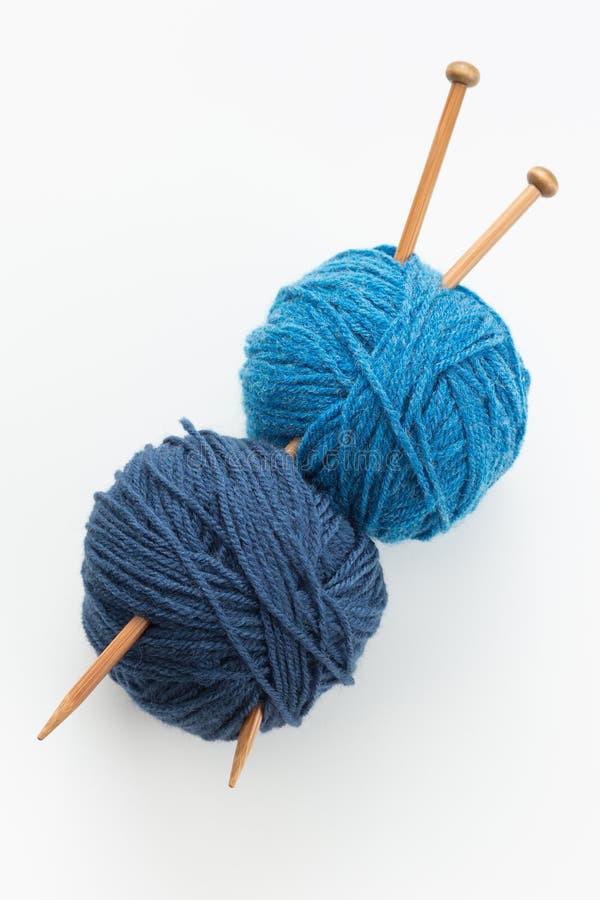
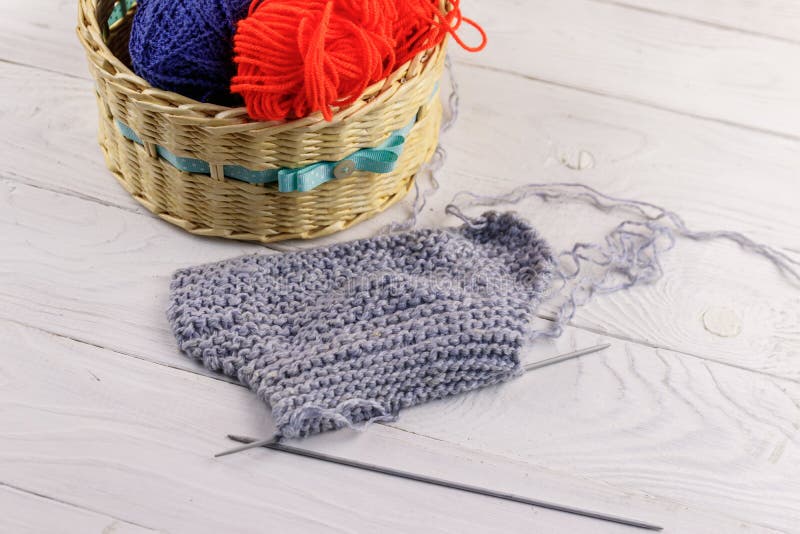
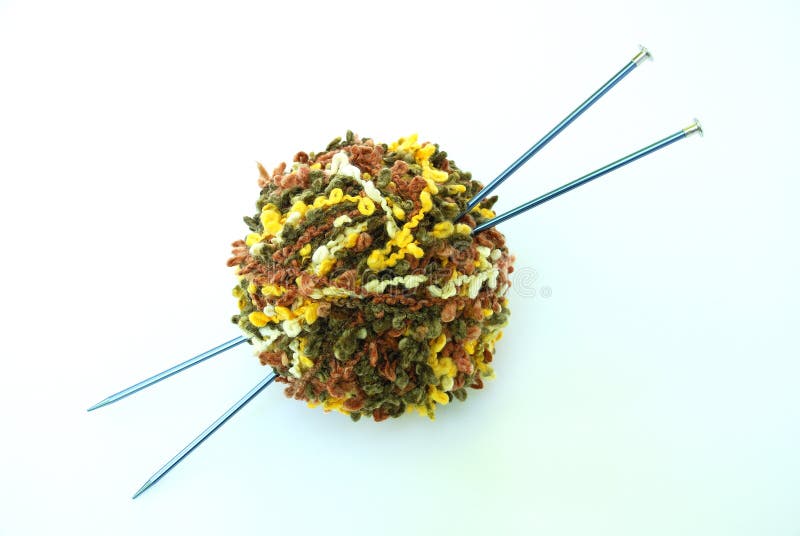
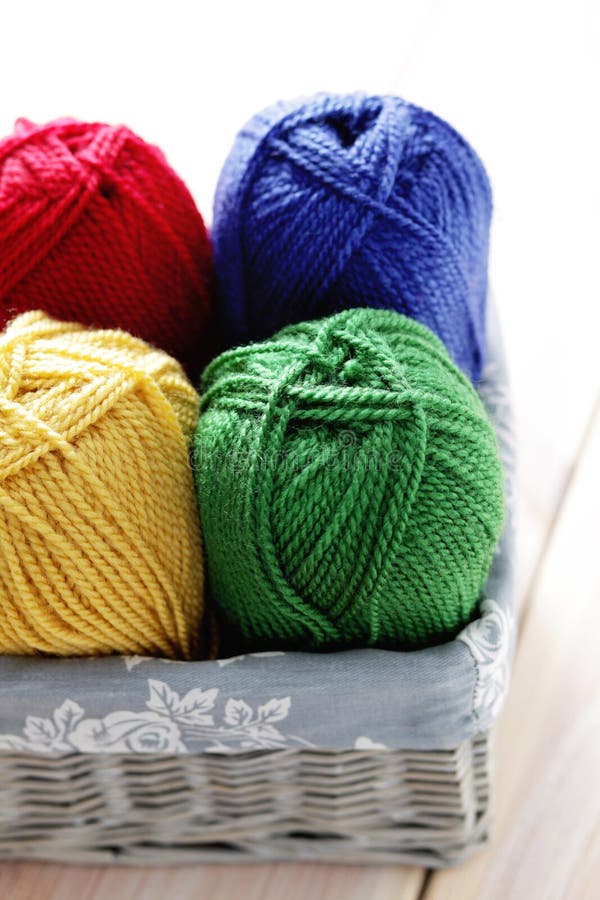
Colorful homespun yarn ball and knitting needles for your creative hand craft projects. Spun yarn is made by twisting or otherwise bonding staple fibers together to make a cohesive thread. Twisting fibers into yarn in the process called spinning can be dated back to the Upper Paleolithic, and yarn spinning was one of the very first processes to be industrialized. Spun yarns may contain a single type of fiber, or be a blend of various types. Combining synthetic fibers (which have high strength, artificial lustre, and fire retardant qualities) with natural fibers (which have good water absorbance and skin comforting qualities) is very common. The most widely used blends are cotton-polyester and wool-acrylic fiber blends. Blends of different natural fibers are common too, especially with more expensive fibers such as angora and cashmere. Different yarns stock images, royalty-free photos and pictures