Search among 77 authentic terrorist brigade stock photos, high-definition images, and pictures, or look at other java city or central java stock images to enhance your presentation with the perfect visual.
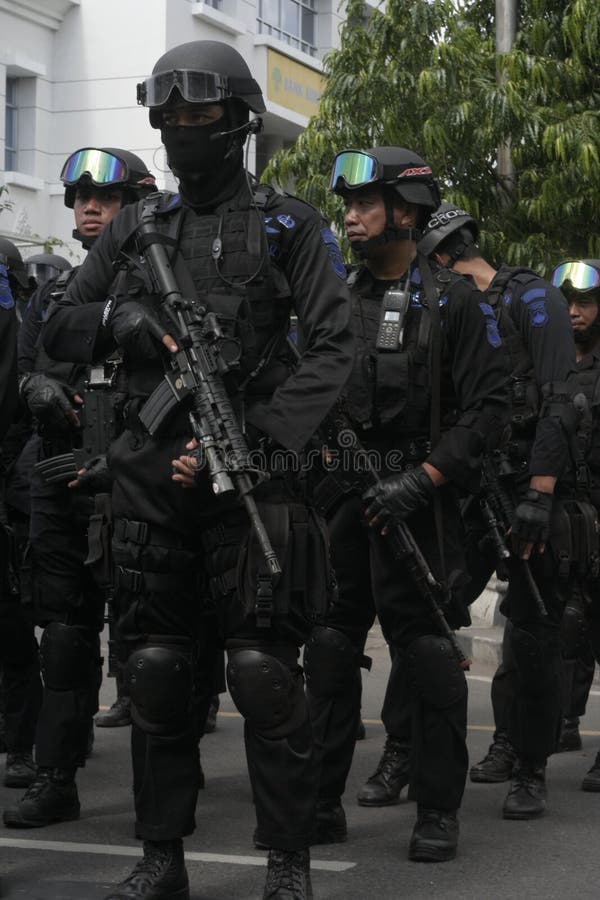
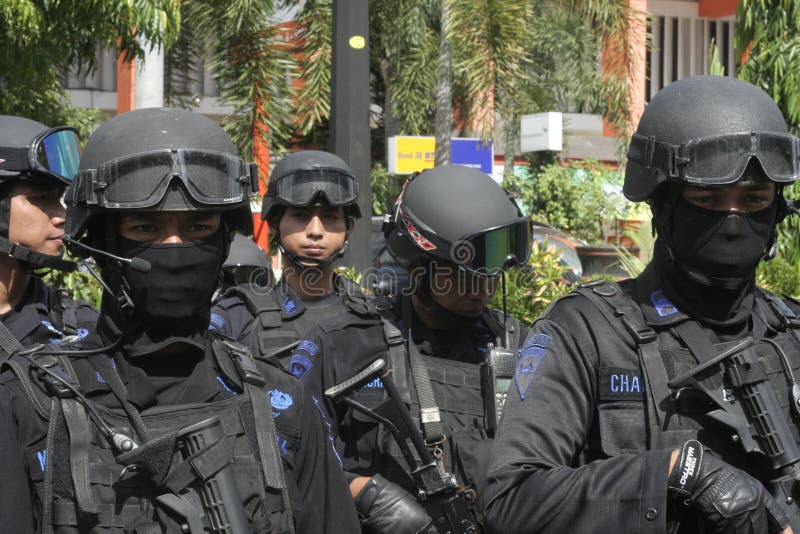
Anti-terrorist police force of Solo in Central Java alert armed and bulletproof vests in front of the building as a place of hiding terrorists. These forces are training ourselves in taking actions against terrorists who simulated in Jalan Sudirman Central Java city of Solo. Terrorist brigade stock images, royalty-free photos and pictures
Army explosives disposal of the city of Solo, Central Java police to evacuate armed and explosive vests to the bag containing explosives from a bank building. This process is a simulation and training in taking actions against terrorists and held in Jalan Sudirman Central Java city of Solo. Terrorist brigade stock images, royalty-free photos and pictures
TZEELIM, SOUTHERN ISRAEL - March 31 2011: Israeli infantry soldiers are participating in an exercise of integrated urban warfare that simulates fighting a war in Gaza at the Tze'elim urban warfare center in southern Israel. Terrorist brigade stock images, royalty-free photos and pictures
Police Mobile Force Brigadier Solo, Central Java, Indonesia with fire armor and bulletproof vests conduct security alert ahead of the Christmas and New Year 2014 in the area around the post office Jalan Sudirman Central Java city of Solo. Terrorist brigade stock images, royalty-free photos and pictures
This sculpted bust of former Italian politician Aldo Moro rests in Bari, Italy in the Puglia region. Moro studied in university in Bari. He was a nimble politician who held numerous high positions including prime minister, foreign minister, and justice minister. Moro was kidnapped by the radical terrorist red brigade and eventually murdered by his captors at the age of 62 in 1978. Terrorist brigade stock images, royalty-free photos and pictures
The damage caused by bullet holes is seen in a home, after gang-members opened fire on it multiple times, demanding the payment of an extortion called the War Tax in her neighborhood known locally as La Brigada (The Brigade) in the zone 5 of Mixco, on the western outskirts of Guatemala City, Guatemala. While no one in the family was hurt inside the home, the attack happened while the children were watching television in the living room. In Latin America, a Mara is a type of transnational criminal gang, particularly prevalent in the Northern Triangle (El Salvador, Honduras, and Guatemala). Unlike other local gangs, maras have a transnational origin as they emerged in Los Angeles during the 1980s, formed mainly by immigrants to protect themselves from already established local gangs. In the 1990s, stricter immigration laws in the United States led to the mass deportation of gang members to their countries of origin. Upon returning, these members replicated the gang culture of Los Angeles, rapidly expanding throughout Central America. There are two dominant groups that maintain a historical and violent rivalry: Mara Salvatrucha (MS-13) and Mara Barrio 18 (M-18). The members, called Mareros in Spanish, are known for their extensive tattoos on their face and body as a symbol of loyalty. They are organized into local cells called Clicas, which operate with great autonomy but under strict codes of conduct. Their main sources of income are widespread extortion, small-scale drug and human trafficking, contract killing, and kidnapping. As of January 2026, Guatemala is experiencing an intense security crisis, with the government declaring a 30-day state of emergency following violent, coordinated offensive attacks by the Barrio 18 gang, that killed 11 police officers in what authorities described as a direct, organized response to the state's actions against their leaders and their prison privileges. Despite joint operations between the Police and the Army, the government faces the challenge of a 340% prison overcrowding, which hinders the effective isolation of the leaders of the Maras. The countries that have declared the Maras as international terrorists organizations are the United States, Canada, El Salvador and Guatemala. These designations allow governments to use more severe legal tools, such as freezing financial assets, longer prison sentences, and expedited extradition processes. Terrorist brigade stock images, royalty-free photos and pictures

Violence and Crime in Guatemala: The Maras, a transnational criminal gang classified as a Terrorist Organization. The damage caused by bullet holes is seen in a home, after gang-members opened fire on it multiple times, demanding the payment of an extortion called the War Tax in her neighborhood known locally as La Brigada (The Brigade) in the zone 5 of Mixco, on the western outskirts of Guatemala City, Guatemala. While no one in the family was hurt inside the home, the attack happened while the children were watching television in the living room. In Latin America, a Mara is a type of transnational criminal gang, particularly prevalent in the Northern Triangle (El Salvador, Honduras, and Guatemala). Unlike other local gangs, maras have a transnational origin as they emerged in Los Angeles during the 1980s, formed mainly by immigrants to protect themselves from already established local gangs. In the 1990s, stricter immigration laws in the United States led to the mass deportation of gang members to their countries of origin. Upon returning, these members replicated the gang culture of Los Angeles, rapidly expanding throughout Central America. There are two dominant groups that maintain a historical and violent rivalry: Mara Salvatrucha (MS-13) and Mara Barrio 18 (M-18). The members, called Mareros in Spanish, are known for their extensive tattoos on their face and body as a symbol of loyalty. They are organized into local cells called Clicas, which operate with great autonomy but under strict codes of conduct. Their main sources of income are widespread extortion, small-scale drug and human trafficking, contract killing, and kidnapping. As of January 2026, Guatemala is experiencing an intense security crisis, with the government declaring a 30-day state of emergency following violent, coordinated offensive attacks by the Barrio 18 gang, that killed 11 police officers in what authorities described as a direct, organized response to the state's actions against their leaders and their prison privileges. Despite joint operations between the Police and the Army, the government faces the challenge of a 340% prison overcrowding, which hinders the effective isolation of the leaders of the Maras. The countries that have declared the Maras as international terrorists organizations are the United States, Canada, El Salvador and Guatemala. These designations allow governments to use more severe legal tools, such as freezing financial assets, longer prison sentences, and expedited extradition processes.

The damage caused by bullet holes is seen in a home, after gang-members opened fire on it multiple times, demanding the payment of an extortion called the War Tax in her neighborhood known locally as La Brigada (The Brigade) in the zone 5 of Mixco, on the western outskirts of Guatemala City, Guatemala. While no one in the family was hurt inside the home, the attack happened while the children were watching television in the living room. In Latin America, a Mara is a type of transnational criminal gang, particularly prevalent in the Northern Triangle (El Salvador, Honduras, and Guatemala). Unlike other local gangs, maras have a transnational origin as they emerged in Los Angeles during the 1980s, formed mainly by immigrants to protect themselves from already established local gangs. In the 1990s, stricter immigration laws in the United States led to the mass deportation of gang members to their countries of origin. Upon returning, these members replicated the gang culture of Los Angeles, rapidly expanding throughout Central America. There are two dominant groups that maintain a historical and violent rivalry: Mara Salvatrucha (MS-13) and Mara Barrio 18 (M-18). The members, called Mareros in Spanish, are known for their extensive tattoos on their face and body as a symbol of loyalty. They are organized into local cells called Clicas, which operate with great autonomy but under strict codes of conduct. Their main sources of income are widespread extortion, small-scale drug and human trafficking, contract killing, and kidnapping. As of January 2026, Guatemala is experiencing an intense security crisis, with the government declaring a 30-day state of emergency following violent, coordinated offensive attacks by the Barrio 18 gang, that killed 11 police officers in what authorities described as a direct, organized response to the state's actions against their leaders and their prison privileges. Despite joint operations between the Police and the Army, the government faces the challenge of a 340% prison overcrowding, which hinders the effective isolation of the leaders of the Maras. The countries that have declared the Maras as international terrorists organizations are the United States, Canada, El Salvador and Guatemala. These designations allow governments to use more severe legal tools, such as freezing financial assets, longer prison sentences, and expedited extradition processes. Terrorist brigade stock images, royalty-free photos and pictures

Violence and Crime in Guatemala: The Maras, a transnational criminal gang classified as a Terrorist Organization. The damage caused by bullet holes is seen in a home, after gang-members opened fire on it multiple times, demanding the payment of an extortion called the War Tax in her neighborhood known locally as La Brigada (The Brigade) in the zone 5 of Mixco, on the western outskirts of Guatemala City, Guatemala. While no one in the family was hurt inside the home, the attack happened while the children were watching television in the living room. In Latin America, a Mara is a type of transnational criminal gang, particularly prevalent in the Northern Triangle (El Salvador, Honduras, and Guatemala). Unlike other local gangs, maras have a transnational origin as they emerged in Los Angeles during the 1980s, formed mainly by immigrants to protect themselves from already established local gangs. In the 1990s, stricter immigration laws in the United States led to the mass deportation of gang members to their countries of origin. Upon returning, these members replicated the gang culture of Los Angeles, rapidly expanding throughout Central America. There are two dominant groups that maintain a historical and violent rivalry: Mara Salvatrucha (MS-13) and Mara Barrio 18 (M-18). The members, called Mareros in Spanish, are known for their extensive tattoos on their face and body as a symbol of loyalty. They are organized into local cells called Clicas, which operate with great autonomy but under strict codes of conduct. Their main sources of income are widespread extortion, small-scale drug and human trafficking, contract killing, and kidnapping. As of January 2026, Guatemala is experiencing an intense security crisis, with the government declaring a 30-day state of emergency following violent, coordinated offensive attacks by the Barrio 18 gang, that killed 11 police officers in what authorities described as a direct, organized response to the state's actions against their leaders and their prison privileges. Despite joint operations between the Police and the Army, the government faces the challenge of a 340% prison overcrowding, which hinders the effective isolation of the leaders of the Maras. The countries that have declared the Maras as international terrorists organizations are the United States, Canada, El Salvador and Guatemala. These designations allow governments to use more severe legal tools, such as freezing financial assets, longer prison sentences, and expedited extradition processes.

An unidentified woman shows the damage caused by bullet holes on her front door and windows, after gang-members shot her home multiple times, demanding the payment of an extortion called the War Tax in her neighborhood known locally as La Brigada (The Brigade) in the zone 5 of Mixco, on the western outskirts of Guatemala City, Guatemala. While no one in the family was hurt inside the home, the attack happened while the children were watching television in the living room. In Latin America, a Mara is a type of transnational criminal gang, particularly prevalent in the Northern Triangle (El Salvador, Honduras, and Guatemala). Unlike other local gangs, maras have a transnational origin as they emerged in Los Angeles during the 1980s, formed mainly by immigrants to protect themselves from already established local gangs. In the 1990s, stricter immigration laws in the United States led to the mass deportation of gang members to their countries of origin. Upon returning, these members replicated the gang culture of Los Angeles, rapidly expanding throughout Central America. There are two dominant groups that maintain a historical and violent rivalry: Mara Salvatrucha (MS-13) and Mara Barrio 18 (M-18). The members, called Mareros in Spanish, are known for their extensive tattoos on their face and body as a symbol of loyalty. They are organized into local cells called Clicas, which operate with great autonomy but under strict codes of conduct. Their main sources of income are widespread extortion, small-scale drug and human trafficking, contract killing, and kidnapping. As of January 2026, Guatemala is experiencing an intense security crisis, with the government declaring a 30-day state of emergency following violent, coordinated offensive attacks by the Barrio 18 gang, that killed 11 police officers in what authorities described as a direct, organized response to the state's actions against their leaders and their prison privileges. Despite joint operations between the Police and the Army, the government faces the challenge of a 340% prison overcrowding, which hinders the effective isolation of the leaders of the Maras. The countries that have declared the Maras as international terrorists organizations are the United States, Canada, El Salvador and Guatemala. These designations allow governments to use more severe legal tools, such as freezing financial assets, longer prison sentences, and expedited extradition processes. Terrorist brigade stock images, royalty-free photos and pictures

Violence and Crime in Guatemala: The Maras, a transnational criminal gang classified as a Terrorist Organization. An unidentified woman shows the damage caused. An unidentified woman shows the damage caused by bullet holes on her front door and windows, after gang-members shot her home multiple times, demanding the payment of an extortion called the War Tax in her neighborhood known locally as La Brigada (The Brigade) in the zone 5 of Mixco, on the western outskirts of Guatemala City, Guatemala. While no one in the family was hurt inside the home, the attack happened while the children were watching television in the living room. In Latin America, a Mara is a type of transnational criminal gang, particularly prevalent in the Northern Triangle (El Salvador, Honduras, and Guatemala). Unlike other local gangs, maras have a transnational origin as they emerged in Los Angeles during the 1980s, formed mainly by immigrants to protect themselves from already established local gangs. In the 1990s, stricter immigration laws in the United States led to the mass deportation of gang members to their countries of origin. Upon returning, these members replicated the gang culture of Los Angeles, rapidly expanding throughout Central America. There are two dominant groups that maintain a historical and violent rivalry: Mara Salvatrucha (MS-13) and Mara Barrio 18 (M-18). The members, called Mareros in Spanish, are known for their extensive tattoos on their face and body as a symbol of loyalty. They are organized into local cells called Clicas, which operate with great autonomy but under strict codes of conduct. Their main sources of income are widespread extortion, small-scale drug and human trafficking, contract killing, and kidnapping. As of January 2026, Guatemala is experiencing an intense security crisis, with the government declaring a 30-day state of emergency following violent, coordinated offensive attacks by the Barrio 18 gang, that killed 11 police officers in what authorities described as a direct, organized response to the state's actions against their leaders and their prison privileges. Despite joint operations between the Police and the Army, the government faces the challenge of a 340% prison overcrowding, which hinders the effective isolation of the leaders of the Maras. The countries that have declared the Maras as international terrorists organizations are the United States, Canada, El Salvador and Guatemala. These designations allow governments to use more severe legal tools, such as freezing financial assets, longer prison sentences, and expedited extradition processes.

Anti riot special forces of Serbian police securing non-violent civil gathering against violence in Kosovo. On the back it is written in Serbian language "Policija", which means Police). Terrorist brigade stock images, royalty-free photos and pictures
Anti-terrorist police force of Solo in Central Java alert armed and bulletproof vests in front of the building as a place of hiding terrorists. These forces are training ourselves in taking actions against terrorists who simulated in Jalan Sudirman Central Java city of Solo. Terrorist brigade stock images, royalty-free photos and pictures
Police anti-terrorist squad in Solo, Central Java on standby with full guns and bullet proof vests as well as the building where terrorists hide. These forces are training ourselves in taking actions against terrorists who simulated in Jalan Sudirman Central Java city of Solo. Terrorist brigade stock images, royalty-free photos and pictures
Three police anti-terrorist squad in Solo, Central Java on standby with full guns and bullet proof vests as well as the building where terrorists hide. These forces are training ourselves in taking actions against terrorists who simulated in Jalan Sudirman Central Java city of Solo. Terrorist brigade stock images, royalty-free photos and pictures
TZEELIM, SOUTHERN ISRAEL - March 31 2011: Israeli infantry soldiers are participating in an exercise of integrated urban warfare that simulates fighting a war in Gaza at the Tze'elim urban warfare center in southern Israel. Terrorist brigade stock images, royalty-free photos and pictures
Police Mobile Force Brigadier Solo, Central Java, Indonesia with fire armor and bulletproof vests conduct security alert ahead of the Christmas and New Year 2014 in the area around the post office Jalan Sudirman Central Java city of Solo. Terrorist brigade stock images, royalty-free photos and pictures
Police Mobile Force Brigadier Solo, Central Java, Indonesia with fire armor lined perform security alert ahead of Christmas in 2013 around the area of ​​Jalan Sudirman church in Solo, Central Java. Terrorist brigade stock images, royalty-free photos and pictures
Police Mobile Force Brigadier Solo, Central Java, Indonesia with fire armor and bulletproof vests conduct security alert ahead of the Christmas and New Year 2014 in the area around the post office Jalan Sudirman Central Java city of Solo. Terrorist brigade stock images, royalty-free photos and pictures
Police Mobile Force Brigadier Solo, Central Java, Indonesia with fire armor and bullet proof vests and intelligence forces conduct security alert ahead of the Christmas and New Year 2014 in the area around the post office Jalan Sudirman Central Java city of Solo. Terrorist brigade stock images, royalty-free photos and pictures
Forces and army Brigadier Mobile Police explosives squad in Solo, Central Java, Indonesia with firearms and equipment vests of explosives do security alert ahead of the Christmas and New Year 2014 in the area around the post office Jalan Sudirman Central Java city of Solo. Terrorist brigade stock images, royalty-free photos and pictures