Free with trial Commemorate World Down Syndrome Day on March 21 with geometric art that celebrates the extra chromosome and advocates for inclusivity and respect. Vector style. Abnormal vectors Promote inclusivity with Down Syndrome Day design. Commemorate World Down Syndrome Day on March 21 with geometric art that celebrates the extra chromosome and. Commemorate World Down Syndrome Day on March 21 with geometric art that celebrates the extra chromosome and advocates for inclusivity and respect. Vector style
Free with trial Retinitis pigmentosa anatomical poster. Human eye diseases concept, retina tissue problem. Vision loss and blindness, sensitivity to bright light and loss of color vision medical vector illustration. Abnormal vectors Retinitis pigmentosa poster. Retinitis pigmentosa anatomical poster. Human eye diseases concept, retina tissue problem. Vision loss and blindness, sensitivity to. Retinitis pigmentosa anatomical poster. Human eye diseases concept, retina tissue problem. Vision loss and blindness, sensitivity to bright light and loss of color vision medical vector illustration.
Free with trial Concerned male with lot of belly fat. Man weight gain. Obesity disease. Guy surprised abdomen obese. Unhealthy lifestyle. Overeating habit. Big stomach. Body mass increase. Vector overweight concept. Abnormal vectors Concerned male with lot of belly fat. Man weight gain. Obesity disease. Guy surprised abdomen obese. Unhealthy lifestyle. Overeating habit. Big stomach. Body
Free with trial World Down Syndrome Day on March 21 is highlighted with a vibrant geometric theme, emphasizing acceptance and the beauty of extra chromosomes. Vector style. Abnormal vectors Mark World Down Syndrome Day with a vibrant design. World Down Syndrome Day on March 21 is highlighted with a vibrant geometric theme, emphasizing acceptance and. World Down Syndrome Day on March 21 is highlighted with a vibrant geometric theme, emphasizing acceptance and the beauty of extra chromosomes. Vector style
Free with trial Two human kidneys side by side comparison a healthy red organ and a diseased dark red organ with internal damage on a white background. Abnormal vectors Healthy and diseased human kidney comparison side by side anatomy transparent background organ. Two human kidneys side by side comparison a healthy red organ and. Two human kidneys side by side comparison a healthy red organ and a diseased dark red organ with internal damage on a white background
Free with trial Bradycardia line black icon. Sign for web page, mobile app, button, logo. Vector isolated button. Editable stroke. Abnormal vectors Bradycardia line black icon. Signs for web page. Bradycardia line black icon. Sign for web page, mobile app, button, logo. Vector isolated button. Editable. Bradycardia line black icon. Sign for web page, mobile app, button, logo. Vector isolated button. Editable stroke
Free with trial A comparative medical illustration showcasing various states of the thyroid gland, highlighting differences in texture and density to represent distinct health conditions and abnormalities. Abnormal vectors Diagram illustrating different thyroid gland conditions, isolated on transparent background. A comparative medical illustration showcasing various states of the. A comparative medical illustration showcasing various states of the thyroid gland, highlighting differences in texture and density to represent distinct health conditions and abnormalities
Free with trial Geometric designs for World Down Syndrome Day on March 21 highlight extra chromosomes and the importance of inclusivity, promoting awareness and understanding. Abnormal vectors Promote awareness with World Down Syndrome Day theme. Geometric designs for World Down Syndrome Day on March 21 highlight extra chromosomes and the importance of. Geometric designs for World Down Syndrome Day on March 21 highlight extra chromosomes and the importance of inclusivity, promoting awareness and understanding
Free with trial On March 21, celebrate World Down Syndrome Day with geometric shapes illustrating extra chromosomes and the importance of inclusion and celebration. Vector style. Abnormal vectors Geometric art for World Down Syndrome Day on March 21. On March 21, celebrate World Down Syndrome Day with geometric shapes illustrating extra chromosomes and. On March 21, celebrate World Down Syndrome Day with geometric shapes illustrating extra chromosomes and the importance of inclusion and celebration. Vector style
Free with trial Diagram showing different nail conditions like brittle nails, pitting, fungal infection, and peeling, with clear labels for medical reference. Abnormal vectors Diagram illustrating various nail conditions and abnormalities with clear line art icons and. Diagram showing different nail conditions like brittle nails. Diagram showing different nail conditions like brittle nails, pitting, fungal infection, and peeling, with clear labels for medical reference
Free with trial World Down Syndrome Day on March 21 features a geometric theme promoting inclusivity, awareness, and celebrating the beauty of extra chromosomes. Vector illustration. Abnormal vectors Geometric theme for celebrates World Down Syndrome Day. World Down Syndrome Day on March 21 features a geometric theme promoting inclusivity, awareness, and. World Down Syndrome Day on March 21 features a geometric theme promoting inclusivity, awareness, and celebrating the beauty of extra chromosomes. Vector illustration
Free with trial An interior shot of a futuristic, curved room with a glowing pink light creating an abstract pattern. High quality photo AI generated. Abnormal vectors An interior shot of a futuristic, curved room with a glowing pink light creating an abstract pattern. High quality photo AI generated
Free with trial On March 21, World Down Syndrome Day is commemorated with creative geometric shapes highlighting extra chromosomes and advocating for inclusivity. Vector style. Abnormal vectors Advocate inclusivity with World Down Syndrome Day design. On March 21, World Down Syndrome Day is commemorated with creative geometric shapes highlighting extra. On March 21, World Down Syndrome Day is commemorated with creative geometric shapes highlighting extra chromosomes and advocating for inclusivity. Vector style
Free with trial A simple flat style illustration of a black mythical cat creature with glowing yellow eyes on a solid black background. Abnormal vectors Stylized Illustration of a Mysterious Feline Creature with Glowing Eyes. A simple flat style illustration of a black mythical cat creature with glowing yellow. A simple flat style illustration of a black mythical cat creature with glowing yellow eyes on a solid black background.
Free with trial A clean electrocardiogram waveform shown in stark black against a pure white backdrop symbolizing vital health indicators and medical diagnostics for healthcare communications. Abnormal vectors Electrocardiogram line in black on a white background representing a healthy heartbeat rhythm concept. A clean electrocardiogram waveform shown in stark black. A clean electrocardiogram waveform shown in stark black against a pure white backdrop symbolizing vital health indicators and medical diagnostics for healthcare communications
Free with trial A geometric celebration of World Down Syndrome Day on March 21, focusing on the extra chromosome and raising awareness for inclusion. Abnormal vectors World Down Syndrome Day brings awareness with geometric art. A geometric celebration of World Down Syndrome Day on March 21, focusing on the extra chromosome and. A geometric celebration of World Down Syndrome Day on March 21, focusing on the extra chromosome and raising awareness for inclusion
Free with trial This infographic visually outlines the diverse range of symptoms associated with paraneoplastic syndromes, including neurological issues like trouble walking, muscle weakness, dizziness, memory loss, ataxia, and involuntary movements. It also depicts other common manifestations such as headaches, vision problems, excessive sweating, abnormal heart rate, and respiratory or gastrointestinal distress (dyspnea, nausea). Furthermore, the graphic illustrates diagnostic and treatment approaches, including blood tests, MRI imaging, spinal analysis, laboratory analysis, medications, intravenous therapies, plasmapheresis, immunotherapy, physical exercises, and supportive care for patients. Abnormal vectors Paraneoplastic syndromes symptoms and treatments icons set with trouble walking, muscle weakness. This infographic visually outlines the diverse range of. This infographic visually outlines the diverse range of symptoms associated with paraneoplastic syndromes, including neurological issues like trouble walking, muscle weakness, dizziness, memory loss, ataxia, and involuntary movements. It also depicts other common manifestations such as headaches, vision problems, excessive sweating, abnormal heart rate, and respiratory or gastrointestinal distress (dyspnea, nausea). Furthermore, the graphic illustrates diagnostic and treatment approaches, including blood tests, MRI imaging, spinal analysis, laboratory analysis, medications, intravenous therapies, plasmapheresis, immunotherapy, physical exercises, and supportive care for patients.
Free with trial World Down Syndrome Day on March 21 highlights a geometric background design celebrating extra chromosomes, promoting diversity, and fostering awareness. Vector. Abnormal vectors Promote diversity on World Down Syndrome Day geometric banner. World Down Syndrome Day on March 21 highlights a geometric background design celebrating extra. World Down Syndrome Day on March 21 highlights a geometric background design celebrating extra chromosomes, promoting diversity, and fostering awareness. Vector
Free with trial Acute myeloid leukemia logotype. Blood cancer symbol. Round banner in red, black color. Medical graphic element. Hematology concept. Editable vector illustration in linear style on a white background. Abnormal vectors Acute myeloid leukemia logotype. Blood cancer symbol. Round banner in red, black color. Medical graphic element. Hematology concept. Editable vector
Free with trial A photo of an Italian cemetery photographed with fish eye lens. Abnormal vision. Abnormal vectors Cemetery landscape photographed with fish eye lens. A photo of an Italian cemetery photographed with fish eye lens.Abnormal vision. A photo of an Italian cemetery photographed with fish eye lens.Abnormal vision.
Free with trial X linked dominant inheritance pattern. Child inherits one copy of a mutated gene from each parent. Genetic disease or disorder. Affected, carriers or healthy X and Y chromosomes vector illustration. Abnormal vectors Dominant inheritance pattern. X linked dominant inheritance pattern. Child inherits one copy of a mutated gene from each parent. Genetic disease or disorder. X linked dominant inheritance pattern. Child inherits one copy of a mutated gene from each parent. Genetic disease or disorder. Affected, carriers or healthy X and Y chromosomes vector illustration.
Free with trial A simple line graph representing a heartbeat and pulse, symbolizing life, health, and medical monitoring. Abnormal vectors Electrocardiogram heart rhythm line, medical symbol for vital signs and health monitoring, science graphic. A simple line graph representing a heartbeat and. A simple line graph representing a heartbeat and pulse, symbolizing life, health, and medical monitoring
Free with trial Brain neural disease for healthcare infographic. Vector flat illustration. Atherosclerosis, ischemic, hemorrhagic strokes. Brain front view with vessel, blood clot. Design for health care, education. Abnormal vectors Brain neural disease for healthcare infographic. Vector flat illustration. Atherosclerosis, ischemic, hemorrhagic strokes. Brain. Front view with vessel, blood. Brain neural disease for healthcare infographic. Vector flat illustration. Atherosclerosis, ischemic, hemorrhagic strokes. Brain front view with vessel, blood clot. Design for health care, education
Free with trial Celiac Disease Month background design with Green silk ribbon. Abnormal vectors Celiac Disease Month background design with Green silk ribbon.
Free with trial Human body showing scoliosis spinal condition icon. Simple outline icon representing scoliosis, a medical condition affecting the spine. Abnormal vectors Human body showing scoliosis spinal condition icon. Simple outline icon representing scoliosis, a medical condition affecting the spine
Free with trial World Down Syndrome Day on March 21 is celebrated with vibrant geometric designs, symbolizing extra chromosomes and advocating for diversity and inclusivity. Vector art. Abnormal vectors Raise awareness on World Down Syndrome Day. World Down Syndrome Day on March 21 is celebrated with vibrant geometric designs, symbolizing extra chromosomes and. World Down Syndrome Day on March 21 is celebrated with vibrant geometric designs, symbolizing extra chromosomes and advocating for diversity and inclusivity. Vector art
Free with trial On March 21, celebrate World Down Syndrome Day with a geometric design symbolizing extra chromosomes and raising awareness for diversity and acceptance. Abnormal vectors Creative design for World Down Syndrome Day. On March 21, celebrate World Down Syndrome Day with a geometric design symbolizing extra chromosomes and raising. On March 21, celebrate World Down Syndrome Day with a geometric design symbolizing extra chromosomes and raising awareness for diversity and acceptance
Free with trial World Down Syndrome Day on March 21 is marked by artistic geometric design symbolizing extra chromosomes, advocating for acceptance and diversity. Vector illustration. Abnormal vectors Celebrate inclusivity with geometric art design for World Down Syndrome Day Banner. World Down Syndrome Day on March 21 is marked by artistic geometric design. World Down Syndrome Day on March 21 is marked by artistic geometric design symbolizing extra chromosomes, advocating for acceptance and diversity. Vector illustration
Free with trial National thyroid awareness month is observed every year on January. Thyroid awareness month concept. Banner with pink, teal and purple ribbon awareness. Vector illustration. Abnormal vectors National thyroid awareness month is observed every year on January. Thyroid awareness month concept. Banner with pink, teal and purple ribbon awareness. Vector
Free with trial Eps vector icons of natural disaster. vector icons collection on white background. Abnormal vectors Natural disaster icon set including earth quack, wildfire, sandstorm, tornado, typhoon, flood, abnormal heat, storm etc. Eps vector icons of natural disaster. eps vector icons of natural disaster. vector icons collection on white background.
Free with trial Urinary tract infection line black icon. Human disease sign for web page, mobile app, button, logo. Vector isolated button. Editable stroke. Abnormal vectors Urinary tract infection line black icon. Human disease sign for web page, mobile app. Button, logo. Vector isolated button. Editable stroke
Free with trial Celiac Disease awareness month background. Shield design with Green silk ribbon. Abnormal vectors Celiac Disease awareness month background. Shield design with Green silk ribbon.
Free with trial Night sweats icon. Editable vector illustration showing person with facial perspiration. Used in medical education, symptom tracking, hormonal disorders, and chronic condition awareness materials. Abnormal vectors Night sweats icon. Editable vector illustration showing person with facial perspiration. Used in medical education, symptom tracking, hormonal disorders, and
Free with trial Contrasting a healthy female reproductive system with an ovary afflicted by cancerous growths. Highlighting awareness of gynecological health and illness. Abnormal vectors Comparing healthy female reproductive organs with an ovary developing cancerous tumors. Illustrating gynecological health. Contrasting a healthy female. Contrasting a healthy female reproductive system with an ovary afflicted by cancerous growths. Highlighting awareness of gynecological health and illness
Free with trial Sarcoma and bone cancer awareness month in july. Abnormal growth of cells in bones. Ewing sarcoma. Colorful ribbon, banner. Editable vector illustration isolated on white background. Abnormal vectors Sarcoma and bone cancer awareness month in july. Abnormal growth of cells in bones. Ewing sarcoma. Colorful ribbon, banner. Editable vector illustration
Free with trial World Down Syndrome Day on March 21 is marked by vibrant geometric designs, emphasizing extra chromosomes and acceptance. Vector illustration for inclusion. Abnormal vectors Raise awareness with World Down Syndrome Day art. World Down Syndrome Day on March 21 is marked by vibrant geometric designs, emphasizing extra chromosomes and. World Down Syndrome Day on March 21 is marked by vibrant geometric designs, emphasizing extra chromosomes and acceptance. Vector illustration for inclusion
Free with trial Commemorate World Down Syndrome Day on March 21 with geometric art that celebrates the extra chromosome and advocates for inclusivity and respect. Vector style. Abnormal vectors Promote inclusivity with Down Syndrome Day design. Commemorate World Down Syndrome Day on March 21 with geometric art that celebrates the extra chromosome and. Commemorate World Down Syndrome Day on March 21 with geometric art that celebrates the extra chromosome and advocates for inclusivity and respect. Vector style
Free with trial Celiac Disease awareness month background design with Green silk ribbon. Abnormal vectors Celiac Disease awareness month background design with Green silk ribbon.
Free with trial Celiac Disease awareness Month background design with Green silk ribbon. Abnormal vectors Celiac Disease awareness Month background design with Green silk ribbon.
Free with trial Gradient background with shades of pink and purple, featuring two smooth, wavy lines curving across. The colors blend seamlessly, creating a soft transition between hues. The abstract design showcases a fluid, organic feel, highlighting a modern, digital aesthetic. Abnormal vectors Pink Purple Background in Gradient style of multi-colored details. Vector illustration. Gradient background with shades of pink and purple, featuring two smooth. Gradient background with shades of pink and purple, featuring two smooth, wavy lines curving across. The colors blend seamlessly, creating a soft transition between hues. The abstract design showcases a fluid, organic feel, highlighting a modern, digital aesthetic.
Free with trial World Down Syndrome Day on March 21 features a geometric design emphasizing the importance of acceptance and understanding of extra chromosomes. Vector background. Abnormal vectors Embrace inclusion with World Down Syndrome Day art. World Down Syndrome Day on March 21 features a geometric design emphasizing the importance of acceptance and. World Down Syndrome Day on March 21 features a geometric design emphasizing the importance of acceptance and understanding of extra chromosomes. Vector background
Free with trial World Down Syndrome Day on March 21 features a geometric theme promoting inclusivity, awareness, and celebrating the beauty of extra chromosomes. Vector illustration. Abnormal vectors Geometric theme celebrates World Down Syndrome Day. World Down Syndrome Day on March 21 features a geometric theme promoting inclusivity, awareness, and. World Down Syndrome Day on March 21 features a geometric theme promoting inclusivity, awareness, and celebrating the beauty of extra chromosomes. Vector illustration
Free with trial A modern, geometric representation of World Down Syndrome Day on March 21, focusing on embracing the extra chromosome and fostering inclusivity. Vector background. Abnormal vectors Celebrate inclusivity with World Down Syndrome Day. A modern, geometric representation of World Down Syndrome Day on March 21, focusing on embracing the extra. A modern, geometric representation of World Down Syndrome Day on March 21, focusing on embracing the extra chromosome and fostering inclusivity. Vector background
Free with trial Celebrate March 21 with a geometric design that raises awareness for World Down Syndrome Day, highlighting extra chromosomes and promoting diversity. Vector art. Abnormal vectors Geometric style celebrating World Down Syndrome Day. Celebrate March 21 with a geometric design that raises awareness for World Down Syndrome Day, highlighting. Celebrate March 21 with a geometric design that raises awareness for World Down Syndrome Day, highlighting extra chromosomes and promoting diversity. Vector art
Free with trial March 21 marks World Down Syndrome Day with an artistic geometric background celebrating the extra chromosome and promoting acceptance. Vector illustration. Abnormal vectors Showcase inclusion with World Down Syndrome Day art. March 21 marks World Down Syndrome Day with an artistic geometric background celebrating the extra. March 21 marks World Down Syndrome Day with an artistic geometric background celebrating the extra chromosome and promoting acceptance. Vector illustration
Free with trial March 21 marks World Down Syndrome Day with an artistic geometric background celebrating the extra chromosome and promoting acceptance. Vector illustration. Abnormal vectors Showcase inclusion with World Down Syndrome Day art. March 21 marks World Down Syndrome Day with an artistic geometric background celebrating the extra. March 21 marks World Down Syndrome Day with an artistic geometric background celebrating the extra chromosome and promoting acceptance. Vector illustration
Free with trial Celebrate World Down Syndrome Day on March 21 with a dynamic geometric design that emphasizes extra chromosomes and advocates for acceptance and understanding. Abnormal vectors Advocate for inclusivity on World Down Syndrome Day. Celebrate World Down Syndrome Day on March 21 with a dynamic geometric design that emphasizes extra. Celebrate World Down Syndrome Day on March 21 with a dynamic geometric design that emphasizes extra chromosomes and advocates for acceptance and understanding
Free with trial World Down Syndrome Day, March 21, highlighted with a modern geometric theme celebrating diversity and extra chromosomes. Beautiful vector art background. Abnormal vectors Celebrate diversity with World Down Syndrome Day geometric design. World Down Syndrome Day, March 21, highlighted with a modern geometric theme celebrating. World Down Syndrome Day, March 21, highlighted with a modern geometric theme celebrating diversity and extra chromosomes. Beautiful vector art background
Free with trial World Down Syndrome Day on March 21 is commemorated with a unique geometric design, symbolizing extra chromosomes and promoting equality for all. Vector design. Abnormal vectors Geometric design celebrating World Down Syndrome Day. World Down Syndrome Day on March 21 is commemorated with a unique geometric design, symbolizing extra. World Down Syndrome Day on March 21 is commemorated with a unique geometric design, symbolizing extra chromosomes and promoting equality for all. Vector design
Free with trial A creative, geometric design commemorates World Down Syndrome Day on March 21, embracing the extra chromosome and spreading awareness for inclusion. Vector art. Abnormal vectors Celebrate with artistic design for Down Syndrome Day. A creative, geometric design commemorates World Down Syndrome Day on March 21, embracing the extra. A creative, geometric design commemorates World Down Syndrome Day on March 21, embracing the extra chromosome and spreading awareness for inclusion. Vector art
Free with trial A creative, geometric design commemorates World Down Syndrome Day on March 21, embracing the extra chromosome and spreading awareness for inclusion. Vector art. Abnormal vectors Celebrate with artistic design for Down Syndrome Day. A creative, geometric design commemorates World Down Syndrome Day on March 21, embracing the extra. A creative, geometric design commemorates World Down Syndrome Day on March 21, embracing the extra chromosome and spreading awareness for inclusion. Vector art
Free with trial World Down Syndrome Day on March 21 is commemorated with a unique geometric design, symbolizing extra chromosomes and promoting equality for all. Vector design. Abnormal vectors Geometric design celebrating World Down Syndrome Day. World Down Syndrome Day on March 21 is commemorated with a unique geometric design, symbolizing extra. World Down Syndrome Day on March 21 is commemorated with a unique geometric design, symbolizing extra chromosomes and promoting equality for all. Vector design
Free with trial On March 21, celebrate World Down Syndrome Day with geometric shapes illustrating extra chromosomes and the importance of inclusion and celebration. Vector style. Abnormal vectors Geometric art for World Down Syndrome Day on March 21. On March 21, celebrate World Down Syndrome Day with geometric shapes illustrating extra chromosomes and. On March 21, celebrate World Down Syndrome Day with geometric shapes illustrating extra chromosomes and the importance of inclusion and celebration. Vector style
Free with trial World Down Syndrome Day is celebrated on March 21 with creative, geometric art highlighting extra chromosomes and promoting positive visibility. Vector design. Abnormal vectors Celebrate Down Syndrome Day with creative geometric art. World Down Syndrome Day is celebrated on March 21 with creative, geometric art highlighting extra. World Down Syndrome Day is celebrated on March 21 with creative, geometric art highlighting extra chromosomes and promoting positive visibility. Vector design
Free with trial Celebrate World Down Syndrome Day on March 21 with a geometric backdrop highlighting the extra chromosome and promoting inclusion. Vector art background. Abnormal vectors Celebrate World Down Syndrome Day with inclusive design. Celebrate World Down Syndrome Day on March 21 with a geometric backdrop highlighting the extra. Celebrate World Down Syndrome Day on March 21 with a geometric backdrop highlighting the extra chromosome and promoting inclusion. Vector art background
Free with trial Celebrate World Down Syndrome Day on March 21 with a geometric backdrop highlighting the extra chromosome and promoting inclusion. Vector art background. Abnormal vectors Celebrate World Down Syndrome Day with inclusive design. Celebrate World Down Syndrome Day on March 21 with a geometric backdrop highlighting the extra. Celebrate World Down Syndrome Day on March 21 with a geometric backdrop highlighting the extra chromosome and promoting inclusion. Vector art background
Free with trial World Down Syndrome Day is celebrated on March 21 with creative, geometric art highlighting extra chromosomes and promoting positive visibility. Vector design. Abnormal vectors Celebrate Down Syndrome Day with creative geometric art. World Down Syndrome Day is celebrated on March 21 with creative, geometric art highlighting extra. World Down Syndrome Day is celebrated on March 21 with creative, geometric art highlighting extra chromosomes and promoting positive visibility. Vector design
Free with trial World Down Syndrome Day, March 21, celebrates the beauty of extra chromosomes with a creative geometric design that encourages inclusion and understanding. Vector style. Abnormal vectors Celebrate diversity with World Down Syndrome Day design. World Down Syndrome Day, March 21, celebrates the beauty of extra chromosomes with a creative geometric. World Down Syndrome Day, March 21, celebrates the beauty of extra chromosomes with a creative geometric design that encourages inclusion and understanding. Vector style
Free with trial On World Down Syndrome Day, March 21, geometric art symbolizes extra chromosomes, encouraging awareness and celebrating the diversity of abilities. Vector style. Abnormal vectors Celebrate World Down Syndrome Day with geometric design. On World Down Syndrome Day, March 21, geometric art symbolizes extra chromosomes, encouraging awareness. On World Down Syndrome Day, March 21, geometric art symbolizes extra chromosomes, encouraging awareness and celebrating the diversity of abilities. Vector style
Free with trial World Down Syndrome Day, March 21, celebrates the beauty of extra chromosomes with a creative geometric design that encourages inclusion and understanding. Vector style. Abnormal vectors Celebrate diversity with World Down Syndrome Day design. World Down Syndrome Day, March 21, celebrates the beauty of extra chromosomes with a creative geometric. World Down Syndrome Day, March 21, celebrates the beauty of extra chromosomes with a creative geometric design that encourages inclusion and understanding. Vector style
Free with trial This detailed 3D illustration shows a microscopic view of a pink cancer cell with irregular surface textures and protruding structures. The sharp lighting emphasizes the complex biological morphology, making it perfect for medical journals, healthcare marketing, or educational presentations. The transparent background allows for seamless integration into various science-themed designs. Abnormal vectors Microscopic View Of Cancer Cell Or Malignant Tumor Isolated On Transparent Background For Medical Research And Oncology Education. This detailed 3D illustration. This detailed 3D illustration shows a microscopic view of a pink cancer cell with irregular surface textures and protruding structures. The sharp lighting emphasizes the complex biological morphology, making it perfect for medical journals, healthcare marketing, or educational presentations. The transparent background allows for seamless integration into various science-themed designs
Free with trial Celebrate World Down Syndrome Day, March 21, with a unique, geometric inspired design symbolizing the beauty of extra chromosomes and inclusion. Vector art. Abnormal vectors Geometric design for World Down Syndrome Day celebration. Celebrate World Down Syndrome Day, March 21, with a unique, geometric inspired design symbolizing the. Celebrate World Down Syndrome Day, March 21, with a unique, geometric inspired design symbolizing the beauty of extra chromosomes and inclusion. Vector art
Free with trial Celebrate World Down Syndrome Day, March 21, with a unique, geometric inspired design symbolizing the beauty of extra chromosomes and inclusion. Vector art. Abnormal vectors Geometric design for World Down Syndrome Day celebration. Celebrate World Down Syndrome Day, March 21, with a unique, geometric inspired design symbolizing the. Celebrate World Down Syndrome Day, March 21, with a unique, geometric inspired design symbolizing the beauty of extra chromosomes and inclusion. Vector art
Free with trial Watery pink cream smear set. Natural moisturizing gel for skin care. Realistic 3D texture cosmetic spot milk, sunscreen texture. Vector illustration smooth drop moisturizer for body, facial moisturing. Abnormal vectors Watery pink cream smear set. Natural moisturizing gel for skin care. Realistic 3D texture cosmetic. Spot milk, sunscreen texture. Vector illustration smooth. Watery pink cream smear set. Natural moisturizing gel for skin care. Realistic 3D texture cosmetic spot milk, sunscreen texture. Vector illustration smooth drop moisturizer for body, facial moisturing
Free with trial Urine Ketone Test, Tube with test strips for testing the level of acetone. Vector illustration. Abnormal vectors Urine Ketone Test, Tube with test strips for testing the level of acetone. Vector illustration
Free with trial Vaginal microflora line black icon. Sign for web page, mobile app, button, logo. Vector isolated button. Editable stroke. Abnormal vectors Vaginal microflora line black icon. Sign for web page, mobile app, button, logo. Vector isolated button. Editable stroke
Free with trial A geometric celebration of World Down Syndrome Day on March 21, focusing on the extra chromosome and raising awareness for inclusion. Abnormal vectors World Down Syndrome Day brings awareness with geometric art. A geometric celebration of World Down Syndrome Day on March 21, focusing on the extra chromosome and. A geometric celebration of World Down Syndrome Day on March 21, focusing on the extra chromosome and raising awareness for inclusion
Free with trial Young man suffering from vitiligo standing with patches on skin. Abnormal vectors Young man suffering from vitiligo standing with patches on skin. Young man suffering from vitiligo standing with patches on his skin
Free with trial Types of Red Blood Cell Shapes or erythrocytes, morphology normal, target cell, spherocyte, ovalocyte, sickle cell, acanthocyte, tear drop, stomatocyte, echinocyte, elliptocyte, bite cell, schistocyte. Abnormal vectors Types of Red Blood Cell Shapes or erythrocytes, morphology normal, target cell, spherocyte, ovalocyte, sickle cell, acanthocyte,. Tear drop, stomatocyte. Types of Red Blood Cell Shapes or erythrocytes, morphology normal, target cell, spherocyte, ovalocyte, sickle cell, acanthocyte, tear drop, stomatocyte, echinocyte, elliptocyte, bite cell, schistocyte
Free with trial World Down Syndrome Day on March 21 highlights a geometric background design celebrating extra chromosomes, promoting diversity, and fostering awareness. Vector. Abnormal vectors Promote diversity on World Down Syndrome Day geometric banner. World Down Syndrome Day on March 21 highlights a geometric background design celebrating extra. World Down Syndrome Day on March 21 highlights a geometric background design celebrating extra chromosomes, promoting diversity, and fostering awareness. Vector
Free with trial Celiac Disease awareness Day background design with Green silk ribbon. Abnormal vectors Celiac Disease awareness Day background design with Green silk ribbon.
Free with trial Celiac Disease awareness day background design with Green silk ribbon. Abnormal vectors Celiac Disease awareness day background design with Green silk ribbon.
Free with trial Ectopic heart rhythms line black icon. Sign for web page, mobile app, button, logo. Vector isolated button. Editable stroke. Abnormal vectors Ectopic heart rhythms line black icon. Signs for web page. Ectopic heart rhythms line black icon. Sign for web page, mobile app, button, logo. Vector isolated. Ectopic heart rhythms line black icon. Sign for web page, mobile app, button, logo. Vector isolated button. Editable stroke
Free with trial Slender woman fitness trainer stands near client suffering from obesity and shows thumbs up, promising quick weight loss. Female fitness trainer with measuring tape in hands, proud of achieved result. Abnormal vectors Slender woman fitness trainer stands near client suffering from obesity and shows thumbs up. Promising quick weight loss. Female fitness trainer with measuring. Slender woman fitness trainer stands near client suffering from obesity and shows thumbs up, promising quick weight loss. Female fitness trainer with measuring tape in hands, proud of achieved result
Free with trial Comparison of normal and sick gastrointestinal systems. The vector illustration highlights the differences in a clear and educational manner. Abnormal vectors Comparison of normal and sick gastrointestinal. Systems. The vector illustration highlights the differences in a clear and educational manner
Free with trial Comparison of normal and sick gastrointestinal systems. The vector illustration highlights the differences in a clear and educational manner. Abnormal vectors Comparison of normal and sick gastrointestinal. Systems. The vector illustration highlights the differences in a clear and educational manner
Free with trial Comparison of normal and sick gastrointestinal systems. The vector illustration highlights the differences in a clear and educational manner. Abnormal vectors Comparison of normal and sick gastrointestinal. Systems. The vector illustration highlights the differences in a clear and educational manner
Free with trial Urinary tract infection line black icon. Human disease sign for web page, mobile app, button, logo. Vector isolated button. Editable stroke. Abnormal vectors Urinary tract infection line black icon. Human disease sign for web page, mobile app. Button, logo. Vector isolated button. Editable stroke
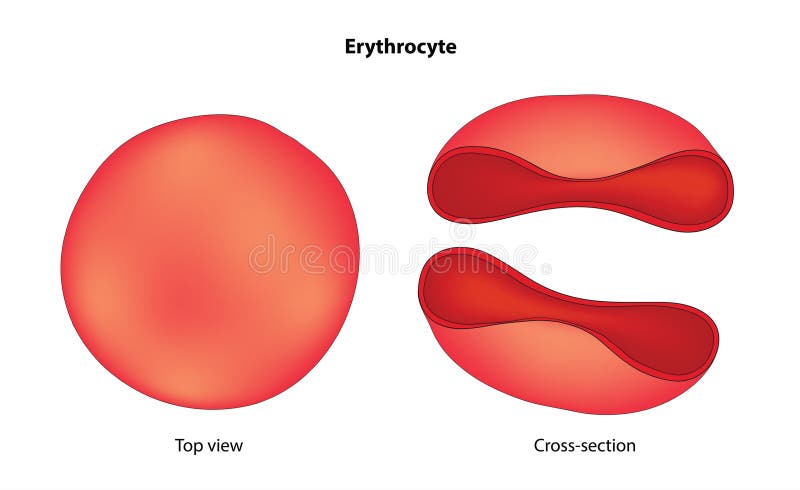
Free with trial The red blood cell, or erythrocyte, is a marvel of biological engineering, boasting a unique shape optimized for its vital role in oxygen transport throughout the body. Its structure is elegantly designed to maximize efficiency in gas exchange while navigating the intricate network of blood vessels. In a top view, the red blood cell presents itself as a disc-like structure, resembling a miniature, slightly deflated beach ball. This circular shape, however, is not uniform rather, it bears a characteristic depression at its center on both sides, giving rise to a biconcave disc shape. This biconcave configuration is not arbitrary it serves a crucial purpose in the erythrocyte's function. The biconcave shape of the red blood cell is instrumental in facilitating gas exchange, particularly the diffusion of oxygen and carbon dioxide across the cell membrane. By maximizing surface area while minimizing volume, this shape enhances the erythrocyte's ability to absorb and release gases efficiently. As blood flows through the narrowest of vessels, such as capillaries, this shape allows the red blood cell to deform and squeeze through tight spaces, ensuring unimpeded circulation and delivery of oxygen to tissues. In a cross-sectional view, the red blood cell reveals its true elegance. Viewed from the side, it appears as a thin disc, its edges slightly thicker than the center. The characteristic dimple or concavity on both sides is readily apparent, contributing to its biconcave morphology. This central depression not only increases the cell's surface area but also imparts flexibility, allowing it to undergo deformations as it traverses the microvasculature. The dimensions of the red blood cell are strikingly precise. With a typical diameter ranging from 6 to 8 micrometers and a thickness of approximately 2 micrometers, its proportions are finely tuned to balance surface area and volume. This delicate equilibrium ensures optimal oxygen-carrying capacity while preserving the cell's ability to navigate the complex labyrinth of blood vessels with ease. Abnormal vectors Shapes of Red Blood cell. The red blood cell, or erythrocyte, is a marvel of biological engineering, boasting a unique shape optimized for its vital role in. The red blood cell, or erythrocyte, is a marvel of biological engineering, boasting a unique shape optimized for its vital role in oxygen transport throughout the body. Its structure is elegantly designed to maximize efficiency in gas exchange while navigating the intricate network of blood vessels. In a top view, the red blood cell presents itself as a disc-like structure, resembling a miniature, slightly deflated beach ball. This circular shape, however, is not uniform rather, it bears a characteristic depression at its center on both sides, giving rise to a biconcave disc shape. This biconcave configuration is not arbitrary it serves a crucial purpose in the erythrocyte's function. The biconcave shape of the red blood cell is instrumental in facilitating gas exchange, particularly the diffusion of oxygen and carbon dioxide across the cell membrane. By maximizing surface area while minimizing volume, this shape enhances the erythrocyte's ability to absorb and release gases efficiently. As blood flows through the narrowest of vessels, such as capillaries, this shape allows the red blood cell to deform and squeeze through tight spaces, ensuring unimpeded circulation and delivery of oxygen to tissues. In a cross-sectional view, the red blood cell reveals its true elegance. Viewed from the side, it appears as a thin disc, its edges slightly thicker than the center. The characteristic dimple or concavity on both sides is readily apparent, contributing to its biconcave morphology. This central depression not only increases the cell's surface area but also imparts flexibility, allowing it to undergo deformations as it traverses the microvasculature. The dimensions of the red blood cell are strikingly precise. With a typical diameter ranging from 6 to 8 micrometers and a thickness of approximately 2 micrometers, its proportions are finely tuned to balance surface area and volume. This delicate equilibrium ensures optimal oxygen-carrying capacity while preserving the cell's ability to navigate the complex labyrinth of blood vessels with ease.
Free with trial Shield with Red and Blue Ribbon for Hereditary Hemorrhagic Telangiectasia Awareness Month in June. Abnormal vectors Shield with Red and Blue Ribbon for Hereditary Hemorrhagic Telangiectasia Awareness Month in June.
 Sign in