Free with trial Spring flowers and grass. Green grass with cute spring flowers illustration isolated white background. Can use as web site header / Footer / banner. Area use vectors Spring flowers and grass. Green grass with cute spring flowers illustration isolated white background. Can use as web site header / Footer / banner
Free with trial Green grass with cute colorful spring flowers illustration isolated white background. Can use as web site header / Footer / banner. flower bed. Area use vectors Spring flowers and grass header. Green grass with cute colorful spring flowers illustration isolated white background. Can use as web site header / Footer /. Green grass with cute colorful spring flowers illustration isolated white background. Can use as web site header / Footer / banner. flower bed
Free with trial Spring flowers and grass header. Green grass with cute spring flowers illustration isolated white background. Can use as web site header / Footer / banner. Area use vectors Spring flowers and grass header. Green grass with cute spring flowers illustration isolated white background. Can use as web site header / Footer / banner
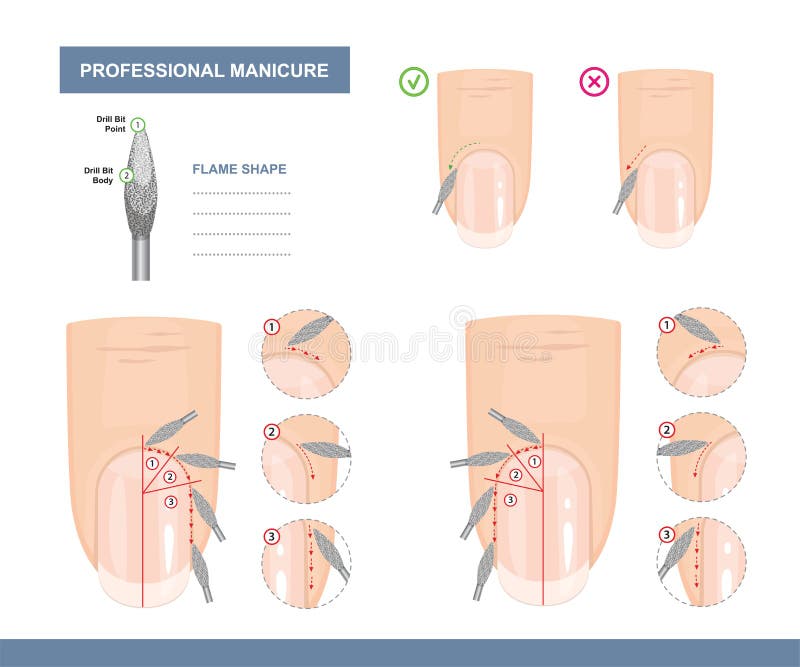
Free with trial How to use a Flame Shape Milling Cutter. Working with the Area around the Nail. Tips and Tricks. Professional Manicure Tutorial. Vector illustration. Area use vectors How to use a Flame Shape Milling Cutter. Working with the Area around the Nail. Tips and Tricks. Professional Manicure Tutorial. Vector illustration
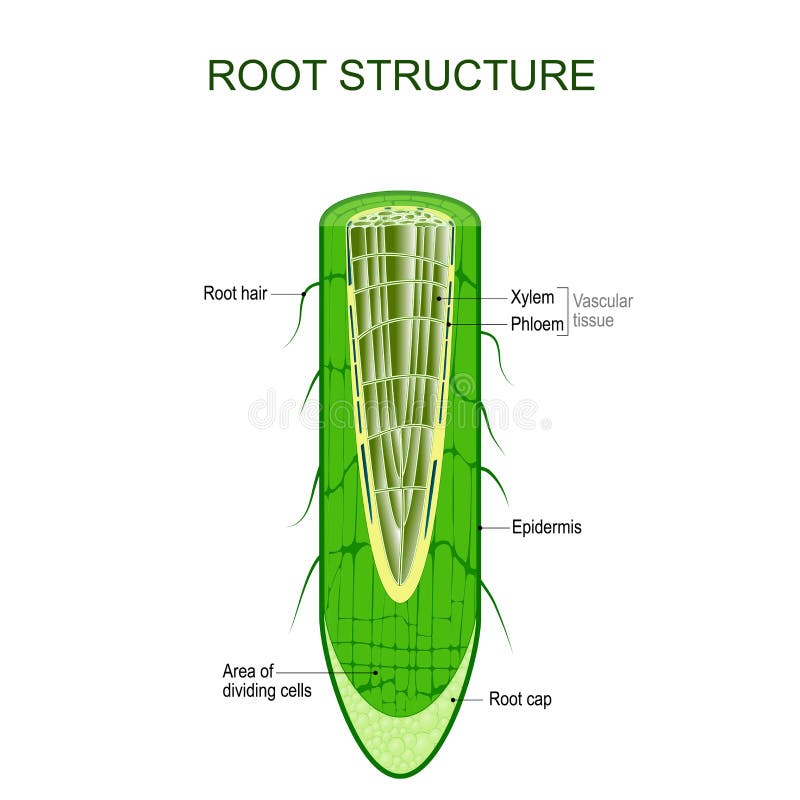
Free with trial Root structure. Plant anatomy. The cross-section of the root with area of dividing cells, Xylem, Phloem, cap, epidermis, and hairs. Vector illustration for biological, science, and educational use. Area use vectors Root structure. Plant anatomy. The cross-section of the root with area of dividing cells, Xylem, Phloem, cap, epidermis, and hairs. Vector illustration for
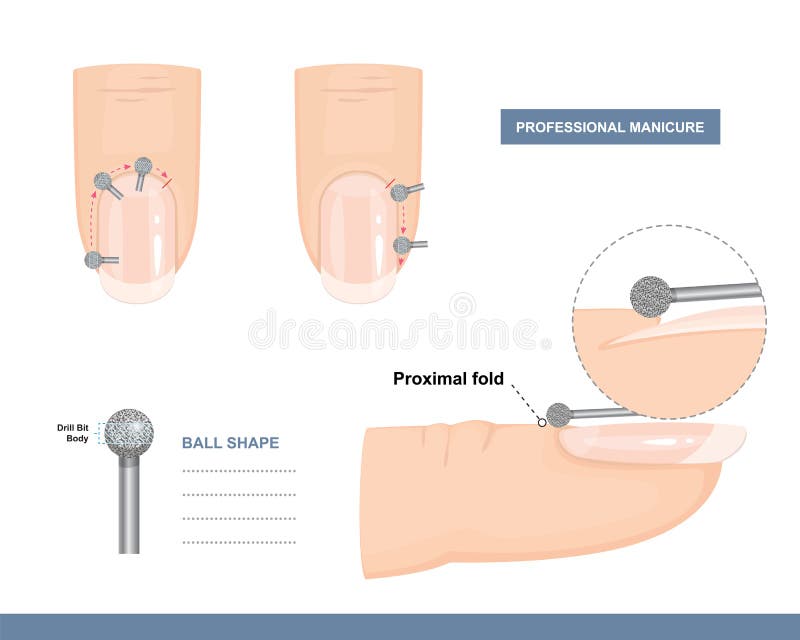
Free with trial How to use a Ball Shape Milling Cutter. Working with the Area around the Nail. Tips and Tricks. Professional Manicure Tutorial. Vector illustration. Area use vectors How to use a Ball Shape Milling Cutter. Working with the Area around the Nail. Tips and Tricks. Professional Manicure Tutorial. Vector illustration
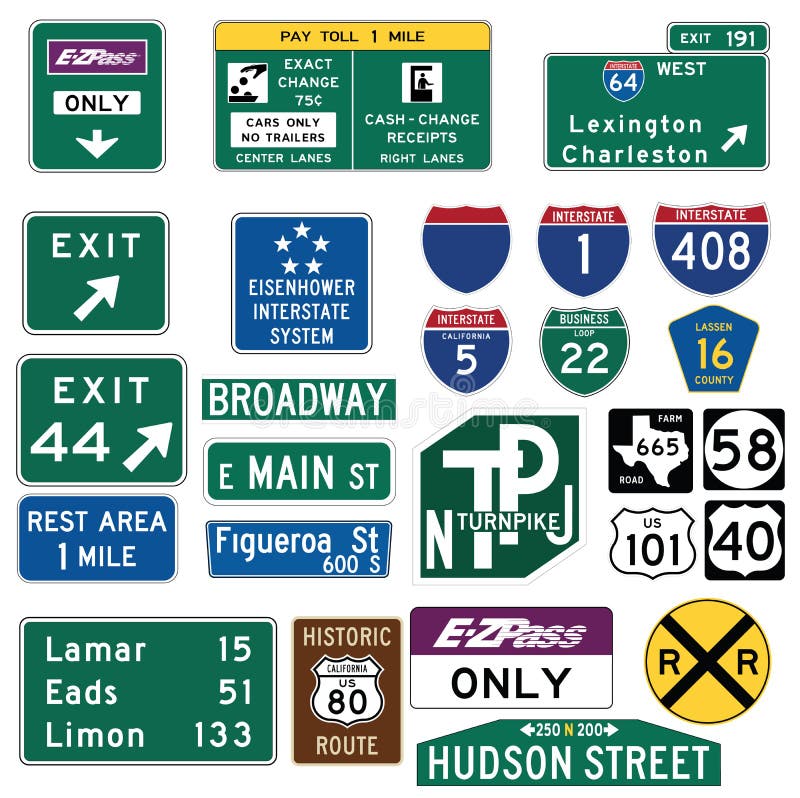
Free with trial Vector Illustration collection of the select Traffic Signs in the United States, isolated on white background. You can find other road signs in my portfolio. EPS file available. Guide signs are essential to direct road users along streets and highways, to inform them of intersecting routes, rnto direct them to cities, towns, villages, or other important destinations, to identify nearby rivers and streams, parks, forests, and historical sites, and generally to give such information as will help them along their way in the most simple, direct manner possible. rnrnIn the United States, road signs are, for the most part, standardized by federal regulations, most notably in the Manual on Uniform Traffic Control Devices (MUTCD) and its companion volume the Standard Highway Signs (SHS). There currently are no plans for adopting the Vienna Convention on Road Signs and Signals standards. Twenty-three states along with the District of Columbia and Puerto Rico use the manual without any alterations, 20 states have adopted it in conjunction with a supplemental volume, and seven states have a state version in substantial conformance to the MUTCD. There are also localized versions that are used in large cities such as New York City which use a naming system compatible with the MUTCD and/or state supplement. The MUTCD and SHS establish seven general categories of signs for road and highway use. rnrnIncluded illustrations are select examples of the MUTCD Guide Signs categories. rn. Area use vectors Traffic Guide Signs in the United States. Vector Illustration collection of the select Traffic Signs in the United States, isolated on white background. You can. Vector Illustration collection of the select Traffic Signs in the United States, isolated on white background. You can find other road signs in my portfolio. EPS file available. Guide signs are essential to direct road users along streets and highways, to inform them of intersecting routes, rnto direct them to cities, towns, villages, or other important destinations, to identify nearby rivers and streams, parks, forests, and historical sites, and generally to give such information as will help them along their way in the most simple, direct manner possible.rnrnIn the United States, road signs are, for the most part, standardized by federal regulations, most notably in the Manual on Uniform Traffic Control Devices (MUTCD) and its companion volume the Standard Highway Signs (SHS). There currently are no plans for adopting the Vienna Convention on Road Signs and Signals standards. Twenty-three states along with the District of Columbia and Puerto Rico use the manual without any alterations, 20 states have adopted it in conjunction with a supplemental volume, and seven states have a state version in substantial conformance to the MUTCD. There are also localized versions that are used in large cities such as New York City which use a naming system compatible with the MUTCD and/or state supplement. The MUTCD and SHS establish seven general categories of signs for road and highway use.rnrnIncluded illustrations are select examples of the MUTCD Guide Signs categories.rn
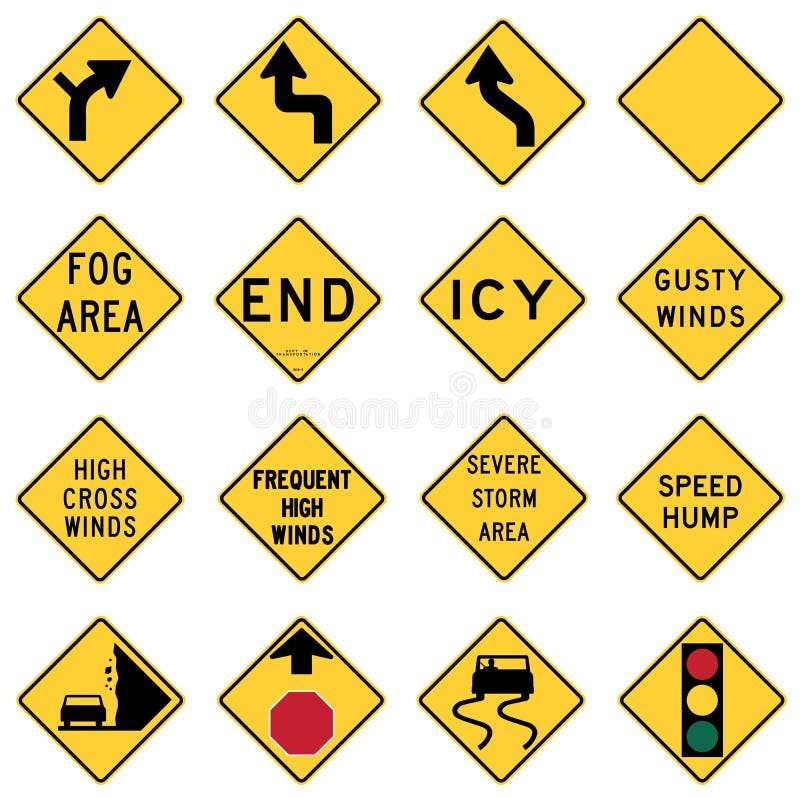
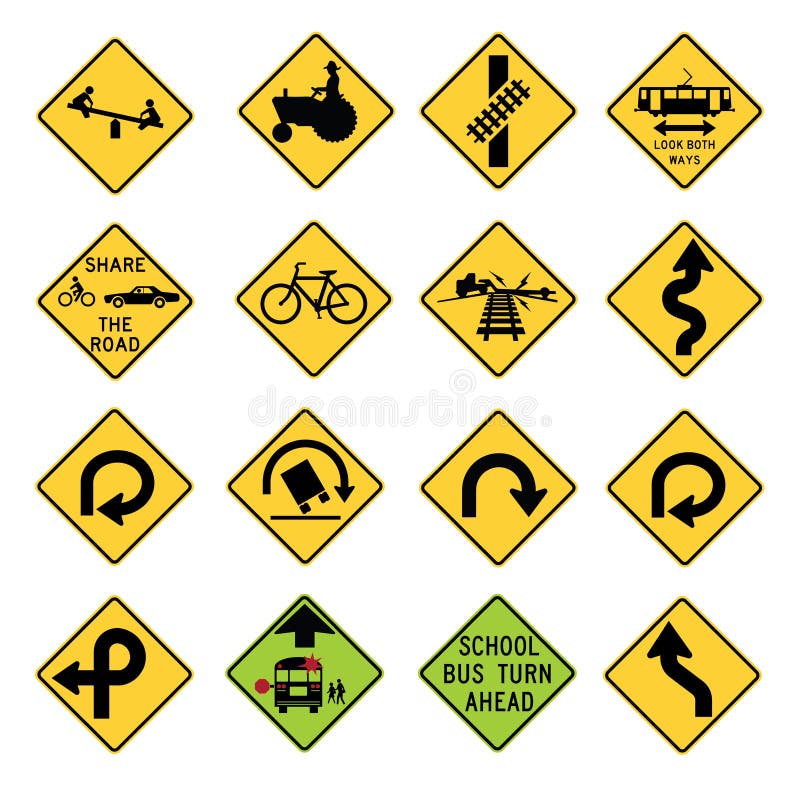
Free with trial Vector Illustration collection of the select Traffic Signs in the United States, isolated on white background. You can find other road signs in my portfolio. EPS file available. Warning signs are found in the W series of the national MUTCD. They highlight existing conditions, such as a curve, school, dead end street, or traffic signal. They can also warn possible danger such as bumps, bicycles, low flying aircraft or emergency vehicles. These signs are either yellow or fluorescent yellow in color and with the exception of a few signs are usually diamond shaped and sometimes have square or rectangular smaller signs or plaques associated with them. Most W series signs can also be found in with orange backgrounds, for temporary use in situations such as construction zones. Some of the temporary use signs are only for use in temporary situations. In the United States, road signs are, for the most part, standardized by federal regulations, most notably in the Manual on Uniform Traffic Control Devices (MUTCD) and its companion volume the Standard Highway Signs (SHS). There currently are no plans for adopting the Vienna Convention on Road Signs and Signals standards. Twenty-three states along with the District of Columbia and Puerto Rico use the manual without any alterations, 20 states have adopted it in conjunction with a supplemental volume, and seven states have a state version in substantial conformance to the MUTCD. There are also localized versions that are used in large cities such as New York City which use a naming system compatible with the MUTCD and/or state supplement. The MUTCD and SHS establish seven general categories of signs for road and highway use. Included illustrations are select examples of the MUTCD Warning Signs categories. Area use vectors Traffic Warning Signs in the United States. Vector Illustration collection of the select Traffic Signs in the United States, isolated on white background. You. Vector Illustration collection of the select Traffic Signs in the United States, isolated on white background. You can find other road signs in my portfolio. EPS file available. Warning signs are found in the W series of the national MUTCD. They highlight existing conditions, such as a curve, school, dead end street, or traffic signal. They can also warn possible danger such as bumps, bicycles, low flying aircraft or emergency vehicles. These signs are either yellow or fluorescent yellow in color and with the exception of a few signs are usually diamond shaped and sometimes have square or rectangular smaller signs or plaques associated with them. Most W series signs can also be found in with orange backgrounds, for temporary use in situations such as construction zones. Some of the temporary use signs are only for use in temporary situations. In the United States, road signs are, for the most part, standardized by federal regulations, most notably in the Manual on Uniform Traffic Control Devices (MUTCD) and its companion volume the Standard Highway Signs (SHS). There currently are no plans for adopting the Vienna Convention on Road Signs and Signals standards. Twenty-three states along with the District of Columbia and Puerto Rico use the manual without any alterations, 20 states have adopted it in conjunction with a supplemental volume, and seven states have a state version in substantial conformance to the MUTCD. There are also localized versions that are used in large cities such as New York City which use a naming system compatible with the MUTCD and/or state supplement. The MUTCD and SHS establish seven general categories of signs for road and highway use. Included illustrations are select examples of the MUTCD Warning Signs categories.
Free with trial Vector Illustration collection of the select Traffic Signs in the United States, isolated on white background. You can find other road signs in my portfolio. EPS file available. Warning signs are found in the W series of the national MUTCD. They highlight existing conditions, such as a curve, school, dead end street, or traffic signal. They can also warn possible danger such as bumps, bicycles, low flying aircraft or emergency vehicles. These signs are either yellow or fluorescent yellow in color and with the exception of a few signs are usually diamond shaped and sometimes have square or rectangular smaller signs or plaques associated with them. Most W series signs can also be found in with orange backgrounds, for temporary use in situations such as construction zones. Some of the temporary use signs are only for use in temporary situations. In the United States, road signs are, for the most part, standardized by federal regulations, most notably in the Manual on Uniform Traffic Control Devices (MUTCD) and its companion volume the Standard Highway Signs (SHS). There currently are no plans for adopting the Vienna Convention on Road Signs and Signals standards. Twenty-three states along with the District of Columbia and Puerto Rico use the manual without any alterations, 20 states have adopted it in conjunction with a supplemental volume, and seven states have a state version in substantial conformance to the MUTCD. There are also localized versions that are used in large cities such as New York City which use a naming system compatible with the MUTCD and/or state supplement. The MUTCD and SHS establish seven general categories of signs for road and highway use. Included illustrations are select examples of the MUTCD Warning Signs categories. Area use vectors Traffic Warning Signs in the United States. Vector Illustration collection of the select Traffic Signs in the United States, isolated on white background. You. Vector Illustration collection of the select Traffic Signs in the United States, isolated on white background. You can find other road signs in my portfolio. EPS file available. Warning signs are found in the W series of the national MUTCD. They highlight existing conditions, such as a curve, school, dead end street, or traffic signal. They can also warn possible danger such as bumps, bicycles, low flying aircraft or emergency vehicles. These signs are either yellow or fluorescent yellow in color and with the exception of a few signs are usually diamond shaped and sometimes have square or rectangular smaller signs or plaques associated with them. Most W series signs can also be found in with orange backgrounds, for temporary use in situations such as construction zones. Some of the temporary use signs are only for use in temporary situations. In the United States, road signs are, for the most part, standardized by federal regulations, most notably in the Manual on Uniform Traffic Control Devices (MUTCD) and its companion volume the Standard Highway Signs (SHS). There currently are no plans for adopting the Vienna Convention on Road Signs and Signals standards. Twenty-three states along with the District of Columbia and Puerto Rico use the manual without any alterations, 20 states have adopted it in conjunction with a supplemental volume, and seven states have a state version in substantial conformance to the MUTCD. There are also localized versions that are used in large cities such as New York City which use a naming system compatible with the MUTCD and/or state supplement. The MUTCD and SHS establish seven general categories of signs for road and highway use. Included illustrations are select examples of the MUTCD Warning Signs categories.
Free with trial City skyline. Set of city skyline illustrations in black color. An additional Vector. Eps file available. (you can use elements separately. Area use vectors City skyline. Set of city skyline illustrations in black color. An additional Vector . Eps file available. (you can use elements separately
Free with trial No cell phone vector sign. Isolated on white background. Area use vectors No cell phone vector sign. Isolated on white background
Free with trial No phone sign banner. No mobile phone sign banner. Area use vectors No phone sign banner. No mobile phone sign banner
Free with trial The international symbolism for, Step out from the Crowd, Be an Innovator, an Early Adopter! Crop the shadows or use the area above them for text. Clipping paths included for easily changing colors, etc. Area use vectors Step Out of Line. The international symbolism for, Step out from the Crowd, Be an Innovator, an Early Adopter! Crop the shadows or use the area above them for. The international symbolism for, Step out from the Crowd, Be an Innovator, an Early Adopter! Crop the shadows or use the area above them for text. Clipping paths included for easily changing colors, etc.
Free with trial Invitation panels - use for weddings, destination weddings or parties. Beach, sand and water with hearts and area for text. Area use vectors Invitation Panels. Use for weddings, destination weddings or parties. Beach, sand and water with hearts and area for text
Free with trial Illustration of 4 various railroad crossing signage available in the Mulvane, KS area. Great for use in maps (these were originally created for a local map project)!. Area use vectors Railroad Crossing Signs. Illustration of 4 various railroad crossing signage available in the Mulvane, KS area. Great for use in maps (these were originally. Illustration of 4 various railroad crossing signage available in the Mulvane, KS area. Great for use in maps (these were originally created for a local map project)!
Free with trial Designated Smoking Area, isolated white background. file in transparent vector illustrator so easy to use. Area use vectors Designated Smoking Area Symbol Sign Vector. Designated Smoking Area, isolated white background. file in transparent vector illustrator so easy to use. Designated Smoking Area, isolated white background. file in transparent vector illustrator so easy to use.
Free with trial Forklift truck in use - vector warning sign, pictogram, icon. Area use vectors Forklift in operating - sign. Forklift truck in use - vector warning sign, pictogram, icon. Forklift truck in use - vector warning sign, pictogram, icon.
Free with trial A set of human pictogram representing safety tips during lightning and thunder at indoor. There are stay away from motor machinery, getaway from high ground, swimming pool, tall object, open area, or canopy. Do not use umbrella and stay inside car. Area use vectors Lightning Thunder Outdoor Safety Tips Clipart. A set of human pictogram representing safety tips during lightning and thunder at indoor. There are stay away from. A set of human pictogram representing safety tips during lightning and thunder at indoor. There are stay away from motor machinery, getaway from high ground, swimming pool, tall object, open area, or canopy. Do not use umbrella and stay inside car.
Free with trial Handbags. Vector image of handbags in woman arm. may be use for retail. There is blank area for your info. Area use vectors Handbags. Vector image of handbags in woman arm. may be use for retail. There is blank area for your info
Free with trial Created in Illustrator CS2, vector garden design for use as background, area left blank for type etc... 300dpi @ A3. Vector file available, easily editable in illustrator. Area use vectors Vector Garden Green. Created in Illustrator CS2, vector garden design for use as background, area left blank for type etc... 300dpi @ A3. Vector file available. Created in Illustrator CS2, vector garden design for use as background, area left blank for type etc... 300dpi @ A3. Vector file available, easily editable in illustrator.
Free with trial Created in Illustrator CS2, vector garden design for use as background, area left blank for type etc... 300dpi @ A3. Vector file available, easily editable in illustrator. Area use vectors Vector Garden White. Created in Illustrator CS2, vector garden design for use as background, area left blank for type etc... 300dpi @ A3. Vector file available. Created in Illustrator CS2, vector garden design for use as background, area left blank for type etc... 300dpi @ A3. Vector file available, easily editable in illustrator.
Free with trial Alien mask. Alien faces illustrations isolated on white background. can be print and use as funny masks for kids. Area use vectors Alien mask. Alien faces illustrations isolated on white background. can be print and use as funny masks for kids
Free with trial Grass with spring flowers. Green grass with cute spring flowers illustration isolated white background. Can use as web site header / Footer / banner. Area use vectors Grass with spring flowers. Green grass with cute spring flowers illustration isolated white background. Can use as web site header / Footer / banner
Free with trial Painter. Man in uniform is painting on the wall. Area use vectors Painter. Man in uniform is painting on the wall
Free with trial Alien mask. Alien faces illustrations isolated on white background. can be print and use as funny masks for kids. Area use vectors Alien mask. Alien faces illustrations isolated on white background. can be print and use as funny masks for kids
Free with trial SERVICE button. Shiny SERVICE button vector illustration. Area use vectors SERVICE button. Shiny SERVICE button vector illustration
Free with trial DJ Concert Background. Audience cheering a DJ set, for use with own text in the lower blank area. Area use vectors DJ Concert Background. Audience cheering a DJ set, for use with own text in the lower blank area
Free with trial Rock Concert Background. Audience cheering a rock group, for use with own text in the central blank area. Area use vectors Rock Concert Background. Audience cheering a rock group, for use with own text in the central blank area
Free with trial Under construction banner. Isolated on white background. Area use vectors Under construction banner. Isolated on white background
Free with trial Under construction banner. Isolated on white background. Area use vectors Under construction banner. Isolated on white background
Free with trial Spring flowers footer / header. Cute pink spring flowers illustration isolated white background. Can use as web site header / Footer / banner or border. Area use vectors Spring flowers footer / header. Cute pink spring flowers illustration isolated white background. Can use as web site header / Footer / banner or border
Free with trial Windmill in field. Vector illustration for best prints and other use. Area use vectors Windmill in field. Vector illustration for best prints and other use
Free with trial Under construction banner. Isolated on white background. Area use vectors Under construction banner. Isolated on white background
Free with trial Focal length and angle of view guide. On white. Area use vectors Focal length and angle of view guide. On white
Free with trial Road sings. Road signs in vector format. Area use vectors Road sings. Road signs in vector format
Free with trial Taste bud and the papillae of the tongue. Human mouth isolated on white background. basic taste areas: sweet, salty, sour, bitter and umami. vector diagram for educational, biological, medical and science use. Area use vectors Taste bud and the papillae of the tongue. basic taste areas: sweet, salty, sour, bitter and umami. Taste bud and the papillae of the tongue. Human mouth isolated. Taste bud and the papillae of the tongue. Human mouth isolated on white background. basic taste areas: sweet, salty, sour, bitter and umami. vector diagram for educational, biological, medical and science use
Free with trial No cell phone sign on transparent background. Vector illustration. Area use vectors No cell phone sign on transparent background. Vector illustration
Free with trial Set 9 templates, Infographics for business conceptual cyclic processes, colorful strips on 3, 4, 5 positions possible to use for workflow, banner, diagram, web design, timeline, area. Area use vectors Set Infographics colorful strips on 3, 4, 5 positions. Set 9 templates, Infographics for business conceptual cyclic processes, colorful strips on 3, 4, 5. Set 9 templates, Infographics for business conceptual cyclic processes, colorful strips on 3, 4, 5 positions possible to use for workflow, banner, diagram, web design, timeline, area
Free with trial No cell phone icon. Simple element illustration. Oncept symbol design, vector logo illustration. Can be used for web and mobile. Area use vectors No cell phone icon. Simple element illustration. No cell phone c. Oncept symbol design, vector logo illustration. Can be used for web and mobile
Free with trial No Cell Phone Sign icon great for any use. Vector EPS10. Area use vectors No Cell Phone Sign icon great for any use. Vector EPS10.
Free with trial No smoking and designated smoking area banners vector illustrations isolated on white background. Forbidden and permitted use tobacco and cigarettes in public place symbols. Area use vectors No smoking and designated smoking area banners vector illustrations isolated. No smoking and designated smoking area banners vector illustrations isolated on. No smoking and designated smoking area banners vector illustrations isolated on white background. Forbidden and permitted use tobacco and cigarettes in public place symbols.
Free with trial No face mask, No entry to protect and prevent from Coronavirus or Covid-19. Warning sign vector for use to notice to people or visiter beware and wear face mask before enter the stores, supermarkets area. Area use vectors No face mask, No entry to protect and prevent from Coronavirus or Covid-19. Warning sign vector for use to notice to people or. Visiter beware and wear face. No face mask, No entry to protect and prevent from Coronavirus or Covid-19. Warning sign vector for use to notice to people or visiter beware and wear face mask before enter the stores, supermarkets area
Free with trial Standard Precautions Use Personal Protective Equipment PPE Symbol Sign ,Vector Illustration, Isolate On White Background Label. EPS10. Area use vectors Standard Precautions Use Personal Protective Equipment PPE Symbol Sign ,Vector Illustration, Isolate On White Background Label. EPS10
Free with trial How to apply sunscreen to the face and neck. Step to apply sunscreen to face and neck for use to design packaging, label, illustration or other job. Area use vectors How to apply sunscreen to the face and neck. Step to apply sunscreen to face and neck for use to design packaging, label, illustration or other job
Free with trial Happy female office worker sitting on chair at ergonomic workstation vector flat illustration. Modern woman working use computer looking at monitor isolated on white. Employee at innovative workplace. Area use vectors Happy female office worker sitting on chair at ergonomic workstation vector flat illustration. Modern woman working use. Computer looking at monitor isolated on. Happy female office worker sitting on chair at ergonomic workstation vector flat illustration. Modern woman working use computer looking at monitor isolated on white. Employee at innovative workplace.
Free with trial Use hair net sign. Vector illustration. Information safety mandatory symbol in blue circle isolated on white. Area use vectors Use hair net sign. Vector illustration. Use hair net sign. Information safety mandatory symbol in blue circle isolated on white. Vector illustration
Free with trial Posing. Vector image of posing girl with blank area for your info. good use like background for shopping cards and posters. Area use vectors Posing. Vector image of posing girl with blank area for your info. good use like background for shopping cards and posters
Free with trial Bright cosmic seamless pattern background with funny cartoon planets in open space. For use in design. Area use vectors Bright cosmic seamless pattern background with funny cartoon planets in open space. For use in design
Free with trial No phone, telephone, cellphone and smartphone prohibited symbol. Sign indicating the prohibition or rule. Warning and forbidden. Flat design. Vector illustration. Easy to use and edit. EPS10. Area use vectors No phone, telephone prohibited symbol. Vector. No phone, telephone, cellphone and smartphone prohibited symbol. Sign indicating the prohibition or rule. Warning. No phone, telephone, cellphone and smartphone prohibited symbol. Sign indicating the prohibition or rule. Warning and forbidden. Flat design. Vector illustration. Easy to use and edit. EPS10.
Free with trial Vector illustration for arabic floral frame. Traditional Islamic design. Suitable for use as mosque decoration elements, backgrounds, calligraphy. Elegance with the text input area in the center. Area use vectors Arabic floral frame. Traditional Islamic design. Suitable for use as mosque decoration elements, backgrounds, calligraphy. Vector illustration for arabic floral. Vector illustration for arabic floral frame. Traditional Islamic design. Suitable for use as mosque decoration elements, backgrounds, calligraphy. Elegance with the text input area in the center
Free with trial Created in Illustrator CS2, vector garden design for use as background, area left blank for type etc... 300dpi @ A3. Vector file available, easily editable in illustrator. Area use vectors Vector Garden White. Created in Illustrator CS2, vector garden design for use as background, area left blank for type etc... 300dpi @ A3. Vector file available. Created in Illustrator CS2, vector garden design for use as background, area left blank for type etc... 300dpi @ A3. Vector file available, easily editable in illustrator.
Free with trial Hotel Door Lock Instructions for use on the back of a Hotel Key Card. Vector file available as. EPS. Area use vectors Hotel Door Lock Instructions. For use on the back of a Hotel Key Card. Vector file available as .EPS
Free with trial Work zone. Caution cordon tape. can be use separately or together. Area use vectors Work zone. Caution cordon tape. can be use separately or together
Free with trial Created in Illustrator CS2, vector garden design for use as background, area left blank for type etc... 300dpi @ A3. Vector file available, easily editable in illustrator. Area use vectors Vector Garden Grey. Created in Illustrator CS2, vector garden design for use as background, area left blank for type etc... 300dpi @ A3. Vector file available. Created in Illustrator CS2, vector garden design for use as background, area left blank for type etc... 300dpi @ A3. Vector file available, easily editable in illustrator.
Free with trial Quiet please vector sign. Isolated on white background. Area use vectors Quiet please vector sign. Isolated on white background
Free with trial Focal length and angle of view. Guide. Area use vectors Focal length and angle of view. Guide
Free with trial Bunny standing behind a sign or banner holding to display an area for text. easter and spring use with text area-More Easter Vectors In Portfolio. Area use vectors Easter Bunny Text Panel. Bunny standing behind a sign or banner holding to display an area for text. easter and spring use with text area-More Easter Vectors In. Bunny standing behind a sign or banner holding to display an area for text. easter and spring use with text area-More Easter Vectors In Portfolio
Free with trial 20 themed EPS images related to ww1 aviation. The number of vector nodes is absolute minimum. The images are very easy to use and edit and are extremely smooth even when highly enlarged. Area use vectors Red Baron. 20 themed EPS images related to ww1 aviation. The number of vector nodes is absolute minimum. The images are very easy to use and edit and are. 20 themed EPS images related to ww1 aviation. The number of vector nodes is absolute minimum. The images are very easy to use and edit and are extremely smooth even when highly enlarged
Free with trial No phone sign. On white background. Area use vectors No phone sign. On white background
Free with trial A bright blue holiday background with many snowflakes and circles for snow. There is a wave swirl and blank space for text. Use it for a Christmas card. Area use vectors Blue Snowflake Holiday Background. A bright blue holiday background with many snowflakes and circles for snow. There is a wave swirl and blank space for text. A bright blue holiday background with many snowflakes and circles for snow. There is a wave swirl and blank space for text. Use it for a Christmas card.
Free with trial Turn off phone sign. Turn off your phone here. Area use vectors Turn off phone sign. Turn off your phone here
Free with trial Seamless pattern - texture of grass - background for natural or eco design. Ready to use as swatch. Area use vectors Seamless pattern - texture of grass. Background for natural or eco design. Ready to use as swatch
Free with trial Cold pack on swelling shoulder of woman for relief of pain. Illustration about first aid equipment. Area use vectors Cold pack on swelling shoulder of woman for pain relief. Cold pack on swelling shoulder of woman for relief of pain. Illustration about first aid equipment. Cold pack on swelling shoulder of woman for relief of pain. Illustration about first aid equipment.
Free with trial Woman relief of shoulder pain with Cold and hot pack gel. Illustration about first aid equipment. Area use vectors Woman relief of shoulder pain with Cold and hot pack gel. Illustration about first aid equipment
Free with trial Safety sign work in progress. Work in progress safety sign isolated on white background. Area use vectors Safety sign work in progress. Work in progress safety sign isolated on white background
Free with trial Taste bud. Mature and Immature taste Receptor, Support and Basal Cells, Epithelium Of tongue. Human Anatomy. Vector diagram for educational, biological, science and medical use. Area use vectors Taste bud. Mature and Immature taste Receptor, Support and Basal Cells, Epithelium Of tongue. Human Anatomy. Vector diagram for educational, biological
Free with trial Employees in coworking open office flat vector illustration. Women giving high five at workplace cartoon characters. Corporate workers using laptops. Happy smiling female coworkers isolated clipart. Area use vectors Employees in coworking open office flat vector illustration. Women giving high five at workplace cartoon characters. Corporate workers using laptops. Happy
Free with trial Public transport infographics template for municipal passenger trasportation routes and statistics. Vector flat design of bus, tram, subway metro train, taxi and trolleybus. Area use vectors Public city transport vector passenger infographics flat template. Public transport infographics template for municipal passenger trasportation routes and. Public transport infographics template for municipal passenger trasportation routes and statistics. Vector flat design of bus, tram, subway metro train, taxi and trolleybus
Free with trial No cell phone sign on a white background. Vector illustration. Area use vectors No cell phone sign. On a white background. Vector illustration
Free with trial Clubber. Vector image of stylish girl. There is blank area for your info. good use like background for R'n'B and Rap party cards and posters. Area use vectors Clubber. Vector image of stylish girl. There is blank area for your info. good use like background for R'n'B and Rap party cards and posters
Free with trial Isolated myrrh branch with leaves and resin. Vector illustration for use in web design, print or other visual area. Area use vectors Isolated myrrh branch with leaves and resin. Vector illustration. For use in web design, print or other visual area
Free with trial Colorful semicircle and circles. Elements of Infographics Conceptual Cyclic Processes for 4 Positions Possible to Use for Workflow, Banner, Diagram, Web design, Timeline, Area chart,Number options. Area use vectors Colorful semicircle and circles. Elements of Infographics. Conceptual Cyclic Processes for 4 Positions Possible to Use for Workflow, Banner, Diagram, Web design. Colorful semicircle and circles. Elements of Infographics Conceptual Cyclic Processes for 4 Positions Possible to Use for Workflow, Banner, Diagram, Web design, Timeline, Area chart,Number options
Free with trial Set 10 universal templates elements Infographics conceptual cyclic processes for 9 positions possible to use for work flow, banner, diagram, web design, time line, area chart,number options. Area use vectors Set 10 universal templates elements Infographics for 9 positions. Set 10 universal templates elements Infographics conceptual cyclic processes for 9 positions. Set 10 universal templates elements Infographics conceptual cyclic processes for 9 positions possible to use for work flow, banner, diagram, web design, time line, area chart,number options
Free with trial Public transport routes and stations infographics template. Municipal passenger trasportation statistics of bus, tram, subway metro train, taxi and trolleybus. Vector flat design. Area use vectors Public transport routes stations statistics vector infographics flat template. Public transport routes and stations infographics template. Municipal passenger. Public transport routes and stations infographics template. Municipal passenger trasportation statistics of bus, tram, subway metro train, taxi and trolleybus. Vector flat design
Free with trial Set 10 universal templates elements Infographics conceptual cyclic processes for 8 positions possible to use for workflow, banner, diagram, web design, timeline, area chart,number options. Area use vectors Set 10 universal templates elements Infographics conceptual cyclic processes for 8 positions. Possible to use for workflow, banner, diagram, web design. Set 10 universal templates elements Infographics conceptual cyclic processes for 8 positions possible to use for workflow, banner, diagram, web design, timeline, area chart,number options
Free with trial Waiting room icon vector from airport collection. Thin line waiting room outline icon vector illustration. Linear symbol for use on web and mobile apps, logo, print media. Area use vectors Waiting room icon vector from airport collection. Thin line waiting room outline icon vector illustration. Linear symbol for use on web and mobile apps, logo
Free with trial Safety First Safety Harness Required Symbol Sign, Vector Illustration, Isolate On White Background Label. EPS10. Area use vectors Safety First Safety Harness Required Symbol Sign, Vector Illustration, Isolate On White Background Label. EPS10
Free with trial Hang Tag Made In Barbados With Flag Icon Isolated On A White Background. Vector Illustration. Made In Badge. Business Concept. Buy products made in Barbados. Use For Brochures, Printed Materials, Logos, Independence Day. Area use vectors Hang Tag Made In Barbados With Flag Icon Isolated On A White Background. Vector Illustration. Made In Badge. Business Concept. Buy products made in Barbados
 Sign in