Free with trial Illustration of a path winding through the clouds, ending at a brilliant light in the distance... possibly symbolic of heaven, afterlife, a near-death experience, or simply the path to a goal. Companion image of Road to Hell also in my portfolio... eps file available. Companion vectors Highway to Heaven/eps. Illustration of a path winding through the clouds, ending at a brilliant light in the distance...possibly symbolic of heaven, afterlife, a. Illustration of a path winding through the clouds, ending at a brilliant light in the distance...possibly symbolic of heaven, afterlife, a near-death experience, or simply the path to a goal. Companion image of Road to Hell also in my portfolio...eps file available
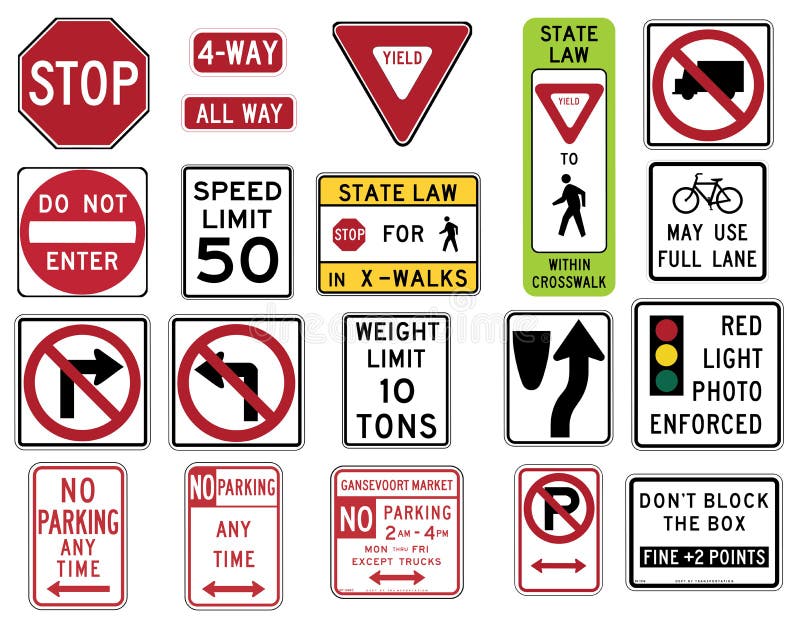
Free with trial Vector Illustration collection of the select Traffic Signs in the United States, isolated on white background. You can find other road signs in my portfolio. EPS file available. In the United States, road signs are, for the most part, standardized by federal regulations, most notably in the Manual on Uniform Traffic Control Devices (MUTCD) and its companion volume the Standard Highway Signs (SHS). There currently are no plans for adopting the Vienna Convention on Road Signs and Signals standards. Twenty-three states along with the District of Columbia and Puerto Rico use the manual without any alterations, 20 states have adopted it in conjunction with a supplemental volume, and seven states have a state version in substantial conformance to the MUTCD. There are also localized versions that are used in large cities such as New York City which use a naming system compatible with the MUTCD and/or state supplement. The MUTCD and SHS establish seven general categories of signs for road and highway use. Included illustrations are select examples of the following MUTCD categories: -- R1 Series STOP and YIELD -- R2 Series Speed Limit -- R3 Series Lane Usage and Turns (Left and Right Turn) -- R4 Regulation of Movement -- R5 Series: Exclusionary -- R7 Series: Parking. Companion vectors Traffic Signs in the United States - Regulatory Series. Vector Illustration collection of the select Traffic Signs in the United States, isolated on white. Vector Illustration collection of the select Traffic Signs in the United States, isolated on white background. You can find other road signs in my portfolio. EPS file available. In the United States, road signs are, for the most part, standardized by federal regulations, most notably in the Manual on Uniform Traffic Control Devices (MUTCD) and its companion volume the Standard Highway Signs (SHS). There currently are no plans for adopting the Vienna Convention on Road Signs and Signals standards. Twenty-three states along with the District of Columbia and Puerto Rico use the manual without any alterations, 20 states have adopted it in conjunction with a supplemental volume, and seven states have a state version in substantial conformance to the MUTCD. There are also localized versions that are used in large cities such as New York City which use a naming system compatible with the MUTCD and/or state supplement. The MUTCD and SHS establish seven general categories of signs for road and highway use. Included illustrations are select examples of the following MUTCD categories: -- R1 Series STOP and YIELD -- R2 Series Speed Limit -- R3 Series Lane Usage and Turns (Left and Right Turn) -- R4 Regulation of Movement -- R5 Series: Exclusionary -- R7 Series: Parking
Free with trial A colourful heart tree leaf growing logo icon. Companion vectors Heart Tree Logo. A colourful heart tree leaf growing logo icon. A colourful heart tree leaf growing logo icon.
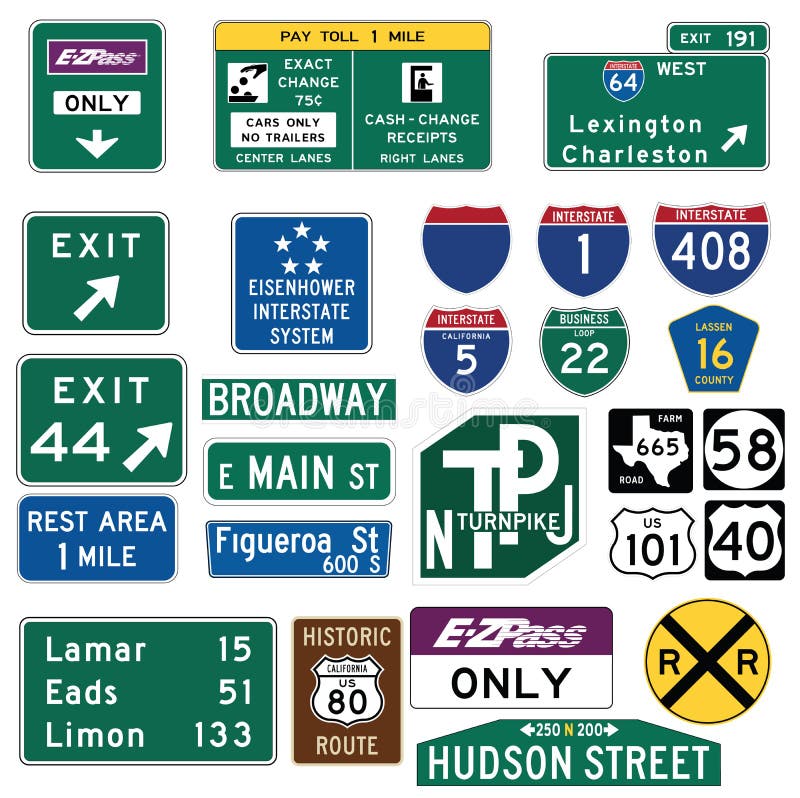
Free with trial Vector Illustration collection of the select Traffic Signs in the United States, isolated on white background. You can find other road signs in my portfolio. EPS file available. Guide signs are essential to direct road users along streets and highways, to inform them of intersecting routes, rnto direct them to cities, towns, villages, or other important destinations, to identify nearby rivers and streams, parks, forests, and historical sites, and generally to give such information as will help them along their way in the most simple, direct manner possible. rnrnIn the United States, road signs are, for the most part, standardized by federal regulations, most notably in the Manual on Uniform Traffic Control Devices (MUTCD) and its companion volume the Standard Highway Signs (SHS). There currently are no plans for adopting the Vienna Convention on Road Signs and Signals standards. Twenty-three states along with the District of Columbia and Puerto Rico use the manual without any alterations, 20 states have adopted it in conjunction with a supplemental volume, and seven states have a state version in substantial conformance to the MUTCD. There are also localized versions that are used in large cities such as New York City which use a naming system compatible with the MUTCD and/or state supplement. The MUTCD and SHS establish seven general categories of signs for road and highway use. rnrnIncluded illustrations are select examples of the MUTCD Guide Signs categories. rn. Companion vectors Traffic Guide Signs in the United States. Vector Illustration collection of the select Traffic Signs in the United States, isolated on white background. You can. Vector Illustration collection of the select Traffic Signs in the United States, isolated on white background. You can find other road signs in my portfolio. EPS file available. Guide signs are essential to direct road users along streets and highways, to inform them of intersecting routes, rnto direct them to cities, towns, villages, or other important destinations, to identify nearby rivers and streams, parks, forests, and historical sites, and generally to give such information as will help them along their way in the most simple, direct manner possible.rnrnIn the United States, road signs are, for the most part, standardized by federal regulations, most notably in the Manual on Uniform Traffic Control Devices (MUTCD) and its companion volume the Standard Highway Signs (SHS). There currently are no plans for adopting the Vienna Convention on Road Signs and Signals standards. Twenty-three states along with the District of Columbia and Puerto Rico use the manual without any alterations, 20 states have adopted it in conjunction with a supplemental volume, and seven states have a state version in substantial conformance to the MUTCD. There are also localized versions that are used in large cities such as New York City which use a naming system compatible with the MUTCD and/or state supplement. The MUTCD and SHS establish seven general categories of signs for road and highway use.rnrnIncluded illustrations are select examples of the MUTCD Guide Signs categories.rn
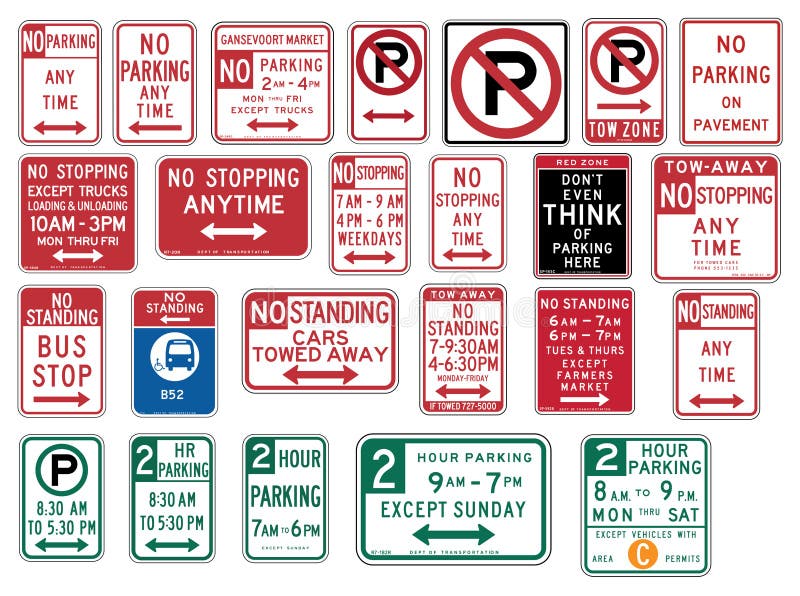
Free with trial Vector Illustration collection of the select Traffic Signs in the United States, isolated on white background. You can find other road signs in my portfolio. EPS file available. rnrnIn the United States, road signs are, for the most part, standardized by federal regulations, most notably in the Manual on Uniform Traffic Control Devices (MUTCD) and its companion volume the Standard Highway Signs (SHS). There currently are no plans for adopting the Vienna Convention on Road Signs and Signals standards. rnTwenty-three states along with the District of Columbia and Puerto Rico use the manual without any alterations, 20 states have adopted it in conjunction with a supplemental volume, and seven states have a state version in substantial conformance to the MUTCD. There are also localized versions that are used in large cities such as New York City which use a naming system compatible with the MUTCD and/or state supplement. The MUTCD and SHS establish seven general categories of signs for road and highway use. rnrnIncluded illustrations are select examples of the following MUTCD categories:rn-- R7 Series: Parkingrnrn. Companion vectors Traffic Signs in the United States - No Parking. Vector Illustration collection of the select Traffic Signs in the United States, isolated on white background. Vector Illustration collection of the select Traffic Signs in the United States, isolated on white background. You can find other road signs in my portfolio. EPS file available.rnrnIn the United States, road signs are, for the most part, standardized by federal regulations, most notably in the Manual on Uniform Traffic Control Devices (MUTCD) and its companion volume the Standard Highway Signs (SHS). There currently are no plans for adopting the Vienna Convention on Road Signs and Signals standards.rnTwenty-three states along with the District of Columbia and Puerto Rico use the manual without any alterations, 20 states have adopted it in conjunction with a supplemental volume, and seven states have a state version in substantial conformance to the MUTCD. There are also localized versions that are used in large cities such as New York City which use a naming system compatible with the MUTCD and/or state supplement. The MUTCD and SHS establish seven general categories of signs for road and highway use.rnrnIncluded illustrations are select examples of the following MUTCD categories:rn-- R7 Series: Parkingrnrn
Free with trial Star Circle Square Logo Set. A colourful Star Circle and Square logo icon set. Companion vectors Star Circle Square Logo Set. A colourful Star Circle and Square logo icon set
Free with trial Dog drawing set. Set of drawing dog icon. Companion vectors Dog drawing set. Set of drawing dog icon
Free with trial Tree with Birds. An illustration of a tree with birds perched in the branches. Companion vectors Tree with Birds. An illustration of a tree with birds perched in the branches
Free with trial Illustration of the path to hell, the road to ruin, or the consequences of bad decisions... can you feel the heat? Companion image of Highway to Heaven also in my portfolio... eps file available. Companion vectors Road to Hell/eps. Illustration of the path to hell, the road to ruin, or the consequences of bad decisions... can you feel the heat? Companion image of Highway. Illustration of the path to hell, the road to ruin, or the consequences of bad decisions... can you feel the heat? Companion image of Highway to Heaven also in my portfolio...eps file available
Free with trial Silhouette of two girls talking and gossiping. vector illustration. Companion vectors Gossip silhouette. Silhouette of two girls talking and gossiping. vector illustration. Silhouette of two girls talking and gossiping. vector illustration.
Free with trial Ladies drinking cocktail. Two young pretty ladies drinking cold drink on the beach. Companion vectors Ladies drinking cocktail. Two young pretty ladies drinking cold drink on the beach
Free with trial A luxurious, elegant vector logo design featuring the Tree of Life in a polished golden color, enclosed within a circular frame. The detailed illustration shows the tree's complete structure, including spreading roots and abundant leaves, symbolizing growth, strength, harmony, and connection to nature. This timeless emblem is ideal for branding, logos, and design elements for businesses in wellness, yoga, meditation, spiritual healing, jewelry, luxury goods, and eco-friendly products. It also serves as a beautiful representation of the sacred Bodhi Tree concept. Companion vectors Luxury Bodhi Tree Symbol: Gold Spiritual Emblem for Wellness and Yoga. A luxurious, elegant vector logo design featuring the Tree of Life in a polished golden. A luxurious, elegant vector logo design featuring the Tree of Life in a polished golden color, enclosed within a circular frame. The detailed illustration shows the tree's complete structure, including spreading roots and abundant leaves, symbolizing growth, strength, harmony, and connection to nature. This timeless emblem is ideal for branding, logos, and design elements for businesses in wellness, yoga, meditation, spiritual healing, jewelry, luxury goods, and eco-friendly products. It also serves as a beautiful representation of the sacred Bodhi Tree concept.
Free with trial Vector cartoon illustration clip art of a group of 2 dogs and 2 cats, A Beagle, German Shepherd, Tabby, and a Grey cat. Each pet is on a separate layer. Companion vectors Group of Vector Cartoon Dogs And Cats. Vector cartoon illustration clip art of a group of 2 dogs and 2 cats, A Beagle, German Shepherd, Tabby, and a Grey cat. Vector cartoon illustration clip art of a group of 2 dogs and 2 cats, A Beagle, German Shepherd, Tabby, and a Grey cat. Each pet is on a separate layer.
Free with trial Woman With Seeing Eye Dog. An illustration featuring the silhouettes of a blind woman in the park with her seeing-eye dog. Companion vectors Woman With Seeing Eye Dog. An illustration featuring the silhouettes of a blind woman in the park with her seeing-eye dog
Free with trial Fishing. Silhouette illustration of two men fishing on the lake. Companion vectors Fishing. Silhouette illustration of two men fishing on the lake
Free with trial Guide dog. Editable vector silhouettes of a blind man and his guide dog with each man and dog as a separate object. Companion vectors Guide dog. Editable vector silhouettes of a blind man and his guide dog with each man and dog as a separate object
Free with trial An illustration of two female friends catching up over drinks at a cafe. Companion vectors At The Cafe. An illustration of two female friends catching up over drinks at a cafe. An illustration of two female friends catching up over drinks at a cafe.
Free with trial Cat and dog. Dog and Cat Best Friends Ever. Companion vectors Cat and dog. Dog and Cat Best Friends Ever
Free with trial Wild Bird hunt.. Hunting for birds in a corn field with the Labrador Retriever.. With the wild turkey, pheasants and duck close by. Companion vectors Wild Bird hunt.. Hunting for birds in a corn field with the Labrador Retriever.. With the wild turkey, pheasants and duck close by
Free with trial Natural birthing class that include yoga, exercise, meditation, and water birth technique. Illustrations in stick figures pictogram. Companion vectors Childbirth labor positions and postures at home. Natural birthing class that include yoga, exercise, meditation, and water birth technique. Illustrations in. Natural birthing class that include yoga, exercise, meditation, and water birth technique. Illustrations in stick figures pictogram.
Free with trial Dog having a bath. Very cute dog having a soapy bath. Companion vectors Dog having a bath. Very cute dog having a soapy bath
Free with trial Rabbit drawing set. Set of rabbit drawing icon vector. Companion vectors Rabbit drawing set. Set of rabbit drawing icon vector
Free with trial Vector sketch domestic dog French Bulldog breed. Closeup portrait of the domestic dog French Bulldog breed on the white background. Companion vectors Vector sketch domestic dog French Bulldog breed. Closeup portrait of the domestic dog French Bulldog breed on the white background
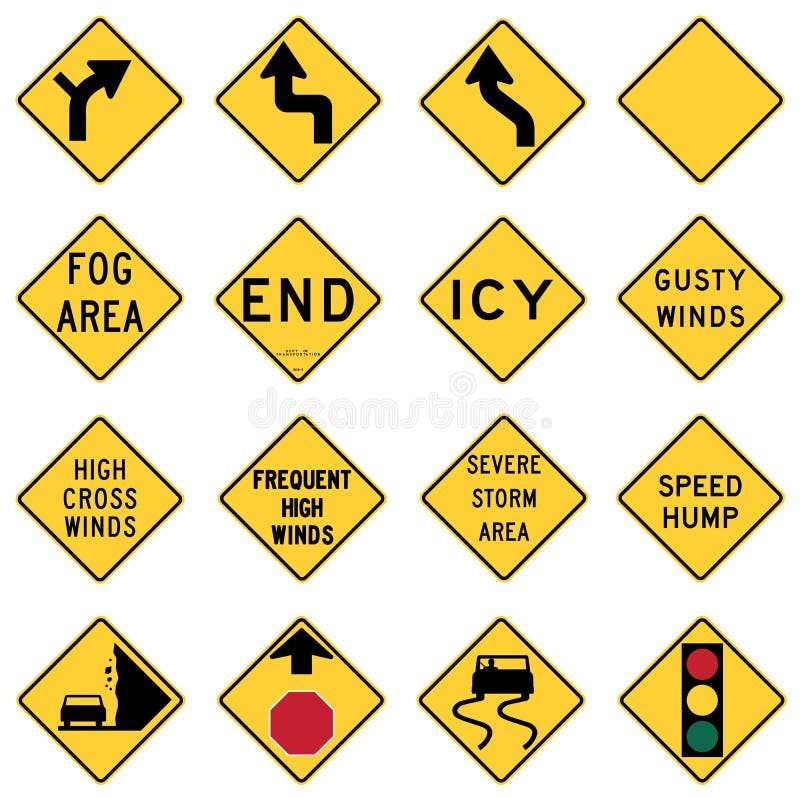
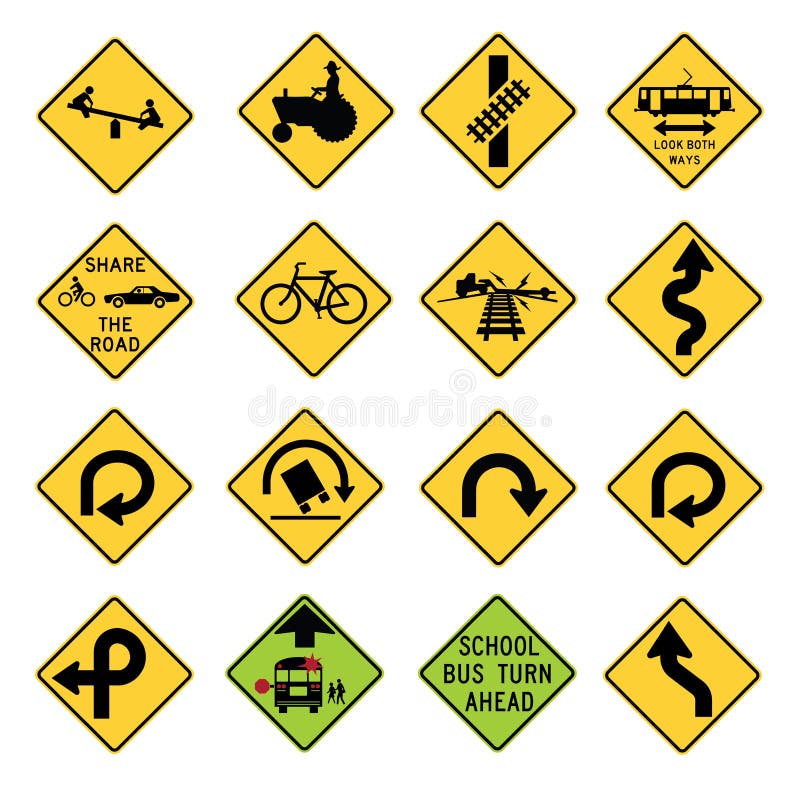
Free with trial Vector Illustration collection of the select Traffic Signs in the United States, isolated on white background. You can find other road signs in my portfolio. EPS file available. Warning signs are found in the W series of the national MUTCD. They highlight existing conditions, such as a curve, school, dead end street, or traffic signal. They can also warn possible danger such as bumps, bicycles, low flying aircraft or emergency vehicles. These signs are either yellow or fluorescent yellow in color and with the exception of a few signs are usually diamond shaped and sometimes have square or rectangular smaller signs or plaques associated with them. Most W series signs can also be found in with orange backgrounds, for temporary use in situations such as construction zones. Some of the temporary use signs are only for use in temporary situations. In the United States, road signs are, for the most part, standardized by federal regulations, most notably in the Manual on Uniform Traffic Control Devices (MUTCD) and its companion volume the Standard Highway Signs (SHS). There currently are no plans for adopting the Vienna Convention on Road Signs and Signals standards. Twenty-three states along with the District of Columbia and Puerto Rico use the manual without any alterations, 20 states have adopted it in conjunction with a supplemental volume, and seven states have a state version in substantial conformance to the MUTCD. There are also localized versions that are used in large cities such as New York City which use a naming system compatible with the MUTCD and/or state supplement. The MUTCD and SHS establish seven general categories of signs for road and highway use. Included illustrations are select examples of the MUTCD Warning Signs categories. Companion vectors Traffic Warning Signs in the United States. Vector Illustration collection of the select Traffic Signs in the United States, isolated on white background. You. Vector Illustration collection of the select Traffic Signs in the United States, isolated on white background. You can find other road signs in my portfolio. EPS file available. Warning signs are found in the W series of the national MUTCD. They highlight existing conditions, such as a curve, school, dead end street, or traffic signal. They can also warn possible danger such as bumps, bicycles, low flying aircraft or emergency vehicles. These signs are either yellow or fluorescent yellow in color and with the exception of a few signs are usually diamond shaped and sometimes have square or rectangular smaller signs or plaques associated with them. Most W series signs can also be found in with orange backgrounds, for temporary use in situations such as construction zones. Some of the temporary use signs are only for use in temporary situations. In the United States, road signs are, for the most part, standardized by federal regulations, most notably in the Manual on Uniform Traffic Control Devices (MUTCD) and its companion volume the Standard Highway Signs (SHS). There currently are no plans for adopting the Vienna Convention on Road Signs and Signals standards. Twenty-three states along with the District of Columbia and Puerto Rico use the manual without any alterations, 20 states have adopted it in conjunction with a supplemental volume, and seven states have a state version in substantial conformance to the MUTCD. There are also localized versions that are used in large cities such as New York City which use a naming system compatible with the MUTCD and/or state supplement. The MUTCD and SHS establish seven general categories of signs for road and highway use. Included illustrations are select examples of the MUTCD Warning Signs categories.
Free with trial Vector Illustration collection of the select Traffic Signs in the United States, isolated on white background. You can find other road signs in my portfolio. EPS file available. Warning signs are found in the W series of the national MUTCD. They highlight existing conditions, such as a curve, school, dead end street, or traffic signal. They can also warn possible danger such as bumps, bicycles, low flying aircraft or emergency vehicles. These signs are either yellow or fluorescent yellow in color and with the exception of a few signs are usually diamond shaped and sometimes have square or rectangular smaller signs or plaques associated with them. Most W series signs can also be found in with orange backgrounds, for temporary use in situations such as construction zones. Some of the temporary use signs are only for use in temporary situations. In the United States, road signs are, for the most part, standardized by federal regulations, most notably in the Manual on Uniform Traffic Control Devices (MUTCD) and its companion volume the Standard Highway Signs (SHS). There currently are no plans for adopting the Vienna Convention on Road Signs and Signals standards. Twenty-three states along with the District of Columbia and Puerto Rico use the manual without any alterations, 20 states have adopted it in conjunction with a supplemental volume, and seven states have a state version in substantial conformance to the MUTCD. There are also localized versions that are used in large cities such as New York City which use a naming system compatible with the MUTCD and/or state supplement. The MUTCD and SHS establish seven general categories of signs for road and highway use. Included illustrations are select examples of the MUTCD Warning Signs categories. Companion vectors Traffic Warning Signs in the United States. Vector Illustration collection of the select Traffic Signs in the United States, isolated on white background. You. Vector Illustration collection of the select Traffic Signs in the United States, isolated on white background. You can find other road signs in my portfolio. EPS file available. Warning signs are found in the W series of the national MUTCD. They highlight existing conditions, such as a curve, school, dead end street, or traffic signal. They can also warn possible danger such as bumps, bicycles, low flying aircraft or emergency vehicles. These signs are either yellow or fluorescent yellow in color and with the exception of a few signs are usually diamond shaped and sometimes have square or rectangular smaller signs or plaques associated with them. Most W series signs can also be found in with orange backgrounds, for temporary use in situations such as construction zones. Some of the temporary use signs are only for use in temporary situations. In the United States, road signs are, for the most part, standardized by federal regulations, most notably in the Manual on Uniform Traffic Control Devices (MUTCD) and its companion volume the Standard Highway Signs (SHS). There currently are no plans for adopting the Vienna Convention on Road Signs and Signals standards. Twenty-three states along with the District of Columbia and Puerto Rico use the manual without any alterations, 20 states have adopted it in conjunction with a supplemental volume, and seven states have a state version in substantial conformance to the MUTCD. There are also localized versions that are used in large cities such as New York City which use a naming system compatible with the MUTCD and/or state supplement. The MUTCD and SHS establish seven general categories of signs for road and highway use. Included illustrations are select examples of the MUTCD Warning Signs categories.
Free with trial Cat and dog embrace love. Cat and dog embrace in love shape. Companion vectors Cat and dog embrace love. Cat and dog embrace in love shape
Free with trial A set of pictogram representing human with their pets. Companion vectors Human and Pets Pictogram. A set of pictogram representing human with their pets. A set of pictogram representing human with their pets.
Free with trial A set of human pictogram representing the deep relationship between a man and his dog. Companion vectors Man and Dog Relationship Pet. A set of human pictogram representing the deep relationship between a man and his dog. A set of human pictogram representing the deep relationship between a man and his dog.
Free with trial Dog, cat, rabbit animal drawing. Vector set of dog, cat, rabbit animal drawing. Companion vectors Dog, cat, rabbit animal drawing. Vector set of dog, cat, rabbit animal drawing
Free with trial Vector Dogs Illustration. Collection of dogs - Vector illustration. Companion vectors Vector Dogs Illustration. Collection of dogs - Vector illustration
Free with trial Vector Hipster dog Pembroke Welsh corgi. Hipster dog Pembroke Welsh corgi breed in hat and neckerchief. Companion vectors Vector Hipster dog Pembroke Welsh corgi. Hipster dog Pembroke Welsh corgi breed in hat and neckerchief
Free with trial Face to Face. Man and women heads profiles, abstract concept of people relations. Companion vectors Face to Face. Man and women heads profiles, abstract concept of people relations
Free with trial Boy and his dog in Spring landscape. Boy blowing bubbles with his dok in spirng landscape. Companion vectors Boy and his dog in Spring landscape. Boy blowing bubbles with his dok in spirng landscape
Free with trial DOG ICONS. Illustration of purebred dogs, cartoon dog portraits. Companion vectors DOG ICONS. Illustration of purebred dogs, cartoon dog portraits
Free with trial Cat vector. Collection of cat silhouettes, vector. Companion vectors Cat vector. Collection of cat silhouettes, vector
Free with trial Teddy bear. Toy, vector illustration. Companion vectors Teddy bear. Toy, vector illustration
Free with trial Cartoon dog in different poses to illustrate English prepositions of place. Vector illustration for preschool kids. Animal pet, booth and domestic, place and mammal breed illustration. Companion vectors Cartoon dog in different poses to illustrate. English prepositions of place. Vector illustration for preschool kids. Animal pet, booth and domestic, place and
Free with trial Science head. The head of the person consists of objects of science. A vector illustration. Companion vectors Science head. The head of the person consists of objects of science. A vector illustration
Free with trial Best friends. Great illustration of a Cute Dog hugging a Cat. Companion vectors Best friends. Great illustration of a Cute Dog hugging a Cat
Free with trial Business ladies. Two business ladies in work place. Companion vectors Business ladies. Two business ladies in work place
Free with trial Cat drawing set. Set of drawing cat icon. Companion vectors Cat drawing set. Set of drawing cat icon
Free with trial Girls at a cafe. Two girls at a cafe talking and looking on each other. Companion vectors Girls at a cafe. Two girls at a cafe talking and looking on each other
Free with trial Puppy and kitten. Cute puppy and kitten hugging each other. Companion vectors Puppy and kitten. Cute puppy and kitten hugging each other
Free with trial Walking with dogs. Young lady walking with three dogs. Companion vectors Walking with dogs. Young lady walking with three dogs
Free with trial Circle of Friends. A group of four people completing a circle. Companion vectors Circle of Friends. A group of four people completing a circle
Free with trial Girls at the coffee. Girls talking and drinking coffee outside. Companion vectors Girls at the coffee. Girls talking and drinking coffee outside
Free with trial Girls having coffee. Young ladyes enjoying a mug of coffee. Companion vectors Girls having coffee. Young ladyes enjoying a mug of coffee
Free with trial Cute set of sausage dogs (dachsund) with funky clothes. Companion vectors Collection of cute dogs. Cute set of sausage dogs (dachsund) with funky clothes. Cute set of sausage dogs (dachsund) with funky clothes.
Free with trial Collection of cat vector. In black. Companion vectors Collection of cat vector. In black
Free with trial Dog and Cat having a bath. Very cute Dog and Cat having a soapy bath. Companion vectors Dog and Cat having a bath. Very cute Dog and Cat having a soapy bath
Free with trial Couple walking with a dog. In the city. Companion vectors Couple walking with a dog. In the city
Free with trial Dog icons / clipart collection. Dog and dogs stuff colorful clipart isolated on white background. Companion vectors Dog icons / clipart collection. Dog and dogs stuff colorful clipart isolated on white background
Free with trial Little boy's daily activities, no gradients. Companion vectors Little boy's daily activities. No gradients
Free with trial Little girl's daily activities, no gradients. Companion vectors Little girl's daily activities. No gradients
Free with trial Vector set French Bulldog dogs. Vector set of white, fawn and black dogs French Bulldog breed, the most common colouring. Companion vectors Vector set French Bulldog dogs. Vector set of white, fawn and black dogs French Bulldog breed, the most common colouring
Free with trial Four young beautiful fashion women having coffee and chatting sitting at cafe in downtown. Companion vectors Women Woman Friends Chatting Coffee Relax Cafe. Four young beautiful fashion women having coffee and chatting sitting at cafe in downtown. Four young beautiful fashion women having coffee and chatting sitting at cafe in downtown.
Free with trial Christmas characters like santa claus,reindeer and snowman holding gift with merry christmas greeting in white background. Vector illustration. Companion vectors Christmas characters like santa claus,reindeer and snowman holding gift. With merry christmas greeting in white background. Vector illustration
Free with trial Vector and illustration: Friendship line icon set. Included icons as friend, relationship, buddy, greeting, love, care and more. Companion vectors Friendship line icon set. Included icons as friend, relationship, buddy, greeting, love, care and more. Vector and illustration: Friendship line icon set. Vector and illustration: Friendship line icon set. Included icons as friend, relationship, buddy, greeting, love, care and more.
Free with trial Cat silhouettes set. Set of different vector cats silhouettes for design use. Companion vectors Cat silhouettes set. Set of different vector cats silhouettes for design use
Free with trial Vector image of an dog (bulldog). On white background. Companion vectors Vector image of an dog (bulldog). On white background. Vector image of an dog (bulldog) on white background
Free with trial Funny puppy daily routine set, cute little dog in his evereday activity colorful character. Vector Illustrations. Companion vectors Funny puppy daily routine set, cute little dog in his evereday activity colorful character. Vector Illustrations
Free with trial Collection of quote typographical background about cats and dogs with hand drawn waves and scrolls. Vector silhouette of cat. Template for business card poster and banner. Print for clothes. Companion vectors Collection of quote typographical background about cats and dogs. With hand drawn waves and scrolls.Vector silhouette of cat. Template for business card poster. Collection of quote typographical background about cats and dogs with hand drawn waves and scrolls.Vector silhouette of cat. Template for business card poster and banner. Print for clothes.
Free with trial Scottish Terrier. The black silhouette of a Scottish Terrier. Companion vectors Scottish Terrier. The black silhouette of a Scottish Terrier
Free with trial Cartoon christmas characters. Xmas tree with Santa Claus gifts, Santas helpers elves and winter holidays deer noel companion, 2019 celebration vector character isolated icons set. Companion vectors Cartoon christmas characters. Xmas tree with Santa Claus gifts, Santas helpers elves and winter holidays deer vector. Cartoon christmas characters. Xmas tree. Cartoon christmas characters. Xmas tree with Santa Claus gifts, Santas helpers elves and winter holidays deer noel companion, 2019 celebration vector character isolated icons set
Free with trial Farm and Companion Animals for Coloring. Coloring Book or Page Cartoon Illustration of Funny Farm and Companion Animals for Children Education. Companion vectors Farm and Companion Animals for Coloring. Coloring Book or Page Cartoon Illustration of Funny Farm and Companion Animals for Children Education
Free with trial Companion robot evolution timeline infographics, Robotics progress stages from small droid to humanised cyborg. Game character unit design, level up upgrade guide with development steps Cartoon vector. Companion vectors Companion robot evolution timeline infographics. Robotics progress stages from small droid to humanised cyborg. Game character unit design, level up upgrade. Companion robot evolution timeline infographics, Robotics progress stages from small droid to humanised cyborg. Game character unit design, level up upgrade guide with development steps Cartoon vector
Free with trial Little boy, child, kid with big fluffy brown dog friend, companion, cartoon vector illustration isolated on white background. Companion vectors Little boy, child, kid with a brown dog friend, companion. Little boy, child, kid with big fluffy brown dog friend, companion, cartoon vector illustration. Little boy, child, kid with big fluffy brown dog friend, companion, cartoon vector illustration isolated on white background.
Free with trial Supernova vector illustration. Scheme how stars become to big bang and explosion. Explained companion star, matter transfer, dwarf, detonation and core collapse. Isolated cosmos and space objects. Companion vectors Supernova vector illustration. how stars become to big bang and explosion. Explained companion star, matter transfer and dwarf. Supernova vector illustration. Supernova vector illustration. Scheme how stars become to big bang and explosion. Explained companion star, matter transfer, dwarf, detonation and core collapse. Isolated cosmos and space objects.
Free with trial Elephant an animal that honored and sacred in Thailand culture. This animal has related with many legend warrior as companion at the battlefield. Represent as a symbol of loyalty, power, strength, and brave. Companion vectors MUAY THAI ELEPHANT SACRED ANIMAL. Elephant an animal that honored and sacred in Thailand culture. This animal has related with many legend warrior as companion. Elephant an animal that honored and sacred in Thailand culture. This animal has related with many legend warrior as companion at the battlefield. Represent as a symbol of loyalty, power, strength, and brave.
Free with trial Big set of 49 different dogs, hounds, working, shepherd, terrier, companion, hunting. Vector set of different dogs standing in profile. Isolated dogs breed silhouettes set in black color on white background. Part 2. Companion vectors Vector dogs silhouettes 2. Big set of 49 different dogs, hounds, working, shepherd, terrier, companion, hunting. Vector set of different dogs standing in. Big set of 49 different dogs, hounds, working, shepherd, terrier, companion, hunting. Vector set of different dogs standing in profile. Isolated dogs breed silhouettes set in black color on white background. Part 2
Free with trial Big set of 49 different dogs, hounds, working, shepherd, terrier, companion, hunting. Vector set of different dogs standing in profile. Isolated dogs breed silhouettes set in black color on white background. Companion vectors Vector dogs silhouettes 1. Big set of 49 different dogs, hounds, working, shepherd, terrier, companion, hunting. Vector set of different dogs standing in. Big set of 49 different dogs, hounds, working, shepherd, terrier, companion, hunting. Vector set of different dogs standing in profile. Isolated dogs breed silhouettes set in black color on white background
Free with trial Big set of 49 different dogs, hounds, working, shepherd, terrier, companion, hunting. Vector set of different dogs standing in profile. Isolated dogs breed silhouettes set in black color on white background. Part 3. Companion vectors Vector dogs silhouettes 3. Big set of 49 different dogs, hounds, working, shepherd, terrier, companion, hunting. Vector set of different dogs standing in. Big set of 49 different dogs, hounds, working, shepherd, terrier, companion, hunting. Vector set of different dogs standing in profile. Isolated dogs breed silhouettes set in black color on white background. Part 3
Free with trial Elderly care abstract concept vector illustration. Elderly people medical care, home nursing for seniors, geriatric healthcare service, live in assistance, retiree companion abstract metaphor. Companion vectors Elderly care abstract concept vector illustration. Elderly people medical care, home nursing for seniors, geriatric healthcare service, live in assistance
Free with trial Love Birds. An illustration of two love birds in a tree. Companion vectors Love Birds. An illustration of two love birds in a tree
Free with trial Dog Silhouette. Illustration Dog Silhouette White Background. Companion vectors Dog Silhouette. Illustration Dog Silhouette White Background
Free with trial A stylized line drawing of a cat. Companion vectors Cat Line drawing Vector. A stylized line drawing of a cat. A stylized line drawing of a cat.
Free with trial Cats And Mouse Silhouette. Illustration. Companion vectors Cats And Mouse Silhouette. Illustration
Free with trial Fishing. Vector illustration of two men silhouette fishing on tranquil lake. Companion vectors Fishing. Vector illustration of two men silhouette fishing on tranquil lake
Free with trial An artistic view with silhouettes of young man and woman sitting at a table, sharing a soda while on a date. Companion vectors Silhouette of couple dating. An artistic view with silhouettes of young man and woman sitting at a table, sharing a soda while on a date. An artistic view with silhouettes of young man and woman sitting at a table, sharing a soda while on a date.
Free with trial Black cats. Set of black cats' silhouettes. Companion vectors Black cats. Set of black cats' silhouettes
 Sign in