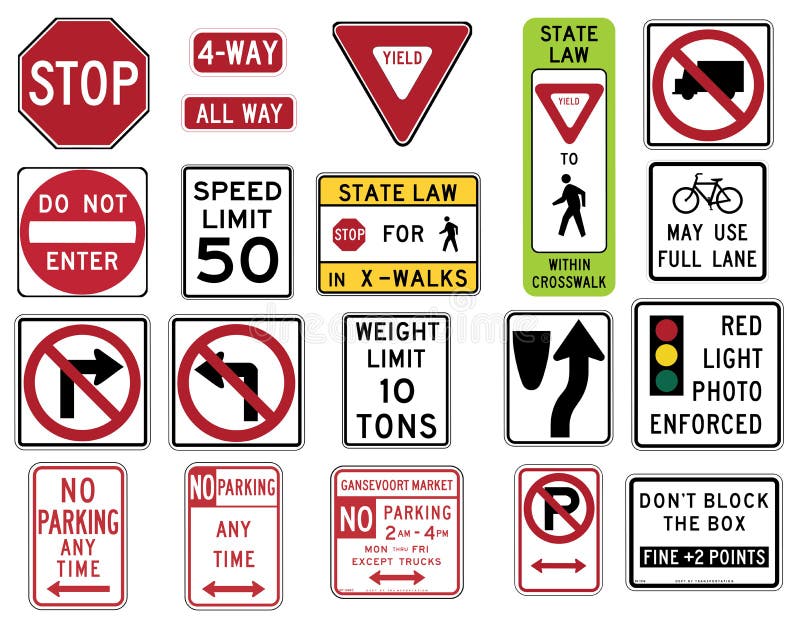
Free with trial Vector Illustration collection of the select Traffic Signs in the United States, isolated on white background. You can find other road signs in my portfolio. EPS file available. In the United States, road signs are, for the most part, standardized by federal regulations, most notably in the Manual on Uniform Traffic Control Devices (MUTCD) and its companion volume the Standard Highway Signs (SHS). There currently are no plans for adopting the Vienna Convention on Road Signs and Signals standards. Twenty-three states along with the District of Columbia and Puerto Rico use the manual without any alterations, 20 states have adopted it in conjunction with a supplemental volume, and seven states have a state version in substantial conformance to the MUTCD. There are also localized versions that are used in large cities such as New York City which use a naming system compatible with the MUTCD and/or state supplement. The MUTCD and SHS establish seven general categories of signs for road and highway use. Included illustrations are select examples of the following MUTCD categories: -- R1 Series STOP and YIELD -- R2 Series Speed Limit -- R3 Series Lane Usage and Turns (Left and Right Turn) -- R4 Regulation of Movement -- R5 Series: Exclusionary -- R7 Series: Parking. Conformance vectors Traffic Signs in the United States - Regulatory Series. Vector Illustration collection of the select Traffic Signs in the United States, isolated on white. Vector Illustration collection of the select Traffic Signs in the United States, isolated on white background. You can find other road signs in my portfolio. EPS file available. In the United States, road signs are, for the most part, standardized by federal regulations, most notably in the Manual on Uniform Traffic Control Devices (MUTCD) and its companion volume the Standard Highway Signs (SHS). There currently are no plans for adopting the Vienna Convention on Road Signs and Signals standards. Twenty-three states along with the District of Columbia and Puerto Rico use the manual without any alterations, 20 states have adopted it in conjunction with a supplemental volume, and seven states have a state version in substantial conformance to the MUTCD. There are also localized versions that are used in large cities such as New York City which use a naming system compatible with the MUTCD and/or state supplement. The MUTCD and SHS establish seven general categories of signs for road and highway use. Included illustrations are select examples of the following MUTCD categories: -- R1 Series STOP and YIELD -- R2 Series Speed Limit -- R3 Series Lane Usage and Turns (Left and Right Turn) -- R4 Regulation of Movement -- R5 Series: Exclusionary -- R7 Series: Parking
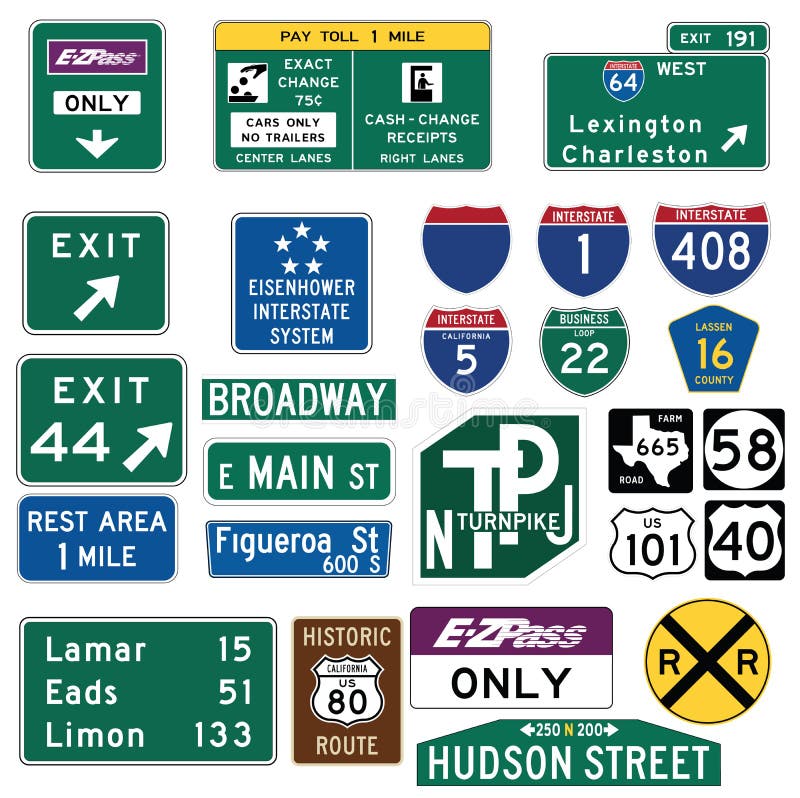
Free with trial Vector Illustration collection of the select Traffic Signs in the United States, isolated on white background. You can find other road signs in my portfolio. EPS file available. Guide signs are essential to direct road users along streets and highways, to inform them of intersecting routes, rnto direct them to cities, towns, villages, or other important destinations, to identify nearby rivers and streams, parks, forests, and historical sites, and generally to give such information as will help them along their way in the most simple, direct manner possible. rnrnIn the United States, road signs are, for the most part, standardized by federal regulations, most notably in the Manual on Uniform Traffic Control Devices (MUTCD) and its companion volume the Standard Highway Signs (SHS). There currently are no plans for adopting the Vienna Convention on Road Signs and Signals standards. Twenty-three states along with the District of Columbia and Puerto Rico use the manual without any alterations, 20 states have adopted it in conjunction with a supplemental volume, and seven states have a state version in substantial conformance to the MUTCD. There are also localized versions that are used in large cities such as New York City which use a naming system compatible with the MUTCD and/or state supplement. The MUTCD and SHS establish seven general categories of signs for road and highway use. rnrnIncluded illustrations are select examples of the MUTCD Guide Signs categories. rn. Conformance vectors Traffic Guide Signs in the United States. Vector Illustration collection of the select Traffic Signs in the United States, isolated on white background. You can. Vector Illustration collection of the select Traffic Signs in the United States, isolated on white background. You can find other road signs in my portfolio. EPS file available. Guide signs are essential to direct road users along streets and highways, to inform them of intersecting routes, rnto direct them to cities, towns, villages, or other important destinations, to identify nearby rivers and streams, parks, forests, and historical sites, and generally to give such information as will help them along their way in the most simple, direct manner possible.rnrnIn the United States, road signs are, for the most part, standardized by federal regulations, most notably in the Manual on Uniform Traffic Control Devices (MUTCD) and its companion volume the Standard Highway Signs (SHS). There currently are no plans for adopting the Vienna Convention on Road Signs and Signals standards. Twenty-three states along with the District of Columbia and Puerto Rico use the manual without any alterations, 20 states have adopted it in conjunction with a supplemental volume, and seven states have a state version in substantial conformance to the MUTCD. There are also localized versions that are used in large cities such as New York City which use a naming system compatible with the MUTCD and/or state supplement. The MUTCD and SHS establish seven general categories of signs for road and highway use.rnrnIncluded illustrations are select examples of the MUTCD Guide Signs categories.rn
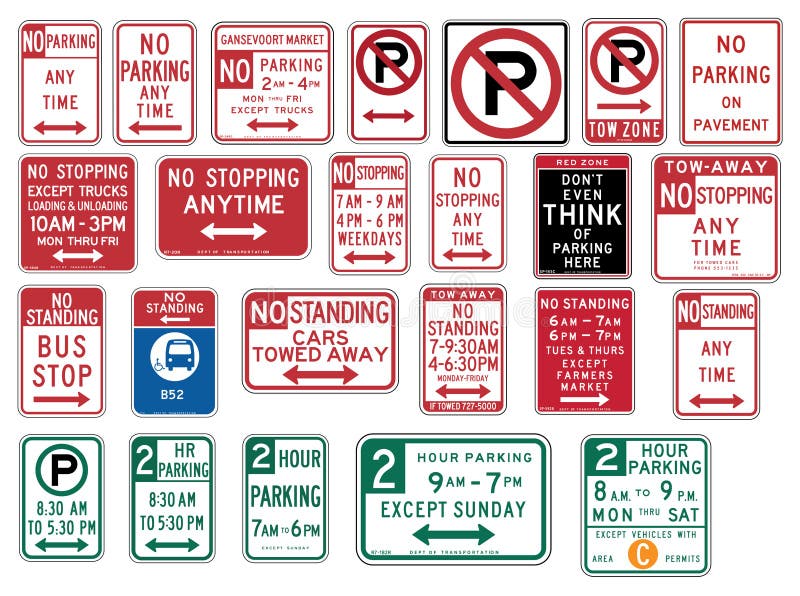
Free with trial Vector Illustration collection of the select Traffic Signs in the United States, isolated on white background. You can find other road signs in my portfolio. EPS file available. rnrnIn the United States, road signs are, for the most part, standardized by federal regulations, most notably in the Manual on Uniform Traffic Control Devices (MUTCD) and its companion volume the Standard Highway Signs (SHS). There currently are no plans for adopting the Vienna Convention on Road Signs and Signals standards. rnTwenty-three states along with the District of Columbia and Puerto Rico use the manual without any alterations, 20 states have adopted it in conjunction with a supplemental volume, and seven states have a state version in substantial conformance to the MUTCD. There are also localized versions that are used in large cities such as New York City which use a naming system compatible with the MUTCD and/or state supplement. The MUTCD and SHS establish seven general categories of signs for road and highway use. rnrnIncluded illustrations are select examples of the following MUTCD categories:rn-- R7 Series: Parkingrnrn. Conformance vectors Traffic Signs in the United States - No Parking. Vector Illustration collection of the select Traffic Signs in the United States, isolated on white background. Vector Illustration collection of the select Traffic Signs in the United States, isolated on white background. You can find other road signs in my portfolio. EPS file available.rnrnIn the United States, road signs are, for the most part, standardized by federal regulations, most notably in the Manual on Uniform Traffic Control Devices (MUTCD) and its companion volume the Standard Highway Signs (SHS). There currently are no plans for adopting the Vienna Convention on Road Signs and Signals standards.rnTwenty-three states along with the District of Columbia and Puerto Rico use the manual without any alterations, 20 states have adopted it in conjunction with a supplemental volume, and seven states have a state version in substantial conformance to the MUTCD. There are also localized versions that are used in large cities such as New York City which use a naming system compatible with the MUTCD and/or state supplement. The MUTCD and SHS establish seven general categories of signs for road and highway use.rnrnIncluded illustrations are select examples of the following MUTCD categories:rn-- R7 Series: Parkingrnrn
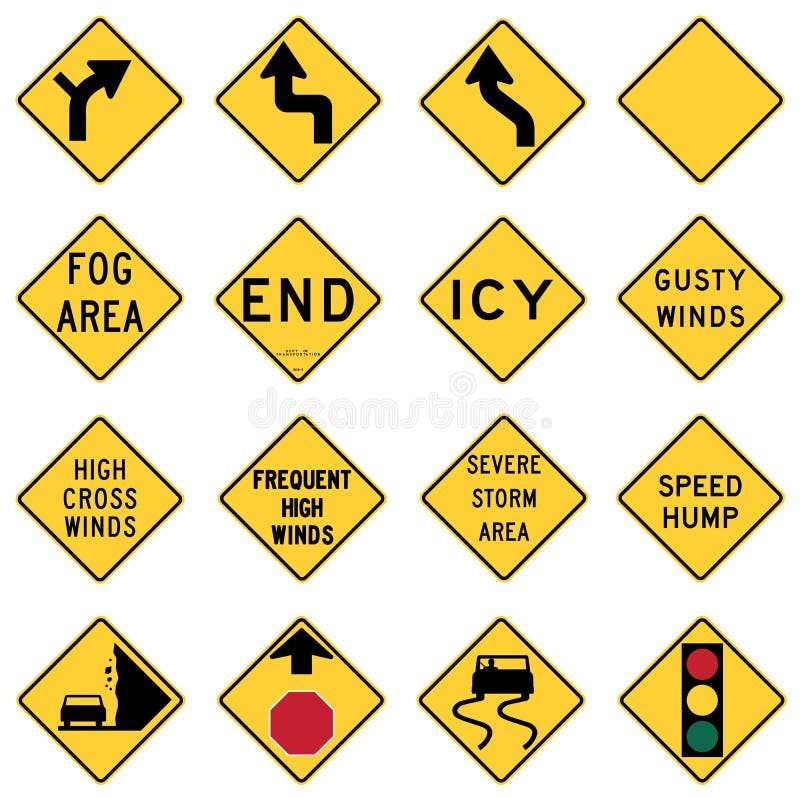
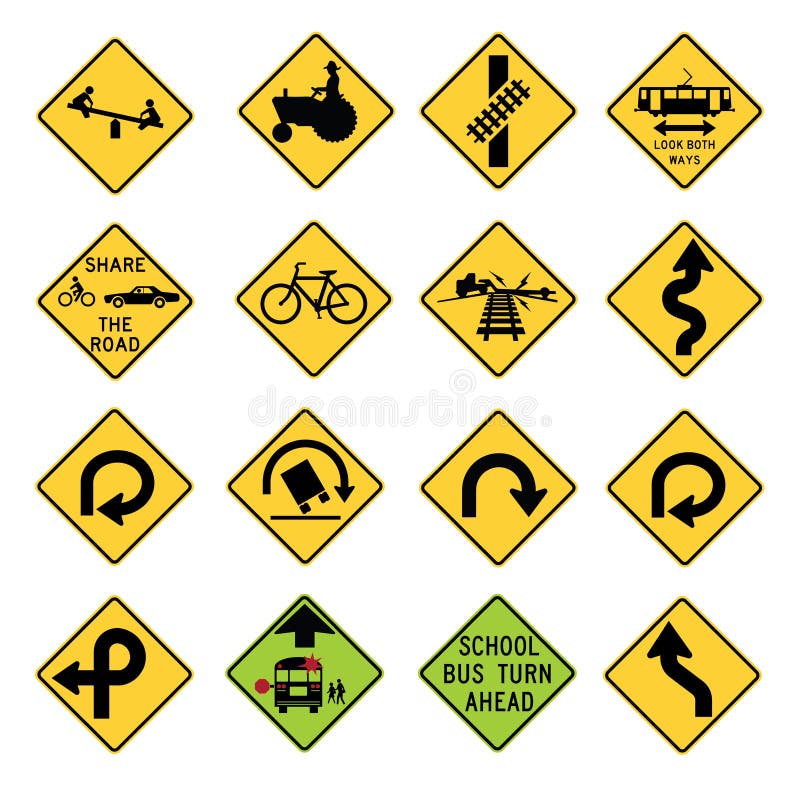
Free with trial Vector Illustration collection of the select Traffic Signs in the United States, isolated on white background. You can find other road signs in my portfolio. EPS file available. Warning signs are found in the W series of the national MUTCD. They highlight existing conditions, such as a curve, school, dead end street, or traffic signal. They can also warn possible danger such as bumps, bicycles, low flying aircraft or emergency vehicles. These signs are either yellow or fluorescent yellow in color and with the exception of a few signs are usually diamond shaped and sometimes have square or rectangular smaller signs or plaques associated with them. Most W series signs can also be found in with orange backgrounds, for temporary use in situations such as construction zones. Some of the temporary use signs are only for use in temporary situations. In the United States, road signs are, for the most part, standardized by federal regulations, most notably in the Manual on Uniform Traffic Control Devices (MUTCD) and its companion volume the Standard Highway Signs (SHS). There currently are no plans for adopting the Vienna Convention on Road Signs and Signals standards. Twenty-three states along with the District of Columbia and Puerto Rico use the manual without any alterations, 20 states have adopted it in conjunction with a supplemental volume, and seven states have a state version in substantial conformance to the MUTCD. There are also localized versions that are used in large cities such as New York City which use a naming system compatible with the MUTCD and/or state supplement. The MUTCD and SHS establish seven general categories of signs for road and highway use. Included illustrations are select examples of the MUTCD Warning Signs categories. Conformance vectors Traffic Warning Signs in the United States. Vector Illustration collection of the select Traffic Signs in the United States, isolated on white background. You. Vector Illustration collection of the select Traffic Signs in the United States, isolated on white background. You can find other road signs in my portfolio. EPS file available. Warning signs are found in the W series of the national MUTCD. They highlight existing conditions, such as a curve, school, dead end street, or traffic signal. They can also warn possible danger such as bumps, bicycles, low flying aircraft or emergency vehicles. These signs are either yellow or fluorescent yellow in color and with the exception of a few signs are usually diamond shaped and sometimes have square or rectangular smaller signs or plaques associated with them. Most W series signs can also be found in with orange backgrounds, for temporary use in situations such as construction zones. Some of the temporary use signs are only for use in temporary situations. In the United States, road signs are, for the most part, standardized by federal regulations, most notably in the Manual on Uniform Traffic Control Devices (MUTCD) and its companion volume the Standard Highway Signs (SHS). There currently are no plans for adopting the Vienna Convention on Road Signs and Signals standards. Twenty-three states along with the District of Columbia and Puerto Rico use the manual without any alterations, 20 states have adopted it in conjunction with a supplemental volume, and seven states have a state version in substantial conformance to the MUTCD. There are also localized versions that are used in large cities such as New York City which use a naming system compatible with the MUTCD and/or state supplement. The MUTCD and SHS establish seven general categories of signs for road and highway use. Included illustrations are select examples of the MUTCD Warning Signs categories.
Free with trial Vector Illustration collection of the select Traffic Signs in the United States, isolated on white background. You can find other road signs in my portfolio. EPS file available. Warning signs are found in the W series of the national MUTCD. They highlight existing conditions, such as a curve, school, dead end street, or traffic signal. They can also warn possible danger such as bumps, bicycles, low flying aircraft or emergency vehicles. These signs are either yellow or fluorescent yellow in color and with the exception of a few signs are usually diamond shaped and sometimes have square or rectangular smaller signs or plaques associated with them. Most W series signs can also be found in with orange backgrounds, for temporary use in situations such as construction zones. Some of the temporary use signs are only for use in temporary situations. In the United States, road signs are, for the most part, standardized by federal regulations, most notably in the Manual on Uniform Traffic Control Devices (MUTCD) and its companion volume the Standard Highway Signs (SHS). There currently are no plans for adopting the Vienna Convention on Road Signs and Signals standards. Twenty-three states along with the District of Columbia and Puerto Rico use the manual without any alterations, 20 states have adopted it in conjunction with a supplemental volume, and seven states have a state version in substantial conformance to the MUTCD. There are also localized versions that are used in large cities such as New York City which use a naming system compatible with the MUTCD and/or state supplement. The MUTCD and SHS establish seven general categories of signs for road and highway use. Included illustrations are select examples of the MUTCD Warning Signs categories. Conformance vectors Traffic Warning Signs in the United States. Vector Illustration collection of the select Traffic Signs in the United States, isolated on white background. You. Vector Illustration collection of the select Traffic Signs in the United States, isolated on white background. You can find other road signs in my portfolio. EPS file available. Warning signs are found in the W series of the national MUTCD. They highlight existing conditions, such as a curve, school, dead end street, or traffic signal. They can also warn possible danger such as bumps, bicycles, low flying aircraft or emergency vehicles. These signs are either yellow or fluorescent yellow in color and with the exception of a few signs are usually diamond shaped and sometimes have square or rectangular smaller signs or plaques associated with them. Most W series signs can also be found in with orange backgrounds, for temporary use in situations such as construction zones. Some of the temporary use signs are only for use in temporary situations. In the United States, road signs are, for the most part, standardized by federal regulations, most notably in the Manual on Uniform Traffic Control Devices (MUTCD) and its companion volume the Standard Highway Signs (SHS). There currently are no plans for adopting the Vienna Convention on Road Signs and Signals standards. Twenty-three states along with the District of Columbia and Puerto Rico use the manual without any alterations, 20 states have adopted it in conjunction with a supplemental volume, and seven states have a state version in substantial conformance to the MUTCD. There are also localized versions that are used in large cities such as New York City which use a naming system compatible with the MUTCD and/or state supplement. The MUTCD and SHS establish seven general categories of signs for road and highway use. Included illustrations are select examples of the MUTCD Warning Signs categories.
Free with trial QUALITY ASSURANCE. A word cloud of Quality assurance related items. Conformance vectors QUALITY ASSURANCE. A word cloud of Quality assurance related items
Free with trial Audit satisfactory of an ISO certification. Conformance vectors ISO Audit Checklist Satisfactory Illustration. Audit satisfactory of an ISO certification. Audit satisfactory of an ISO certification.
Free with trial Hr metric line concept icon. Hr metric flat vector website sign, outline symbol, illustration. Conformance vectors Hr metric line icon concept. Hr metric flat vector symbol, sign, outline illustration. Hr metric line concept icon. Hr metric flat vector website sign. Hr metric line concept icon. Hr metric flat vector website sign, outline symbol, illustration.
Free with trial Old fashioned audit report written in feather on parchment. Conformance vectors Audit report in antique style. Old fashioned audit report written in feather on parchment. Old fashioned audit report written in feather on parchment.
Free with trial WCAG guidelines structure is shown as a pyramid with conformance levels, testable criteria, and four principles. Doodle style diagram. Conformance vectors WCAG guidelines structure is shown as a pyramid with conformance ... WCAG guidelines structure is shown as a pyramid with conformance levels, testable criteria. WCAG guidelines structure is shown as a pyramid with conformance levels, testable criteria, and four principles. Doodle style diagram
Free with trial VPAT process brief shows accessibility conformance steps, smartphone, magnifying glass, and report checklist illustrate submission, audit, and approval flow. Outline diagram. Conformance vectors VPAT process brief shows accessibility conformance steps, smartphone, magnifying glass, ... VPAT process brief shows accessibility conformance steps, smartphone. VPAT process brief shows accessibility conformance steps, smartphone, magnifying glass, and report checklist illustrate submission, audit, and approval flow. Outline diagram
Free with trial WCAG guidelines structure shown as a pyramid with conformance levels, principles, and icons for perceivable, operable, understandable. Outline diagram. Conformance vectors WCAG guidelines structure shown as a pyramid with conformance levels, ... WCAG guidelines structure shown as a pyramid with conformance levels, principles, and. WCAG guidelines structure shown as a pyramid with conformance levels, principles, and icons for perceivable, operable, understandable. Outline diagram
Free with trial Non-Conformance Report line icon. linear style sign for mobile concept and web design. Document with cross mark outline vector icon. Symbol, logo illustration. Vector graphics. Conformance vectors Non-Conformance Report line icon. Linear style sign for mobile concept and web design. Document with cross mark outline vector icon. Symbol, logo illustration
Free with trial Flat duotone icon set covering WCAG 2. 2 success criteria — focus visibility, target size, redundant entry, dragging movements, consistent help, and accessible authentication — for accessibility auditors, compliance consultancies, and SaaS accessibility teams building conformance reports and audit dashboards. Conformance vectors WCAG 2.2 Conformance Icons, AI-generated wcag-22-conformance icon set. Flat duotone icon set covering WCAG 2.2 success criteria — focus visibility, target size. Flat duotone icon set covering WCAG 2.2 success criteria — focus visibility, target size, redundant entry, dragging movements, consistent help, and accessible authentication — for accessibility auditors, compliance consultancies, and SaaS accessibility teams building conformance reports and audit dashboards.
Free with trial An AI-generated flat duotone 12-icon set for European Accessibility Act compliance — EAA digital accessibility duties, EN 301 549, WCAG conformance, accessible products and services — for accessibility auditors, e-commerce platforms, banking and telecom compliance teams and legal publishers. Conformance vectors EU Accessibility Act Icons, AI-generated EU accessibility-act icon set. An AI-generated flat duotone 12-icon set for European Accessibility Act compliance —. An AI-generated flat duotone 12-icon set for European Accessibility Act compliance — EAA digital accessibility duties, EN 301 549, WCAG conformance, accessible products and services — for accessibility auditors, e-commerce platforms, banking and telecom compliance teams and legal publishers.
Free with trial Document with cross mark vector icon. filled flat sign for mobile concept and web design. Non-Conformance Report glyph icon. Symbol, logo illustration. Vector graphics. Conformance vectors Document with cross mark vector icon. Filled flat sign for mobile concept and web design. Non-Conformance Report glyph icon. Symbol, logo illustration. Vector
Free with trial Quality control outline icon set,15 icons. Quality control outline icon collection for web, app, UI, UX, dashboard, presentation and infographic and print design. Conformance vectors Quality control outline icon set,15 icons. Quality control outline icon collection for web, app, UI, UX, dashboard, presentation and infographic and print design
Free with trial Quality control filled glyph icon collection for web, app, UI, UX, dashboard, presentation and infographic and print design. Conformance vectors Quality control filled glyph icon set,15 icons. Quality control filled glyph icon collection for web, app, UI, UX, dashboard, presentation and infographic and. quality control filled glyph icon collection for web, app, UI, UX, dashboard, presentation and infographic and print design
Free with trial Adherence Concept. Vector Illustration: Consistency, Commitment, and Perseverance. Conformance vectors Adherence Concept. Vector Illustration: Consistency, Commitment, and Perseverance
Free with trial A bold, red, circular stamp with a distressed texture, signifying an official rejection. The word 'DECLINED' is prominently displayed in large, sans-serif capital letters across the center. Above it, curved text reads 'OFFICIAL REJECTION', accompanied by three small stars. Below 'DECLINED', the phrase 'FILE CLOSED' is also stamped, indicating finality. This graphic is ideal for representing denial, refusal, or the termination of a process in business, legal, or administrative contexts. Conformance vectors Official Rejection Declined File Closed Stamp. A bold, red, circular stamp with a distressed texture, signifying an official rejection. The word 'DECLINED' is. A bold, red, circular stamp with a distressed texture, signifying an official rejection. The word 'DECLINED' is prominently displayed in large, sans-serif capital letters across the center. Above it, curved text reads 'OFFICIAL REJECTION', accompanied by three small stars. Below 'DECLINED', the phrase 'FILE CLOSED' is also stamped, indicating finality. This graphic is ideal for representing denial, refusal, or the termination of a process in business, legal, or administrative contexts.
Free with trial A comprehensive set of 28 vector icons representing smart factory concepts, manufacturing processes, and quality control systems. The icons feature a clean, modern line art style with color accents in blue, orange, and green. Key concepts illustrated include automated workflow, machine monitoring, quality assurance, defect detection, process validation, compliance standards, and root cause analysis. Ideal for presentations, websites, and infographics related to Industry 4. 0, industrial automation, logistics, and quality management systems. Conformance vectors Smart Factory Manufacturing and Quality Control Icon Set. A comprehensive set of 28 vector icons representing smart factory concepts, manufacturing processes. A comprehensive set of 28 vector icons representing smart factory concepts, manufacturing processes, and quality control systems. The icons feature a clean, modern line art style with color accents in blue, orange, and green. Key concepts illustrated include automated workflow, machine monitoring, quality assurance, defect detection, process validation, compliance standards, and root cause analysis. Ideal for presentations, websites, and infographics related to Industry 4.0, industrial automation, logistics, and quality management systems.
Free with trial An array of quality control icons, featuring symbols like checkmarks, trophies, and tools, designed in a minimalist black outline. Style on white background. Conformance vectors An array of quality control icons, featuring symbols like checkmarks, trophies, and tools, designed in a minimalist black outline. Style on white background
Free with trial Conformance testing or type testing technique. Software testing methodology. IT specialist searching for bugs in code. Website and application development. Flat vector illustration. Conformance vectors Conformance testing or type testing technique. Software testing methodology. IT specialist searching for bugs in code. Website and application development
Free with trial Conformance testing or type testing technique web banner or landing page. Software testing methodology. IT specialist searching for bugs in code. Website and app development. Flat vector illustration. Conformance vectors Conformance testing or type testing technique web banner or landing page. Software testing methodology. IT specialist searching for bugs in code. Website and
Free with trial TBH, Technical Basis for Harmonized Conformance. Concept with keyword, people and icons. Flat vector illustration. Isolated on white background. Conformance vectors TBH, Technical Basis for Harmonized Conformance. Concept with keyword, people and icons. Flat vector illustration. Isolated on white background
Free with trial Video conformance social distance for covid-19. Work at home be safe. Conformance vectors Video conformance social distance for covid-19. Work at home be safe
Free with trial Quality word cloud concept. Vector illustration. Conformance vectors Quality word cloud concept. Vector illustration
Free with trial Quality word cloud. Concept. Vector illustration. Conformance vectors Quality word cloud. Concept. Vector illustration
 Sign in