Free with trial Hong Kong City Skyline Black and White Vector Illu. Hong Kong City Skyline Panorama Black Isolated on White Background Vector Illustration. Convention vectors Hong Kong City Skyline Black and White Vector Illu. Hong Kong City Skyline Panorama Black Isolated on White Background Vector Illustration
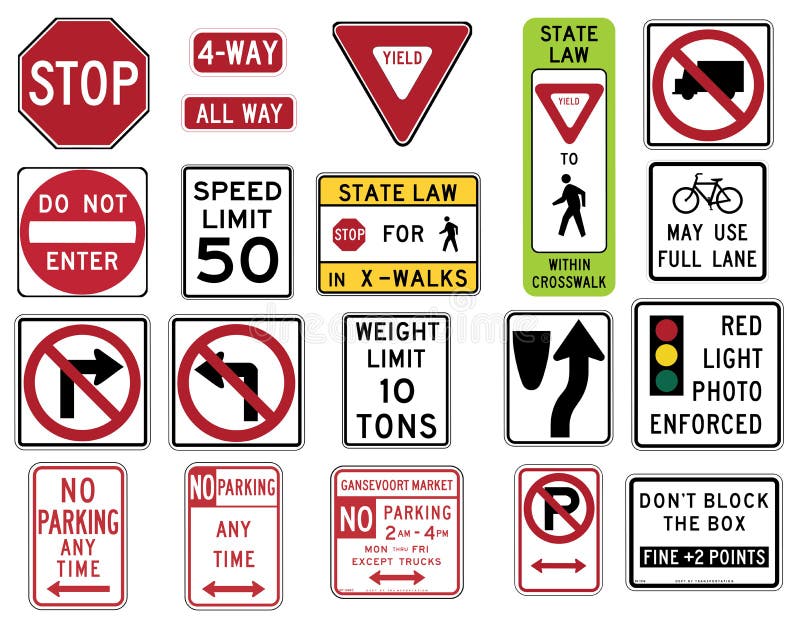
Free with trial Vector Illustration collection of the select Traffic Signs in the United States, isolated on white background. You can find other road signs in my portfolio. EPS file available. In the United States, road signs are, for the most part, standardized by federal regulations, most notably in the Manual on Uniform Traffic Control Devices (MUTCD) and its companion volume the Standard Highway Signs (SHS). There currently are no plans for adopting the Vienna Convention on Road Signs and Signals standards. Twenty-three states along with the District of Columbia and Puerto Rico use the manual without any alterations, 20 states have adopted it in conjunction with a supplemental volume, and seven states have a state version in substantial conformance to the MUTCD. There are also localized versions that are used in large cities such as New York City which use a naming system compatible with the MUTCD and/or state supplement. The MUTCD and SHS establish seven general categories of signs for road and highway use. Included illustrations are select examples of the following MUTCD categories: -- R1 Series STOP and YIELD -- R2 Series Speed Limit -- R3 Series Lane Usage and Turns (Left and Right Turn) -- R4 Regulation of Movement -- R5 Series: Exclusionary -- R7 Series: Parking. Convention vectors Traffic Signs in the United States - Regulatory Series. Vector Illustration collection of the select Traffic Signs in the United States, isolated on white. Vector Illustration collection of the select Traffic Signs in the United States, isolated on white background. You can find other road signs in my portfolio. EPS file available. In the United States, road signs are, for the most part, standardized by federal regulations, most notably in the Manual on Uniform Traffic Control Devices (MUTCD) and its companion volume the Standard Highway Signs (SHS). There currently are no plans for adopting the Vienna Convention on Road Signs and Signals standards. Twenty-three states along with the District of Columbia and Puerto Rico use the manual without any alterations, 20 states have adopted it in conjunction with a supplemental volume, and seven states have a state version in substantial conformance to the MUTCD. There are also localized versions that are used in large cities such as New York City which use a naming system compatible with the MUTCD and/or state supplement. The MUTCD and SHS establish seven general categories of signs for road and highway use. Included illustrations are select examples of the following MUTCD categories: -- R1 Series STOP and YIELD -- R2 Series Speed Limit -- R3 Series Lane Usage and Turns (Left and Right Turn) -- R4 Regulation of Movement -- R5 Series: Exclusionary -- R7 Series: Parking
Free with trial Audience. Illustration of heads of an audience. Convention vectors Audience. Illustration of heads of an audience
Free with trial Public speaker presenting to a large group of people on a stage. Convention vectors Convention Event. Public speaker presenting to a large group of people on a stage. Public speaker presenting to a large group of people on a stage.
Free with trial Crowd of People in a Round Convention Illustration. Concept for a Community Reunited to Claim a Solution. Convention vectors Crowd of People in a Round Convention Illustration. Concept for a Community Reunited to Claim a Solution
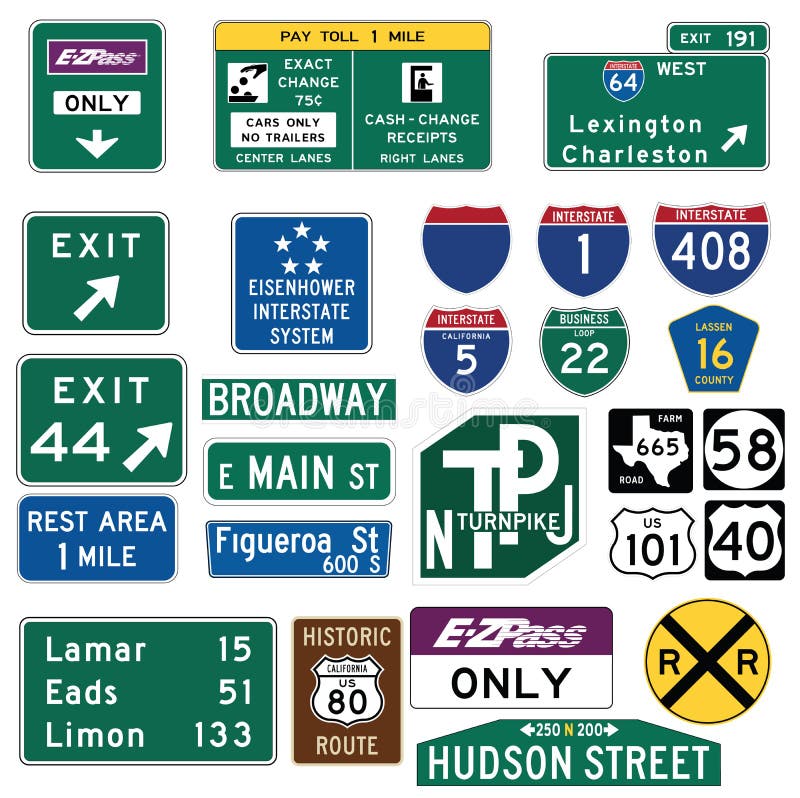
Free with trial Vector Illustration collection of the select Traffic Signs in the United States, isolated on white background. You can find other road signs in my portfolio. EPS file available. Guide signs are essential to direct road users along streets and highways, to inform them of intersecting routes, rnto direct them to cities, towns, villages, or other important destinations, to identify nearby rivers and streams, parks, forests, and historical sites, and generally to give such information as will help them along their way in the most simple, direct manner possible. rnrnIn the United States, road signs are, for the most part, standardized by federal regulations, most notably in the Manual on Uniform Traffic Control Devices (MUTCD) and its companion volume the Standard Highway Signs (SHS). There currently are no plans for adopting the Vienna Convention on Road Signs and Signals standards. Twenty-three states along with the District of Columbia and Puerto Rico use the manual without any alterations, 20 states have adopted it in conjunction with a supplemental volume, and seven states have a state version in substantial conformance to the MUTCD. There are also localized versions that are used in large cities such as New York City which use a naming system compatible with the MUTCD and/or state supplement. The MUTCD and SHS establish seven general categories of signs for road and highway use. rnrnIncluded illustrations are select examples of the MUTCD Guide Signs categories. rn. Convention vectors Traffic Guide Signs in the United States. Vector Illustration collection of the select Traffic Signs in the United States, isolated on white background. You can. Vector Illustration collection of the select Traffic Signs in the United States, isolated on white background. You can find other road signs in my portfolio. EPS file available. Guide signs are essential to direct road users along streets and highways, to inform them of intersecting routes, rnto direct them to cities, towns, villages, or other important destinations, to identify nearby rivers and streams, parks, forests, and historical sites, and generally to give such information as will help them along their way in the most simple, direct manner possible.rnrnIn the United States, road signs are, for the most part, standardized by federal regulations, most notably in the Manual on Uniform Traffic Control Devices (MUTCD) and its companion volume the Standard Highway Signs (SHS). There currently are no plans for adopting the Vienna Convention on Road Signs and Signals standards. Twenty-three states along with the District of Columbia and Puerto Rico use the manual without any alterations, 20 states have adopted it in conjunction with a supplemental volume, and seven states have a state version in substantial conformance to the MUTCD. There are also localized versions that are used in large cities such as New York City which use a naming system compatible with the MUTCD and/or state supplement. The MUTCD and SHS establish seven general categories of signs for road and highway use.rnrnIncluded illustrations are select examples of the MUTCD Guide Signs categories.rn
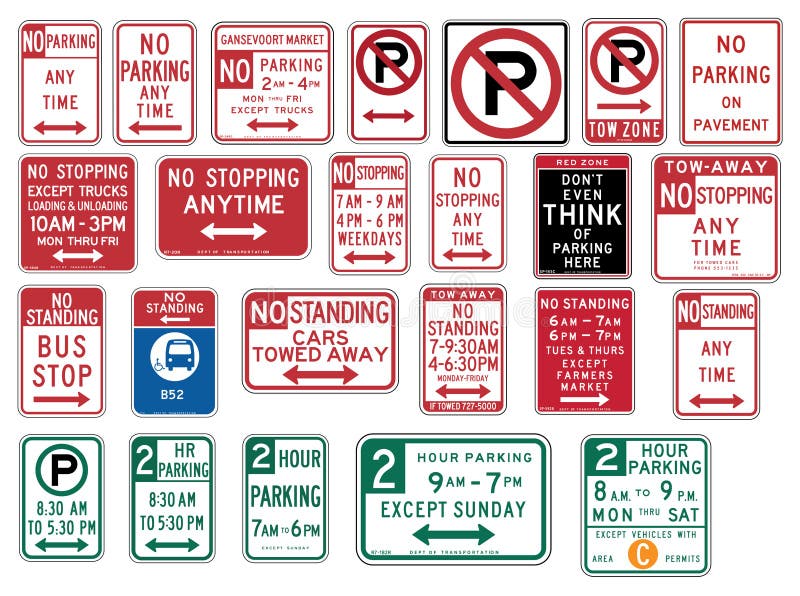
Free with trial Vector Illustration collection of the select Traffic Signs in the United States, isolated on white background. You can find other road signs in my portfolio. EPS file available. rnrnIn the United States, road signs are, for the most part, standardized by federal regulations, most notably in the Manual on Uniform Traffic Control Devices (MUTCD) and its companion volume the Standard Highway Signs (SHS). There currently are no plans for adopting the Vienna Convention on Road Signs and Signals standards. rnTwenty-three states along with the District of Columbia and Puerto Rico use the manual without any alterations, 20 states have adopted it in conjunction with a supplemental volume, and seven states have a state version in substantial conformance to the MUTCD. There are also localized versions that are used in large cities such as New York City which use a naming system compatible with the MUTCD and/or state supplement. The MUTCD and SHS establish seven general categories of signs for road and highway use. rnrnIncluded illustrations are select examples of the following MUTCD categories:rn-- R7 Series: Parkingrnrn. Convention vectors Traffic Signs in the United States - No Parking. Vector Illustration collection of the select Traffic Signs in the United States, isolated on white background. Vector Illustration collection of the select Traffic Signs in the United States, isolated on white background. You can find other road signs in my portfolio. EPS file available.rnrnIn the United States, road signs are, for the most part, standardized by federal regulations, most notably in the Manual on Uniform Traffic Control Devices (MUTCD) and its companion volume the Standard Highway Signs (SHS). There currently are no plans for adopting the Vienna Convention on Road Signs and Signals standards.rnTwenty-three states along with the District of Columbia and Puerto Rico use the manual without any alterations, 20 states have adopted it in conjunction with a supplemental volume, and seven states have a state version in substantial conformance to the MUTCD. There are also localized versions that are used in large cities such as New York City which use a naming system compatible with the MUTCD and/or state supplement. The MUTCD and SHS establish seven general categories of signs for road and highway use.rnrnIncluded illustrations are select examples of the following MUTCD categories:rn-- R7 Series: Parkingrnrn
Free with trial Speech of Director. Conference with presentation from a sales diagram. Convention vectors Speech of Director. Conference with presentation from a sales diagram
Free with trial Hillary Clinton Caricature. Illustration of democratic presidential candidate Hillary Clinton. Convention vectors Hillary Clinton Caricature. Illustration of democratic presidential candidate Hillary Clinton
Free with trial Mandatory Signage. Icon Collection individually layered. Convention vectors Mandatory Signage. Icon Collection individually layered
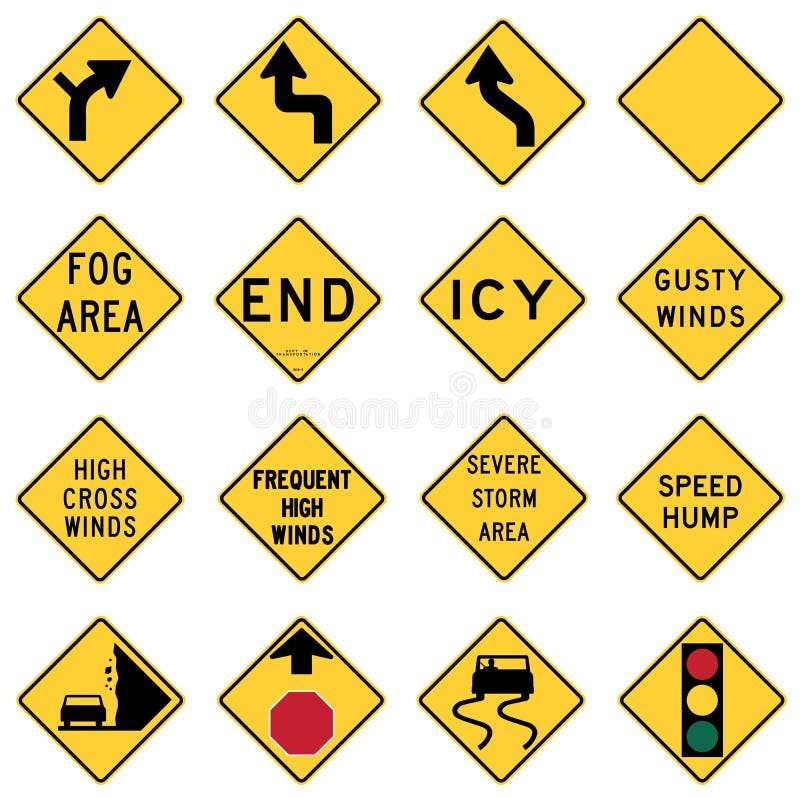
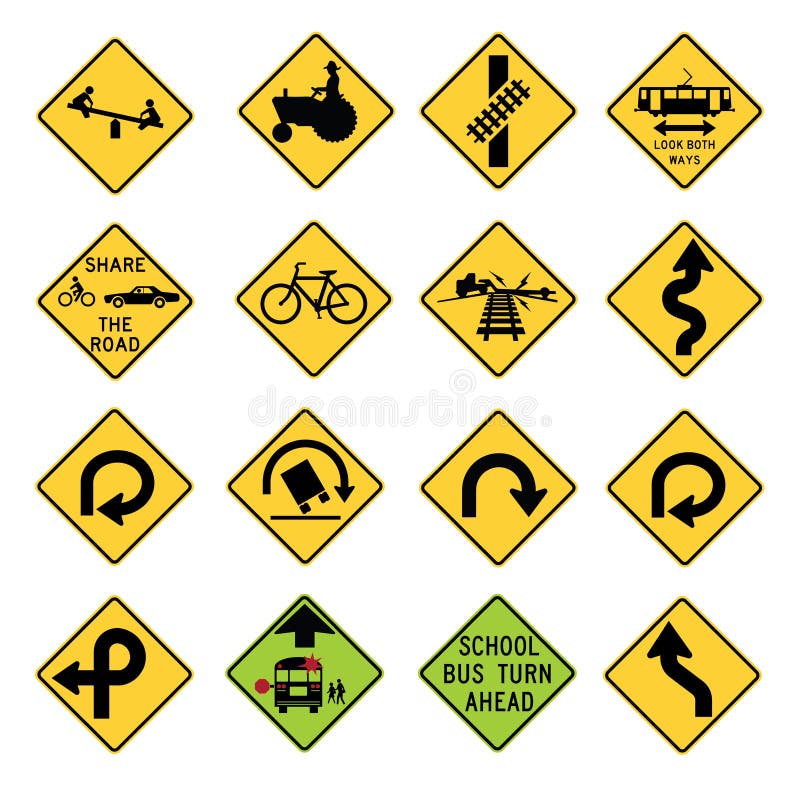
Free with trial Vector Illustration collection of the select Traffic Signs in the United States, isolated on white background. You can find other road signs in my portfolio. EPS file available. Warning signs are found in the W series of the national MUTCD. They highlight existing conditions, such as a curve, school, dead end street, or traffic signal. They can also warn possible danger such as bumps, bicycles, low flying aircraft or emergency vehicles. These signs are either yellow or fluorescent yellow in color and with the exception of a few signs are usually diamond shaped and sometimes have square or rectangular smaller signs or plaques associated with them. Most W series signs can also be found in with orange backgrounds, for temporary use in situations such as construction zones. Some of the temporary use signs are only for use in temporary situations. In the United States, road signs are, for the most part, standardized by federal regulations, most notably in the Manual on Uniform Traffic Control Devices (MUTCD) and its companion volume the Standard Highway Signs (SHS). There currently are no plans for adopting the Vienna Convention on Road Signs and Signals standards. Twenty-three states along with the District of Columbia and Puerto Rico use the manual without any alterations, 20 states have adopted it in conjunction with a supplemental volume, and seven states have a state version in substantial conformance to the MUTCD. There are also localized versions that are used in large cities such as New York City which use a naming system compatible with the MUTCD and/or state supplement. The MUTCD and SHS establish seven general categories of signs for road and highway use. Included illustrations are select examples of the MUTCD Warning Signs categories. Convention vectors Traffic Warning Signs in the United States. Vector Illustration collection of the select Traffic Signs in the United States, isolated on white background. You. Vector Illustration collection of the select Traffic Signs in the United States, isolated on white background. You can find other road signs in my portfolio. EPS file available. Warning signs are found in the W series of the national MUTCD. They highlight existing conditions, such as a curve, school, dead end street, or traffic signal. They can also warn possible danger such as bumps, bicycles, low flying aircraft or emergency vehicles. These signs are either yellow or fluorescent yellow in color and with the exception of a few signs are usually diamond shaped and sometimes have square or rectangular smaller signs or plaques associated with them. Most W series signs can also be found in with orange backgrounds, for temporary use in situations such as construction zones. Some of the temporary use signs are only for use in temporary situations. In the United States, road signs are, for the most part, standardized by federal regulations, most notably in the Manual on Uniform Traffic Control Devices (MUTCD) and its companion volume the Standard Highway Signs (SHS). There currently are no plans for adopting the Vienna Convention on Road Signs and Signals standards. Twenty-three states along with the District of Columbia and Puerto Rico use the manual without any alterations, 20 states have adopted it in conjunction with a supplemental volume, and seven states have a state version in substantial conformance to the MUTCD. There are also localized versions that are used in large cities such as New York City which use a naming system compatible with the MUTCD and/or state supplement. The MUTCD and SHS establish seven general categories of signs for road and highway use. Included illustrations are select examples of the MUTCD Warning Signs categories.
Free with trial Vector Illustration collection of the select Traffic Signs in the United States, isolated on white background. You can find other road signs in my portfolio. EPS file available. Warning signs are found in the W series of the national MUTCD. They highlight existing conditions, such as a curve, school, dead end street, or traffic signal. They can also warn possible danger such as bumps, bicycles, low flying aircraft or emergency vehicles. These signs are either yellow or fluorescent yellow in color and with the exception of a few signs are usually diamond shaped and sometimes have square or rectangular smaller signs or plaques associated with them. Most W series signs can also be found in with orange backgrounds, for temporary use in situations such as construction zones. Some of the temporary use signs are only for use in temporary situations. In the United States, road signs are, for the most part, standardized by federal regulations, most notably in the Manual on Uniform Traffic Control Devices (MUTCD) and its companion volume the Standard Highway Signs (SHS). There currently are no plans for adopting the Vienna Convention on Road Signs and Signals standards. Twenty-three states along with the District of Columbia and Puerto Rico use the manual without any alterations, 20 states have adopted it in conjunction with a supplemental volume, and seven states have a state version in substantial conformance to the MUTCD. There are also localized versions that are used in large cities such as New York City which use a naming system compatible with the MUTCD and/or state supplement. The MUTCD and SHS establish seven general categories of signs for road and highway use. Included illustrations are select examples of the MUTCD Warning Signs categories. Convention vectors Traffic Warning Signs in the United States. Vector Illustration collection of the select Traffic Signs in the United States, isolated on white background. You. Vector Illustration collection of the select Traffic Signs in the United States, isolated on white background. You can find other road signs in my portfolio. EPS file available. Warning signs are found in the W series of the national MUTCD. They highlight existing conditions, such as a curve, school, dead end street, or traffic signal. They can also warn possible danger such as bumps, bicycles, low flying aircraft or emergency vehicles. These signs are either yellow or fluorescent yellow in color and with the exception of a few signs are usually diamond shaped and sometimes have square or rectangular smaller signs or plaques associated with them. Most W series signs can also be found in with orange backgrounds, for temporary use in situations such as construction zones. Some of the temporary use signs are only for use in temporary situations. In the United States, road signs are, for the most part, standardized by federal regulations, most notably in the Manual on Uniform Traffic Control Devices (MUTCD) and its companion volume the Standard Highway Signs (SHS). There currently are no plans for adopting the Vienna Convention on Road Signs and Signals standards. Twenty-three states along with the District of Columbia and Puerto Rico use the manual without any alterations, 20 states have adopted it in conjunction with a supplemental volume, and seven states have a state version in substantial conformance to the MUTCD. There are also localized versions that are used in large cities such as New York City which use a naming system compatible with the MUTCD and/or state supplement. The MUTCD and SHS establish seven general categories of signs for road and highway use. Included illustrations are select examples of the MUTCD Warning Signs categories.
Free with trial A set of pictograms representing teacher or a speaker giving his presentation and lecture. Convention vectors Speaker Presentation Teaching Pictogram. A set of pictograms representing teacher or a speaker giving his presentation and lecture. A set of pictograms representing teacher or a speaker giving his presentation and lecture.
Free with trial Speaker. Business man is delivering a lecture. Convention vectors Speaker. Business man is delivering a lecture
Free with trial Crowd silhouette rocking out cheering the lives away. Convention vectors Crazy Crowd. Crowd silhouette rocking out cheering the lives away. Crowd silhouette rocking out cheering the lives away.
Free with trial People icons. Collection of diverse male and female people icons. Convention vectors People icons. Collection of diverse male and female people icons
Free with trial Sales presentation. Seminar or sales presentation with many listener. Convention vectors Sales presentation. Seminar or sales presentation with many listener
Free with trial International congress. Congress of an international company. Convention vectors International congress. Congress of an international company
Free with trial Tripod Projection Screen. Illustration of a tripod projection screen. Convention vectors Tripod Projection Screen. Illustration of a tripod projection screen
Free with trial College students listening to the professor in the auditorium. A vector illustration of college students listening to the professor in the auditorium. Convention vectors College students listening to the professor in the auditorium. A vector illustration of college students listening to the professor in the auditorium
Free with trial Woman leading a demonstration. Illustration of a young woman leading a demonstration with a megaphone. Convention vectors Woman leading a demonstration. Illustration of a young woman leading a demonstration with a megaphone
Free with trial Las Vegas City and wolcome sign. Las Vegas Welcome sign with the cities building behind. Convention vectors Las Vegas City and wolcome sign. Las Vegas Welcome sign with the cities building behind
Free with trial Health and Safety sign. Make your own Health and Safety sign graphics individually layered. Convention vectors Health and Safety sign. Make your own Health and Safety sign graphics individually layered
Free with trial Continuous Line Drawing of Vector illustration character of audience in the conference hall background with blank space for your text and design. Outline, thin line art, hand drawn sketch. Convention vectors Continuous Line Drawing of Vector illustration character of audience in the conference hall. Background with blank space for your text and design. Outline, thin. Continuous Line Drawing of Vector illustration character of audience in the conference hall background with blank space for your text and design. Outline, thin line art, hand drawn sketch.
Free with trial Hong Kong City Skyline Color Panorama Vector Illustration. Hong Kong City Skyline Panorama Color on White Background Vector Illustration. Convention vectors Hong Kong City Skyline Color Panorama Vector Illustration. Hong Kong City Skyline Panorama Color on White Background Vector Illustration
Free with trial Lawyer, attorney, jurist vector logo design. Happy lawyer in a business suit. vector. flat illustration. Convention vectors Lawyer, attorney, jurist vector logo design. Happy lawyer in a business suit. vector. flat illustration
Free with trial Vector Las Vegas Sign silhouette isolated on white. Convention vectors Welcome to Las Vegas Sign. Vector Las Vegas Sign silhouette isolated on white. Vector Las Vegas Sign silhouette isolated on white.
Free with trial Group of people at the seminar, presentation or conference. Vector flat cartoon illustration. Professional speaker coach speaks to the audience. Business training, coaching and education concept. Convention vectors People at the seminar, presentation, conference. Vector illustration. Business training, coaching and education concept. Group of people at the seminar. Group of people at the seminar, presentation or conference. Vector flat cartoon illustration. Professional speaker coach speaks to the audience. Business training, coaching and education concept
Free with trial Hong Kong City Skyline and Big Buddha Statue Panorama Color on White Background Vector Illustration. Convention vectors Hong Kong Skyline and Buddha Statue Color Vector Illustration. Hong Kong City Skyline and Big Buddha Statue Panorama Color on White Background Vector. Hong Kong City Skyline and Big Buddha Statue Panorama Color on White Background Vector Illustration
Free with trial Registered trademark sign. Registered Trademark symbol , isolated black vector illustration eps10. Registered Trademark symbol. Convention vectors Registered trademark sign. Registered Trademark symbol , isolated black vector illustration eps10. Registered trademark sign. Registered Trademark symbol
Free with trial The modern system of training and courses, distance learning, technology, knowledge, teaching and skills. Illustration thin line design of vector doodles, infographics elements. Convention vectors Training and courses, distance learning, technology, knowledge, teaching and skills. The modern system of training and courses, distance learning, technology. The modern system of training and courses, distance learning, technology, knowledge, teaching and skills. Illustration thin line design of vector doodles, infographics elements.
Free with trial Welcome las vegas. Welcome to fabulous las vegas nevada sign, isolated. vector. Convention vectors Welcome las vegas. Welcome to fabulous las vegas nevada sign, isolated. vector
Free with trial Registered Trademark sign. Dark gray icon on transparent background. Convention vectors Registered Trademark sign. Dark gray icon on transparent background
Free with trial Demonstrate , jpg + eps 8 vectors. Convention vectors Demonstrate. Jpg + eps 8 vectors. Demonstrate , jpg + eps 8 vectors
Free with trial Portland Oregon Outline Silhouette with City Skyline Downtown and Transportation Panorama Black on White Background Vector Illustration. Convention vectors Portland Oregon Skyline Transportation Vector Illustration. Portland Oregon Outline Silhouette with City Skyline Downtown and Transportation Panorama Black on. Portland Oregon Outline Silhouette with City Skyline Downtown and Transportation Panorama Black on White Background Vector Illustration
Free with trial Portland Oregon Outline Silhouette with City Skyline Downtown Panorama and Text Color Isolated on White Background vector Illustration. Convention vectors Portland Oregon Skyline and Text Color vector Illustration. Portland Oregon Outline Silhouette with City Skyline Downtown Panorama and Text Color Isolated on. Portland Oregon Outline Silhouette with City Skyline Downtown Panorama and Text Color Isolated on White Background vector Illustration
Free with trial Colorful flags garland of different countries of the europe and world with confetti. Festive garlands of the international pennant. Bunting wreaths. Vector banner for celebration party, conference. Convention vectors Colorful flags garland of different countries of the europe and world with confetti. Festive garlands of the international pennant. Bunting wreaths. Vector
Free with trial Caricature of Joe Biden, speaking and gesturing. Democratic presidential candidate in the 2020 United States presidential election. Vector Illustration. Convention vectors Caricature of Joe Biden, Democratic presidential candidate in the 2020 United States presidential election. Caricature of Joe Biden, speaking and gesturing. Caricature of Joe Biden, speaking and gesturing. Democratic presidential candidate in the 2020 United States presidential election. Vector Illustration.
Free with trial Caricature of Joe Biden, speaking and gesturing. Democratic presidential candidate in the 2020 United States presidential election. Vector Illustration. Convention vectors Caricature of Joe Biden, Democratic presidential candidate in the 2020 United States presidential election. Caricature of Joe Biden, speaking and gesturing. Caricature of Joe Biden, speaking and gesturing. Democratic presidential candidate in the 2020 United States presidential election. Vector Illustration.
Free with trial Kenya country flat cartoon style historic sight vector illustration. World vacation travel Africa collection. Kenyatta International Convention Centre National Archives Bomas Nairobi National Museum. Convention vectors Kenya country design template Flat cartoon style w. Kenya country flat cartoon style historic sight vector illustration. World vacation travel Africa collection. Kenya country flat cartoon style historic sight vector illustration. World vacation travel Africa collection. Kenyatta International Convention Centre National Archives Bomas Nairobi National Museum.
Free with trial Public speaker presenting to a large group of people on a stage - black and white. Convention vectors Convention Event - black and white. Public speaker presenting to a large group of people on a stage - black and white. Public speaker presenting to a large group of people on a stage - black and white.
Free with trial Housing concept logo symbol illustration. Convention vectors Housing Logo. Housing concept logo symbol illustration. Housing concept logo symbol illustration.
Free with trial Housing concept logo symbol illustration. Convention vectors Housing Logo. Housing concept logo symbol illustration. Housing concept logo symbol illustration.
Free with trial Architecture,housing concept logo symbol illustration. Convention vectors Housing Logo. Architecture,housing concept logo symbol illustration. Architecture,housing concept logo symbol illustration.
Free with trial Housing concept logo symbol illustration. Convention vectors Housing Logo. Housing concept logo symbol illustration. Housing concept logo symbol illustration.
Free with trial Business Logo. Engineering concept logo symbol illustration. Convention vectors Business Logo. Engineering concept logo symbol illustration
Free with trial Business presentation. Illustration of business meeting, presenter standing in front of video projector, group of people attending presentation. Convention vectors Business presentation. Illustration of business meeting, presenter standing in front of video projector, group of people attending presentation
Free with trial Conference. Twenty adult people sitting in chairs and listening, taking notes. Viewed from top. Vector color illustration. Convention vectors Conference. Twenty adult people sitting in chairs and listening, taking notes. Viewed from top. Vector color illustration
Free with trial Presentation. A person doing a presentation at a business conference or product marketing in front of crowd to audience. add your copy text on blank projection. Convention vectors Presentation. A person doing a presentation at a business conference or product marketing in front of crowd to audience. add your copy text on blank projection
Free with trial Las Vegas welcome sign with sign pointing to Las Vegas Boulevard (The Strip). Convention vectors Las Vegas Boulevard Welcome Sign. Las Vegas welcome sign with sign pointing to Las Vegas Boulevard (The Strip. Las Vegas welcome sign with sign pointing to Las Vegas Boulevard (The Strip)
Free with trial Vector illustration of monochrome cartoon characters: Set of pairs of business people with colorful speech bubbles having conversations. Convention vectors Business people having conversations. Vector illustration of monochrome cartoon characters: Set of pairs of business people with colorful speech bubbles having. Vector illustration of monochrome cartoon characters: Set of pairs of business people with colorful speech bubbles having conversations.
Free with trial A person doing a presentation at a business conference or product marketing in front of crowd to audience. add your copy text on blank projection screen. Convention vectors Presentation at a business conference. A person doing a presentation at a business conference or product marketing in front of crowd to audience. add your copy. A person doing a presentation at a business conference or product marketing in front of crowd to audience. add your copy text on blank projection screen.
Free with trial Cinema. Hand drawn illustration of cinema isolated on white background. Convention vectors Cinema. Hand drawn illustration of cinema isolated on white background
Free with trial Cinema. People watching movie at cinema hall, Vector illustration. Convention vectors Cinema. People watching movie at cinema hall, Vector illustration
Free with trial Presentation. Vector illustration on which the conference hall with spectators and the included projector during presentation is represented. Convention vectors Presentation. Vector illustration on which the conference hall with spectators and the included projector during presentation is represented
Free with trial Politics icons. Politics related vector icons/ silhouettes. Convention vectors Politics icons. Politics related vector icons/ silhouettes
Free with trial Vector illustration of a happy group of cartoon business people gesturing and handshaking. Convention vectors Group of business people. Vector illustration of a happy group of cartoon business people gesturing and handshaking. Vector illustration of a happy group of cartoon business people gesturing and handshaking.
Free with trial Vector blank roll up banner. On white background. Convention vectors Vector blank roll up banner. On white background
Free with trial Some icons realted with hotels. Convention vectors Hotel icons. Some icons realted with hotels. Some icons realted with hotels.
Free with trial Vector blank roll up banner. On white background. Convention vectors Vector blank roll up banner. On white background
Free with trial Speaking into the microphone- vector work. Convention vectors Speaking into the microphone. Vector work
Free with trial Speaker addresses an audience. Vector illustration of a speaker addresses an audience in a political campaign. Convention vectors Speaker addresses an audience. Vector illustration of a speaker addresses an audience in a political campaign
Free with trial Las Vegas sign with fireworks. Iconic Las Vegas welcome sign with fireworks. Convention vectors Las Vegas sign with fireworks. Iconic Las Vegas welcome sign with fireworks
Free with trial Cyberpunk 80s style. emotional speaker robot, dictatorship of ga. Dgets. Pop art retro vector illustration. Convention vectors Cyberpunk 80s style. emotional speaker robot, dictatorship of ga. Dgets. Pop art retro vector illustration
Free with trial Presentation in a conference in an auditorium. A vector illustration of a presentation in a conference in an auditorium. Convention vectors Presentation in a conference in an auditorium. A vector illustration of a presentation in a conference in an auditorium
Free with trial Vector illustration of monochrome cartoon characters: Group of business people having conversations and colorful speech balloons. Convention vectors Group of busines people having conversations. Vector illustration of monochrome cartoon characters: Group of business people having conversations and colorful. Vector illustration of monochrome cartoon characters: Group of business people having conversations and colorful speech balloons.
Free with trial Contract and pen. Vector illustration of contract and ballpoint pen. Convention vectors Contract and pen. Vector illustration of contract and ballpoint pen
Free with trial Vector isometric low poly office conference room. Includes table, office chairs, projector screen, with presentation charts. Convention vectors Vector isometric low poly office conference room. Includes table, office chairs, projector screen, with presentation charts
Free with trial Personal signature. Set of autographs. Convention vectors Personal signature. Set of autographs
Free with trial Group of people continuous one line vector drawing. Audience silhouette hand drawn characters. Crowd standing at concert, meeting. Women and men waiting in queue. Minimalistic contour illustration. Convention vectors Group of people continuous one line vector drawing. Crowd standing at concert, meeting. Group of people continuous one line vector drawing. Audience silhouette. Group of people continuous one line vector drawing. Audience silhouette hand drawn characters. Crowd standing at concert, meeting. Women and men waiting in queue. Minimalistic contour illustration
Free with trial Group of people continuous one line vector drawing. Crowd standing at concert, meeting. Women and men waiting in queue. Character of audience in the conference hall. Outline hand drawn illustration. Convention vectors Group of people continuous one line vector drawing. Crowd standing at concert, meeting. Women and men waiting in queue. Character of audience in the conference
Free with trial Continuous Line Drawing of Vector illustration character of audience in the conference hall background with blank space for your text and design. Outline, thin line art, hand drawn sketch. Convention vectors Continuous Line Drawing of Vector illustration character of audience in the conference hall. Background with blank space for your text and design. Outline, thin. Continuous Line Drawing of Vector illustration character of audience in the conference hall background with blank space for your text and design. Outline, thin line art, hand drawn sketch.
Free with trial Vector isometric office conference or meeting room interior. Big desk, chairs, tv screen showing presentation charts, laptop. Convention vectors Vector isometric office meeting room interior. Vector isometric office conference or meeting room interior. Big desk, chairs, tv screen showing presentation. Vector isometric office conference or meeting room interior. Big desk, chairs, tv screen showing presentation charts, laptop
Free with trial Hong Kong City Skyline Grayscale Panorama Vector Illustration. Hong Kong City Skyline Panorama Grayscale on White Background Vector Illustration. Convention vectors Hong Kong City Skyline Grayscale Panorama Vector Illustration. Hong Kong City Skyline Panorama Grayscale on White Background Vector Illustration
Free with trial Illustration of a group of bussiness people having a video conference. Convention vectors Video conference. Illustration of a group of bussiness people having a video conference. Illustration of a group of bussiness people having a video conference.
Free with trial Medical Symposium International Meeting Flat 3d Isometric Isometry Doctor Speaker Moderators and Public Physicians and Nurses. Creative People Collection. Convention vectors Medical Meeting People Isometric. Medical Symposium International Meeting Flat 3d Isometric Isometry Doctor Speaker Moderators and Public Physicians and Nurses. Medical Symposium International Meeting Flat 3d Isometric Isometry Doctor Speaker Moderators and Public Physicians and Nurses. Creative People Collection
Free with trial Dublin skyline, Ireland. This vector illustration represents the city with its most notable buildings. Vector is fully editable, every object is holistic and movable. Convention vectors Dublin skyline Ireland vector big city buildings. Dublin skyline, Ireland. This vector illustration represents the city with its most notable buildings. Vector. Dublin skyline, Ireland. This vector illustration represents the city with its most notable buildings. Vector is fully editable, every object is holistic and movable
Free with trial Icons of politics and American elections. This is a collection of icons releated with politics and american elections. Convention vectors Icons of politics and American elections. This is a collection of icons releated with politics and american elections
Free with trial Vector High quality illustration of stop sign and go sign isolated on white background. Official Vienna convention international color and size - editable vector eps file available. Convention vectors Stop go sign. Vector High quality illustration of stop sign and go sign isolated on white background. Official Vienna convention international color and size. Vector High quality illustration of stop sign and go sign isolated on white background. Official Vienna convention international color and size - editable vector eps file available.
Free with trial Vector color Signature fictitious Autograph on white background. Convention vectors Vector Signature fictitious Autograph on white. Vector color Signature fictitious Autograph on white background. Vector color Signature fictitious Autograph on white background.
 Sign in