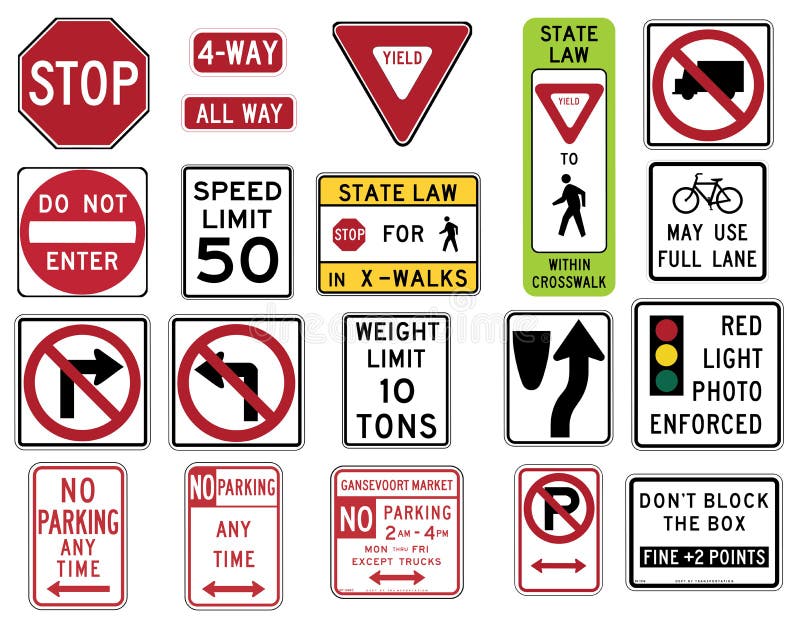
Free with trial Vector Illustration collection of the select Traffic Signs in the United States, isolated on white background. You can find other road signs in my portfolio. EPS file available. In the United States, road signs are, for the most part, standardized by federal regulations, most notably in the Manual on Uniform Traffic Control Devices (MUTCD) and its companion volume the Standard Highway Signs (SHS). There currently are no plans for adopting the Vienna Convention on Road Signs and Signals standards. Twenty-three states along with the District of Columbia and Puerto Rico use the manual without any alterations, 20 states have adopted it in conjunction with a supplemental volume, and seven states have a state version in substantial conformance to the MUTCD. There are also localized versions that are used in large cities such as New York City which use a naming system compatible with the MUTCD and/or state supplement. The MUTCD and SHS establish seven general categories of signs for road and highway use. Included illustrations are select examples of the following MUTCD categories: -- R1 Series STOP and YIELD -- R2 Series Speed Limit -- R3 Series Lane Usage and Turns (Left and Right Turn) -- R4 Regulation of Movement -- R5 Series: Exclusionary -- R7 Series: Parking. Regulation vectors Traffic Signs in the United States - Regulatory Series. Vector Illustration collection of the select Traffic Signs in the United States, isolated on white. Vector Illustration collection of the select Traffic Signs in the United States, isolated on white background. You can find other road signs in my portfolio. EPS file available. In the United States, road signs are, for the most part, standardized by federal regulations, most notably in the Manual on Uniform Traffic Control Devices (MUTCD) and its companion volume the Standard Highway Signs (SHS). There currently are no plans for adopting the Vienna Convention on Road Signs and Signals standards. Twenty-three states along with the District of Columbia and Puerto Rico use the manual without any alterations, 20 states have adopted it in conjunction with a supplemental volume, and seven states have a state version in substantial conformance to the MUTCD. There are also localized versions that are used in large cities such as New York City which use a naming system compatible with the MUTCD and/or state supplement. The MUTCD and SHS establish seven general categories of signs for road and highway use. Included illustrations are select examples of the following MUTCD categories: -- R1 Series STOP and YIELD -- R2 Series Speed Limit -- R3 Series Lane Usage and Turns (Left and Right Turn) -- R4 Regulation of Movement -- R5 Series: Exclusionary -- R7 Series: Parking
Free with trial Cars parking sign. Isolated on white. Regulation vectors Cars parking sign. Isolated on white
Free with trial Scales of Justice/eps. Illustration of the scales of justice... a symbol used in the legal profession... Want to change the color? eps file is available. Regulation vectors Scales of Justice/eps. Illustration of the scales of justice...a symbol used in the legal profession...Want to change the color? eps file is available
Free with trial Regulation of blood pressure. By baroreceptor reflex, eps8. Regulation vectors Regulation of blood pressure. By baroreceptor reflex, eps8
Free with trial Hormonal Regulation of Calcium. Parathyroid hormone. Human endocrine system. Regulation vectors Hormonal Regulation of Calcium. Parathyroid hormone. Human endocrine system
Free with trial Compliance to regulation process standard industry company. Vector. Regulation vectors Compliance to regulation process standard industry company. Vector
Free with trial Compliance document vector icon. Approved process illustration symbol. regulation sign or logo. For web sites. Regulation vectors Compliance document vector icon. Approved process illustration symbol. regulation sign or logo. For web sites
Free with trial GDPR - General Data Protection Regulation. Vector. Security technology background. Vector illustration. Regulation vectors GDPR - General Data Protection Regulation. Vector. GDPR - General Data Protection Regulation. Security technology background. Vector illustration
Free with trial Leptin. Control of food intake. Human hormones. Leptin, insulin and Ghrelin. Leptin and the regulation of energy balance. Regulation vectors Leptin. Control of food intake. Human hormones. Leptin, insulin and Ghrelin. Leptin and the regulation of energy balance
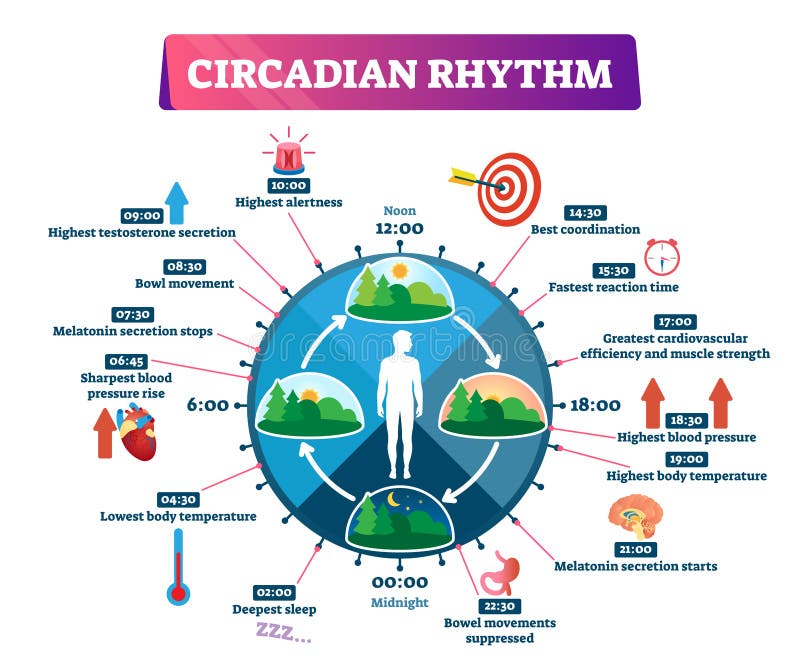
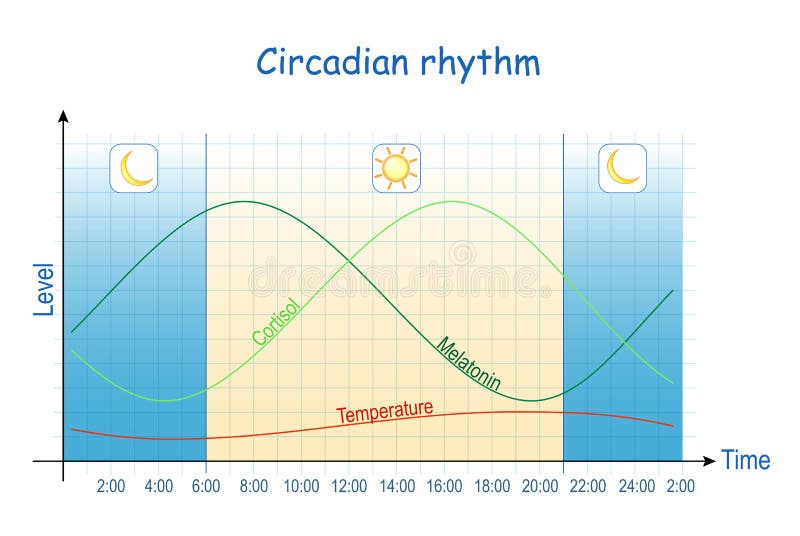
Free with trial Circadian rhythm vector illustration. Labeled educational day cycle scheme. Daily human body inner regulation schedule. Natural sleep-wake biological process explanation and chronobiology infographic. Regulation vectors Circadian rhythm vector illustration. Labeled educational day cycle scheme. Daily human body inner regulation schedule. Natural sleep-wake biological process
Free with trial Life regulation signs. A businessman is standing in front of road signs. Regulation vectors Life regulation signs. A businessman is standing in front of road signs
Free with trial Hormones. of the hyroid gland. Thyroid Hormones. Regulation of vital Functions of body. Vector illustation. Regulation vectors Hormones. of the hyroid gland. Thyroid Hormones. Regulation of vital Functions of body. Vector illustation
Free with trial Calcitonin and parathormone. Hormonal regulation of blood calcium levels. Regulation of calcium levels in the blood by CT from the thyroid gland and by PTH from the parathyroid glands. Too much calcium could cause heart failure, while low calcium could cause loss of nervous system control. Regulation vectors Calcitonin is the agonist to PTH. Calcitonin and parathormone. Hormonal regulation of blood calcium levels. Regulation of calcium levels in the blood by CT from. Calcitonin and parathormone. Hormonal regulation of blood calcium levels. Regulation of calcium levels in the blood by CT from the thyroid gland and by PTH from the parathyroid glands. Too much calcium could cause heart failure, while low calcium could cause loss of nervous system control
Free with trial Gov TAX foot steps down on business people. Government foot of oppression by high taxes and unfair regulation steps down to crush small business people. Regulation vectors Gov TAX foot steps down on business people. Government foot of oppression by high taxes and unfair regulation steps down to crush small business people
Free with trial Law education logo. Illustration art of a law education logo with isolated background. Regulation vectors Law education logo. Illustration art of a law education logo with isolated background
Free with trial No parking sign. Isolated on white. Regulation vectors No parking sign. Isolated on white
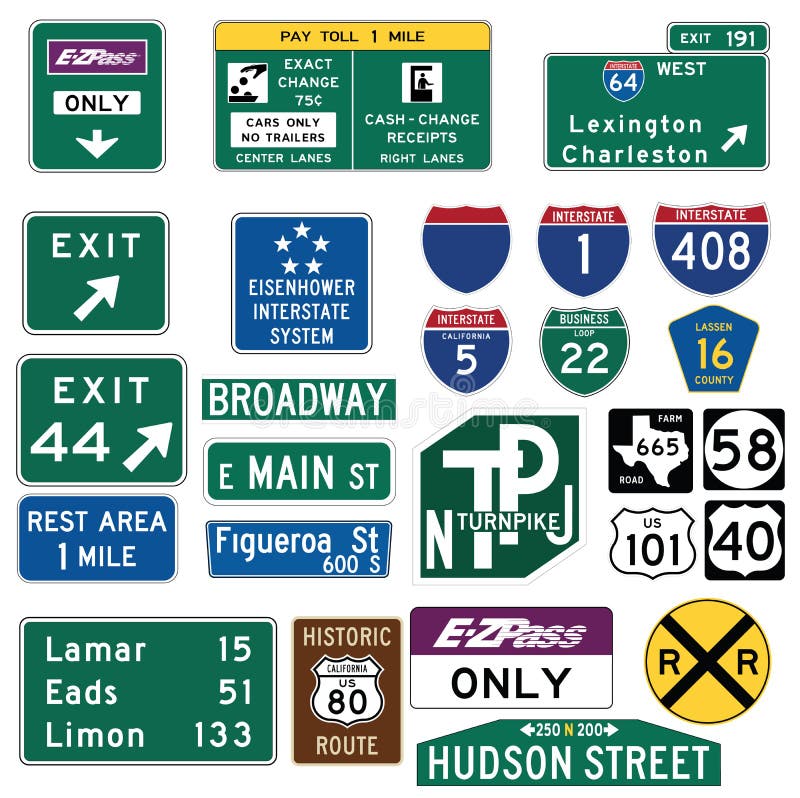
Free with trial Vector Illustration collection of the select Traffic Signs in the United States, isolated on white background. You can find other road signs in my portfolio. EPS file available. Guide signs are essential to direct road users along streets and highways, to inform them of intersecting routes, rnto direct them to cities, towns, villages, or other important destinations, to identify nearby rivers and streams, parks, forests, and historical sites, and generally to give such information as will help them along their way in the most simple, direct manner possible. rnrnIn the United States, road signs are, for the most part, standardized by federal regulations, most notably in the Manual on Uniform Traffic Control Devices (MUTCD) and its companion volume the Standard Highway Signs (SHS). There currently are no plans for adopting the Vienna Convention on Road Signs and Signals standards. Twenty-three states along with the District of Columbia and Puerto Rico use the manual without any alterations, 20 states have adopted it in conjunction with a supplemental volume, and seven states have a state version in substantial conformance to the MUTCD. There are also localized versions that are used in large cities such as New York City which use a naming system compatible with the MUTCD and/or state supplement. The MUTCD and SHS establish seven general categories of signs for road and highway use. rnrnIncluded illustrations are select examples of the MUTCD Guide Signs categories. rn. Regulation vectors Traffic Guide Signs in the United States. Vector Illustration collection of the select Traffic Signs in the United States, isolated on white background. You can. Vector Illustration collection of the select Traffic Signs in the United States, isolated on white background. You can find other road signs in my portfolio. EPS file available. Guide signs are essential to direct road users along streets and highways, to inform them of intersecting routes, rnto direct them to cities, towns, villages, or other important destinations, to identify nearby rivers and streams, parks, forests, and historical sites, and generally to give such information as will help them along their way in the most simple, direct manner possible.rnrnIn the United States, road signs are, for the most part, standardized by federal regulations, most notably in the Manual on Uniform Traffic Control Devices (MUTCD) and its companion volume the Standard Highway Signs (SHS). There currently are no plans for adopting the Vienna Convention on Road Signs and Signals standards. Twenty-three states along with the District of Columbia and Puerto Rico use the manual without any alterations, 20 states have adopted it in conjunction with a supplemental volume, and seven states have a state version in substantial conformance to the MUTCD. There are also localized versions that are used in large cities such as New York City which use a naming system compatible with the MUTCD and/or state supplement. The MUTCD and SHS establish seven general categories of signs for road and highway use.rnrnIncluded illustrations are select examples of the MUTCD Guide Signs categories.rn
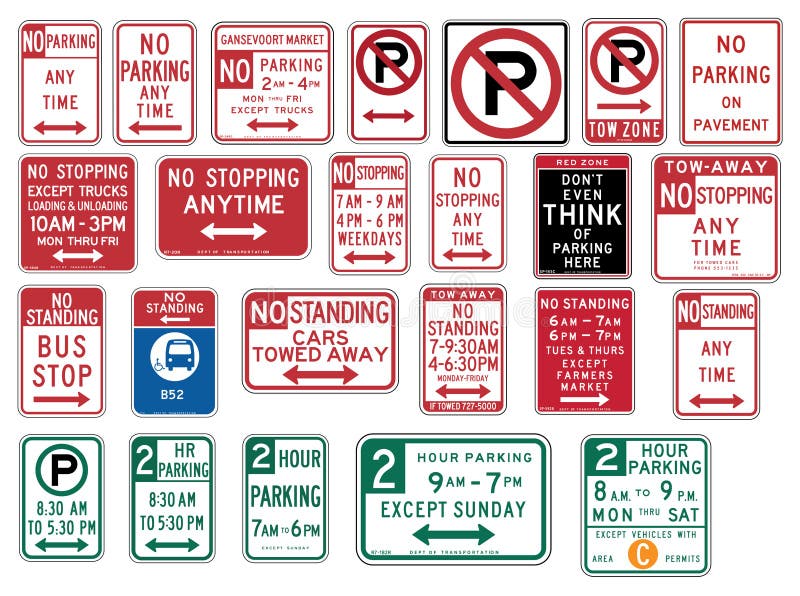
Free with trial Vector Illustration collection of the select Traffic Signs in the United States, isolated on white background. You can find other road signs in my portfolio. EPS file available. rnrnIn the United States, road signs are, for the most part, standardized by federal regulations, most notably in the Manual on Uniform Traffic Control Devices (MUTCD) and its companion volume the Standard Highway Signs (SHS). There currently are no plans for adopting the Vienna Convention on Road Signs and Signals standards. rnTwenty-three states along with the District of Columbia and Puerto Rico use the manual without any alterations, 20 states have adopted it in conjunction with a supplemental volume, and seven states have a state version in substantial conformance to the MUTCD. There are also localized versions that are used in large cities such as New York City which use a naming system compatible with the MUTCD and/or state supplement. The MUTCD and SHS establish seven general categories of signs for road and highway use. rnrnIncluded illustrations are select examples of the following MUTCD categories:rn-- R7 Series: Parkingrnrn. Regulation vectors Traffic Signs in the United States - No Parking. Vector Illustration collection of the select Traffic Signs in the United States, isolated on white background. Vector Illustration collection of the select Traffic Signs in the United States, isolated on white background. You can find other road signs in my portfolio. EPS file available.rnrnIn the United States, road signs are, for the most part, standardized by federal regulations, most notably in the Manual on Uniform Traffic Control Devices (MUTCD) and its companion volume the Standard Highway Signs (SHS). There currently are no plans for adopting the Vienna Convention on Road Signs and Signals standards.rnTwenty-three states along with the District of Columbia and Puerto Rico use the manual without any alterations, 20 states have adopted it in conjunction with a supplemental volume, and seven states have a state version in substantial conformance to the MUTCD. There are also localized versions that are used in large cities such as New York City which use a naming system compatible with the MUTCD and/or state supplement. The MUTCD and SHS establish seven general categories of signs for road and highway use.rnrnIncluded illustrations are select examples of the following MUTCD categories:rn-- R7 Series: Parkingrnrn
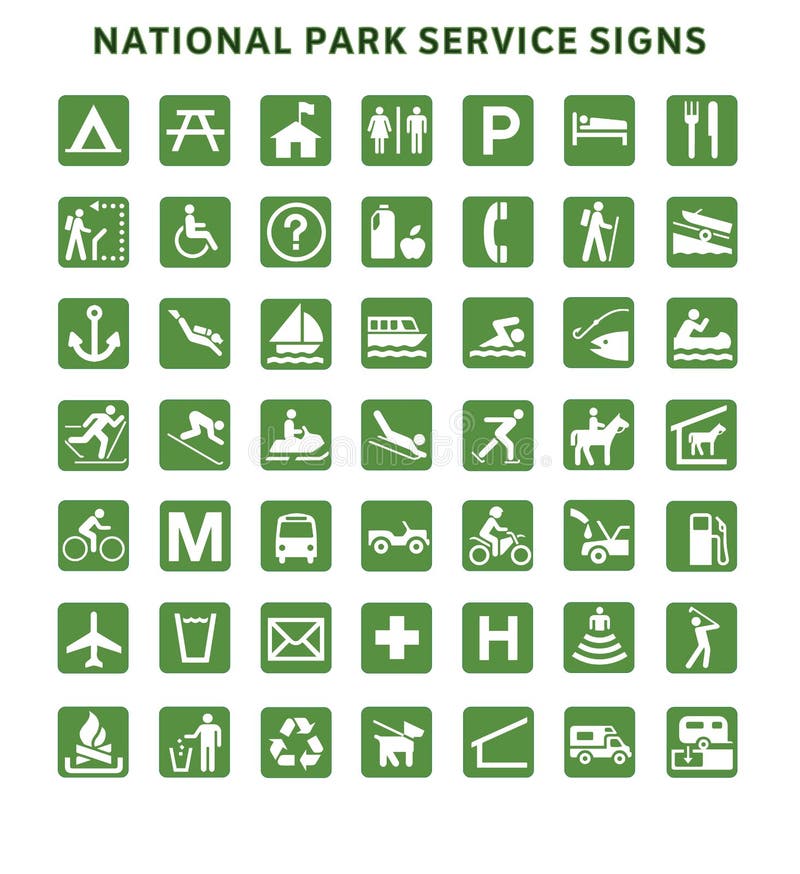
Free with trial Vector Illustration collection of the select National Park Service Signs in the United States, isolated on white background. You can find other signs in my portfolio. EPS file available. Regulation vectors National Park Service Signs. Vector Illustration collection of the select National Park Service Signs in the United States, isolated on white background. You can. Vector Illustration collection of the select National Park Service Signs in the United States, isolated on white background. You can find other signs in my portfolio. EPS file available.
Free with trial Hazard sign corrosive substances. Hazard label and placard for corrosive substances. Regulation vectors Hazard sign corrosive substances. Hazard label and placard for corrosive substances
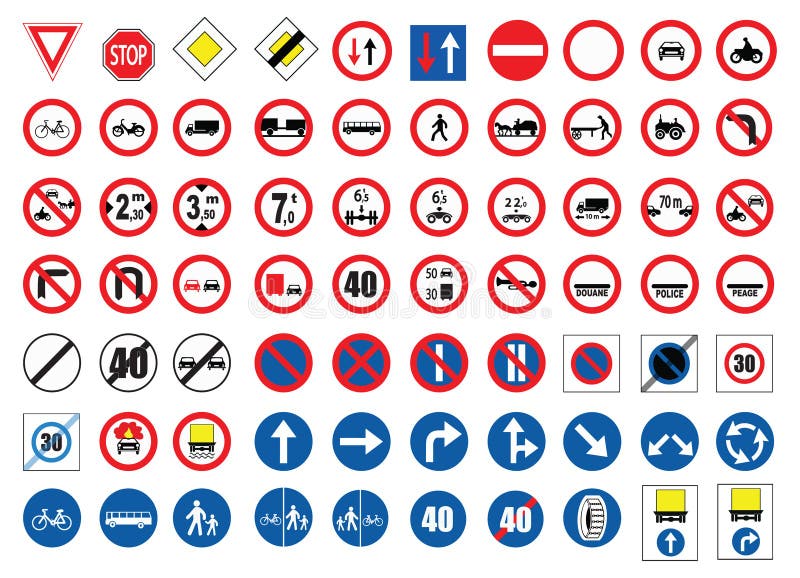
Free with trial Traffic signs. Vector editable regulatory traffic signs. Regulation vectors Traffic signs. Vector editable regulatory traffic signs
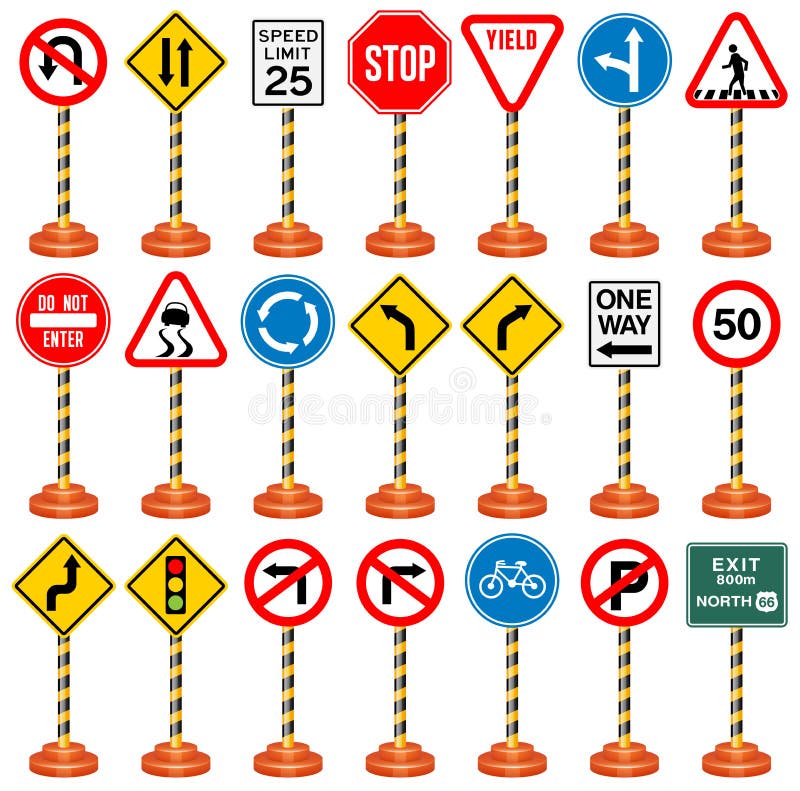
Free with trial Vector Illustration of Road Signs. Best for Transportation, Safety, Travel, Signs and Symbols concept. Regulation vectors Road Signs, Traffic Signs, Transportation, Safety, Travel. Vector Illustration of Road Signs. Best for Transportation, Safety, Travel, Signs and Symbols concept. Vector Illustration of Road Signs. Best for Transportation, Safety, Travel, Signs and Symbols concept.
Free with trial Leptin is a hormone made by adipose cells that helps regulate appetite, control of metabolism, energy homeostasis, activation of immune cells, and other function. Human endocrine system. Regulation vectors Leptin hormone effects. Leptin is a hormone made by adipose cells that helps regulate appetite, control of metabolism, energy homeostasis, activation of immune. Leptin is a hormone made by adipose cells that helps regulate appetite, control of metabolism, energy homeostasis, activation of immune cells, and other function. Human endocrine system
Free with trial Food allergy icons including the 14 allergies outlined by the EU Food Information for Consumers Regulation EFSA European Food Safety Authority, Annex II which encompass the big 8 FDA Major Allergens. Regulation vectors Allergen Food Allergy Icons. Food allergy icons including the 14 allergies outlined by the EU Food Information for Consumers Regulation EFSA European Food Safety. Food allergy icons including the 14 allergies outlined by the EU Food Information for Consumers Regulation EFSA European Food Safety Authority, Annex II which encompass the big 8 FDA Major Allergens
Free with trial Mandatory Signage. Icon Collection individually layered. Regulation vectors Mandatory Signage. Icon Collection individually layered
Free with trial Construction signs. Construction related mandatory & hazards icons and signs. Regulation vectors Construction signs. Construction related mandatory & hazards icons and signs
Free with trial Sign for Safety, Health, Environment and Quality. Safety First! Also in vector!. Regulation vectors Safety First - SHE&Q sign - vector. Sign for Safety, Health, Environment and Quality. Safety First! Also in vector. Sign for Safety, Health, Environment and Quality. Safety First! Also in vector!
Free with trial Parking sign. Car parking sign illustration over white. Regulation vectors Parking sign. Car parking sign illustration over white
Free with trial Hot and cold sun and snowflake icons. Climate symbols. Regulation vectors Hot and cold sun and snowflake icons. Climate symbols
Free with trial Thyroid hormones. Human endocrine system. Regulation vectors Thyroid hormones. Human endocrine system
Free with trial Ghrelin and leptin - hormones regulating appetite. Leptin the satiety hormone. Ghrelin the hunger hormone. When ghrelin levels are high, we feel hungry. After we eat, ghrelin levels fall and we feel satisfied. Regulation vectors Ghrelin and leptin. Hormones regulating appetite. Leptin the satiety hormone. Ghrelin the hunger hormone. When ghrelin levels are high, we feel hungry. Ghrelin and leptin - hormones regulating appetite. Leptin the satiety hormone. Ghrelin the hunger hormone. When ghrelin levels are high, we feel hungry. After we eat, ghrelin levels fall and we feel satisfied.
Free with trial Insulin and glucagon. Regulate blood glucose levels. Human anatomy. Liver and pancreas. Regulation vectors Insulin and glucagon. Regulate blood glucose levels. Human anatomy. Liver and pancreas
Free with trial Oregon License Plate. A vector illustration rendition of the Oregon State License plate. Regulation vectors Oregon License Plate. A vector illustration rendition of the Oregon State License plate
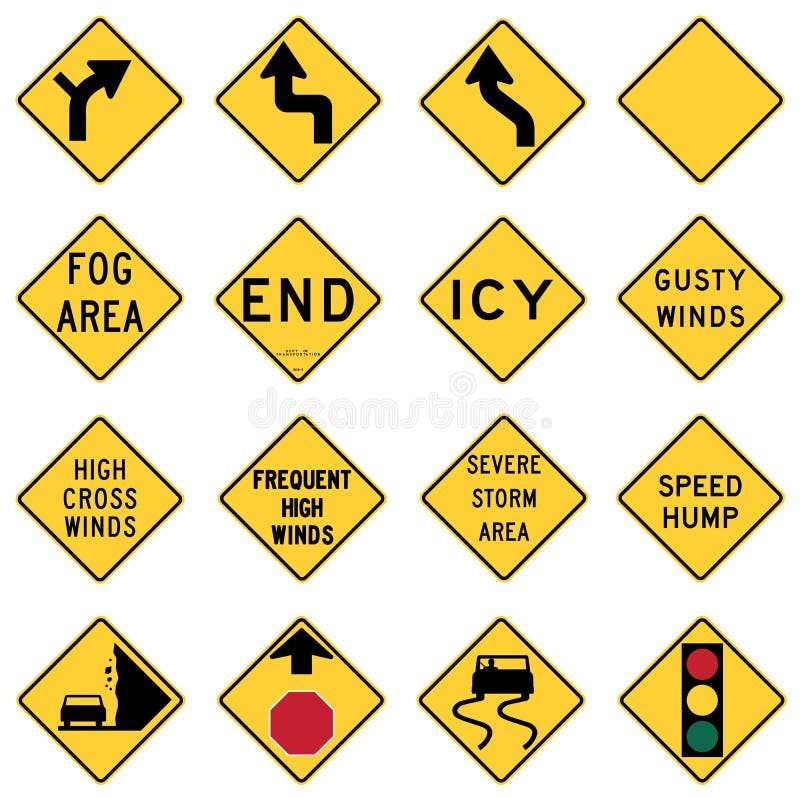
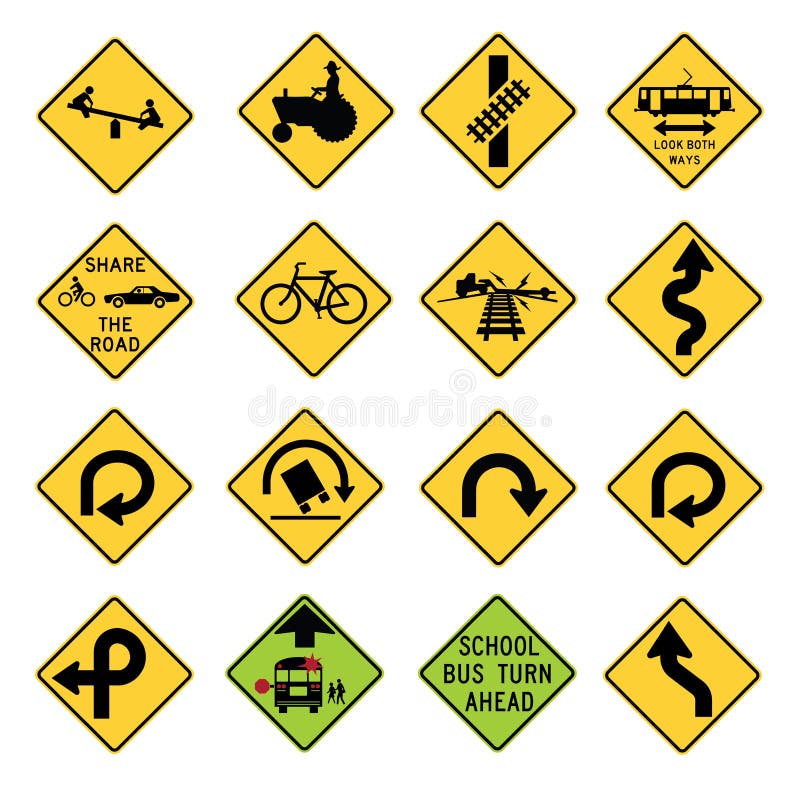
Free with trial Vector Illustration collection of the select Traffic Signs in the United States, isolated on white background. You can find other road signs in my portfolio. EPS file available. Warning signs are found in the W series of the national MUTCD. They highlight existing conditions, such as a curve, school, dead end street, or traffic signal. They can also warn possible danger such as bumps, bicycles, low flying aircraft or emergency vehicles. These signs are either yellow or fluorescent yellow in color and with the exception of a few signs are usually diamond shaped and sometimes have square or rectangular smaller signs or plaques associated with them. Most W series signs can also be found in with orange backgrounds, for temporary use in situations such as construction zones. Some of the temporary use signs are only for use in temporary situations. In the United States, road signs are, for the most part, standardized by federal regulations, most notably in the Manual on Uniform Traffic Control Devices (MUTCD) and its companion volume the Standard Highway Signs (SHS). There currently are no plans for adopting the Vienna Convention on Road Signs and Signals standards. Twenty-three states along with the District of Columbia and Puerto Rico use the manual without any alterations, 20 states have adopted it in conjunction with a supplemental volume, and seven states have a state version in substantial conformance to the MUTCD. There are also localized versions that are used in large cities such as New York City which use a naming system compatible with the MUTCD and/or state supplement. The MUTCD and SHS establish seven general categories of signs for road and highway use. Included illustrations are select examples of the MUTCD Warning Signs categories. Regulation vectors Traffic Warning Signs in the United States. Vector Illustration collection of the select Traffic Signs in the United States, isolated on white background. You. Vector Illustration collection of the select Traffic Signs in the United States, isolated on white background. You can find other road signs in my portfolio. EPS file available. Warning signs are found in the W series of the national MUTCD. They highlight existing conditions, such as a curve, school, dead end street, or traffic signal. They can also warn possible danger such as bumps, bicycles, low flying aircraft or emergency vehicles. These signs are either yellow or fluorescent yellow in color and with the exception of a few signs are usually diamond shaped and sometimes have square or rectangular smaller signs or plaques associated with them. Most W series signs can also be found in with orange backgrounds, for temporary use in situations such as construction zones. Some of the temporary use signs are only for use in temporary situations. In the United States, road signs are, for the most part, standardized by federal regulations, most notably in the Manual on Uniform Traffic Control Devices (MUTCD) and its companion volume the Standard Highway Signs (SHS). There currently are no plans for adopting the Vienna Convention on Road Signs and Signals standards. Twenty-three states along with the District of Columbia and Puerto Rico use the manual without any alterations, 20 states have adopted it in conjunction with a supplemental volume, and seven states have a state version in substantial conformance to the MUTCD. There are also localized versions that are used in large cities such as New York City which use a naming system compatible with the MUTCD and/or state supplement. The MUTCD and SHS establish seven general categories of signs for road and highway use. Included illustrations are select examples of the MUTCD Warning Signs categories.
Free with trial Vector Illustration collection of the select Traffic Signs in the United States, isolated on white background. You can find other road signs in my portfolio. EPS file available. Warning signs are found in the W series of the national MUTCD. They highlight existing conditions, such as a curve, school, dead end street, or traffic signal. They can also warn possible danger such as bumps, bicycles, low flying aircraft or emergency vehicles. These signs are either yellow or fluorescent yellow in color and with the exception of a few signs are usually diamond shaped and sometimes have square or rectangular smaller signs or plaques associated with them. Most W series signs can also be found in with orange backgrounds, for temporary use in situations such as construction zones. Some of the temporary use signs are only for use in temporary situations. In the United States, road signs are, for the most part, standardized by federal regulations, most notably in the Manual on Uniform Traffic Control Devices (MUTCD) and its companion volume the Standard Highway Signs (SHS). There currently are no plans for adopting the Vienna Convention on Road Signs and Signals standards. Twenty-three states along with the District of Columbia and Puerto Rico use the manual without any alterations, 20 states have adopted it in conjunction with a supplemental volume, and seven states have a state version in substantial conformance to the MUTCD. There are also localized versions that are used in large cities such as New York City which use a naming system compatible with the MUTCD and/or state supplement. The MUTCD and SHS establish seven general categories of signs for road and highway use. Included illustrations are select examples of the MUTCD Warning Signs categories. Regulation vectors Traffic Warning Signs in the United States. Vector Illustration collection of the select Traffic Signs in the United States, isolated on white background. You. Vector Illustration collection of the select Traffic Signs in the United States, isolated on white background. You can find other road signs in my portfolio. EPS file available. Warning signs are found in the W series of the national MUTCD. They highlight existing conditions, such as a curve, school, dead end street, or traffic signal. They can also warn possible danger such as bumps, bicycles, low flying aircraft or emergency vehicles. These signs are either yellow or fluorescent yellow in color and with the exception of a few signs are usually diamond shaped and sometimes have square or rectangular smaller signs or plaques associated with them. Most W series signs can also be found in with orange backgrounds, for temporary use in situations such as construction zones. Some of the temporary use signs are only for use in temporary situations. In the United States, road signs are, for the most part, standardized by federal regulations, most notably in the Manual on Uniform Traffic Control Devices (MUTCD) and its companion volume the Standard Highway Signs (SHS). There currently are no plans for adopting the Vienna Convention on Road Signs and Signals standards. Twenty-three states along with the District of Columbia and Puerto Rico use the manual without any alterations, 20 states have adopted it in conjunction with a supplemental volume, and seven states have a state version in substantial conformance to the MUTCD. There are also localized versions that are used in large cities such as New York City which use a naming system compatible with the MUTCD and/or state supplement. The MUTCD and SHS establish seven general categories of signs for road and highway use. Included illustrations are select examples of the MUTCD Warning Signs categories.
Free with trial Realistic 3d Detailed Road Traffic Light Banner Card Symbol Of Safety Rules Web Design Element. Vector illustration of Stoplight. Regulation vectors Realistic 3d Detailed Road Traffic Light Banner Card. Vector. Realistic 3d Detailed Road Traffic Light Banner Card Symbol Of Safety Rules Web Design Element. Realistic 3d Detailed Road Traffic Light Banner Card Symbol Of Safety Rules Web Design Element. Vector illustration of Stoplight
Free with trial Control of body temperature by the hypothalamus causing constriction or dilation of skin capillaries and sweat production. Created in Adobe Illustrator. Contains gradient fills. EPS 10. Regulation vectors Control of body temperature. By the hypothalamus causing constriction or dilation of skin capillaries and sweat production. Created in Adobe Illustrator. Control of body temperature by the hypothalamus causing constriction or dilation of skin capillaries and sweat production. Created in Adobe Illustrator. Contains gradient fills. EPS 10.
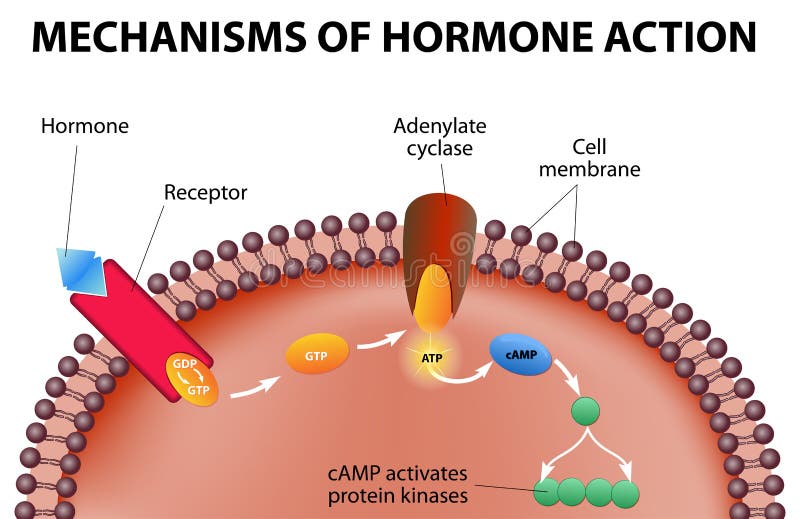
Free with trial Hormones bind to receptors on the plasma membrane. The hormone itself is the first messenger. Binding to the receptors activates a second messenger inside the cell. The second messenger causes intracellular effects. Regulation vectors Mechanisms of hormone action. Hormones bind to receptors on the plasma membrane. The hormone itself is the first messenger. Binding to the receptors activates a. Hormones bind to receptors on the plasma membrane. The hormone itself is the first messenger. Binding to the receptors activates a second messenger inside the cell. The second messenger causes intracellular effects
Free with trial Environment friendly fuel icon. Alternative fuel with a green leaf icon symbolizing environment friendliness. Regulation vectors Environment friendly fuel icon. Alternative fuel with a green leaf icon symbolizing environment friendliness
Free with trial Construction health and safety. Construction worker repairman thumb up, safety first, health and safety warning signs, vector illustrator. Regulation vectors Construction health and safety. Construction worker repairman thumb up, safety first, health and safety warning signs, vector illustrator
Free with trial Word cloud - corporate governance. A word cloud of corporate governance related items. Regulation vectors Word cloud - corporate governance. A word cloud of corporate governance related items
Free with trial City. Illustration, active road motion on town street. Regulation vectors City. Illustration, active road motion on town street
Free with trial Vitamin D. Foods contain vitamin D. Skin absorbs solar UVB radiation and synthesis of vitamin D. Calcium homeostasis and metabolism. Regulation vectors Schematic diagram of vitamin D metabolism. Vitamin D. Foods contain vitamin D. Skin absorbs solar UVB radiation and synthesis of vitamin D. Calcium homeostasis. Vitamin D. Foods contain vitamin D. Skin absorbs solar UVB radiation and synthesis of vitamin D. Calcium homeostasis and metabolism.
Free with trial Car parking sign, vector illustration. Regulation vectors Car parking sign. Vector illustration
Free with trial Gene expression. Central dogma of molecular biology, eps8. Regulation vectors Gene expression. Central dogma of molecular biology, eps8
Free with trial DNA microarrays. Chip used in cancer (and other diseases) research,eps8. Regulation vectors DNA microarrays. Chip used in cancer (and other diseases) research,eps8
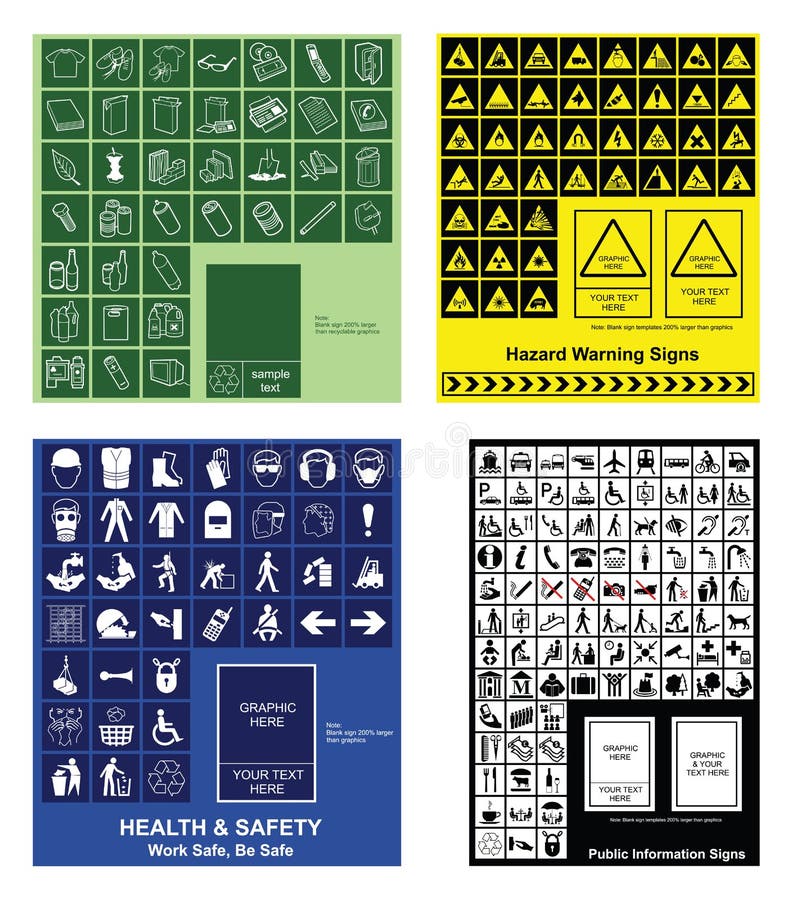
Free with trial Make your own sign collection. Make your own recycling, hazard warning, health & safety and public information signs. Regulation vectors Make your own sign collection. Make your own recycling, hazard warning, health & safety and public information signs
Free with trial An illustration of a basketball on a court and a tournament bracket in the background. Vector EPS 10 available. EPS file is layered and contains transparencies. Regulation vectors Basketball Court and Ball Tournament Illustration. An illustration of a basketball on a court and a tournament bracket in the background. Vector EPS 10 available. An illustration of a basketball on a court and a tournament bracket in the background. Vector EPS 10 available. EPS file is layered and contains transparencies.
Free with trial Word cloud - franchise. A word cloud of franchise related items. Regulation vectors Word cloud - franchise. A word cloud of franchise related items
Free with trial Hormones And Appetite. Human endocrine system. Human organs and hormones. Regulation vectors Hormones And Appetite. Human endocrine system. Human organs and hormones
Free with trial Metabolism of vitamin D. synthesis of vitamin D3 in humans begins in the skin. Regulation vectors Metabolism of vitamin D. Synthesis of vitamin D3 in humans begins in the skin
Free with trial Steroid hormones action. And gene expression, eps10. Regulation vectors Steroid hormones action. And gene expression, eps10
Free with trial Hormones appetite & hunger. Human endocrine system. Incretin, ghrelin, leptin and insulin. Regulation vectors Hormones appetite & hunger. Human endocrine system. Incretin, ghrelin, leptin and insulin
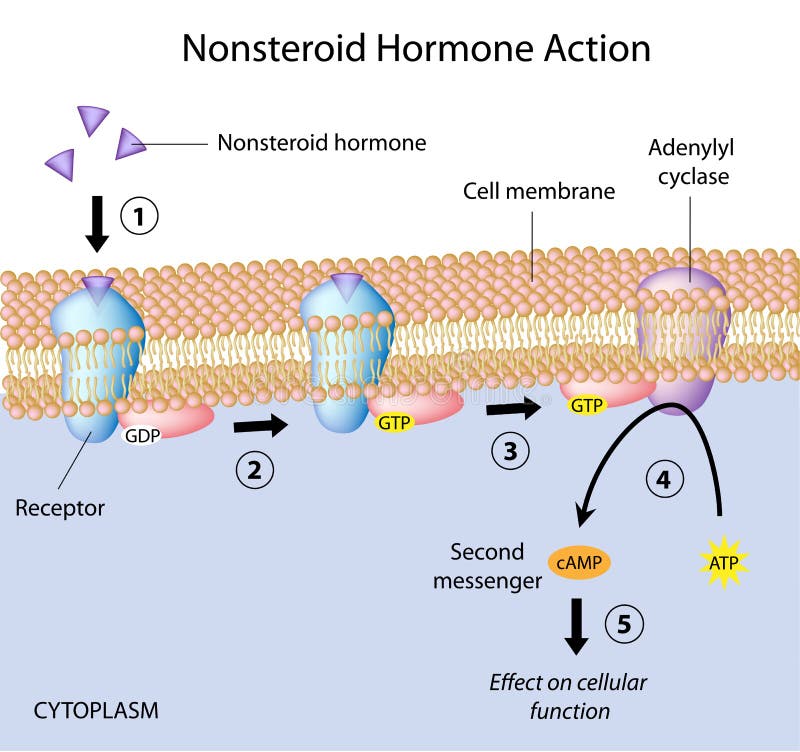
Free with trial Nonsteroid hormones action. Signal transduction pathway triggered by nonsteroid hormones, eps10. Regulation vectors Nonsteroid hormones action. Signal transduction pathway triggered by nonsteroid hormones, eps10
Free with trial Blue abstract background. Artwork. Regulation vectors Blue abstract background. Artwork
Free with trial How work steroid hormones response. Steroids Bind to an intracellular receptor. this complex activates gene transcription, cause a protein to be manufactured. Vector diagram. Regulation vectors Steroid hormones response. Vector. How work steroid hormones response. Steroids Bind to an intracellular receptor. this complex activates gene transcription. How work steroid hormones response. Steroids Bind to an intracellular receptor. this complex activates gene transcription, cause a protein to be manufactured. Vector diagram
Free with trial Circadian rhythm. Diagram of melatonin, and cortisol hormones level. During day 24 hours. temperature schedule. human biological clock. Chart of awake and sleep. Regulation vectors Circadian rhythm. Diagram of melatonin, and cortisol hormones level. During day 24 hours. temperature schedule. human biological clock. Chart of awake and sleep
Free with trial Mandatory construction. Related icon set each individually layered. Regulation vectors Mandatory construction. Related icon set each individually layered
Free with trial Health and Safety sign. Make your own Health and Safety sign graphics individually layered. Regulation vectors Health and Safety sign. Make your own Health and Safety sign graphics individually layered
Free with trial A set of pictogram representing worker safety attire. Regulation vectors Proper Safety Attire Uniform Wear Pictogram. A set of pictogram representing worker safety attire. A set of pictogram representing worker safety attire.
Free with trial Glucose induces insulin release in beta cells. Glucose induces insulin exocytosis in beta cells of the pancreas, eps10. Regulation vectors Glucose induces insulin release in beta cells. Glucose induces insulin exocytosis in beta cells of the pancreas, eps10
Free with trial Clipboard and cogwheel, technical support check list, team work solution, project management, software upgrade. Testing services vector icon, flat design illustration. technical terms and conditions. Regulation vectors Clipboard and cogwheel, technical support check list, team work solution, project management, software upgrade. Testing. Services vector icon, flat design. Clipboard and cogwheel, technical support check list, team work solution, project management, software upgrade. Testing services vector icon, flat design illustration. technical terms and conditions
Free with trial Vitamin D. Sources, metabolism and organs that regulate the level of calcium in the blood bone, kidney, intestine, parathyroid gland, liver, and skin. Hormones involved in the process of calcium absorption calcitriol, PTH, calcidiol. Vector illustration for medical, science and education use. Regulation vectors Vitamin D. Sources, metabolism and organs that regulate the level of calcium in the blood. Bone, kidney, intestine, parathyroid gland, liver, and skin. Hormones. Vitamin D. Sources, metabolism and organs that regulate the level of calcium in the blood bone, kidney, intestine, parathyroid gland, liver, and skin. Hormones involved in the process of calcium absorption calcitriol, PTH, calcidiol. Vector illustration for medical, science and education use
Free with trial Data protection concept. Credit card check and software access data as confidential. Can use for web banner, infographics, hero images. Flat isometric illustration isolated on white background. Regulation vectors Confidential Data Protection Credit Card Check Concept. Data protection concept. Credit card check and software access data as confidential. Can use for web. Data protection concept. Credit card check and software access data as confidential. Can use for web banner, infographics, hero images. Flat isometric illustration isolated on white background.
Free with trial ADHD vector illustration. Labeled attention deficit hyperactivity disorder scheme. Examples with symptoms and causes. Stressful behavior explanation. Medical infographic with mind focusing illness. Regulation vectors ADHD vector illustration. Labeled mind attention deficit disorder scheme. ADHD vector illustration. Labeled attention deficit hyperactivity disorder scheme. ADHD vector illustration. Labeled attention deficit hyperactivity disorder scheme. Examples with symptoms and causes. Stressful behavior explanation. Medical infographic with mind focusing illness.
Free with trial Cognitive behavioral therapy vector illustration. Outlined CBT explanation. Psycho social intervention to improve mental health. Psychotherapy help for depression, anxiety, bad thoughts and feelings. Regulation vectors Cognitive behavioral therapy vector illustration. Outlined CBT explanation. Psycho social intervention to improve mental health. Psychotherapy help for
Free with trial Homeostasis vector illustration. Labeled educational glucose example scheme. Internal physical and chemical state condition to maintain living systems. Body temperature, fluid balance and blood sugar. Regulation vectors Homeostasis vector illustration. Labeled educational glucose example scheme. Internal physical and chemical state condition to maintain living systems. Body
Free with trial Business contract signing. Corporate document. Agreement checking. Data protection. Terms and conditions, privacy policy, legal notice metaphors. Vector isolated concept metaphor illustrations. Regulation vectors Business contract signing. Corporate document. Agreement checking. Data protection. Terms and conditions, privacy policy. Legal notice metaphors. Vector. Business contract signing. Corporate document. Agreement checking. Data protection. Terms and conditions, privacy policy, legal notice metaphors. Vector isolated concept metaphor illustrations
Free with trial Appetite and hunger hormones vector diagram illustration, graphic educational scheme. Educational medical information. Regulation vectors Appetite and hunger hormones vector diagram illustration, graphic educational scheme. Educational medical information.
Free with trial PPE Safety caution. Worker is presenting warning sign about PPE. Regulation vectors PPE Safety caution. Worker is presenting warning sign about PPE
Free with trial International maritime signal nautical flags, morse alphabet for print or internet. Best for education. Regulation vectors International maritime signal nautical flags, morse alphabet. For print or internet. Best for education
Free with trial Skin in thermoregulation. Body temperature regulation. If the body is too hot, blood vessels dilate. Sweat glands produce more sweat, which evaporates to cool the skin. Heat and perspiration from the skin. The mechanism body temperature regulation. Regulation vectors Skin in thermoregulation. Body temperature regulation. If the body is too hot, blood vessels dilate. Sweat glands produce more sweat, which evaporates to cool
Free with trial Banner regulation illustration concept. Banner regulation concept with keywords and icons on white background. Standard. Compliance. Guideline. Rule. Law. Regulation vectors Banner regulation illustration concept. Banner regulation concept with keywords and icons on white background. Standard. Compliance. Guideline. Rule. Law
Free with trial Regulation law standard corporation document requirement. Paper. Regulation vectors Regulation law standard corporation document requirement. Paper
Free with trial Policies regulation concept list document company clipboard. Vector. Regulation vectors Policies regulation concept list document company clipboard. Vector
Free with trial Compliance to regulation process standard industry company. Vector illustration. Regulation vectors Compliance to regulation process standard industry company. Vector illustration
Free with trial Policies regulation concept list document company clipboard. Vector. Regulation vectors Policies regulation concept list document company clipboard. Vector
Free with trial Data Protection Regulation GDPR. Cyber security and privacy. Concept, abstract background, vector illustration. Regulation vectors Data Protection Regulation GDPR. Cyber security and privacy. Concept, abstract background, vector illustration
 Sign in