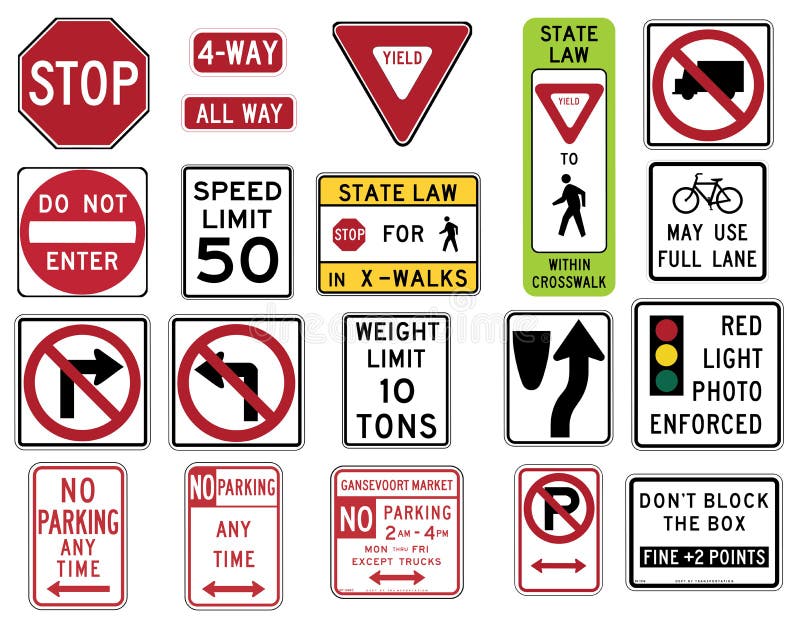
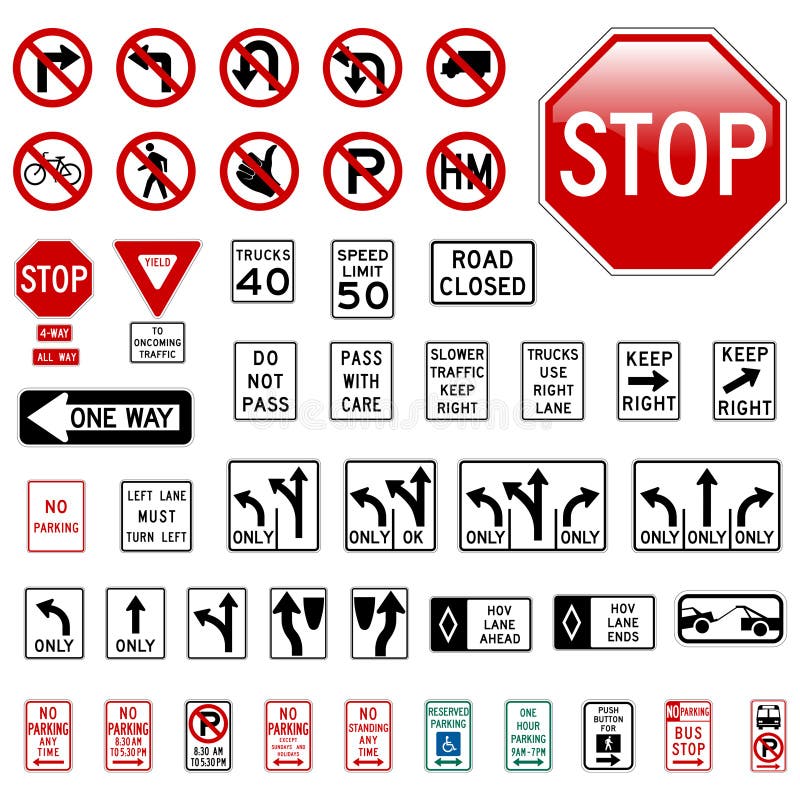
Free with trial Vector Illustration collection of the select Traffic Signs in the United States, isolated on white background. You can find other road signs in my portfolio. EPS file available. In the United States, road signs are, for the most part, standardized by federal regulations, most notably in the Manual on Uniform Traffic Control Devices (MUTCD) and its companion volume the Standard Highway Signs (SHS). There currently are no plans for adopting the Vienna Convention on Road Signs and Signals standards. Twenty-three states along with the District of Columbia and Puerto Rico use the manual without any alterations, 20 states have adopted it in conjunction with a supplemental volume, and seven states have a state version in substantial conformance to the MUTCD. There are also localized versions that are used in large cities such as New York City which use a naming system compatible with the MUTCD and/or state supplement. The MUTCD and SHS establish seven general categories of signs for road and highway use. Included illustrations are select examples of the following MUTCD categories: -- R1 Series STOP and YIELD -- R2 Series Speed Limit -- R3 Series Lane Usage and Turns (Left and Right Turn) -- R4 Regulation of Movement -- R5 Series: Exclusionary -- R7 Series: Parking. Regulatory vectors Traffic Signs in the United States - Regulatory Series. Vector Illustration collection of the select Traffic Signs in the United States, isolated on white. Vector Illustration collection of the select Traffic Signs in the United States, isolated on white background. You can find other road signs in my portfolio. EPS file available. In the United States, road signs are, for the most part, standardized by federal regulations, most notably in the Manual on Uniform Traffic Control Devices (MUTCD) and its companion volume the Standard Highway Signs (SHS). There currently are no plans for adopting the Vienna Convention on Road Signs and Signals standards. Twenty-three states along with the District of Columbia and Puerto Rico use the manual without any alterations, 20 states have adopted it in conjunction with a supplemental volume, and seven states have a state version in substantial conformance to the MUTCD. There are also localized versions that are used in large cities such as New York City which use a naming system compatible with the MUTCD and/or state supplement. The MUTCD and SHS establish seven general categories of signs for road and highway use. Included illustrations are select examples of the following MUTCD categories: -- R1 Series STOP and YIELD -- R2 Series Speed Limit -- R3 Series Lane Usage and Turns (Left and Right Turn) -- R4 Regulation of Movement -- R5 Series: Exclusionary -- R7 Series: Parking
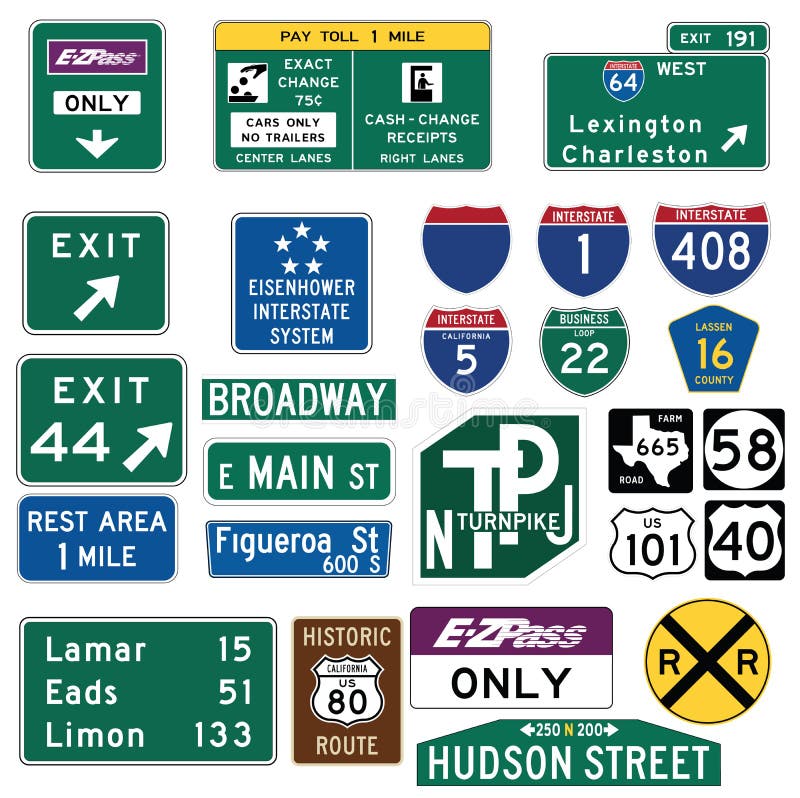
Free with trial Vector Illustration collection of the select Traffic Signs in the United States, isolated on white background. You can find other road signs in my portfolio. EPS file available. Guide signs are essential to direct road users along streets and highways, to inform them of intersecting routes, rnto direct them to cities, towns, villages, or other important destinations, to identify nearby rivers and streams, parks, forests, and historical sites, and generally to give such information as will help them along their way in the most simple, direct manner possible. rnrnIn the United States, road signs are, for the most part, standardized by federal regulations, most notably in the Manual on Uniform Traffic Control Devices (MUTCD) and its companion volume the Standard Highway Signs (SHS). There currently are no plans for adopting the Vienna Convention on Road Signs and Signals standards. Twenty-three states along with the District of Columbia and Puerto Rico use the manual without any alterations, 20 states have adopted it in conjunction with a supplemental volume, and seven states have a state version in substantial conformance to the MUTCD. There are also localized versions that are used in large cities such as New York City which use a naming system compatible with the MUTCD and/or state supplement. The MUTCD and SHS establish seven general categories of signs for road and highway use. rnrnIncluded illustrations are select examples of the MUTCD Guide Signs categories. rn. Regulatory vectors Traffic Guide Signs in the United States. Vector Illustration collection of the select Traffic Signs in the United States, isolated on white background. You can. Vector Illustration collection of the select Traffic Signs in the United States, isolated on white background. You can find other road signs in my portfolio. EPS file available. Guide signs are essential to direct road users along streets and highways, to inform them of intersecting routes, rnto direct them to cities, towns, villages, or other important destinations, to identify nearby rivers and streams, parks, forests, and historical sites, and generally to give such information as will help them along their way in the most simple, direct manner possible.rnrnIn the United States, road signs are, for the most part, standardized by federal regulations, most notably in the Manual on Uniform Traffic Control Devices (MUTCD) and its companion volume the Standard Highway Signs (SHS). There currently are no plans for adopting the Vienna Convention on Road Signs and Signals standards. Twenty-three states along with the District of Columbia and Puerto Rico use the manual without any alterations, 20 states have adopted it in conjunction with a supplemental volume, and seven states have a state version in substantial conformance to the MUTCD. There are also localized versions that are used in large cities such as New York City which use a naming system compatible with the MUTCD and/or state supplement. The MUTCD and SHS establish seven general categories of signs for road and highway use.rnrnIncluded illustrations are select examples of the MUTCD Guide Signs categories.rn
Free with trial Mandatory Signage. Icon Collection individually layered. Regulatory vectors Mandatory Signage. Icon Collection individually layered
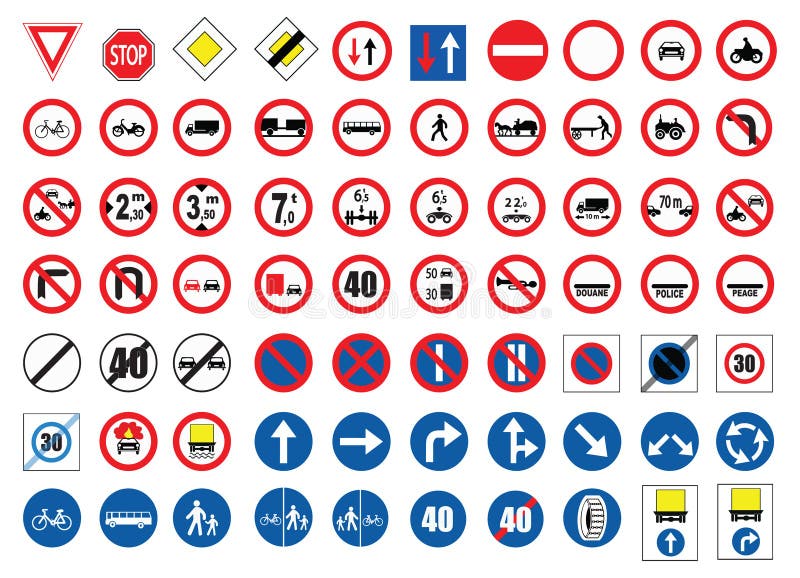
Free with trial Traffic signs. Vector editable regulatory traffic signs. Regulatory vectors Traffic signs. Vector editable regulatory traffic signs
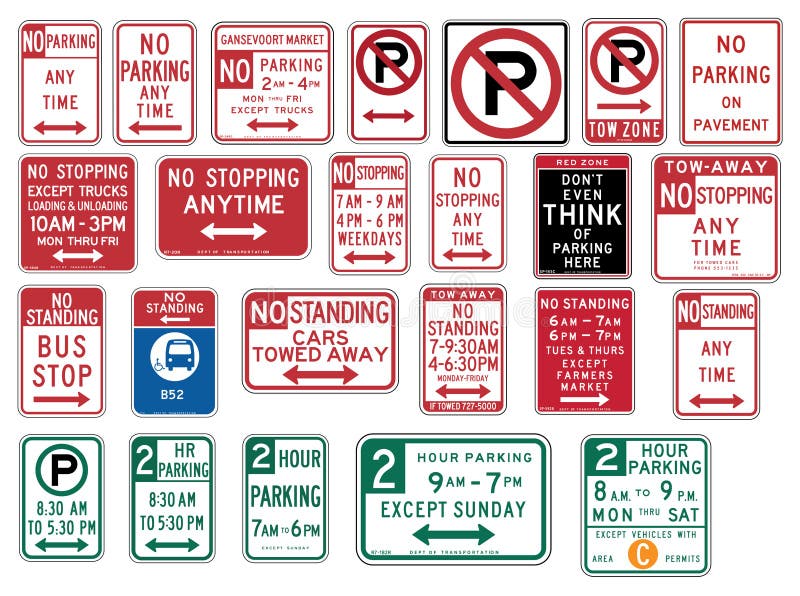
Free with trial Vector Illustration collection of the select Traffic Signs in the United States, isolated on white background. You can find other road signs in my portfolio. EPS file available. rnrnIn the United States, road signs are, for the most part, standardized by federal regulations, most notably in the Manual on Uniform Traffic Control Devices (MUTCD) and its companion volume the Standard Highway Signs (SHS). There currently are no plans for adopting the Vienna Convention on Road Signs and Signals standards. rnTwenty-three states along with the District of Columbia and Puerto Rico use the manual without any alterations, 20 states have adopted it in conjunction with a supplemental volume, and seven states have a state version in substantial conformance to the MUTCD. There are also localized versions that are used in large cities such as New York City which use a naming system compatible with the MUTCD and/or state supplement. The MUTCD and SHS establish seven general categories of signs for road and highway use. rnrnIncluded illustrations are select examples of the following MUTCD categories:rn-- R7 Series: Parkingrnrn. Regulatory vectors Traffic Signs in the United States - No Parking. Vector Illustration collection of the select Traffic Signs in the United States, isolated on white background. Vector Illustration collection of the select Traffic Signs in the United States, isolated on white background. You can find other road signs in my portfolio. EPS file available.rnrnIn the United States, road signs are, for the most part, standardized by federal regulations, most notably in the Manual on Uniform Traffic Control Devices (MUTCD) and its companion volume the Standard Highway Signs (SHS). There currently are no plans for adopting the Vienna Convention on Road Signs and Signals standards.rnTwenty-three states along with the District of Columbia and Puerto Rico use the manual without any alterations, 20 states have adopted it in conjunction with a supplemental volume, and seven states have a state version in substantial conformance to the MUTCD. There are also localized versions that are used in large cities such as New York City which use a naming system compatible with the MUTCD and/or state supplement. The MUTCD and SHS establish seven general categories of signs for road and highway use.rnrnIncluded illustrations are select examples of the following MUTCD categories:rn-- R7 Series: Parkingrnrn
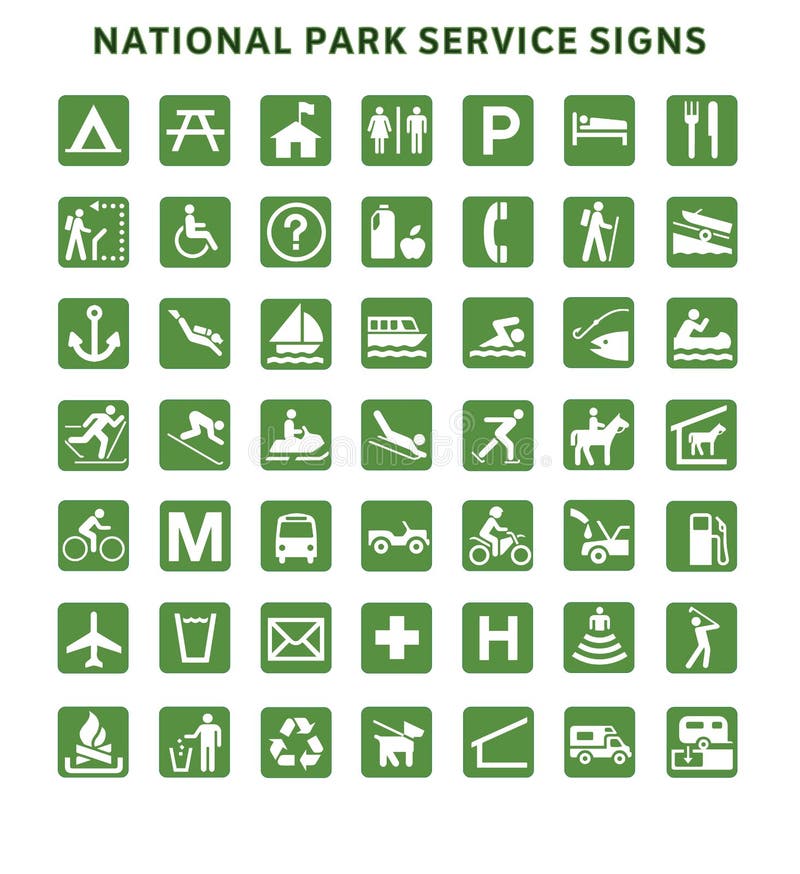
Free with trial Vector Illustration collection of the select National Park Service Signs in the United States, isolated on white background. You can find other signs in my portfolio. EPS file available. Regulatory vectors National Park Service Signs. Vector Illustration collection of the select National Park Service Signs in the United States, isolated on white background. You can. Vector Illustration collection of the select National Park Service Signs in the United States, isolated on white background. You can find other signs in my portfolio. EPS file available.
Free with trial Icons. Colorful web icon set isolated on white. Regulatory vectors Icons. Colorful web icon set isolated on white
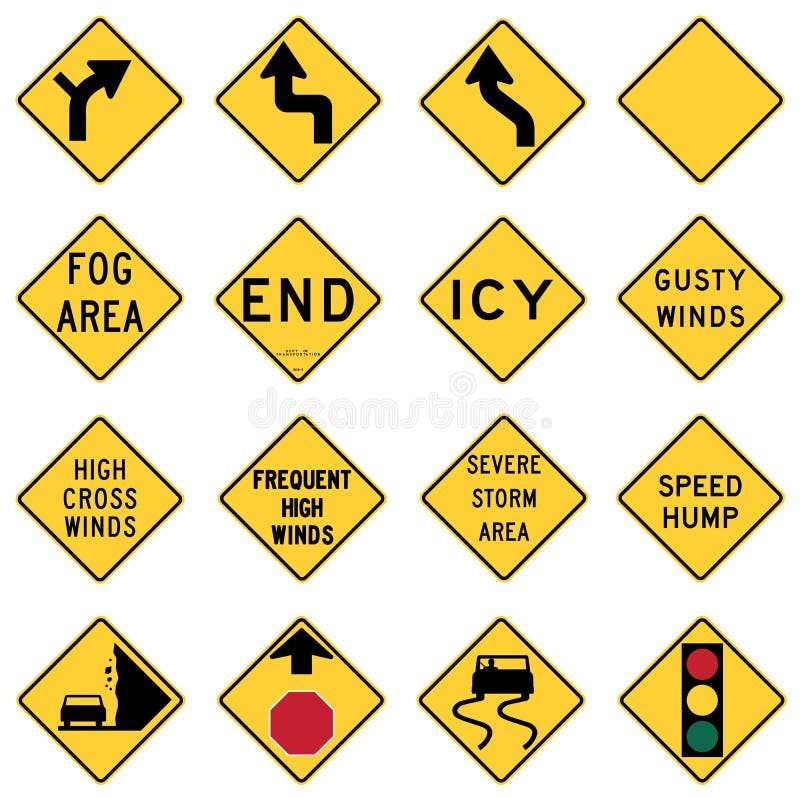
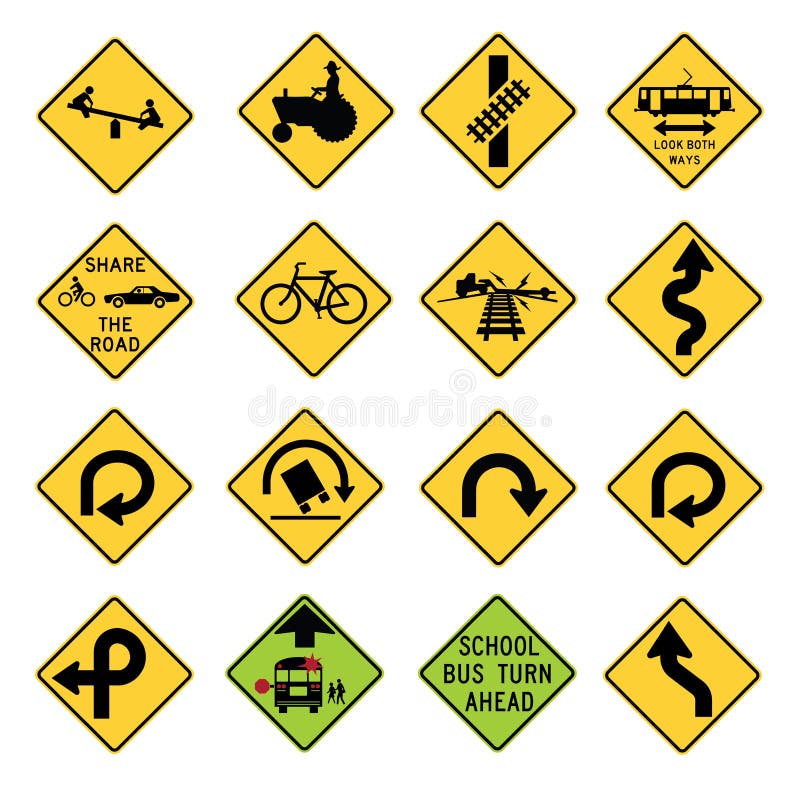
Free with trial Vector Illustration collection of the select Traffic Signs in the United States, isolated on white background. You can find other road signs in my portfolio. EPS file available. Warning signs are found in the W series of the national MUTCD. They highlight existing conditions, such as a curve, school, dead end street, or traffic signal. They can also warn possible danger such as bumps, bicycles, low flying aircraft or emergency vehicles. These signs are either yellow or fluorescent yellow in color and with the exception of a few signs are usually diamond shaped and sometimes have square or rectangular smaller signs or plaques associated with them. Most W series signs can also be found in with orange backgrounds, for temporary use in situations such as construction zones. Some of the temporary use signs are only for use in temporary situations. In the United States, road signs are, for the most part, standardized by federal regulations, most notably in the Manual on Uniform Traffic Control Devices (MUTCD) and its companion volume the Standard Highway Signs (SHS). There currently are no plans for adopting the Vienna Convention on Road Signs and Signals standards. Twenty-three states along with the District of Columbia and Puerto Rico use the manual without any alterations, 20 states have adopted it in conjunction with a supplemental volume, and seven states have a state version in substantial conformance to the MUTCD. There are also localized versions that are used in large cities such as New York City which use a naming system compatible with the MUTCD and/or state supplement. The MUTCD and SHS establish seven general categories of signs for road and highway use. Included illustrations are select examples of the MUTCD Warning Signs categories. Regulatory vectors Traffic Warning Signs in the United States. Vector Illustration collection of the select Traffic Signs in the United States, isolated on white background. You. Vector Illustration collection of the select Traffic Signs in the United States, isolated on white background. You can find other road signs in my portfolio. EPS file available. Warning signs are found in the W series of the national MUTCD. They highlight existing conditions, such as a curve, school, dead end street, or traffic signal. They can also warn possible danger such as bumps, bicycles, low flying aircraft or emergency vehicles. These signs are either yellow or fluorescent yellow in color and with the exception of a few signs are usually diamond shaped and sometimes have square or rectangular smaller signs or plaques associated with them. Most W series signs can also be found in with orange backgrounds, for temporary use in situations such as construction zones. Some of the temporary use signs are only for use in temporary situations. In the United States, road signs are, for the most part, standardized by federal regulations, most notably in the Manual on Uniform Traffic Control Devices (MUTCD) and its companion volume the Standard Highway Signs (SHS). There currently are no plans for adopting the Vienna Convention on Road Signs and Signals standards. Twenty-three states along with the District of Columbia and Puerto Rico use the manual without any alterations, 20 states have adopted it in conjunction with a supplemental volume, and seven states have a state version in substantial conformance to the MUTCD. There are also localized versions that are used in large cities such as New York City which use a naming system compatible with the MUTCD and/or state supplement. The MUTCD and SHS establish seven general categories of signs for road and highway use. Included illustrations are select examples of the MUTCD Warning Signs categories.
Free with trial Vector Illustration collection of the select Traffic Signs in the United States, isolated on white background. You can find other road signs in my portfolio. EPS file available. Warning signs are found in the W series of the national MUTCD. They highlight existing conditions, such as a curve, school, dead end street, or traffic signal. They can also warn possible danger such as bumps, bicycles, low flying aircraft or emergency vehicles. These signs are either yellow or fluorescent yellow in color and with the exception of a few signs are usually diamond shaped and sometimes have square or rectangular smaller signs or plaques associated with them. Most W series signs can also be found in with orange backgrounds, for temporary use in situations such as construction zones. Some of the temporary use signs are only for use in temporary situations. In the United States, road signs are, for the most part, standardized by federal regulations, most notably in the Manual on Uniform Traffic Control Devices (MUTCD) and its companion volume the Standard Highway Signs (SHS). There currently are no plans for adopting the Vienna Convention on Road Signs and Signals standards. Twenty-three states along with the District of Columbia and Puerto Rico use the manual without any alterations, 20 states have adopted it in conjunction with a supplemental volume, and seven states have a state version in substantial conformance to the MUTCD. There are also localized versions that are used in large cities such as New York City which use a naming system compatible with the MUTCD and/or state supplement. The MUTCD and SHS establish seven general categories of signs for road and highway use. Included illustrations are select examples of the MUTCD Warning Signs categories. Regulatory vectors Traffic Warning Signs in the United States. Vector Illustration collection of the select Traffic Signs in the United States, isolated on white background. You. Vector Illustration collection of the select Traffic Signs in the United States, isolated on white background. You can find other road signs in my portfolio. EPS file available. Warning signs are found in the W series of the national MUTCD. They highlight existing conditions, such as a curve, school, dead end street, or traffic signal. They can also warn possible danger such as bumps, bicycles, low flying aircraft or emergency vehicles. These signs are either yellow or fluorescent yellow in color and with the exception of a few signs are usually diamond shaped and sometimes have square or rectangular smaller signs or plaques associated with them. Most W series signs can also be found in with orange backgrounds, for temporary use in situations such as construction zones. Some of the temporary use signs are only for use in temporary situations. In the United States, road signs are, for the most part, standardized by federal regulations, most notably in the Manual on Uniform Traffic Control Devices (MUTCD) and its companion volume the Standard Highway Signs (SHS). There currently are no plans for adopting the Vienna Convention on Road Signs and Signals standards. Twenty-three states along with the District of Columbia and Puerto Rico use the manual without any alterations, 20 states have adopted it in conjunction with a supplemental volume, and seven states have a state version in substantial conformance to the MUTCD. There are also localized versions that are used in large cities such as New York City which use a naming system compatible with the MUTCD and/or state supplement. The MUTCD and SHS establish seven general categories of signs for road and highway use. Included illustrations are select examples of the MUTCD Warning Signs categories.
Free with trial Office signs. Construction industry and office signs individually layered. Regulatory vectors Office signs. Construction industry and office signs individually layered
Free with trial Road Signs. Road Sign Set #1 - Regulatory. Regulatory vectors Road Signs. Road Sign Set #1 - Regulatory
Free with trial Activation of T-cell leukocytes. T-cell encounters its cognate antigen on the surface of an infected cell. T cells direct and regulate immune responses and attack infected or cancerous cells. Regulatory vectors Activation of T-cell leukocytes. T-cell encounters its cognate antigen on the surface of an infected cell. T cells direct and regulate immune responses and
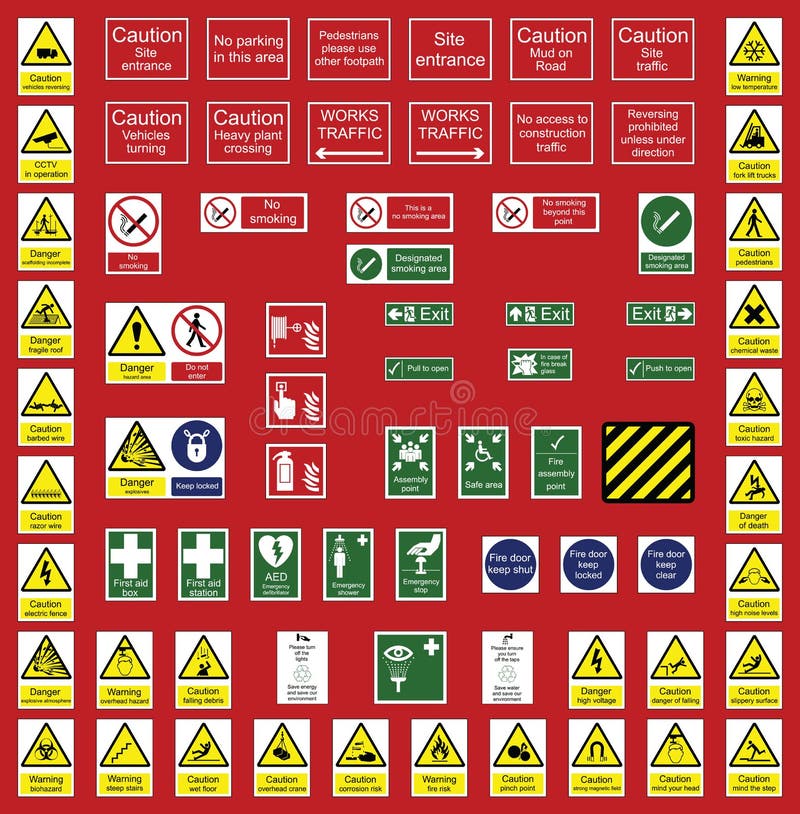
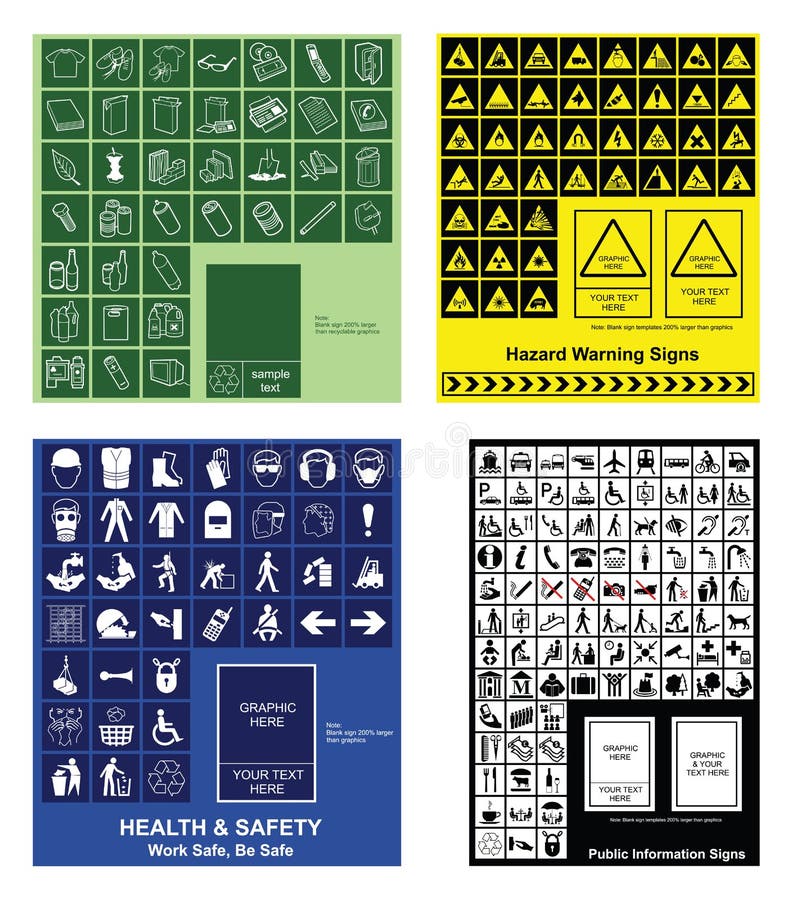
Free with trial Make your own sign collection. Make your own recycling, hazard warning, health & safety and public information signs. Regulatory vectors Make your own sign collection. Make your own recycling, hazard warning, health & safety and public information signs
Free with trial Steroid hormones action. And gene expression, eps10. Regulatory vectors Steroid hormones action. And gene expression, eps10
Free with trial Compliance to regulation process standard industry company. Vector. Regulatory vectors Compliance to regulation process standard industry company. Vector
Free with trial How work steroid hormones response. Steroids Bind to an intracellular receptor. this complex activates gene transcription, cause a protein to be manufactured. Vector diagram. Regulatory vectors Steroid hormones response. Vector. How work steroid hormones response. Steroids Bind to an intracellular receptor. this complex activates gene transcription. How work steroid hormones response. Steroids Bind to an intracellular receptor. this complex activates gene transcription, cause a protein to be manufactured. Vector diagram
Free with trial Business Ethics Outline Icon Set w Honesty, Integrity, Commitment, & Decision. Regulatory vectors Business Ethics Outline Icon Set w Honesty, Integrity, Commitment, & Decision. Business Ethics Outline Icon Set with Honesty, Integrity, Commitment, and Decision
Free with trial Health and Safety sign. Make your own Health and Safety sign graphics individually layered. Regulatory vectors Health and Safety sign. Make your own Health and Safety sign graphics individually layered
Free with trial Compliance document vector icon. Approved process illustration symbol. regulation sign or logo. For web sites. Regulatory vectors Compliance document vector icon. Approved process illustration symbol. regulation sign or logo. For web sites
Free with trial Regulatory signs. Set of isolated regulatory signs of usa. Regulatory vectors Regulatory signs. Set of isolated regulatory signs of usa
Free with trial Regulatory compliance concept. Business people read laws, discuss changes, plan the implementation of rules and the development of the company. Flat vector illustration isolated on white background. Regulatory vectors Regulatory compliance concept. Business people read laws, discuss changes, plan the implementation of rules and the development of. The company. Flat vector. Regulatory compliance concept. Business people read laws, discuss changes, plan the implementation of rules and the development of the company. Flat vector illustration isolated on white background
Free with trial No entry hand sign on transparent background. Red stop sign icon with hand palm. Road sign. Traffic regulatory warning symbol. Notify template for apps and websites. Vector illustration. Regulatory vectors No entry hand sign on transparent background. Red stop sign icon with hand palm. Road sign. Traffic regulatory warning. Symbol. Notify template for apps and. No entry hand sign on transparent background. Red stop sign icon with hand palm. Road sign. Traffic regulatory warning symbol. Notify template for apps and websites. Vector illustration.
Free with trial Regulatory compliance flat isometric vector concept. Business people are discussing steps to comply with relevant laws, policies, and regulations. Regulatory vectors Regulatory compliance flat isometric vector. Regulatory compliance flat isometric vector concept. Business people are discussing steps to comply with relevant. Regulatory compliance flat isometric vector concept. Business people are discussing steps to comply with relevant laws, policies, and regulations.
Free with trial Regulatory compliance flat isometric vector concept. Businessmen are discussing steps to comply with relevant laws, policies, and regulations. Regulatory vectors Regulatory compliance flat isometric vector concept. Businessmen are discussing steps to comply with relevant laws, policies, and regulations
Free with trial White regulatory signs. White regulatory American road signs. Regulatory vectors White regulatory signs. White regulatory American road signs
Free with trial Types of T-cell. Lymphoid cell. T lymphocytes: Naive Regulatory Memory helper and T-killer or Cytotoxic T cells. Vector illustration. Regulatory vectors Types of T-cell. T lymphocyte. Types of T-cell. Lymphoid cell. T lymphocytes: Naive Regulatory Memory helper and T-killer or Cytotoxic T cells. Vector. Types of T-cell. Lymphoid cell. T lymphocytes: Naive Regulatory Memory helper and T-killer or Cytotoxic T cells. Vector illustration
Free with trial Basic road traffic warning regulatory prohibiting and informative signs flat pictograms banner print abstract vector isolated illustration. Regulatory vectors Road traffic signs flat icons set. Basic road traffic warning regulatory prohibiting and informative signs flat pictograms banner print abstract vector isolated. Basic road traffic warning regulatory prohibiting and informative signs flat pictograms banner print abstract vector isolated illustration
Free with trial Website menu. Template vector illustration. Regulatory vectors Website menu. Template vector illustration
Free with trial Statue of justice. Isolated on white. Regulatory vectors Statue of justice. Isolated on white
Free with trial ONEWAY. Vector traffic sign for one way. Regulatory vectors ONEWAY. Vector traffic sign for one way
Free with trial This vector collection features a variety of road and traffic signs, including stop, parking, no entry, and directional signs. Each sign is meticulously detailed, making it perfect for use in transportation, safety, and educational projects. The collection ensures comprehensive coverage of common road signs, enhancing its utility for various design needs. Regulatory vectors Comprehensive Vector Collection of Road and Traffic Signs - Perfect for Transport and Safety Projects. This vector collection features a variety of road and. This vector collection features a variety of road and traffic signs, including stop, parking, no entry, and directional signs. Each sign is meticulously detailed, making it perfect for use in transportation, safety, and educational projects. The collection ensures comprehensive coverage of common road signs, enhancing its utility for various design needs.
Free with trial Legal Compliance Icons Set. Legal compliance deal protection and copyright regulation flat icons set isolated vector illustration. Regulatory vectors Legal Compliance Icons Set. Legal compliance deal protection and copyright regulation flat icons set isolated vector illustration
Free with trial T-cell. Activation and lysis of the leukocytes. T-cell encounters its cognate antigen on the surface of an infected cell. T cells direct and regulate immune responses and attack infected or cancerous cells. Regulatory vectors T-cell. Activation and lysis of the leukocytes. T-cell encounters its cognate antigen on the surface of an infected cell. T cells direct and regulate immune
Free with trial Compliance to regulation process standard industry company. Vector illustration. Regulatory vectors Compliance to regulation process standard industry company. Vector illustration
Free with trial Business Ethics Solid Icon Set with Honesty, Integrity, Commitment, and Decision. Regulatory vectors Business Ethics Solid Icon Set with Honesty, Integrity, Commitment, and Decision. Business Ethics Solid Icon Set with Honesty, Integrity, Commitment, & Decision
Free with trial Business Ethics Solid Icon Set with Honesty, Integrity, Commitment, and Decision. Regulatory vectors Business Ethics Solid Icon Set with Honesty, Integrity, Commitment, and Decision. Business Ethics Solid Icon Set with Honesty, Integrity, Commitment, & Decision
Free with trial Information technology internet digital justice law Labor Law Lawyer Legal Business Concept. vector illustration. Eps10. Regulatory vectors Information technology internet digital justice law Labor Law Lawyer Legal Business Concept. vector illustration. Eps10
Free with trial Intestinal Mucous Membrane. Immunology of intestinal mucous membrane and effect of probiotics. Vector scheme illustration. Regulatory vectors Intestinal Mucous Membrane. Immunology of intestinal mucous membrane and effect of probiotics. Vector scheme illustration
Free with trial Business Ethics Solid Icon Set w Honesty, Integrity, Commitment, & Decisions Web Banner Header. Regulatory vectors Business Ethics Solid Icon Set w Honesty, Integrity, Commitment, and Decision - Business Ethics Solid Icon Set w. Business Ethics Solid Icon Set w Honesty. Business Ethics Solid Icon Set w Honesty, Integrity, Commitment, & Decisions Web Banner Header
Free with trial Business Ethics Solid Icon Set with Honesty, Integrity, Commitment, and Decision. Regulatory vectors Business Ethics Solid Icon Set with Honesty, Integrity, Commitment, and Decision. Business Ethics Solid Icon Set with Honesty, Integrity, Commitment, & Decision
Free with trial In Compliance Icon with paper, checks & list. Regulatory vectors In Compliance Icon with paper, checks & list. In Compliance Icon w paper, checks and list
Free with trial Governance Word Cloud. On a White Background. Regulatory vectors Governance Word Cloud. On a White Background
Free with trial In compliance icon. Checklist sign. Certified document symbol. Approval process. Company passed inspection. Colorful compliance icon in circle button. Certified approval checklist. Verified vector. Regulatory vectors In compliance icon. Checklist sign. Certified document symbol. Company passed inspection. Vector. In compliance icon. Checklist sign. Certified document symbol. In compliance icon. Checklist sign. Certified document symbol. Approval process. Company passed inspection. Colorful compliance icon in circle button. Certified approval checklist. Verified vector
Free with trial 2011 calendar. With mandatory health and safety theme. Regulatory vectors 2011 calendar. With mandatory health and safety theme
Free with trial Stop sign and no entry hand symbol set isolated on transparent background. Red road signs. Traffic regulatory warning stop symbol. Notify template for apps and websites. Vector illustration. Regulatory vectors Stop sign and no entry hand symbol set isolated on transparent background. Red road signs. Traffic regulatory warning. Stop symbol. Notify template for apps and. Stop sign and no entry hand symbol set isolated on transparent background. Red road signs. Traffic regulatory warning stop symbol. Notify template for apps and websites. Vector illustration.
Free with trial Basel accord Committee on Banking Supervision International regulatory framework for banks. Vector. Regulatory vectors Basel accord Committee on Banking Supervision International regulatory framework for banks. Vector
Free with trial Compliance rules, regulatory concept, law gavel, standards and requirements, legal terms and conditions, vector line icon set. Regulatory vectors Compliance rules, regulatory concept, law gavel, standards and requirements, legal terms and conditions. Vector line icon set
Free with trial Regulatory Compliance 3D Flat Isometric Vector Concept. Business People Are Discussing Steps to Comply With Relevant Laws, Policies, and Regulations. Regulatory vectors Regulatory Compliance Flat Isometric Vector Conceptual Illustration. Regulatory Compliance 3D Flat Isometric Vector Concept. Business People Are Discussing. Regulatory Compliance 3D Flat Isometric Vector Concept. Business People Are Discussing Steps to Comply With Relevant Laws, Policies, and Regulations.
Free with trial 3D Isometric Flat Vector Conceptual Illustration of Regulatory Compliance, Steps That Are Needed to Be Complied With Relevant Laws, Policies and Regulations. Regulatory vectors 3D Isometric Flat Vector Conceptual Illustration of Regulatory Compliance. 3D Isometric Flat Vector Conceptual Illustration of Regulatory Compliance, Steps That. 3D Isometric Flat Vector Conceptual Illustration of Regulatory Compliance, Steps That Are Needed to Be Complied With Relevant Laws, Policies and Regulations.
Free with trial 3D Isometric Flat Vector Concept of Regulatory Compliance, Steps That Are Needed to Be Complied With Relevant Laws, Policies and Regulations. Regulatory vectors 3D Isometric Flat Vector Concept of Regulatory Compliance. 3D Isometric Flat Vector Concept of Regulatory Compliance, Steps That Are Needed to Be Complied With. 3D Isometric Flat Vector Concept of Regulatory Compliance, Steps That Are Needed to Be Complied With Relevant Laws, Policies and Regulations.
Free with trial 3D Isometric Flat Vector Conceptual Illustration of Regulatory Compliance, Policies and Regulations. Regulatory vectors 3D Isometric Flat Vector Conceptual Illustration of Regulatory Compliance. 3D Isometric Flat Vector Conceptual Illustration of Regulatory Compliance, Policies. 3D Isometric Flat Vector Conceptual Illustration of Regulatory Compliance, Policies and Regulations.
Free with trial Flat isometric vector landing page template of regulatory compliance. Business people are discussing steps to comply with relevant laws, policies, and regulations. Regulatory vectors Flat isometric vector landing page template of regulatory compliance. Business people are discussing steps to comply with relevant laws, policies, and
Free with trial Railway or railroad crossing Intersection regulatory sign. Vector illustration. Regulatory vectors Railway or railroad crossing Intersection regulatory sign. Vector illustration. Railway or railroad crossing Intersection regulatory sign. Vector illustration
Free with trial Regulatory news service (rns) icon. Trendy modern flat linear vector regulatory news service (rns) icon on white background from thin line business collection, outline vector illustration. Regulatory vectors Regulatory News Service (RNS) icon. Trendy modern flat linear ve. Ctor regulatory news service (rns) icon on white background from thin line business collection. regulatory news service (rns) icon. Trendy modern flat linear vector regulatory news service (rns) icon on white background from thin line business collection, outline vector illustration
Free with trial Regulatory News Service (RNS) icon. Trendy flat vector Regulatory News Service (RNS) icon on white background from business collection, vector illustration can be use for web and mobile, eps10. Regulatory vectors Regulatory News Service (RNS) icon. Trendy flat vector Regulator. Y News Service (RNS) icon on white background from business collection, vector illustration can. Regulatory News Service (RNS) icon. Trendy flat vector Regulatory News Service (RNS) icon on white background from business collection, vector illustration can be use for web and mobile, eps10
Free with trial Set Isometric road and Vector Cars, Common road traffic regulatory. Vector illustration eps 10 isolated on white. Background. Regulatory vectors Set Isometric road and Vector Cars, Common road traffic regulatory. Vector illustration eps 10 isolated on white. Background
Free with trial Red Stop Sign isolated on white background. Traffic regulatory warning stop symbol. Vector illustration. Regulatory vectors Red Stop Sign isolated on white background. Traffic regulatory warning stop symbol. Vector illustration, EPS10. Red Stop Sign isolated on white background. Red Stop Sign isolated on white background. Traffic regulatory warning stop symbol. Vector illustration.
Free with trial Red Stop Sign isolated on white background. Traffic regulatory warning stop symbol. Vector illustration, EPS10. Web icon. Regulatory vectors Red Stop Sign isolated on white background. Traffic regulatory warning stop symbol. Vector illustration, EPS10. Web icon
Free with trial How steroid hormones work. interaction of the hormone with the intracellular receptor. Human endocrine signaling system. Regulatory vectors How steroid hormones work. Interaction of the hormone with the intracellular receptor. Human endocrine signaling system
Free with trial Rightturn151207. Vector traffic sign go right. Regulatory vectors Rightturn151207. Vector traffic sign go right
Free with trial Cartoon colorful brain. Illustration of Cartoon colorful brain. Regulatory vectors Cartoon colorful brain. Illustration of Cartoon colorful brain
Free with trial Mandatory sign collection. Industry mandatory sign collection mounted on post. Regulatory vectors Mandatory sign collection. Industry mandatory sign collection mounted on post
Free with trial Go right. Vector traffic signs for right and left. Regulatory vectors Go right. Vector traffic signs for right and left
Free with trial Go right green. Vector traffic signs for right and left. Regulatory vectors Go right green. Vector traffic signs for right and left
Free with trial Vector direction arrow signs. On white background. Regulatory vectors Vector direction arrow signs. On white background
Free with trial Vector direction arrow sign on evening sky. Regulatory vectors Vector direction arrow sign. On evening sky
Free with trial Legal Compliance Icons Set. Legal compliance terms abidance work policy black icons set isolated vector illustration. Regulatory vectors Legal Compliance Icons Set. Legal compliance terms abidance work policy black icons set isolated vector illustration
Free with trial POLICIES letters banner. POLICIES overlapping letters banner on colorful squares background. Regulatory vectors POLICIES letters banner. POLICIES overlapping letters banner on colorful squares background
Free with trial The kidneys are bean-shaped organs that serve several essential regulatory roles in vertebrates. Their main function is to regulate the balance of electrolytes in the blood, along with maintaining pH homeostasis. Regulatory vectors Kidney Structures. Health care education infographic. Vector design. The kidneys are bean-shaped organs that serve several essential regulatory roles in. The kidneys are bean-shaped organs that serve several essential regulatory roles in vertebrates. Their main function is to regulate the balance of electrolytes in the blood, along with maintaining pH homeostasis.
Free with trial Legal compliance deal protection and copyright regulation. Copyright legal, protection and regulation, regulate compliance agreement, vector illustration. Regulatory vectors Legal compliance deal protection and copyright regulation. Copyright legal, protection and regulation, regulate compliance agreement, vector illustration
Free with trial An illustration of allosteric model of enzyme activity. Regulatory vectors Illustration of allosteric model of enzyme activity. An illustration of allosteric model of enzyme activity. An illustration of allosteric model of enzyme activity.
Free with trial In compliance web banner - icon set that shows a company passed. In compliance web banner with icon set that shows a company passed inspection. Regulatory vectors In compliance web banner - icon set that shows a company passed. In compliance web banner with icon set that shows a company passed inspection
Free with trial HIPAA Compliance Web Banner Header with Medical Icon Set and tex. Regulatory vectors HIPAA Compliance Web Banner Header with Medical Icon Set and tex. HIPAA Compliance Web Banner Header - Medical Icon Set and text
Free with trial In compliance web banner - icon set that shows a company passed. In compliance web banner with icon set that shows a company passed inspection. Regulatory vectors In compliance web banner - icon set that shows a company passed. In compliance web banner with icon set that shows a company passed inspection
Free with trial Compliance isometric concept. Connected line 3d icons. Integrated circle infographic design system. Rules, Standards, Law, Requirements symbols. Regulations, Policies, Transparency pictogram. Regulatory vectors Compliance isometric concept. Connected line 3d icons. Integrated circle infographic design system. Rules, Standards. Law, Requirements symbols. Regulations. Compliance isometric concept. Connected line 3d icons. Integrated circle infographic design system. Rules, Standards, Law, Requirements symbols. Regulations, Policies, Transparency pictogram
Free with trial Violation road rules. Kids abruptly cross path, dangerous scene, playing ball roadway, sudden braking car, traffic problem. Warning light red signal, childish educational scene. Vector cartoon concept. Regulatory vectors Violation road rules. Kids abruptly cross path, dangerous scene, playing ball roadway, sudden braking car, traffic. Problem. Warning light red signal, childish. Violation road rules. Kids abruptly cross path, dangerous scene, playing ball roadway, sudden braking car, traffic problem. Warning light red signal, childish educational scene. Vector cartoon concept
Free with trial Health Safety and Environment Icon Set & Web Header Banner. Regulatory vectors Health Safety and Environment Icon Set & Web Header Banner. Health Safety & Environment Icon Set & Web Header Banner
Free with trial HIPPA Compliance web banner header w Medical Icon Set & text. Regulatory vectors HIPPA Compliance web banner header w Medical Icon Set & text. HIPPA Compliance web banner header w Medical Icon Set and text
Free with trial Business Ethics Web Banner Icon Set with Honesty, Integrity, Com. Business Ethics Web Banner Icon Set - Honesty, Integrity, Commitment, and Decision. Regulatory vectors Business Ethics Web Banner Icon Set with Honesty, Integrity, Com. Business Ethics Web Banner Icon Set - Honesty, Integrity, Commitment, and Decision
Free with trial Business Ethics Web Banner Icon Set with Honesty, Integrity, Com. Business Ethics Web Banner Icon Set - Honesty, Integrity, Commitment, and Decision. Regulatory vectors Business Ethics Web Banner Icon Set with Honesty, Integrity, Com. Business Ethics Web Banner Icon Set - Honesty, Integrity, Commitment, and Decision
 Sign in