Free with trial Set of hands icons and symbols, emoji, different hands, gestures, signals and signs, vector illustration. Signals vectors Set of shit icons, smiling faces, emoji, emoticons. Set of hands icons and symbols, emoji, different hands, gestures, signals and signs, vector illustration. Set of hands icons and symbols, emoji, different hands, gestures, signals and signs, vector illustration.
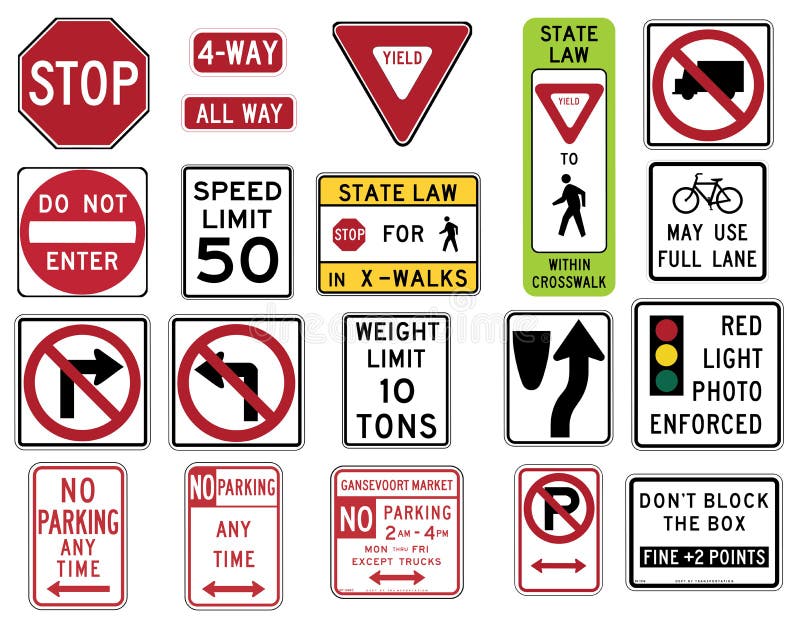
Free with trial Vector Illustration collection of the select Traffic Signs in the United States, isolated on white background. You can find other road signs in my portfolio. EPS file available. In the United States, road signs are, for the most part, standardized by federal regulations, most notably in the Manual on Uniform Traffic Control Devices (MUTCD) and its companion volume the Standard Highway Signs (SHS). There currently are no plans for adopting the Vienna Convention on Road Signs and Signals standards. Twenty-three states along with the District of Columbia and Puerto Rico use the manual without any alterations, 20 states have adopted it in conjunction with a supplemental volume, and seven states have a state version in substantial conformance to the MUTCD. There are also localized versions that are used in large cities such as New York City which use a naming system compatible with the MUTCD and/or state supplement. The MUTCD and SHS establish seven general categories of signs for road and highway use. Included illustrations are select examples of the following MUTCD categories: -- R1 Series STOP and YIELD -- R2 Series Speed Limit -- R3 Series Lane Usage and Turns (Left and Right Turn) -- R4 Regulation of Movement -- R5 Series: Exclusionary -- R7 Series: Parking. Signals vectors Traffic Signs in the United States - Regulatory Series. Vector Illustration collection of the select Traffic Signs in the United States, isolated on white. Vector Illustration collection of the select Traffic Signs in the United States, isolated on white background. You can find other road signs in my portfolio. EPS file available. In the United States, road signs are, for the most part, standardized by federal regulations, most notably in the Manual on Uniform Traffic Control Devices (MUTCD) and its companion volume the Standard Highway Signs (SHS). There currently are no plans for adopting the Vienna Convention on Road Signs and Signals standards. Twenty-three states along with the District of Columbia and Puerto Rico use the manual without any alterations, 20 states have adopted it in conjunction with a supplemental volume, and seven states have a state version in substantial conformance to the MUTCD. There are also localized versions that are used in large cities such as New York City which use a naming system compatible with the MUTCD and/or state supplement. The MUTCD and SHS establish seven general categories of signs for road and highway use. Included illustrations are select examples of the following MUTCD categories: -- R1 Series STOP and YIELD -- R2 Series Speed Limit -- R3 Series Lane Usage and Turns (Left and Right Turn) -- R4 Regulation of Movement -- R5 Series: Exclusionary -- R7 Series: Parking
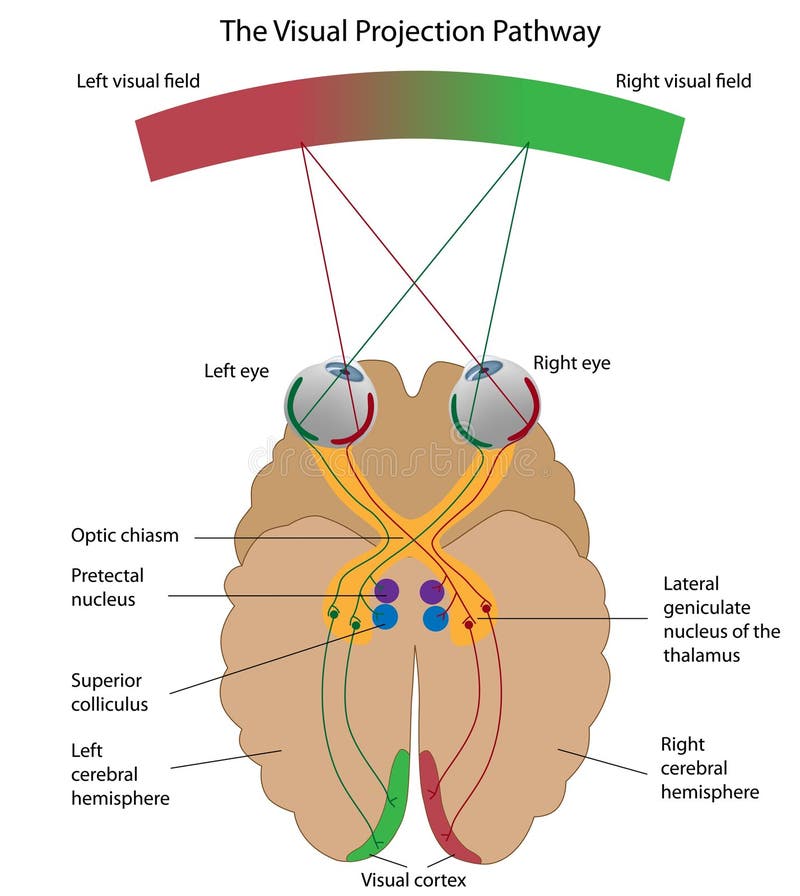
Free with trial The visual projection pathway. Diagram explaining how visual signals are received by the brain, eps8. Signals vectors The visual projection pathway. Diagram explaining how visual signals are received by the brain, eps8
Free with trial Black musical sound waves. Audio frequencies, musical impulses, electronic radio signals, radio wave curves. Signals vectors Black musical sound waves. Audio frequencies, musical impulses, electronic radio signals. Black musical sound waves. Audio frequencies, musical impulses. Black musical sound waves. Audio frequencies, musical impulses, electronic radio signals, radio wave curves
Free with trial Health Safety Signs Sign Signal Signals Collection. Collection of green health and safety signs signals isolated on white background. Eps file is available. Signals vectors Health Safety Signs Sign Signal Signals Collection. Collection of green health and safety signs signals isolated on white background. Eps file is available
Free with trial Gesture hand silhouette - black on white vector. Assorted hand silhouettes. Signals including ok, counting(1-2-3-4-5), call me, gun. Signals vectors Assorted Hand Signals. Gesture hand silhouette - black on white vector. Assorted hand silhouettes. Signals including ok, counting(1-2-3-4-5), call me, gun. Gesture hand silhouette - black on white vector. Assorted hand silhouettes. Signals including ok, counting(1-2-3-4-5), call me, gun.
Free with trial Aircraft marshalling signals. Infographics poster. Signals vectors Aircraft marshalling signals. Infographics poster
Free with trial Signal icons vector set isolated on white background, line outline style radio signals waves and light rays, radar, wifi, antenna and satellite signal symbols. Signals vectors Signal icons vector, radio signals waves and light rays symbols. Signal icons vector set isolated on white background, line outline style radio signals waves and. Signal icons vector set isolated on white background, line outline style radio signals waves and light rays, radar, wifi, antenna and satellite signal symbols
Free with trial Set of hands icons and symbols. Emoji hand icons. Different gestures, hands, signals and signs, vector illustration. Emoji hand. Signals vectors Set of hands icons and symbols. Emoji hand icons. Different gestures, hands, signals and signs, vector illustration. Set of hands icons and symbols. Emoji hand
Free with trial Set of hands icons and symbols. Emoji hand icons. Different gestures, hands, signals and signs, alpha background vector. Illustration. Signals vectors Set of hands icons and symbols. Emoji hand icons. Different gestures, hands, signals and signs, alpha background vector. Illustration
Free with trial Set of cartoon hands icons and symbols. Emoji hand icons. Different hands, gestures, signals and signs, vector. Illustration collection. Signals vectors Set of cartoon hands icons and symbols. Emoji hand icons. Different hands, gestures, signals and signs, vector. Illustration collection
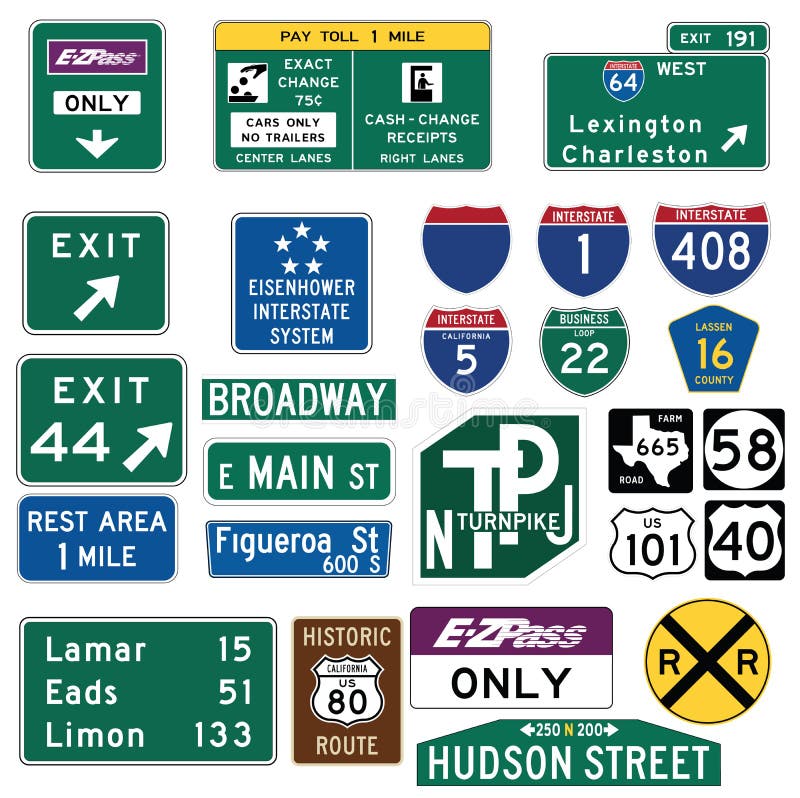
Free with trial Vector Illustration collection of the select Traffic Signs in the United States, isolated on white background. You can find other road signs in my portfolio. EPS file available. Guide signs are essential to direct road users along streets and highways, to inform them of intersecting routes, rnto direct them to cities, towns, villages, or other important destinations, to identify nearby rivers and streams, parks, forests, and historical sites, and generally to give such information as will help them along their way in the most simple, direct manner possible. rnrnIn the United States, road signs are, for the most part, standardized by federal regulations, most notably in the Manual on Uniform Traffic Control Devices (MUTCD) and its companion volume the Standard Highway Signs (SHS). There currently are no plans for adopting the Vienna Convention on Road Signs and Signals standards. Twenty-three states along with the District of Columbia and Puerto Rico use the manual without any alterations, 20 states have adopted it in conjunction with a supplemental volume, and seven states have a state version in substantial conformance to the MUTCD. There are also localized versions that are used in large cities such as New York City which use a naming system compatible with the MUTCD and/or state supplement. The MUTCD and SHS establish seven general categories of signs for road and highway use. rnrnIncluded illustrations are select examples of the MUTCD Guide Signs categories. rn. Signals vectors Traffic Guide Signs in the United States. Vector Illustration collection of the select Traffic Signs in the United States, isolated on white background. You can. Vector Illustration collection of the select Traffic Signs in the United States, isolated on white background. You can find other road signs in my portfolio. EPS file available. Guide signs are essential to direct road users along streets and highways, to inform them of intersecting routes, rnto direct them to cities, towns, villages, or other important destinations, to identify nearby rivers and streams, parks, forests, and historical sites, and generally to give such information as will help them along their way in the most simple, direct manner possible.rnrnIn the United States, road signs are, for the most part, standardized by federal regulations, most notably in the Manual on Uniform Traffic Control Devices (MUTCD) and its companion volume the Standard Highway Signs (SHS). There currently are no plans for adopting the Vienna Convention on Road Signs and Signals standards. Twenty-three states along with the District of Columbia and Puerto Rico use the manual without any alterations, 20 states have adopted it in conjunction with a supplemental volume, and seven states have a state version in substantial conformance to the MUTCD. There are also localized versions that are used in large cities such as New York City which use a naming system compatible with the MUTCD and/or state supplement. The MUTCD and SHS establish seven general categories of signs for road and highway use.rnrnIncluded illustrations are select examples of the MUTCD Guide Signs categories.rn
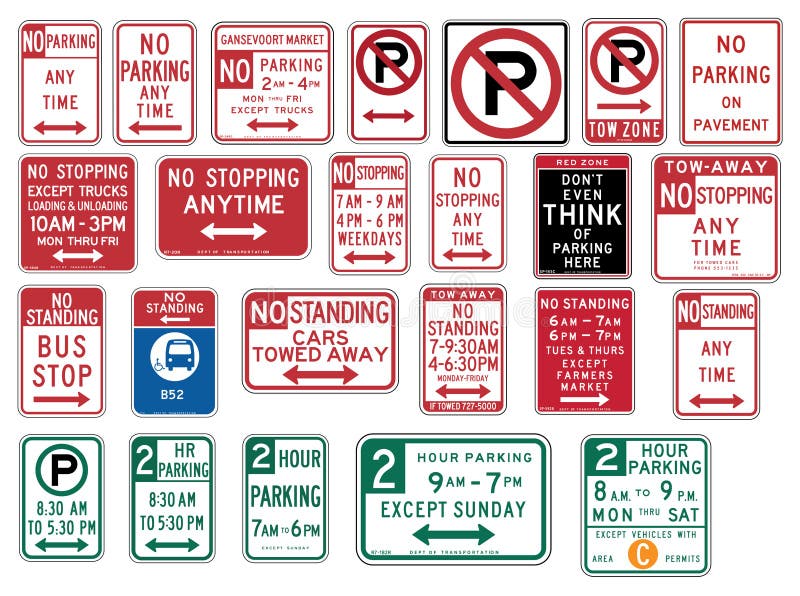
Free with trial Vector Illustration collection of the select Traffic Signs in the United States, isolated on white background. You can find other road signs in my portfolio. EPS file available. rnrnIn the United States, road signs are, for the most part, standardized by federal regulations, most notably in the Manual on Uniform Traffic Control Devices (MUTCD) and its companion volume the Standard Highway Signs (SHS). There currently are no plans for adopting the Vienna Convention on Road Signs and Signals standards. rnTwenty-three states along with the District of Columbia and Puerto Rico use the manual without any alterations, 20 states have adopted it in conjunction with a supplemental volume, and seven states have a state version in substantial conformance to the MUTCD. There are also localized versions that are used in large cities such as New York City which use a naming system compatible with the MUTCD and/or state supplement. The MUTCD and SHS establish seven general categories of signs for road and highway use. rnrnIncluded illustrations are select examples of the following MUTCD categories:rn-- R7 Series: Parkingrnrn. Signals vectors Traffic Signs in the United States - No Parking. Vector Illustration collection of the select Traffic Signs in the United States, isolated on white background. Vector Illustration collection of the select Traffic Signs in the United States, isolated on white background. You can find other road signs in my portfolio. EPS file available.rnrnIn the United States, road signs are, for the most part, standardized by federal regulations, most notably in the Manual on Uniform Traffic Control Devices (MUTCD) and its companion volume the Standard Highway Signs (SHS). There currently are no plans for adopting the Vienna Convention on Road Signs and Signals standards.rnTwenty-three states along with the District of Columbia and Puerto Rico use the manual without any alterations, 20 states have adopted it in conjunction with a supplemental volume, and seven states have a state version in substantial conformance to the MUTCD. There are also localized versions that are used in large cities such as New York City which use a naming system compatible with the MUTCD and/or state supplement. The MUTCD and SHS establish seven general categories of signs for road and highway use.rnrnIncluded illustrations are select examples of the following MUTCD categories:rn-- R7 Series: Parkingrnrn
Free with trial Neuron, nerve cell that is the main part of the nervous system. Isolated on a white background. Signals vectors Neuron. Nerve cell that is the main part of the nervous system. Isolated on a white background
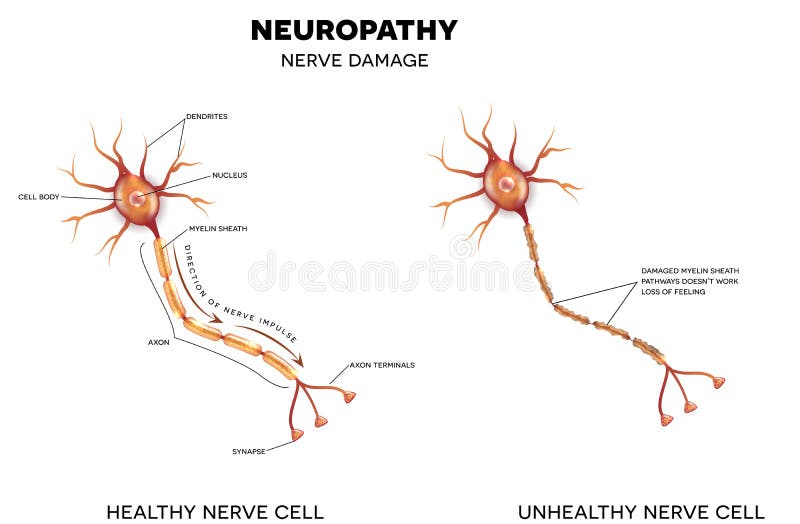
Free with trial Neuropathy, damage of nerves. This can be caused by Diabetes. Signals vectors Nerve damage. Neuropathy, damage of nerves. This can be caused by Diabetes. Neuropathy, damage of nerves. This can be caused by Diabetes.
Free with trial Car indicators. Car dashboard indicators in vector format. Signals vectors Car indicators. Car dashboard indicators in vector format
Free with trial Wood Btn. Wooden arrows easy to resize or change color. Signals vectors Wood Btn. Wooden arrows easy to resize or change color
Free with trial Neuropathy, damage of peripheral nerves. Pain and loss of sensation in the extremities. This can be caused by Diabetes. Signals vectors Neuropathy, nerve damage. Neuropathy, damage of peripheral nerves. Pain and loss of sensation in the extremities. This can be caused by Diabetes. Neuropathy, damage of peripheral nerves. Pain and loss of sensation in the extremities. This can be caused by Diabetes.
Free with trial Traffic light & status bar. Vector icons of traffic light & status bar. Signals vectors Traffic light & status bar. Vector icons of traffic light & status bar
Free with trial Thumbs down and up. Hands are making thumbs up and down signals, in two different layers. Signals vectors Thumbs down and up. Hands are making thumbs up and down signals, in two different layers
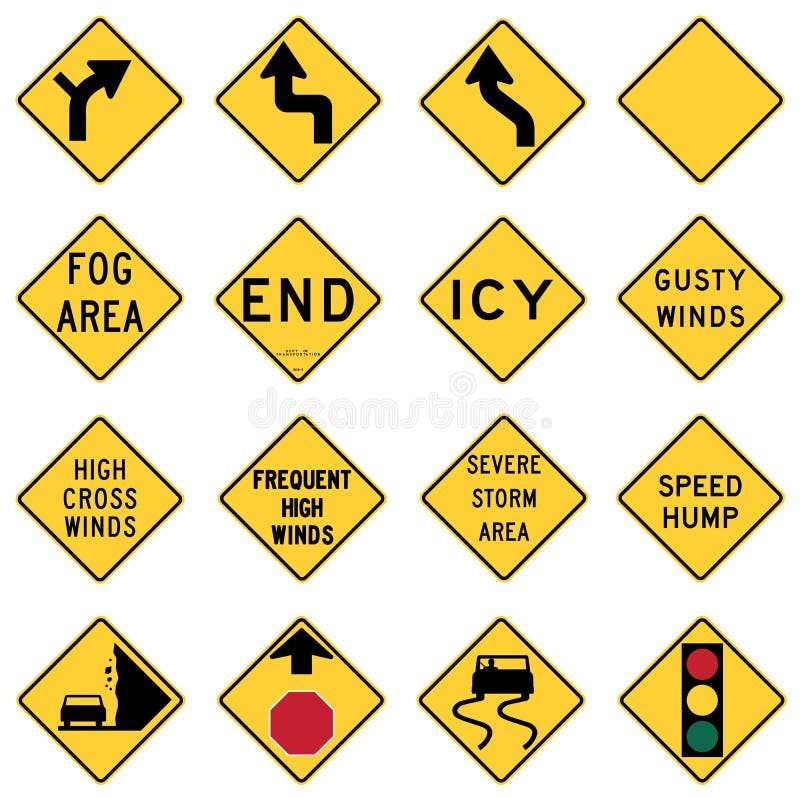
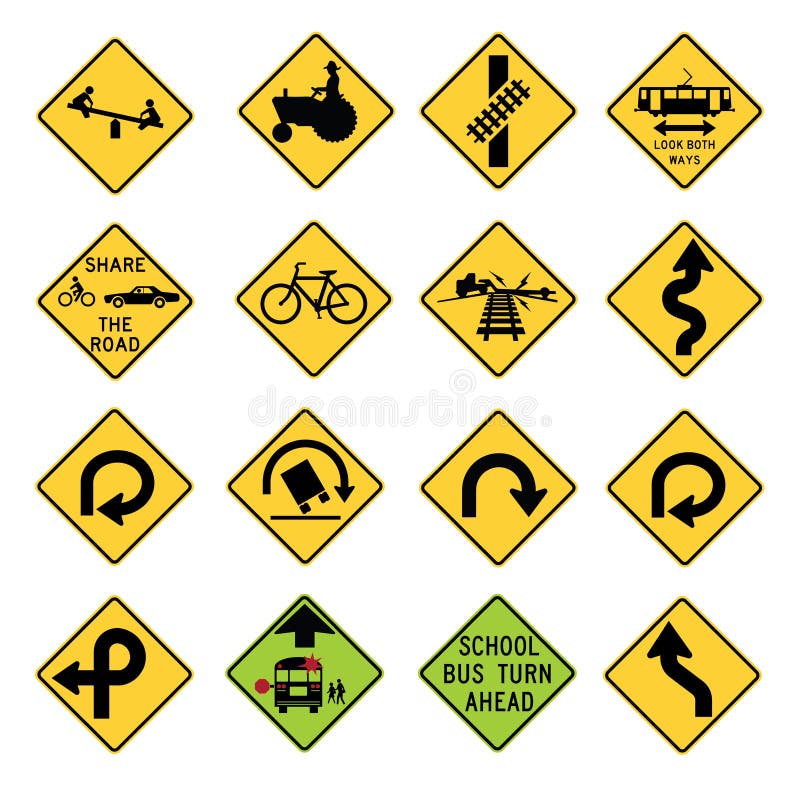
Free with trial Vector Illustration collection of the select Traffic Signs in the United States, isolated on white background. You can find other road signs in my portfolio. EPS file available. Warning signs are found in the W series of the national MUTCD. They highlight existing conditions, such as a curve, school, dead end street, or traffic signal. They can also warn possible danger such as bumps, bicycles, low flying aircraft or emergency vehicles. These signs are either yellow or fluorescent yellow in color and with the exception of a few signs are usually diamond shaped and sometimes have square or rectangular smaller signs or plaques associated with them. Most W series signs can also be found in with orange backgrounds, for temporary use in situations such as construction zones. Some of the temporary use signs are only for use in temporary situations. In the United States, road signs are, for the most part, standardized by federal regulations, most notably in the Manual on Uniform Traffic Control Devices (MUTCD) and its companion volume the Standard Highway Signs (SHS). There currently are no plans for adopting the Vienna Convention on Road Signs and Signals standards. Twenty-three states along with the District of Columbia and Puerto Rico use the manual without any alterations, 20 states have adopted it in conjunction with a supplemental volume, and seven states have a state version in substantial conformance to the MUTCD. There are also localized versions that are used in large cities such as New York City which use a naming system compatible with the MUTCD and/or state supplement. The MUTCD and SHS establish seven general categories of signs for road and highway use. Included illustrations are select examples of the MUTCD Warning Signs categories. Signals vectors Traffic Warning Signs in the United States. Vector Illustration collection of the select Traffic Signs in the United States, isolated on white background. You. Vector Illustration collection of the select Traffic Signs in the United States, isolated on white background. You can find other road signs in my portfolio. EPS file available. Warning signs are found in the W series of the national MUTCD. They highlight existing conditions, such as a curve, school, dead end street, or traffic signal. They can also warn possible danger such as bumps, bicycles, low flying aircraft or emergency vehicles. These signs are either yellow or fluorescent yellow in color and with the exception of a few signs are usually diamond shaped and sometimes have square or rectangular smaller signs or plaques associated with them. Most W series signs can also be found in with orange backgrounds, for temporary use in situations such as construction zones. Some of the temporary use signs are only for use in temporary situations. In the United States, road signs are, for the most part, standardized by federal regulations, most notably in the Manual on Uniform Traffic Control Devices (MUTCD) and its companion volume the Standard Highway Signs (SHS). There currently are no plans for adopting the Vienna Convention on Road Signs and Signals standards. Twenty-three states along with the District of Columbia and Puerto Rico use the manual without any alterations, 20 states have adopted it in conjunction with a supplemental volume, and seven states have a state version in substantial conformance to the MUTCD. There are also localized versions that are used in large cities such as New York City which use a naming system compatible with the MUTCD and/or state supplement. The MUTCD and SHS establish seven general categories of signs for road and highway use. Included illustrations are select examples of the MUTCD Warning Signs categories.
Free with trial Vector Illustration collection of the select Traffic Signs in the United States, isolated on white background. You can find other road signs in my portfolio. EPS file available. Warning signs are found in the W series of the national MUTCD. They highlight existing conditions, such as a curve, school, dead end street, or traffic signal. They can also warn possible danger such as bumps, bicycles, low flying aircraft or emergency vehicles. These signs are either yellow or fluorescent yellow in color and with the exception of a few signs are usually diamond shaped and sometimes have square or rectangular smaller signs or plaques associated with them. Most W series signs can also be found in with orange backgrounds, for temporary use in situations such as construction zones. Some of the temporary use signs are only for use in temporary situations. In the United States, road signs are, for the most part, standardized by federal regulations, most notably in the Manual on Uniform Traffic Control Devices (MUTCD) and its companion volume the Standard Highway Signs (SHS). There currently are no plans for adopting the Vienna Convention on Road Signs and Signals standards. Twenty-three states along with the District of Columbia and Puerto Rico use the manual without any alterations, 20 states have adopted it in conjunction with a supplemental volume, and seven states have a state version in substantial conformance to the MUTCD. There are also localized versions that are used in large cities such as New York City which use a naming system compatible with the MUTCD and/or state supplement. The MUTCD and SHS establish seven general categories of signs for road and highway use. Included illustrations are select examples of the MUTCD Warning Signs categories. Signals vectors Traffic Warning Signs in the United States. Vector Illustration collection of the select Traffic Signs in the United States, isolated on white background. You. Vector Illustration collection of the select Traffic Signs in the United States, isolated on white background. You can find other road signs in my portfolio. EPS file available. Warning signs are found in the W series of the national MUTCD. They highlight existing conditions, such as a curve, school, dead end street, or traffic signal. They can also warn possible danger such as bumps, bicycles, low flying aircraft or emergency vehicles. These signs are either yellow or fluorescent yellow in color and with the exception of a few signs are usually diamond shaped and sometimes have square or rectangular smaller signs or plaques associated with them. Most W series signs can also be found in with orange backgrounds, for temporary use in situations such as construction zones. Some of the temporary use signs are only for use in temporary situations. In the United States, road signs are, for the most part, standardized by federal regulations, most notably in the Manual on Uniform Traffic Control Devices (MUTCD) and its companion volume the Standard Highway Signs (SHS). There currently are no plans for adopting the Vienna Convention on Road Signs and Signals standards. Twenty-three states along with the District of Columbia and Puerto Rico use the manual without any alterations, 20 states have adopted it in conjunction with a supplemental volume, and seven states have a state version in substantial conformance to the MUTCD. There are also localized versions that are used in large cities such as New York City which use a naming system compatible with the MUTCD and/or state supplement. The MUTCD and SHS establish seven general categories of signs for road and highway use. Included illustrations are select examples of the MUTCD Warning Signs categories.
Free with trial Neuron, nerve cell that is the main part of the nervous system. Cross section detailed anatomy, nucleus and other organelles of the cell. Signals vectors Neuron, nerve cell anatomy. Neuron, nerve cell that is the main part of the nervous system. Cross section detailed anatomy, nucleus and other organelles of the. Neuron, nerve cell that is the main part of the nervous system. Cross section detailed anatomy, nucleus and other organelles of the cell.
Free with trial Cardboard signs. Differents black cardboard signs / pictograms / icons. Signals vectors Cardboard signs. Differents black cardboard signs / pictograms / icons
Free with trial Traffic sign - roadworks. Signals vectors Traffic Sign. Roadworks. Traffic sign - roadworks
Free with trial Speeding Car. Ignoring signs and signals. Signals vectors Speeding Car. Ignoring signs and signals
Free with trial Phone signal and battery icons. Vector mobile interface top bar icon set for network signals and telephone charge levels status. Signals vectors Phone signal and battery icons. Vector mobile interface top bar icon set for network signals and telephone charge levels status
Free with trial Retina structure. Eye and Vision. structure of the retina. Rods and Cones. Vector diagram. Signals vectors Retina structure. Eye and Vision. structure of the retina. Rods and Cones. Vector diagram
Free with trial Phone services icons. Illustrated icons for phone services as support 24 hours, help, free calls. Signals vectors Phone services icons. Illustrated icons for phone services as support 24 hours, help, free calls
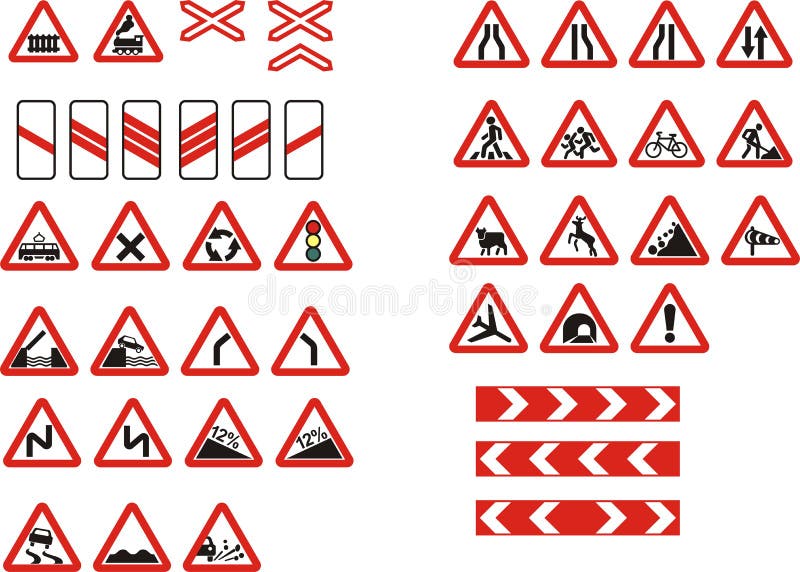
Free with trial Cautionary road sign. Safety traffic. Signals vectors Cautionary road sign. Safety traffic
Free with trial Urban Telecommunications. Telecom tower with radio signals and an urban background. Signals vectors Urban Telecommunications. Telecom tower with radio signals and an urban background
Free with trial Neuron detailed anatomy illustrations. Neuron types, myelin sheath formation, organelles of the neuron body and synapse. Signals vectors The neuron anatomy poster. Neuron detailed anatomy illustrations. Neuron types, myelin sheath formation, organelles of the neuron body and synapse. Neuron detailed anatomy illustrations. Neuron types, myelin sheath formation, organelles of the neuron body and synapse.
Free with trial Labeled diagram of the neuron, nerve cell that is the main part of the nervous system. Signals vectors Labeled diagram of the neuron. Nerve cell that is the main part of the nervous system
Free with trial American Sign Language Hand Signing. Graphic representation of the American sign language hand symbols. Signals vectors American Sign Language Hand Signing. Graphic representation of the American sign language hand symbols
Free with trial Multiple sclerosis is a specific immune system malfunction which causes damage to healthy nerves, disrupting the flow of nerve signals. immune system eats away at the protective sheath that covers nerves. Vector diagram. Signals vectors Nerve affected by multiple sclerosis. Multiple sclerosis is a specific immune system malfunction which causes damage to healthy nerves, disrupting the flow of. Multiple sclerosis is a specific immune system malfunction which causes damage to healthy nerves, disrupting the flow of nerve signals. immune system eats away at the protective sheath that covers nerves. Vector diagram
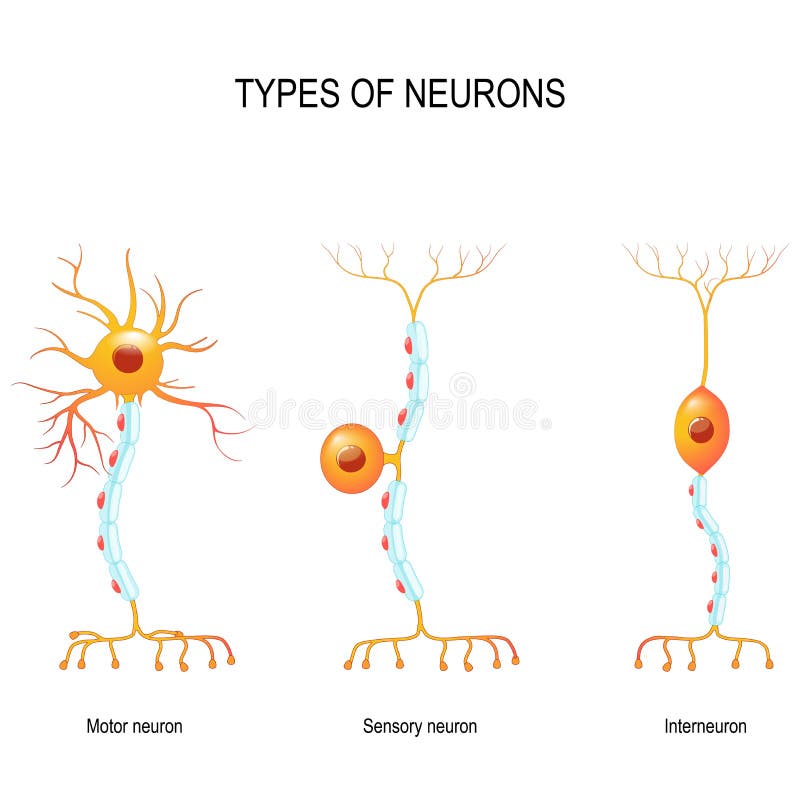
Free with trial Types of neurons: sensory and motor neurons, and interneuron. Humans nervous system. Vector diagram for educational, biological, medical and science use. Signals vectors Sensory neuron, motor neuron, and interneuron. Types of neurons: sensory and motor neurons, and interneuron. Humans nervous system. Vector diagram for. Types of neurons: sensory and motor neurons, and interneuron. Humans nervous system. Vector diagram for educational, biological, medical and science use
Free with trial The process of injury, resulting inflammation and resolution. Signals vectors Injury and inflammation. The process of injury, resulting inflammation and resolution. The process of injury, resulting inflammation and resolution.
Free with trial Structure of a typical chemical synapse. neurotransmitter release mechanisms. Neurotransmitters are packaged into synaptic vesicles transmit signals from a neuron to a target cell across a synapse. Vector diagram. Signals vectors Structure of a typical chemical synapse. Neurotransmitter release mechanisms. Neurotransmitters are packaged into synaptic vesicles transmit signals from a
Free with trial A neuron, also known as a neurone and nerve cell, is an electrically excitable cell that receives, processes, and transmits information through electrical and chemical signals. Signals vectors Types of Neurons - sensory, intereuron, motor. A neuron, also known as a neurone and nerve cell, is an electrically excitable cell that receives, processes, and. A neuron, also known as a neurone and nerve cell, is an electrically excitable cell that receives, processes, and transmits information through electrical and chemical signals.
Free with trial Types of heart disease collection, vector illustration diagram. Educational medical information. Signals vectors Types of heart disease collection, vector illustration diagram. Educational medical information.
Free with trial Vector and illustration: Traffic jam icon set. Included icons as congestion, transport, broken car, road and more. Signals vectors Traffic jam icon set. Included icons as congestion, transport, broken car, road and more. Vector and illustration: Traffic jam icon set. Included icons as. Vector and illustration: Traffic jam icon set. Included icons as congestion, transport, broken car, road and more.
Free with trial International maritime signal nautical flags, morse alphabet for print or internet. Best for education. Signals vectors International maritime signal nautical flags, morse alphabet. For print or internet. Best for education
Free with trial The car race vector pack. A beautiful vector illustration of a race car objects including different elements. Signals vectors The car race vector pack. A beautiful vector illustration of a race car objects including different elements
Free with trial Indian making smoke signals. Cartoon illustration of a Indian making smoke signals. Signals vectors Indian making smoke signals. Cartoon illustration of a Indian making smoke signals
Free with trial A set of stickman pictogram representing a set of basketball referee hand signals for the basketball game. Signals vectors Basketball Referees Officials Hand Signals Cliparts. A set of stickman pictogram representing a set of basketball referee hand signals for the basketball game. A set of stickman pictogram representing a set of basketball referee hand signals for the basketball game.
Free with trial Icce hockey Officials or referee Signals. The Officials Hand Signals 26 different signals are illustrated. Signals vectors Icce hockey Officials or referee Signals. The Officials Hand Signals 26 different signals are illustrated
Free with trial A set of stickman pictogram representing the hand signals and gestures of a football soccer referee signals. Signals vectors Football Soccer Referees Officials Hand Signals Cliparts. A set of stickman pictogram representing the hand signals and gestures of a football soccer referee. A set of stickman pictogram representing the hand signals and gestures of a football soccer referee signals.
Free with trial Traffic signals. Collection of traffic signals in different stages of changes. Signals vectors Traffic signals. Collection of traffic signals in different stages of changes
Free with trial Basic Mathematical Operations Signals (Addition, Subtraction,Multiplication,Division,Total). Signals vectors Basic Math Signals. Basic Mathematical Operations Signals (Addition, Subtraction,Multiplication,Division,Total. Basic Mathematical Operations Signals (Addition, Subtraction,Multiplication,Division,Total)
Free with trial Railway crossing signals. Set of different railway crossing signals with warning signs. Signals vectors Railway crossing signals. Set of different railway crossing signals with warning signs
Free with trial Signal wave set. Vector analog signals and digital sound waves forms. Amplitude audio wave illustration. Signals vectors Signal wave set. Vector analog signals and digital sound waves forms. Amplitude audio wave illustration
Free with trial Traffic signals - GO!. Signals vectors Traffic Signal Icon. Traffic signals - GO. Traffic signals - GO!
Free with trial Basic dog commands and behavioral training icons set. Vector illustrations of a person giving hand signals for the dog to follow in obedient learning. Signals vectors Basic dog commands and behavioral training icons set. Vector illustrations of a person giving hand signals for the dog to follow in obedient learning
Free with trial Synaptic transmission. Structure of a typical chemical synapse. Neurotransmitter release mechanisms. Neurotransmitters are packaged into synaptic vesicles transmit signals from a neuron to a target cell. Signals vectors Synaptic transmission. Structure of chemical synapse. Synaptic transmission. Structure of a typical chemical synapse. Neurotransmitter release mechanisms. Synaptic transmission. Structure of a typical chemical synapse. Neurotransmitter release mechanisms. Neurotransmitters are packaged into synaptic vesicles transmit signals from a neuron to a target cell.
Free with trial Wireless wifi and radio signals icons. Antenna, mobile signal and wave vector symbols isolated. Radio antenna and wireless network illustration. Signals vectors Wireless wifi and radio signals icons. Antenna, mobile signal and wave vector symbols isolated. Radio antenna and wireless network illustration
Free with trial Cell signaling. Signalling mechanism in cells: intracrine, autocrine and endocrine signals. Signals vectors Cell signaling. intracrine, autocrine and endocrine signals. Cell signaling. Signalling mechanism in cells: intracrine, autocrine and endocrine signals. Cell signaling. Signalling mechanism in cells: intracrine, autocrine and endocrine signals.
Free with trial Traffic signals on stop. Signals vectors Traffic Signal Icon. Traffic signals on stop. Traffic signals on stop.
Free with trial Helicopter marshalling signals. Infographics poster. Signals vectors Helicopter marshalling signals. Infographics poster
Free with trial Sound frequency waves. Analog curved signal symbols. Audio track music equalizer forms, soundwaves signals vector set. Wavy signal electronic equalizer illustration. Signals vectors Sound frequency waves. Analog curved signal symbols. Audio track music equalizer forms, soundwaves signals vector set. Wavy signal electronic equalizer
Free with trial Spinal Reflex Arc scheme, vector illustration, with stimulus pathway through the nerve signals and effector organ muscle response. Educational diagram with fun cartoon characters. Signals vectors Spinal Reflex Arc scheme, vector illustration, with stimulus pathway through the nerve signals. Fun cartoon characters. Spinal Reflex Arc scheme, vector. Spinal Reflex Arc scheme, vector illustration, with stimulus pathway through the nerve signals and effector organ muscle response. Educational diagram with fun cartoon characters.
Free with trial Audio waveform signals, wave song equalizer, stereo recorder sound visualization. Soundtrack signal spectrum and studio melody beat vector frequency meter concept on dark background. Signals vectors Audio waveform signals, wave song equalizer, stereo recorder sound visualization. Soundtrack signal and melody beat. Audio waveform signals, wave song equalizer. Audio waveform signals, wave song equalizer, stereo recorder sound visualization. Soundtrack signal spectrum and studio melody beat vector frequency meter concept on dark background
Free with trial Silhouette of Football Signals. Silhouette of an NFL referee signalling common American football fouls. Signals vectors Silhouette of Football Signals. Silhouette of an NFL referee signalling common American football fouls
Free with trial Realistic human hands icons and symbols set. Emoji hand icons. Different gestures, hands, signals and signs emotions. Vector illustration. Signals vectors Realistic human hands icons and symbols set. Emoji hand icons. Different gestures, hands, signals and signs emotions. Vector illustration
Free with trial International signals used by ships at sea, used to spell out short messages, or used individually or in combination each with a special meaning. Signals vectors Maritime signal flags J-R. International signals used by ships at sea, used to spell out short messages, or used individually or in combination each with a. International signals used by ships at sea, used to spell out short messages, or used individually or in combination each with a special meaning
Free with trial Wood Btn. Wooden arrows easy to resize or change color. Signals vectors Wood Btn. Wooden arrows easy to resize or change color
Free with trial Live on air. Illustration of two luminous signals for On Air and Live, in two instances: on and off. Signals vectors Live on air. Illustration of two luminous signals for On Air and Live, in two instances: on and off
Free with trial Phone telecommunication logo. Vector illustrations as logos and brands for mobile, phone, communication company with stylized phones, and signals. Signals vectors Phone telecommunication logo. Vector illustrations as logos and brands for mobile, phone, communication company with stylized phones, and signals
Free with trial Labyrinth forest. Cartoon labyrinth forest. Hand drawn vector illustration. Signals vectors Labyrinth forest. Cartoon labyrinth forest. Hand drawn vector illustration
Free with trial Traffic Light. The traffic Light - see no evil, hear no evil, speak no evil - Vectorial. Signals vectors Traffic Light. The traffic Light - see no evil, hear no evil, speak no evil - Vectorial
Free with trial Image of a radio tower with blue background. Signals vectors Communications Tower. Image of a radio tower with blue background. Image of a radio tower with blue background.
Free with trial Image of a communications tower with blue background. Signals vectors Communications Tower. Image of a communications tower with blue background. Image of a communications tower with blue background.
Free with trial Image of a radio tower with blue background with clouds. Signals vectors Communications Tower. Image of a radio tower with blue background with clouds. Image of a radio tower with blue background with clouds.
Free with trial Neuron, nerve cell detailed anatomy cross section illustration with organelles. Signals vectors Neuron. Nerve cell detailed anatomy cross section illustration with organelles
Free with trial Hands. Vector illustration of hands. Useful for the instruction how to create sth. Signals vectors Hands. Vector illustration of hands. Useful for the instruction how to create sth
Free with trial Hands. And red hearts on a black background. Signals vectors Hands. And red hearts on a black background
Free with trial Hands. Silhouette of Both Hands - (jpeg file has clipping path. Signals vectors Hands. Silhouette of Both Hands - (jpeg file has clipping path
Free with trial Nerve. Neuron, nerve cell that is the main part of the nervous system. Cross section detailed anatomy, nucleus and other organelles of the cell. Signals vectors Nerve. Neuron, nerve cell that is the main part of the nervous system. Cross section detailed anatomy, nucleus and other organelles of the cell
Free with trial Traffic sign - roundabout. Signals vectors Traffic Sign. Roundabout. Traffic sign - roundabout
Free with trial Telemedicine. Distant doctor performing a consultation via satellite. Signals vectors Telemedicine. Distant doctor performing a consultation via satellite
Free with trial Neuron types, nerve cells that is the main part of the nervous system. Signals vectors Neuron types. Nerve cells that is the main part of the nervous system
 Sign in