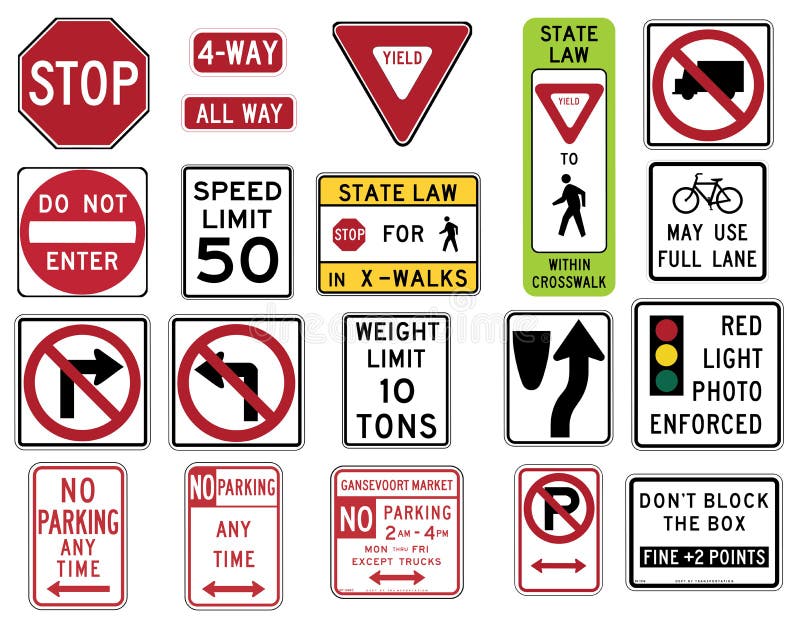
Free with trial Vector Illustration collection of the select Traffic Signs in the United States, isolated on white background. You can find other road signs in my portfolio. EPS file available. In the United States, road signs are, for the most part, standardized by federal regulations, most notably in the Manual on Uniform Traffic Control Devices (MUTCD) and its companion volume the Standard Highway Signs (SHS). There currently are no plans for adopting the Vienna Convention on Road Signs and Signals standards. Twenty-three states along with the District of Columbia and Puerto Rico use the manual without any alterations, 20 states have adopted it in conjunction with a supplemental volume, and seven states have a state version in substantial conformance to the MUTCD. There are also localized versions that are used in large cities such as New York City which use a naming system compatible with the MUTCD and/or state supplement. The MUTCD and SHS establish seven general categories of signs for road and highway use. Included illustrations are select examples of the following MUTCD categories: -- R1 Series STOP and YIELD -- R2 Series Speed Limit -- R3 Series Lane Usage and Turns (Left and Right Turn) -- R4 Regulation of Movement -- R5 Series: Exclusionary -- R7 Series: Parking. Standardized vectors Traffic Signs in the United States - Regulatory Series. Vector Illustration collection of the select Traffic Signs in the United States, isolated on white. Vector Illustration collection of the select Traffic Signs in the United States, isolated on white background. You can find other road signs in my portfolio. EPS file available. In the United States, road signs are, for the most part, standardized by federal regulations, most notably in the Manual on Uniform Traffic Control Devices (MUTCD) and its companion volume the Standard Highway Signs (SHS). There currently are no plans for adopting the Vienna Convention on Road Signs and Signals standards. Twenty-three states along with the District of Columbia and Puerto Rico use the manual without any alterations, 20 states have adopted it in conjunction with a supplemental volume, and seven states have a state version in substantial conformance to the MUTCD. There are also localized versions that are used in large cities such as New York City which use a naming system compatible with the MUTCD and/or state supplement. The MUTCD and SHS establish seven general categories of signs for road and highway use. Included illustrations are select examples of the following MUTCD categories: -- R1 Series STOP and YIELD -- R2 Series Speed Limit -- R3 Series Lane Usage and Turns (Left and Right Turn) -- R4 Regulation of Movement -- R5 Series: Exclusionary -- R7 Series: Parking
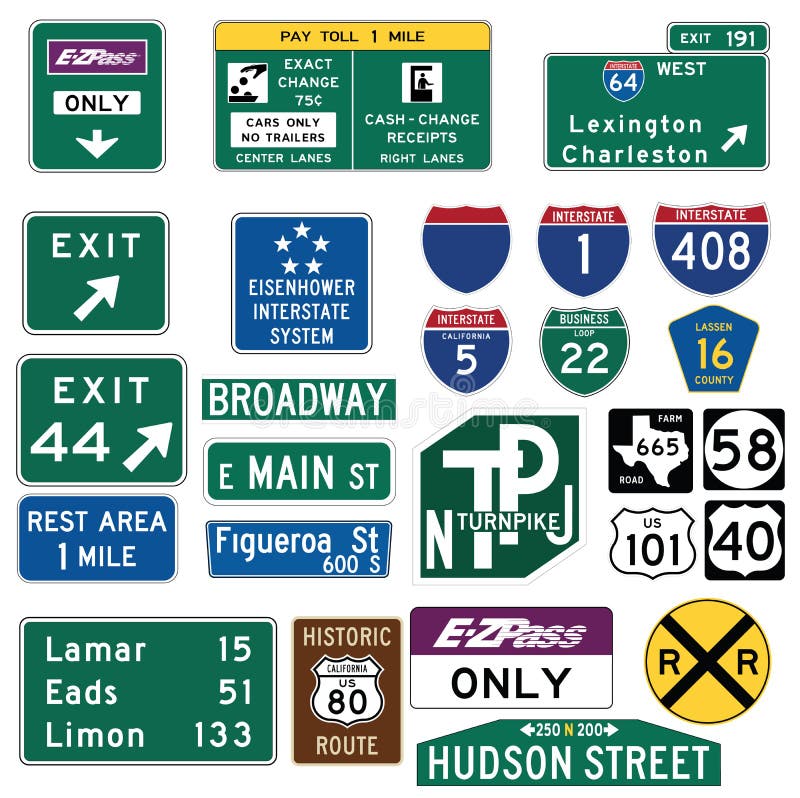
Free with trial Vector Illustration collection of the select Traffic Signs in the United States, isolated on white background. You can find other road signs in my portfolio. EPS file available. Guide signs are essential to direct road users along streets and highways, to inform them of intersecting routes, rnto direct them to cities, towns, villages, or other important destinations, to identify nearby rivers and streams, parks, forests, and historical sites, and generally to give such information as will help them along their way in the most simple, direct manner possible. rnrnIn the United States, road signs are, for the most part, standardized by federal regulations, most notably in the Manual on Uniform Traffic Control Devices (MUTCD) and its companion volume the Standard Highway Signs (SHS). There currently are no plans for adopting the Vienna Convention on Road Signs and Signals standards. Twenty-three states along with the District of Columbia and Puerto Rico use the manual without any alterations, 20 states have adopted it in conjunction with a supplemental volume, and seven states have a state version in substantial conformance to the MUTCD. There are also localized versions that are used in large cities such as New York City which use a naming system compatible with the MUTCD and/or state supplement. The MUTCD and SHS establish seven general categories of signs for road and highway use. rnrnIncluded illustrations are select examples of the MUTCD Guide Signs categories. rn. Standardized vectors Traffic Guide Signs in the United States. Vector Illustration collection of the select Traffic Signs in the United States, isolated on white background. You can. Vector Illustration collection of the select Traffic Signs in the United States, isolated on white background. You can find other road signs in my portfolio. EPS file available. Guide signs are essential to direct road users along streets and highways, to inform them of intersecting routes, rnto direct them to cities, towns, villages, or other important destinations, to identify nearby rivers and streams, parks, forests, and historical sites, and generally to give such information as will help them along their way in the most simple, direct manner possible.rnrnIn the United States, road signs are, for the most part, standardized by federal regulations, most notably in the Manual on Uniform Traffic Control Devices (MUTCD) and its companion volume the Standard Highway Signs (SHS). There currently are no plans for adopting the Vienna Convention on Road Signs and Signals standards. Twenty-three states along with the District of Columbia and Puerto Rico use the manual without any alterations, 20 states have adopted it in conjunction with a supplemental volume, and seven states have a state version in substantial conformance to the MUTCD. There are also localized versions that are used in large cities such as New York City which use a naming system compatible with the MUTCD and/or state supplement. The MUTCD and SHS establish seven general categories of signs for road and highway use.rnrnIncluded illustrations are select examples of the MUTCD Guide Signs categories.rn
Free with trial Man hold clipboard with Assessment, green ticks checkmarks and pen. Checklist, Test complete tasks, to-do list, survey, exam concepts. Flat design, vector illustration on background. Best quality. Standardized vectors Man hold clipboard with Assessment, green ticks checkmarks and pen. Checklist, Test complete tasks, to-do list, survey. Exam concepts. Flat design, vector. Man hold clipboard with Assessment, green ticks checkmarks and pen. Checklist, Test complete tasks, to-do list, survey, exam concepts. Flat design, vector illustration on background. Best quality
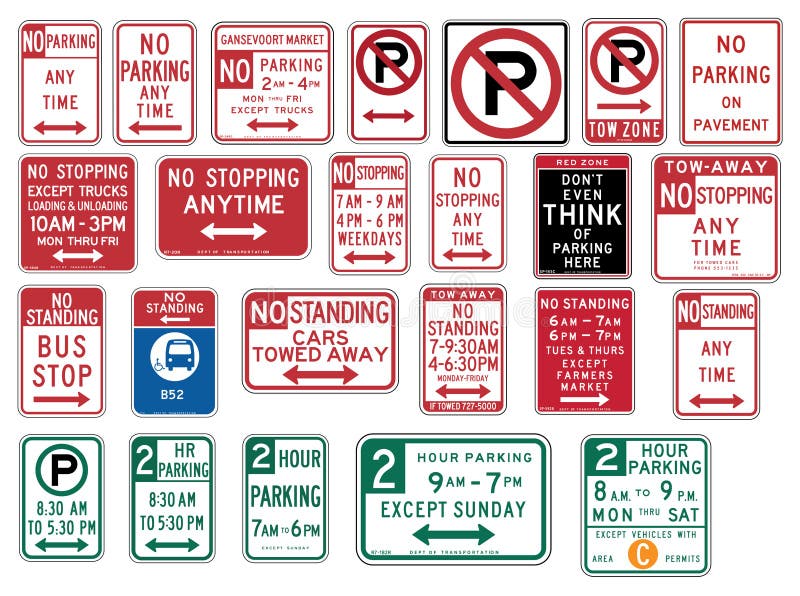
Free with trial Vector Illustration collection of the select Traffic Signs in the United States, isolated on white background. You can find other road signs in my portfolio. EPS file available. rnrnIn the United States, road signs are, for the most part, standardized by federal regulations, most notably in the Manual on Uniform Traffic Control Devices (MUTCD) and its companion volume the Standard Highway Signs (SHS). There currently are no plans for adopting the Vienna Convention on Road Signs and Signals standards. rnTwenty-three states along with the District of Columbia and Puerto Rico use the manual without any alterations, 20 states have adopted it in conjunction with a supplemental volume, and seven states have a state version in substantial conformance to the MUTCD. There are also localized versions that are used in large cities such as New York City which use a naming system compatible with the MUTCD and/or state supplement. The MUTCD and SHS establish seven general categories of signs for road and highway use. rnrnIncluded illustrations are select examples of the following MUTCD categories:rn-- R7 Series: Parkingrnrn. Standardized vectors Traffic Signs in the United States - No Parking. Vector Illustration collection of the select Traffic Signs in the United States, isolated on white background. Vector Illustration collection of the select Traffic Signs in the United States, isolated on white background. You can find other road signs in my portfolio. EPS file available.rnrnIn the United States, road signs are, for the most part, standardized by federal regulations, most notably in the Manual on Uniform Traffic Control Devices (MUTCD) and its companion volume the Standard Highway Signs (SHS). There currently are no plans for adopting the Vienna Convention on Road Signs and Signals standards.rnTwenty-three states along with the District of Columbia and Puerto Rico use the manual without any alterations, 20 states have adopted it in conjunction with a supplemental volume, and seven states have a state version in substantial conformance to the MUTCD. There are also localized versions that are used in large cities such as New York City which use a naming system compatible with the MUTCD and/or state supplement. The MUTCD and SHS establish seven general categories of signs for road and highway use.rnrnIncluded illustrations are select examples of the following MUTCD categories:rn-- R7 Series: Parkingrnrn
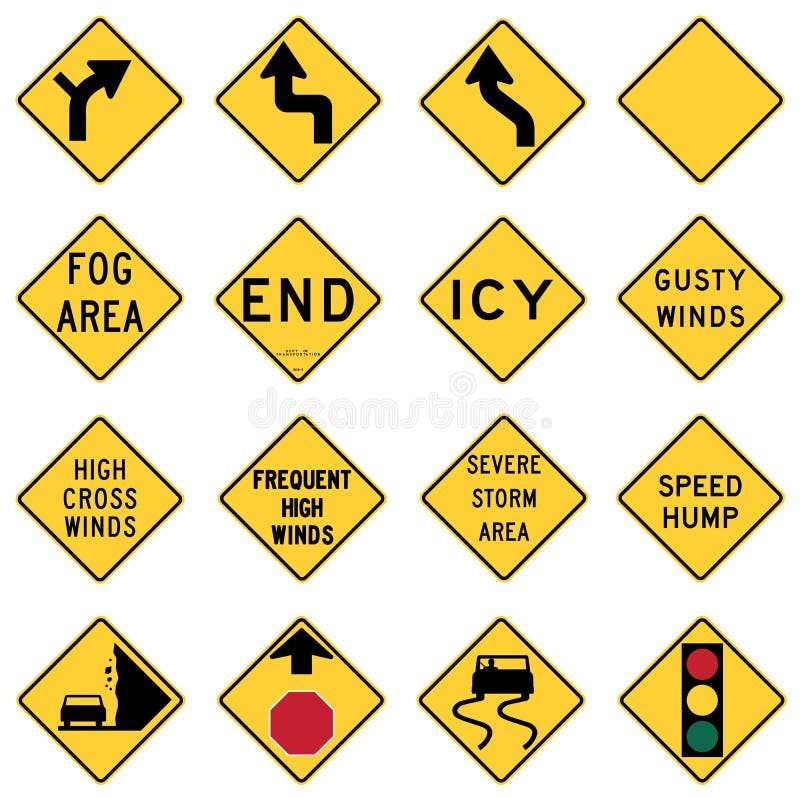
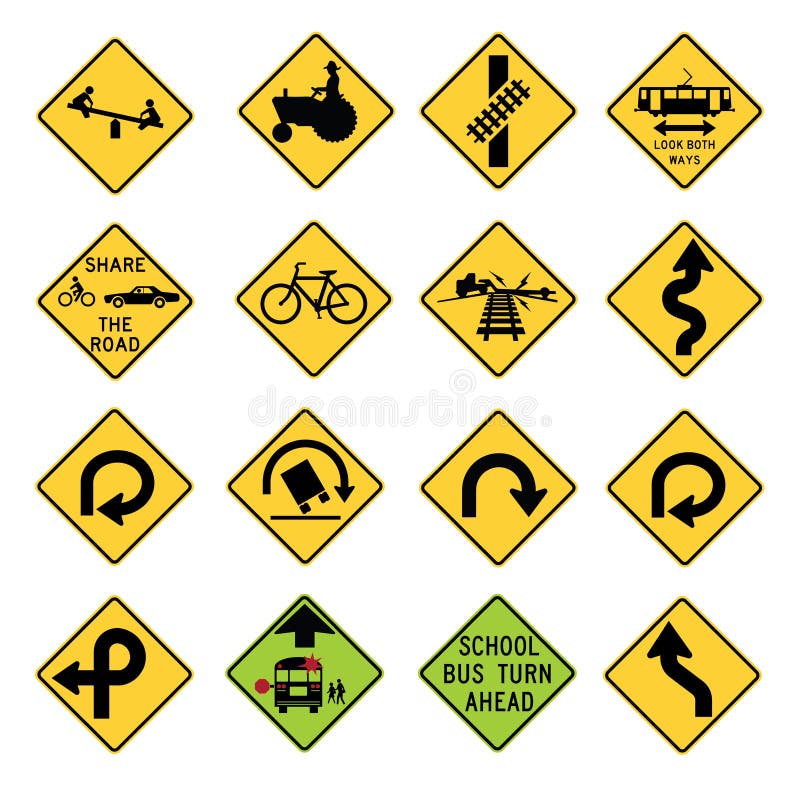
Free with trial Vector Illustration collection of the select Traffic Signs in the United States, isolated on white background. You can find other road signs in my portfolio. EPS file available. Warning signs are found in the W series of the national MUTCD. They highlight existing conditions, such as a curve, school, dead end street, or traffic signal. They can also warn possible danger such as bumps, bicycles, low flying aircraft or emergency vehicles. These signs are either yellow or fluorescent yellow in color and with the exception of a few signs are usually diamond shaped and sometimes have square or rectangular smaller signs or plaques associated with them. Most W series signs can also be found in with orange backgrounds, for temporary use in situations such as construction zones. Some of the temporary use signs are only for use in temporary situations. In the United States, road signs are, for the most part, standardized by federal regulations, most notably in the Manual on Uniform Traffic Control Devices (MUTCD) and its companion volume the Standard Highway Signs (SHS). There currently are no plans for adopting the Vienna Convention on Road Signs and Signals standards. Twenty-three states along with the District of Columbia and Puerto Rico use the manual without any alterations, 20 states have adopted it in conjunction with a supplemental volume, and seven states have a state version in substantial conformance to the MUTCD. There are also localized versions that are used in large cities such as New York City which use a naming system compatible with the MUTCD and/or state supplement. The MUTCD and SHS establish seven general categories of signs for road and highway use. Included illustrations are select examples of the MUTCD Warning Signs categories. Standardized vectors Traffic Warning Signs in the United States. Vector Illustration collection of the select Traffic Signs in the United States, isolated on white background. You. Vector Illustration collection of the select Traffic Signs in the United States, isolated on white background. You can find other road signs in my portfolio. EPS file available. Warning signs are found in the W series of the national MUTCD. They highlight existing conditions, such as a curve, school, dead end street, or traffic signal. They can also warn possible danger such as bumps, bicycles, low flying aircraft or emergency vehicles. These signs are either yellow or fluorescent yellow in color and with the exception of a few signs are usually diamond shaped and sometimes have square or rectangular smaller signs or plaques associated with them. Most W series signs can also be found in with orange backgrounds, for temporary use in situations such as construction zones. Some of the temporary use signs are only for use in temporary situations. In the United States, road signs are, for the most part, standardized by federal regulations, most notably in the Manual on Uniform Traffic Control Devices (MUTCD) and its companion volume the Standard Highway Signs (SHS). There currently are no plans for adopting the Vienna Convention on Road Signs and Signals standards. Twenty-three states along with the District of Columbia and Puerto Rico use the manual without any alterations, 20 states have adopted it in conjunction with a supplemental volume, and seven states have a state version in substantial conformance to the MUTCD. There are also localized versions that are used in large cities such as New York City which use a naming system compatible with the MUTCD and/or state supplement. The MUTCD and SHS establish seven general categories of signs for road and highway use. Included illustrations are select examples of the MUTCD Warning Signs categories.
Free with trial Vector Illustration collection of the select Traffic Signs in the United States, isolated on white background. You can find other road signs in my portfolio. EPS file available. Warning signs are found in the W series of the national MUTCD. They highlight existing conditions, such as a curve, school, dead end street, or traffic signal. They can also warn possible danger such as bumps, bicycles, low flying aircraft or emergency vehicles. These signs are either yellow or fluorescent yellow in color and with the exception of a few signs are usually diamond shaped and sometimes have square or rectangular smaller signs or plaques associated with them. Most W series signs can also be found in with orange backgrounds, for temporary use in situations such as construction zones. Some of the temporary use signs are only for use in temporary situations. In the United States, road signs are, for the most part, standardized by federal regulations, most notably in the Manual on Uniform Traffic Control Devices (MUTCD) and its companion volume the Standard Highway Signs (SHS). There currently are no plans for adopting the Vienna Convention on Road Signs and Signals standards. Twenty-three states along with the District of Columbia and Puerto Rico use the manual without any alterations, 20 states have adopted it in conjunction with a supplemental volume, and seven states have a state version in substantial conformance to the MUTCD. There are also localized versions that are used in large cities such as New York City which use a naming system compatible with the MUTCD and/or state supplement. The MUTCD and SHS establish seven general categories of signs for road and highway use. Included illustrations are select examples of the MUTCD Warning Signs categories. Standardized vectors Traffic Warning Signs in the United States. Vector Illustration collection of the select Traffic Signs in the United States, isolated on white background. You. Vector Illustration collection of the select Traffic Signs in the United States, isolated on white background. You can find other road signs in my portfolio. EPS file available. Warning signs are found in the W series of the national MUTCD. They highlight existing conditions, such as a curve, school, dead end street, or traffic signal. They can also warn possible danger such as bumps, bicycles, low flying aircraft or emergency vehicles. These signs are either yellow or fluorescent yellow in color and with the exception of a few signs are usually diamond shaped and sometimes have square or rectangular smaller signs or plaques associated with them. Most W series signs can also be found in with orange backgrounds, for temporary use in situations such as construction zones. Some of the temporary use signs are only for use in temporary situations. In the United States, road signs are, for the most part, standardized by federal regulations, most notably in the Manual on Uniform Traffic Control Devices (MUTCD) and its companion volume the Standard Highway Signs (SHS). There currently are no plans for adopting the Vienna Convention on Road Signs and Signals standards. Twenty-three states along with the District of Columbia and Puerto Rico use the manual without any alterations, 20 states have adopted it in conjunction with a supplemental volume, and seven states have a state version in substantial conformance to the MUTCD. There are also localized versions that are used in large cities such as New York City which use a naming system compatible with the MUTCD and/or state supplement. The MUTCD and SHS establish seven general categories of signs for road and highway use. Included illustrations are select examples of the MUTCD Warning Signs categories.
Free with trial Student filling out answers to exam test answer sheet with pencil. Flat style vector illustration on white background. Standardized vectors Student filling out answers to exam test. Answer sheet with pencil. Flat style vector illustration on white background
Free with trial Set of vector safety signs buildings and other applications. Set ISO 7010 standardized vector safety symbols. Vector graphic safety symbols signs marks. Emergency exit, fire extinguisher door ladder. Standardized vectors Set of vector safety signs buildings and other applications. Set ISO 7010 standardized vector safety symbols. Safety symbols. Set of vector safety signs. Set of vector safety signs buildings and other applications. Set ISO 7010 standardized vector safety symbols. Vector graphic safety symbols signs marks. Emergency exit, fire extinguisher door ladder
Free with trial Mass Production. Semi-transparent yellow boxes on a assembly line. Production concept. Standardized vectors Mass Production. Semi-transparent yellow boxes on a assembly line. Production concept
Free with trial IQ test. Choose correct answer. Logical tasks composed of geometric shapes. Vector illustration. Standardized vectors IQ test. Choose correct answer. Logical tasks composed of geometric shapes. Vector illustration
Free with trial Holding clipboard checklist. Flat style. Standardized vectors Holding clipboard checklist. Flat style. Holding clipboard checklist . Flat style
Free with trial IQ test. Choose correct answer. Logical tasks composed of geometric shapes. Vector illustration. Standardized vectors IQ test. Choose correct answer. Logical tasks composed of geometric shapes. Vector illustration
Free with trial IQ test. Choose correct answer. Logical tasks composed of geometric shapes. Vector illustration. Standardized vectors IQ test. Choose correct answer. Logical tasks composed of geometric shapes. Vector illustration
Free with trial IQ test. Choose correct answer. Logical tasks composed of geometric shapes. Vector illustration. Standardized vectors IQ test. Choose correct answer. Logical tasks composed of geometric shapes. Vector illustration
Free with trial IQ test. Choose correct answer. Logical tasks composed of geometric shapes. Vector illustration. Standardized vectors IQ test. Choose correct answer. Logical tasks composed of geometric shapes. Vector illustration
Free with trial IQ test. Choose answer. Logical tasks composed of geometric shapes. Vector illustration. Standardized vectors IQ test. Choose answer. Logical tasks composed of geometric shapes. Vector illustration
Free with trial IQ test. Choose answer. Logical tasks composed of geometric shapes. Vector illustration. Standardized vectors IQ test. Choose answer. Logical tasks composed of geometric shapes. Vector illustration
Free with trial Retro styled web banners. Designed using standardized width and height proportions. Standardized vectors Retro styled web banners. Designed using standardized width and height proportions
Free with trial IQ test. Choose answer. Choose correct answer. Logical tasks composed of geometric shapes. Vector illustration. Standardized vectors IQ test. Choose answer. IQ test. Choose correct answer. Logical tasks composed of geometric shapes. Vector illustration
Free with trial IQ test. Choose answer. Logical tasks composed of geometric shapes. Vector illustration. Standardized vectors IQ test. Choose answer. Logical tasks composed of geometric shapes. Vector illustration
Free with trial IQ test. Choose correct answer. Logical tasks composed of geometric shapes. Vector illustration. Standardized vectors IQ test. Choose correct answer. Logical tasks composed of geometric shapes. Vector illustration
Free with trial IQ test. Choose correct answer. Logical tasks composed of geometric shapes. Vector illustration. Standardized vectors IQ test. Choose correct answer. Logical tasks composed of geometric shapes. Vector illustration
Free with trial Student hand fills examination quiz paper, School exam test results. wooden school desk with pins, calculator. vector illustration in flat design. Standardized vectors Student hand fills examination quiz paper. School exam test results. wooden school desk with pins, calculator. vector illustration in flat design
Free with trial Businessman hands holding clipboard checklist in a flat design with long shadow. Standardized vectors Businessman hands holding clipboard checklist in a flat design with long shadow
Free with trial Official standardized national coat of arms of Greenland is blue shield charged with an upright polar bear. Vector illustration. Arms is used by official Danish government representative in Greenland. Standardized vectors Official standardized national coat of arms of Greenland. Is blue shield charged with an upright polar bear. Vector illustration. Arms is used by official. Official standardized national coat of arms of Greenland is blue shield charged with an upright polar bear. Vector illustration. Arms is used by official Danish government representative in Greenland
Free with trial Mechanical Drawing Cross Hatching of Material Symbols is the first line are accepted by practically cut and uncut portions and various other parts wide range of standardized cross to hatching symbols vintage line drawing or engraving illustration. Standardized vectors Mechanical Drawing Cross Hatching of Material Symbol standardized cross to hatching symbols vintage engraving. Mechanical Drawing Cross Hatching of Material. Mechanical Drawing Cross Hatching of Material Symbols is the first line are accepted by practically cut and uncut portions and various other parts wide range of standardized cross to hatching symbols vintage line drawing or engraving illustration
Free with trial International Morse code, chart with 26 letters and 10 numerals. Telecommunications method which encodes text characters as standardized sequences of two different signal durations, dots and dashes. Standardized vectors International Morse code, chart with 26 letters and 10 numerals. Telecommunications method which encodes text characters as standardized sequences of two
Free with trial Psychometric Testing concept. Assessing cognitive abilities and personality traits. Insightful evaluation through standardized tests. Standardized vectors Psychometric Testing concept. Assessing cognitive abilities and personality traits. Insightful evaluation through standardized tests
Free with trial Road Signs, Standardized Symbols Erected Beside Roads To Provide Instructions, Warnings, And Information To Drivers And Pedestrians For Safety And Navigation. Cartoon Vector Illustration. Standardized vectors Road Signs, Standardized Symbols Erected Beside Roads To Provide Instructions, Warnings, And Information To Drivers. And Pedestrians For Safety And Navigation. Road Signs, Standardized Symbols Erected Beside Roads To Provide Instructions, Warnings, And Information To Drivers And Pedestrians For Safety And Navigation. Cartoon Vector Illustration
Free with trial Six views of Object in a projection with six principal views of a multiview drawing and have illustration by which a standardized series of orthographic, vintage line drawing or engraving illustration. Standardized vectors Six views of Object in a projection, series of orthographic, vintage engraving. Six views of Object in a projection with six principal views of a multiview. Six views of Object in a projection with six principal views of a multiview drawing and have illustration by which a standardized series of orthographic, vintage line drawing or engraving illustration
Free with trial Middle and high school student testing isolated cartoon vector illustration set. Record keeping, standardized annual examination, college preparatory test, timer on computer screen vector cartoon. Standardized vectors Middle and high school student testing isolated cartoon vector illustration set. Record keeping, standardized annual examination, college preparatory test
Free with trial Current schooling linear icons set. Curriculum, Learning, Assessment, Instruction, Teaching, Technology, Resources vector symbols and line concept signs. Standardized,Reform,Pedagogy illustration. Standardized vectors Current schooling linear icons set. Curriculum, Learning, Assessment, Instruction, Teaching, Technology, Resources line. Current schooling linear icons set. Current schooling linear icons set. Curriculum, Learning, Assessment, Instruction, Teaching, Technology, Resources vector symbols and line concept signs. Standardized,Reform,Pedagogy illustration
Free with trial Exams. The failure of the schooling system. Standardized vectors Exams. The failure of the schooling system
Free with trial IQ test. Choose correct answer. Logical tasks composed of geometric shapes. Vector illustration. Standardized vectors IQ test. Choose correct answer. Logical tasks composed of geometric shapes. Vector illustration
Free with trial IQ test. Choose answer. Choose correct answer. Logical tasks composed of geometric shapes. Vector illustration. Standardized vectors IQ test. Choose answer. IQ test. Choose correct answer. Logical tasks composed of geometric shapes. Vector illustration
Free with trial IQ test. Choose answer. Choose correct answer. Logical tasks composed of geometric shapes. Vector illustration. Standardized vectors IQ test. Choose answer. IQ test. Choose correct answer. Logical tasks composed of geometric shapes. Vector illustration
Free with trial IQ test. Choose correct answer. Logical tasks composed of geometric shapes. Vector illustration. Standardized vectors IQ test. Choose correct answer. Logical tasks composed of geometric shapes. Vector illustration
Free with trial IQ test. Choose correct answer. Logical tasks composed of geometric shapes. Vector illustration. Standardized vectors IQ test. Choose correct answer. Logical tasks composed of geometric shapes. Vector illustration
Free with trial IQ test. Choose correct answer. Logical tasks composed of geometric shapes. Vector illustration. Standardized vectors IQ test. Choose correct answer. Logical tasks composed of geometric shapes. Vector illustration
Free with trial IQ test. Choose answer. Logical tasks composed of geometric shapes. Vector illustration. Standardized vectors IQ test. Choose answer. Logical tasks composed of geometric shapes. Vector illustration
Free with trial IQ test. Choose answer. Logical tasks composed of geometric shapes. Vector illustration. Standardized vectors IQ test. Choose answer. Logical tasks composed of geometric shapes. Vector illustration
Free with trial IQ test. Choose correct answer. Logical tasks composed of geometric shapes. Vector illustration. Standardized vectors IQ test. Choose correct answer. Logical tasks composed of geometric shapes. Vector illustration
Free with trial IQ test. Choose correct answer. Logical tasks composed of geometric shapes. Vector illustration. Standardized vectors IQ test. Choose correct answer. Logical tasks composed of geometric shapes. Vector illustration
Free with trial IQ test. Choose correct answer. Logical tasks composed of geometric shapes. Vector illustration. Standardized vectors IQ test. Choose correct answer. Logical tasks composed of geometric shapes. Vector illustration
Free with trial IQ test. Choose correct answer. Logical tasks composed of geometric shapes. Vector illustration. Standardized vectors IQ test. Choose correct answer. Logical tasks composed of geometric shapes. Vector illustration
Free with trial IQ test. Choose answer. Choose correct answer. Logical tasks composed of geometric shapes. Vector illustration. Standardized vectors IQ test. Choose answer. IQ test. Choose correct answer. Logical tasks composed of geometric shapes. Vector illustration
Free with trial IQ test. Choose answer. Logical tasks composed of geometric shapes. Vector illustration. Standardized vectors IQ test. Choose answer. Logical tasks composed of geometric shapes. Vector illustration
Free with trial Word cloud - mass production. A word cloud of mass production related items. Standardized vectors Word cloud - mass production. A word cloud of mass production related items
Free with trial IQ test. Choose answer. Logical tasks composed of geometric shapes. Vector illustration. Standardized vectors IQ test. Choose answer. Logical tasks composed of geometric shapes. Vector illustration
Free with trial IQ test. Choose correct answer. Logical tasks composed of geometric shapes. Vector illustration. Standardized vectors IQ test. Choose correct answer. Logical tasks composed of geometric shapes. Vector illustration
Free with trial IQ test. Choose correct answer. Logical tasks composed of geometric shapes. Vector illustration. Standardized vectors IQ test. Choose correct answer. Logical tasks composed of geometric shapes. Vector illustration
Free with trial IQ test. Choose correct answer. Logical tasks composed of geometric shapes. Vector illustration. Standardized vectors IQ test. Choose correct answer. Logical tasks composed of geometric shapes. Vector illustration
Free with trial IQ test. Choose correct answer. Logical tasks composed of geometric shapes. Vector illustration. Standardized vectors IQ test. Choose correct answer. Logical tasks composed of geometric shapes. Vector illustration
Free with trial IQ test. Choose correct answer. Logical tasks composed of geometric shapes. Vector illustration. Standardized vectors IQ test. Choose correct answer. Logical tasks composed of geometric shapes. Vector illustration
Free with trial Third-party lab verified - badge in flat style. Third-party lab verified, for purity and potency - labeling for safe products in flat style. Standardized vectors Third-party lab verified - badge in flat style. Third-party lab verified, for purity and potency - labeling for safe products in flat style
Free with trial IQ test. Choose answer. Logical tasks composed of geometric shapes. Vector illustration. Standardized vectors IQ test. Choose answer. Logical tasks composed of geometric shapes. Vector illustration
Free with trial Hand with pencil filling out answers on exam test answer sheet, flat style illustration. Standardized vectors Hand with pencil filling out answers on exam test answer sheet. Flat style illustration
Free with trial Hand holding notepad checklist. Vector illustration isolated on background. Standardized vectors Hand holding notepad checklist. Vector illustration isolated on background
Free with trial IQ test. Choose correct answer. Logical tasks composed of geometric shapes. Vector illustration. Standardized vectors IQ test. Choose correct answer. Logical tasks composed of geometric shapes. Vector illustration
Free with trial Multiple Choice Blank nswer Sheet. Vector. Vector illustration. Standardized vectors Multiple Choice Blank nswer Sheet. Vector. Multiple Choice Blank Test Answer Sheet. Vector illustration
Free with trial The student filling out answers to exam test answer sheet with a pencil. School and Education. Test score sheet with answers. Standardized vectors The student filling out answers to exam test answer sheet with a pencil. School and Education. Test score sheet with. Answers
Free with trial Modern buildings. Set for your designs. Standardized vectors Modern buildings. Set for your designs
Free with trial Student Filling Out Answers to Answer Sheet with Pencil. Isometrc School Exam Test Results in high school, university. Exam, business school. Standardized vectors Student Filling Out Answers to Answer Sheet with Pencil. Isometrc School Exam Test Results in high school, university. Exam, business school
Free with trial Automatic logistics solutions in warehouse facility isometric background with robotic arm gripping and placing packages vector illustration. Standardized vectors Automatic Logistics Delivery Isometric Background. Automatic logistics solutions in warehouse facility isometric background with robotic arm gripping and placing. Automatic logistics solutions in warehouse facility isometric background with robotic arm gripping and placing packages vector illustration
Free with trial Third-party lab verified - badge in flat style. Third-party lab verified, for purity and potency - labeling for safe products in flat style. Standardized vectors Third-party lab verified - badge in flat style. Third-party lab verified, for purity and potency - labeling for safe products in flat style
Free with trial Set of Old Empty back of postcard. For travel, Airmail. Vector vintage template for design, card illustration. Standardized vectors Set of Old Empty back of postcard. For travel, Airmail. Vector vintage template for design, card illustration
Free with trial Clipboard checklist with assessment. Paperwork, sheets in folder flat design - vector. Standardized vectors Clipboard checklist with assessment. Paperwork, sheets in folder flat design - stock vector. Clipboard checklist with assessment. Paperwork, sheets in folder. Clipboard checklist with assessment. Paperwork, sheets in folder flat design - vector
Free with trial A comprehensive set of GHS (Globally Harmonized System) safety and hazard warning signs. This professional vector collection features essential pictograms for chemical labeling, including toxic, corrosive, health hazard, harmful irritant, dangerous for the environment, compressed gas, flammable, explosive, and oxidising materials. These standardized icons are ideal for industrial safety manuals, factory signage, material safety data sheets (MSDS), laboratory warnings, and workplace compliance displays. Standardized vectors GHS Hazard Warning Symbols Set: Chemical Safety Icons for Toxic, Flammable, Corrosive, Explosive, and Environmental Materials. A comprehensive set of GHS (. A comprehensive set of GHS (Globally Harmonized System) safety and hazard warning signs. This professional vector collection features essential pictograms for chemical labeling, including toxic, corrosive, health hazard, harmful irritant, dangerous for the environment, compressed gas, flammable, explosive, and oxidising materials. These standardized icons are ideal for industrial safety manuals, factory signage, material safety data sheets (MSDS), laboratory warnings, and workplace compliance displays.
Free with trial The student filling out answers to exam test answer sheet with a pencil. Education concept. Isometric vector illustration. Standardized vectors The student filling out answers to exam test answer sheet with a pencil. Education concept. Isometric vector. Illustration
Free with trial Student Filling Out Answers to Answer Sheet with Pencil. Isometrc School Exam Test Results in high school, university. Exam, business school. Standardized vectors Student Filling Out Answers to Answer Sheet with Pencil. Isometrc School Exam Test Results in high school, university. Exam, business school
Free with trial Student Filling Out Answers to Answer Sheet with Pencil. Isometrc School Exam Test Results in high school, university. Exam, business school. Standardized vectors Student Filling Out Answers to Answer Sheet with Pencil. Isometrc School Exam Test Results in high school, university. Exam, business school
Free with trial The Equal Housing Opportunity symbol featuring a house outline with an equal sign, a standardized mark used by real estate agencies, brokers, and property listings in the United States to indicate compliance with fair housing laws. Standardized vectors Equal housing opportunity symbol with house icon and equal sign representing fair housing standards. The Equal Housing Opportunity symbol featuring a house. The Equal Housing Opportunity symbol featuring a house outline with an equal sign, a standardized mark used by real estate agencies, brokers, and property listings in the United States to indicate compliance with fair housing laws.
Free with trial Illustrations depict two women's passport photo icons. The left icon is an outline style, showing a woman with medium-length hair and a blazer. The right icon is a silhouette style, featuring similar hair and attire but in solid black. Both images present a generic, featureless face against a plain white background, emphasizing the simplicity and standardized format typical of passport photo representations. Standardized vectors Woman\'s passport photo illustration icon, outline and silhouette style. Illustrations depict two women's passport photo icons. The left icon is an outline style. Illustrations depict two women's passport photo icons. The left icon is an outline style, showing a woman with medium-length hair and a blazer. The right icon is a silhouette style, featuring similar hair and attire but in solid black. Both images present a generic, featureless face against a plain white background, emphasizing the simplicity and standardized format typical of passport photo representations.
Free with trial The Equal Housing Lender symbol featuring a house outline with an equal sign, a standardized mark used by banks, mortgage lenders, and real estate businesses in the United States to indicate compliance with fair lending laws. Standardized vectors Equal housing lender symbol with house icon and equal sign representing fair lending practices in real estate. The Equal Housing Lender symbol featuring a house. The Equal Housing Lender symbol featuring a house outline with an equal sign, a standardized mark used by banks, mortgage lenders, and real estate businesses in the United States to indicate compliance with fair lending laws.
Free with trial Male hand signing document. Hand filling checklist on clipboard. Modern flat design concept for web banners, web sites, printed materials, infographics. Standardized vectors Clipboard checklist productivity hand check flat vector. Male hand signing document. Hand filling checklist on clipboard. Modern flat design concept for web. Male hand signing document. Hand filling checklist on clipboard. Modern flat design concept for web banners, web sites, printed materials, infographics.
Free with trial Test answer sheet concept isometric. Vector illustration. Standardized vectors Test answer sheet concept isometric. Vector illustration. Test answer sheet concept isometric
Free with trial Standards Button With Check Mark On Laptop Keyboard With Fingers - Vector Illustration. Standardized vectors Standards Button With Check Mark On Laptop Keyboard With Fingers - Vector Illustration
Free with trial Third-party tested, checking of purity and potency. Third-party tested, for purity and potency - labeling for safe products in golden medal style. Standardized vectors Third-party tested, checking of purity and potency. Third-party tested, for purity and potency - labeling for safe products in golden medal style
Free with trial Skyscrapers. City district. Detailed vector image, flat colors. Standardized vectors Skyscrapers. City district. Detailed vector image, flat colors
Free with trial Student hand fills examination quiz paper with green pen, School exam test results. wooden school desk with pins, calculator, notepad, calendar. vector illustration in flat design. Standardized vectors Student hand fills examination quiz paper. With green pen, School exam test results. wooden school desk with pins, calculator, notepad, calendar. vector. Student hand fills examination quiz paper with green pen, School exam test results. wooden school desk with pins, calculator, notepad, calendar. vector illustration in flat design.
 Sign in