Free with trial This A to Z alphabet is hand created digitally for your design purposes in a Broadway marquee style, perfect for posters, banners, scrapbooking, etc. Twenty vectors Digital Alphabet Marquee Style Scrapbooking Element. This A to Z alphabet is hand created digitally for your design purposes in a Broadway marquee style, perfect. This A to Z alphabet is hand created digitally for your design purposes in a Broadway marquee style, perfect for posters, banners, scrapbooking, etc.
Free with trial Art Deco Great Gatsby Background. Art Deco Background inspired by The Great Gatsby. Twenty vectors Art Deco Great Gatsby Background. Art Deco Background inspired by The Great Gatsby
Free with trial Puzzle pieces. 20 pieces puzzle, complete and individual pieces,colored and black and white version. Isolated on white background. Twenty vectors Puzzle pieces. 20 pieces puzzle, complete and individual pieces,colored and black and white version.Isolated on white background
Free with trial Twenty woman hands silhouettes. On white. Twenty vectors Twenty woman hands silhouettes. On white
Free with trial 20 years anniversary logo template on white, black and white stamp 20th anniversary icon label with ribbon, twenty year birthday seal symbol. Twenty vectors 20 years anniversary logo template , black and white stamp 20th anniversary icon label with ribbon, twenty year. 20 years anniversary logo template on white. 20 years anniversary logo template on white, black and white stamp 20th anniversary icon label with ribbon, twenty year birthday seal symbol
Free with trial Twenty sketchy happy kids jumping with joy, no gradients, isolated. Twenty vectors Twenty sketchy happy kids jumping with joy. No gradients, isolated
Free with trial Abstract black 20th anniversary logo on white background. 20 number logotype. Twenty years jubilee celebration icon. Twentieth birthday emblem. Vector anniversary illustration. Twenty vectors Abstract black 20th anniversary logo on white background. 20 number logotype. Twenty years jubilee celebration. Icon. Twentieth birthday emblem. Vector. abstract black 20th anniversary logo on white background. 20 number logotype. Twenty years jubilee celebration icon. Twentieth birthday emblem. Vector anniversary illustration
Free with trial Car icon set. Set of twenty-one car icons. Twenty vectors Car icon set. Set of twenty-one car icons
Free with trial Set of vector gift tag, discount label. Twenty different shapes, pattern. Craft paper, cardboard color. Twenty vectors Set of vector gift tag, discount label. Twenty different shapes. Set of vector gift tag, discount label. Twenty different shapes, pattern. Craft paper. Set of vector gift tag, discount label. Twenty different shapes, pattern. Craft paper, cardboard color.
Free with trial 20 years anniversary logo template on white, 20th anniversary icon label with ribbon, twenty year birthday symbol isolated on white background. Twenty vectors 20 years anniversary logo template, 20th anniversary icon label with ribbon. 20 years anniversary logo template on white, 20th anniversary icon label with ribbon. 20 years anniversary logo template on white, 20th anniversary icon label with ribbon, twenty year birthday symbol isolated on white background
Free with trial Set Of Twenty One Color Corners. Elements Of Design. Twenty vectors Set Of Twenty One Color Corners. Elements Of Design
Free with trial Isolated abstract black 25th anniversary logo on white background. 25 number logotype. Twenty-five years jubilee celebration icon. Twenty-fifth birthday emblem. Vector anniversary illustration. Twenty vectors Isolated abstract black 25th anniversary logo on white background. 25 number logotype. Twenty-five years jubilee. Celebration icon. Twenty-fifth birthday emblem. Isolated abstract black 25th anniversary logo on white background. 25 number logotype. Twenty-five years jubilee celebration icon. Twenty-fifth birthday emblem. Vector anniversary illustration
Free with trial Isolated abstract black 25th anniversary logo on white background. 25 number logotype. Twenty-five years jubilee celebration icon. Twenty-fifth birthday emblem. Vector anniversary illustration. Twenty vectors Isolated abstract black 25th anniversary logo on white background. 25 number logotype. Twenty-five years jubilee. Celebration icon. Twenty-fifth birthday emblem. Isolated abstract black 25th anniversary logo on white background. 25 number logotype. Twenty-five years jubilee celebration icon. Twenty-fifth birthday emblem. Vector anniversary illustration
Free with trial A wreath laurel banner celebrating an anniversary wedding or occasion. Twenty vectors Anniversary Banner Wreath. A wreath laurel banner celebrating an anniversary wedding or occasion. A wreath laurel banner celebrating an anniversary wedding or occasion.
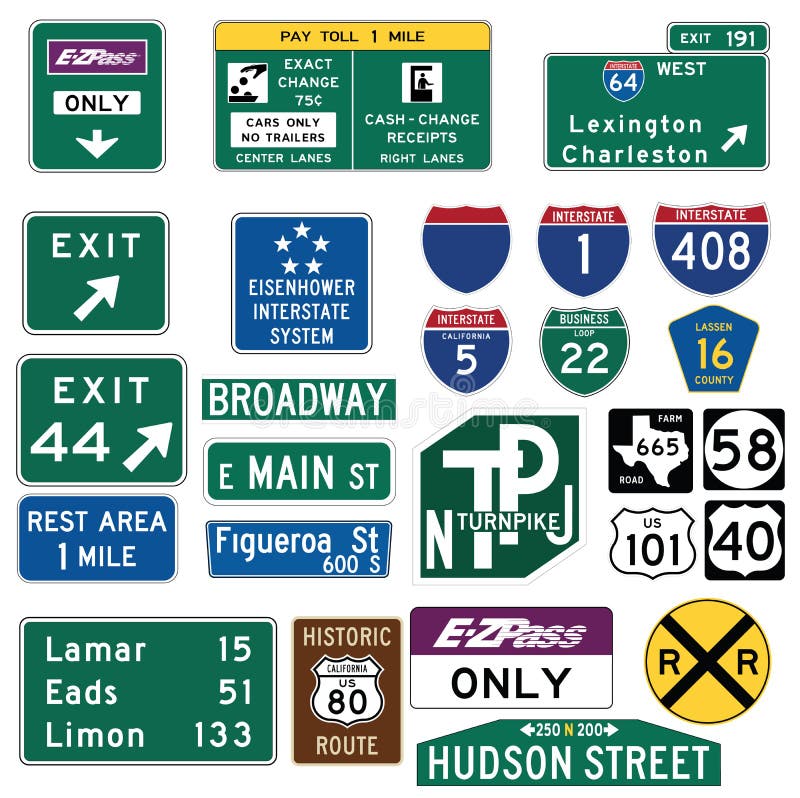
Free with trial Vector Illustration collection of the select Traffic Signs in the United States, isolated on white background. You can find other road signs in my portfolio. EPS file available. Guide signs are essential to direct road users along streets and highways, to inform them of intersecting routes, rnto direct them to cities, towns, villages, or other important destinations, to identify nearby rivers and streams, parks, forests, and historical sites, and generally to give such information as will help them along their way in the most simple, direct manner possible. rnrnIn the United States, road signs are, for the most part, standardized by federal regulations, most notably in the Manual on Uniform Traffic Control Devices (MUTCD) and its companion volume the Standard Highway Signs (SHS). There currently are no plans for adopting the Vienna Convention on Road Signs and Signals standards. Twenty-three states along with the District of Columbia and Puerto Rico use the manual without any alterations, 20 states have adopted it in conjunction with a supplemental volume, and seven states have a state version in substantial conformance to the MUTCD. There are also localized versions that are used in large cities such as New York City which use a naming system compatible with the MUTCD and/or state supplement. The MUTCD and SHS establish seven general categories of signs for road and highway use. rnrnIncluded illustrations are select examples of the MUTCD Guide Signs categories. rn. Twenty vectors Traffic Guide Signs in the United States. Vector Illustration collection of the select Traffic Signs in the United States, isolated on white background. You can. Vector Illustration collection of the select Traffic Signs in the United States, isolated on white background. You can find other road signs in my portfolio. EPS file available. Guide signs are essential to direct road users along streets and highways, to inform them of intersecting routes, rnto direct them to cities, towns, villages, or other important destinations, to identify nearby rivers and streams, parks, forests, and historical sites, and generally to give such information as will help them along their way in the most simple, direct manner possible.rnrnIn the United States, road signs are, for the most part, standardized by federal regulations, most notably in the Manual on Uniform Traffic Control Devices (MUTCD) and its companion volume the Standard Highway Signs (SHS). There currently are no plans for adopting the Vienna Convention on Road Signs and Signals standards. Twenty-three states along with the District of Columbia and Puerto Rico use the manual without any alterations, 20 states have adopted it in conjunction with a supplemental volume, and seven states have a state version in substantial conformance to the MUTCD. There are also localized versions that are used in large cities such as New York City which use a naming system compatible with the MUTCD and/or state supplement. The MUTCD and SHS establish seven general categories of signs for road and highway use.rnrnIncluded illustrations are select examples of the MUTCD Guide Signs categories.rn
Free with trial Twenty one Farm animal silhouettes. Set of 21 Silhouettes representing different Farm Animal. Twenty vectors Twenty one Farm animal silhouettes. Set of 21 Silhouettes representing different Farm Animal
Free with trial 20th Anniversary Celebration. 20th year anniversary celebration logo. Twenty vectors 20th Anniversary Celebration. 20th year anniversary celebration logo
Free with trial Santa clause cartoon waving hand. Illustration of santa clause cartoon waving hand. Twenty vectors Santa clause cartoon waving hand. Illustration of santa clause cartoon waving hand
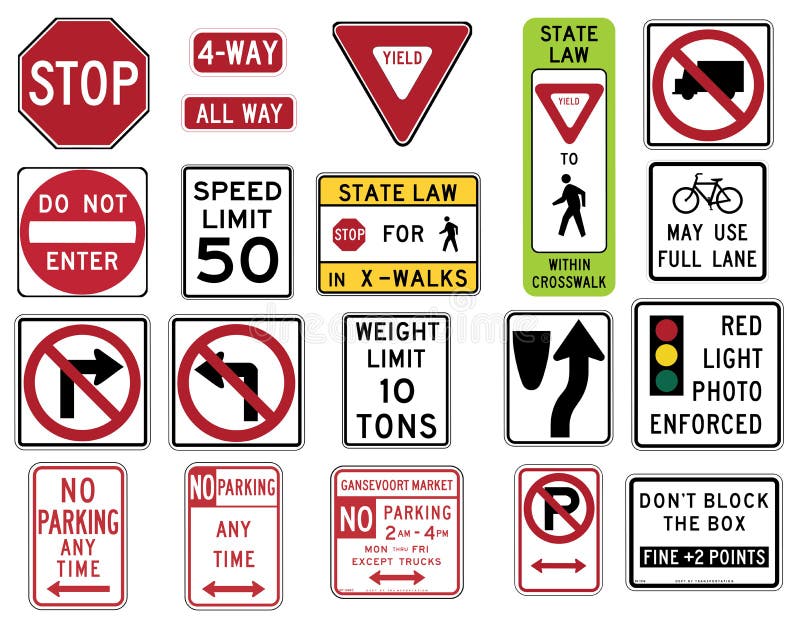
Free with trial Vector Illustration collection of the select Traffic Signs in the United States, isolated on white background. You can find other road signs in my portfolio. EPS file available. In the United States, road signs are, for the most part, standardized by federal regulations, most notably in the Manual on Uniform Traffic Control Devices (MUTCD) and its companion volume the Standard Highway Signs (SHS). There currently are no plans for adopting the Vienna Convention on Road Signs and Signals standards. Twenty-three states along with the District of Columbia and Puerto Rico use the manual without any alterations, 20 states have adopted it in conjunction with a supplemental volume, and seven states have a state version in substantial conformance to the MUTCD. There are also localized versions that are used in large cities such as New York City which use a naming system compatible with the MUTCD and/or state supplement. The MUTCD and SHS establish seven general categories of signs for road and highway use. Included illustrations are select examples of the following MUTCD categories: -- R1 Series STOP and YIELD -- R2 Series Speed Limit -- R3 Series Lane Usage and Turns (Left and Right Turn) -- R4 Regulation of Movement -- R5 Series: Exclusionary -- R7 Series: Parking. Twenty vectors Traffic Signs in the United States - Regulatory Series. Vector Illustration collection of the select Traffic Signs in the United States, isolated on white. Vector Illustration collection of the select Traffic Signs in the United States, isolated on white background. You can find other road signs in my portfolio. EPS file available. In the United States, road signs are, for the most part, standardized by federal regulations, most notably in the Manual on Uniform Traffic Control Devices (MUTCD) and its companion volume the Standard Highway Signs (SHS). There currently are no plans for adopting the Vienna Convention on Road Signs and Signals standards. Twenty-three states along with the District of Columbia and Puerto Rico use the manual without any alterations, 20 states have adopted it in conjunction with a supplemental volume, and seven states have a state version in substantial conformance to the MUTCD. There are also localized versions that are used in large cities such as New York City which use a naming system compatible with the MUTCD and/or state supplement. The MUTCD and SHS establish seven general categories of signs for road and highway use. Included illustrations are select examples of the following MUTCD categories: -- R1 Series STOP and YIELD -- R2 Series Speed Limit -- R3 Series Lane Usage and Turns (Left and Right Turn) -- R4 Regulation of Movement -- R5 Series: Exclusionary -- R7 Series: Parking
Free with trial 50th anniversary design. Floral design for a 50th or golden anniversary of a marriage or business. vector available. Twenty vectors 50th anniversary design. Floral design for a 50th or golden anniversary of a marriage or business.vector available
Free with trial Llustration of a Silver Gold & Red with the inscription. 25 Years Celebration. Twenty vectors Celebrating 25 Years/eps. Llustration of a Silver Gold & Red with the inscription. 25 Years Celebration. Llustration of a Silver Gold & Red with the inscription. 25 Years Celebration.
Free with trial An illustration of a 25th Anniversary seal celebrating 25 five years of your business, wedding or any other event. Available in vector EPS format. Twenty vectors 25th Anniversary Seal EPS. An illustration of a 25th Anniversary seal celebrating 25 five years of your business, wedding or any other event. Available in vector. An illustration of a 25th Anniversary seal celebrating 25 five years of your business, wedding or any other event. Available in vector EPS format.
Free with trial Illustration of a silver seal with the inscription... 25th Anniversary. Twenty vectors 25th Anniversary Seal/eps. Illustration of a silver seal with the inscription...25th Anniversary. Illustration of a silver seal with the inscription...25th Anniversary.
Free with trial 3D image of a quarter. Twenty vectors Quarter. 3D image of a quarter. 3D image of a quarter.
Free with trial 24 hours icon isolated on the white background. Twenty vectors 24 hours. 24 hours icon isolated on the white background. 24 hours icon isolated on the white background.
Free with trial Check-in. Illustration of all the documents that you would need when you fly from an airport. Twenty vectors Check-in. Illustration of all the documents that you would need when you fly from an airport
Free with trial Silver anniversary banner/eps. Logo for a 25th or silver anniversary of a marriage or business... eps file available. Twenty vectors Silver anniversary banner/eps. Logo for a 25th or silver anniversary of a marriage or business...eps file available
Free with trial 247 support. 24 hours 7 days support icons. Twenty vectors 247 support. 24 hours 7 days support icons
Free with trial American bills. Three detailed, stylized drawings of $1, $5 and $20 American bills. Also available in vector format. Twenty vectors American bills. Three detailed, stylized drawings of $1, $5 and $20 American bills. Also available in vector format
Free with trial Neon signs set. Set of color neon signs. Twenty vectors Neon signs set. Set of color neon signs
Free with trial 24 hour clock icon. Vector art of an hour and clock icon isolated on white. Twenty vectors 24 hour clock icon. Vector art of an hour and clock icon isolated on white
Free with trial Sale & delivery icons. Vector icons of sale and delivery. Twenty vectors Sale & delivery icons. Vector icons of sale and delivery
Free with trial Sparse vector illustration of all dollar bills. EPS-10, all icons, signs and texts except the value numbers are sparse shapes. Twenty vectors All Dollar Bills Flat. Sparse vector illustration of all dollar bills. EPS-10, all icons, signs and texts except the value numbers are sparse shapes. Sparse vector illustration of all dollar bills. EPS-10, all icons, signs and texts except the value numbers are sparse shapes.
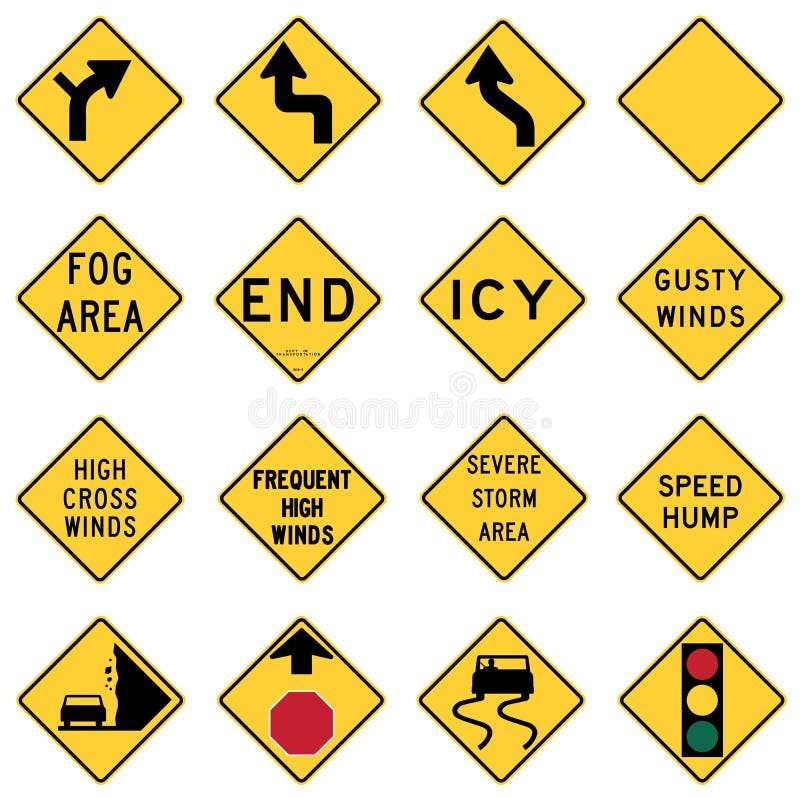
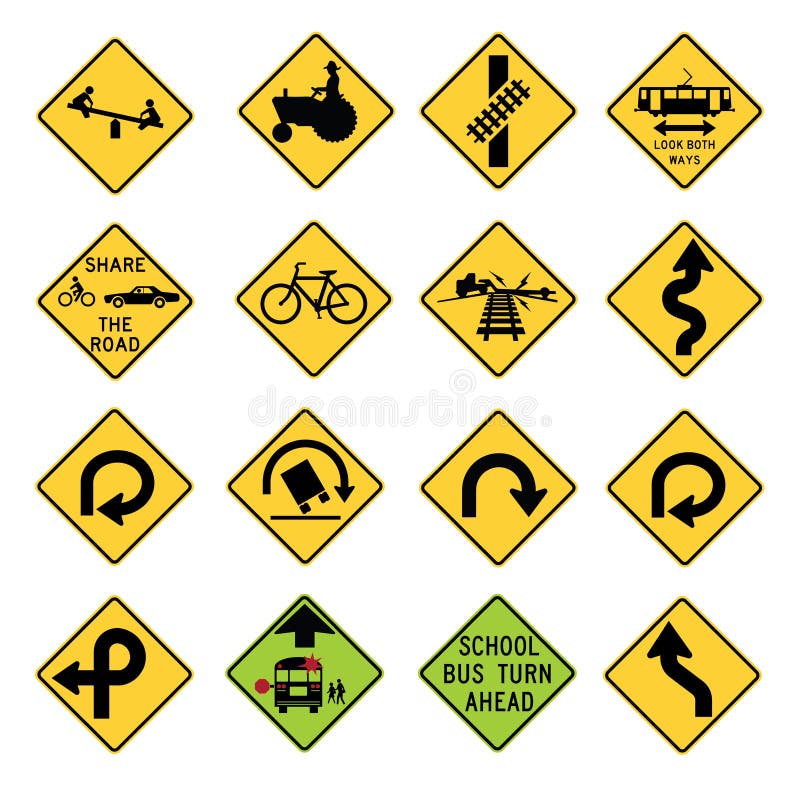
Free with trial Vector Illustration collection of the select Traffic Signs in the United States, isolated on white background. You can find other road signs in my portfolio. EPS file available. Warning signs are found in the W series of the national MUTCD. They highlight existing conditions, such as a curve, school, dead end street, or traffic signal. They can also warn possible danger such as bumps, bicycles, low flying aircraft or emergency vehicles. These signs are either yellow or fluorescent yellow in color and with the exception of a few signs are usually diamond shaped and sometimes have square or rectangular smaller signs or plaques associated with them. Most W series signs can also be found in with orange backgrounds, for temporary use in situations such as construction zones. Some of the temporary use signs are only for use in temporary situations. In the United States, road signs are, for the most part, standardized by federal regulations, most notably in the Manual on Uniform Traffic Control Devices (MUTCD) and its companion volume the Standard Highway Signs (SHS). There currently are no plans for adopting the Vienna Convention on Road Signs and Signals standards. Twenty-three states along with the District of Columbia and Puerto Rico use the manual without any alterations, 20 states have adopted it in conjunction with a supplemental volume, and seven states have a state version in substantial conformance to the MUTCD. There are also localized versions that are used in large cities such as New York City which use a naming system compatible with the MUTCD and/or state supplement. The MUTCD and SHS establish seven general categories of signs for road and highway use. Included illustrations are select examples of the MUTCD Warning Signs categories. Twenty vectors Traffic Warning Signs in the United States. Vector Illustration collection of the select Traffic Signs in the United States, isolated on white background. You. Vector Illustration collection of the select Traffic Signs in the United States, isolated on white background. You can find other road signs in my portfolio. EPS file available. Warning signs are found in the W series of the national MUTCD. They highlight existing conditions, such as a curve, school, dead end street, or traffic signal. They can also warn possible danger such as bumps, bicycles, low flying aircraft or emergency vehicles. These signs are either yellow or fluorescent yellow in color and with the exception of a few signs are usually diamond shaped and sometimes have square or rectangular smaller signs or plaques associated with them. Most W series signs can also be found in with orange backgrounds, for temporary use in situations such as construction zones. Some of the temporary use signs are only for use in temporary situations. In the United States, road signs are, for the most part, standardized by federal regulations, most notably in the Manual on Uniform Traffic Control Devices (MUTCD) and its companion volume the Standard Highway Signs (SHS). There currently are no plans for adopting the Vienna Convention on Road Signs and Signals standards. Twenty-three states along with the District of Columbia and Puerto Rico use the manual without any alterations, 20 states have adopted it in conjunction with a supplemental volume, and seven states have a state version in substantial conformance to the MUTCD. There are also localized versions that are used in large cities such as New York City which use a naming system compatible with the MUTCD and/or state supplement. The MUTCD and SHS establish seven general categories of signs for road and highway use. Included illustrations are select examples of the MUTCD Warning Signs categories.
Free with trial Vector Illustration collection of the select Traffic Signs in the United States, isolated on white background. You can find other road signs in my portfolio. EPS file available. Warning signs are found in the W series of the national MUTCD. They highlight existing conditions, such as a curve, school, dead end street, or traffic signal. They can also warn possible danger such as bumps, bicycles, low flying aircraft or emergency vehicles. These signs are either yellow or fluorescent yellow in color and with the exception of a few signs are usually diamond shaped and sometimes have square or rectangular smaller signs or plaques associated with them. Most W series signs can also be found in with orange backgrounds, for temporary use in situations such as construction zones. Some of the temporary use signs are only for use in temporary situations. In the United States, road signs are, for the most part, standardized by federal regulations, most notably in the Manual on Uniform Traffic Control Devices (MUTCD) and its companion volume the Standard Highway Signs (SHS). There currently are no plans for adopting the Vienna Convention on Road Signs and Signals standards. Twenty-three states along with the District of Columbia and Puerto Rico use the manual without any alterations, 20 states have adopted it in conjunction with a supplemental volume, and seven states have a state version in substantial conformance to the MUTCD. There are also localized versions that are used in large cities such as New York City which use a naming system compatible with the MUTCD and/or state supplement. The MUTCD and SHS establish seven general categories of signs for road and highway use. Included illustrations are select examples of the MUTCD Warning Signs categories. Twenty vectors Traffic Warning Signs in the United States. Vector Illustration collection of the select Traffic Signs in the United States, isolated on white background. You. Vector Illustration collection of the select Traffic Signs in the United States, isolated on white background. You can find other road signs in my portfolio. EPS file available. Warning signs are found in the W series of the national MUTCD. They highlight existing conditions, such as a curve, school, dead end street, or traffic signal. They can also warn possible danger such as bumps, bicycles, low flying aircraft or emergency vehicles. These signs are either yellow or fluorescent yellow in color and with the exception of a few signs are usually diamond shaped and sometimes have square or rectangular smaller signs or plaques associated with them. Most W series signs can also be found in with orange backgrounds, for temporary use in situations such as construction zones. Some of the temporary use signs are only for use in temporary situations. In the United States, road signs are, for the most part, standardized by federal regulations, most notably in the Manual on Uniform Traffic Control Devices (MUTCD) and its companion volume the Standard Highway Signs (SHS). There currently are no plans for adopting the Vienna Convention on Road Signs and Signals standards. Twenty-three states along with the District of Columbia and Puerto Rico use the manual without any alterations, 20 states have adopted it in conjunction with a supplemental volume, and seven states have a state version in substantial conformance to the MUTCD. There are also localized versions that are used in large cities such as New York City which use a naming system compatible with the MUTCD and/or state supplement. The MUTCD and SHS establish seven general categories of signs for road and highway use. Included illustrations are select examples of the MUTCD Warning Signs categories.
Free with trial Twenty old and disabled people silhouettes. Illustration on white background. Twenty vectors Old and disabled people. Twenty old and disabled people silhouettes. Illustration on white background. Twenty old and disabled people silhouettes. Illustration on white background.
Free with trial Anniversary 20. gold 3d numbers. Poster template for Celebrating 20th anniversary event party. Vector illustration. Twenty vectors Anniversary 20. gold 3d numbers. Poster template for Celebrating 20th anniversary event party. Vector illustration
Free with trial Anniversary 50. gold 3d numbers. Poster template for Celebrating 50th anniversary event party. Vector illustration. Twenty vectors Anniversary 50. gold 3d numbers. Poster template for Celebrating 50th anniversary event party. Vector illustration
Free with trial Vector blackjack table layout. Detailed black jack casino table with icons. Twenty vectors Vector blackjack table layout. Detailed black jack casino table with icons
Free with trial Contacts simple vector icon set - envelope, email, chat, telephone, mobile phone, map, globe and business hours. Twenty vectors Contacts simple vector icon set. Envelope, email, chat, telephone, mobile phone, map, globe and business hours
Free with trial Art Deco Great Gatsby Background. Art Deco Background inspired by The Great Gatsby. Twenty vectors Art Deco Great Gatsby Background. Art Deco Background inspired by The Great Gatsby
Free with trial 25th year anniversary silver seal isolated over a white background. vector file also available. Twenty vectors 25th Anniversary Seal. 25th year anniversary silver seal isolated over a white background. vector file also available. 25th year anniversary silver seal isolated over a white background. vector file also available.
Free with trial 10 minutes clock quick number icon. 10min time circle icon. Twenty vectors 10 minutes clock quick number icon. 10min time circle icon.
Free with trial Online shopping simple vector icon set - shop, computer, cart, delivery, card, gift and operator. Twenty vectors Online shopping simple vector icon set. Shop, computer, cart, delivery, card, gift and operator
Free with trial 25 anniversary. Floral text with Cector art of a seal with Number 25 with laurel leaves. Twenty vectors 25 anniversary. Floral text with Cector art of a seal with Number 25 with laurel leaves
Free with trial 25 anniversary. Cector art of a seal with Number 25 with laurel leaves. Twenty vectors 25 anniversary. Cector art of a seal with Number 25 with laurel leaves
Free with trial 25 anniversary. Cector art of a seal with Number 25 with laurel leaves. Twenty vectors 25 anniversary. Cector art of a seal with Number 25 with laurel leaves
Free with trial Set of chef hats. Monochrome set of twenty-five chef hats. Twenty vectors Set of chef hats. Monochrome set of twenty-five chef hats
Free with trial Twenty fresh designs for card, 100% vectors. Twenty vectors Visiting cards 3. Twenty fresh designs for card, 100% vectors. Twenty fresh designs for card, 100% vectors.
Free with trial Twenty dollar bill. A stylized drawing of a 20 dollar bill banknote. Twenty vectors Twenty dollar bill. A stylized drawing of a 20 dollar bill banknote
Free with trial Illustrated colorful 3D button icons with a variety of objects. Twenty vectors Multimedia icon set. Illustrated colorful 3D button icons with a variety of objects. Illustrated colorful 3D button icons with a variety of objects.
Free with trial Christmas Calendar Date - 25 December. Twenty vectors Christmas Calendar Date. 25 December
Free with trial 20 summer sun collection. Twenty summer sun collection vector icon. Twenty vectors 20 summer sun collection. Twenty summer sun collection vector icon
Free with trial Call Center / Customer Service / 24 hours Support Flat Icon. Set. Twenty vectors Call Center / Customer Service / 24 hours Support Flat Icon. Set
Free with trial 20 years anniversary symbol - illustration for the web. Twenty vectors 20 years anniversary symbol. Illustration for the web
Free with trial Golden laurel wreath 25 years. Twenty five years anniversary, 25 years jubile. Twenty vectors Golden laurel wreath 25 years. Twenty five years anniversary, 25 years jubile
Free with trial Agriculture and farming icons. A set of twenty-five agriculture and farming icons. Twenty vectors Agriculture and farming icons. A set of twenty-five agriculture and farming icons
Free with trial Anniversary 25. silver 3d numbers. Poster template for Celebrating 25th anniversary event party. Vector illustration. Twenty vectors Anniversary 25. silver 3d numbers. Poster template for Celebrating 25th anniversary event party. Vector illustration
Free with trial Seamless cartoon money and dollar sign pattern. Twenty vectors Seamless Cartoon Money Pattern. Seamless cartoon money and dollar sign pattern. Seamless cartoon money and dollar sign pattern.
Free with trial An image of a menstrual cycle chart. Twenty vectors Menstrual Cycle Fertility Chart. An image of a menstrual cycle chart. An image of a menstrual cycle chart.
Free with trial HAPPY BIRTHDAY overlapping semi-transparent colorful letters banner card. Vector. Twenty vectors Colorful HAPPY BIRTHDAY overlapping semi-transparent letters banner. HAPPY BIRTHDAY overlapping semi-transparent colorful letters banner card. Vector. HAPPY BIRTHDAY overlapping semi-transparent colorful letters banner card. Vector.
Free with trial Vintage New Orleans Street Tiles Numbers. Complete English numbers - collage of 10 isolated vintage tiles as seen on the streets of New Orleans. Twenty vectors Vintage New Orleans Street Tiles Numbers. Complete English numbers - collage of 10 isolated vintage tiles as seen on the streets of New Orleans
Free with trial Isolated United States Quarter - vector illustrat. Ion 25 cents. Twenty vectors Isolated United States Quarter - vector illustrat. Ion 25 cents
Free with trial Collection of 10, 15, 20 and 25 years of experience gold labels. Twenty vectors Years Of Experience. Collection of 10, 15, 20 and 25 years of experience gold labels. Collection of 10, 15, 20 and 25 years of experience gold labels.
Free with trial This A to Z alphabet is hand created digitally for your design purposes in a burlesque glitter style, perfect for posters, banners, scrapbooking, etc. Twenty vectors Digital Alphabet Diva Style Scrapbooking Element. This A to Z alphabet is hand created digitally for your design purposes in a burlesque glitter style, perfect. This A to Z alphabet is hand created digitally for your design purposes in a burlesque glitter style, perfect for posters, banners, scrapbooking, etc.
Free with trial Clock icon. Simple vector filled flat in clock face icon solid pictogram isolated on white background. Twenty vectors Clock icon. Simple vector filled flat in clock face icon solid pictogram isolated on white background
Free with trial 20 years old celebrating classic logo. Colored anniversary 20 th template numbers. Birthday greetings celebrates. Traditional framed digits of jubilee ages. Colored letter O or 0. Card or label idea. Twenty vectors 20 years old celebrating classic logo. Colored anniversary 20 th template numbers. Birthday greetings celebrates. Traditional framed digits of jubilee ages
Free with trial Anniversary 30. gold 3d numbers. Poster template for Celebrating 30th anniversary event party. Vector illustration. Twenty vectors Anniversary 30. gold 3d numbers. Poster template for Celebrating 30th anniversary event party. Vector illustration
Free with trial 20 anniversary. Stamp 20 anniversary, color illustration. Twenty vectors 20 anniversary. Stamp 20 anniversary, color illustration
Free with trial Happy 40th birthday gold foil balloon greeting background. 40 years anniversary logo template- 40th celebrating with confetti. Vector stock. Twenty vectors Happy 40th birthday gold foil balloon greeting background. 40 years anniversary logo template- 40th celebrating with confetti. Vector stock
Free with trial Happy 70th birthday gold foil balloon greeting background. 70 years anniversary logo template- 70th celebrating with confetti. Vector stock. Twenty vectors Happy 70th birthday gold foil balloon greeting background. 70 years anniversary logo template- 70th celebrating with confetti. Vector stock
Free with trial Happy 50th birthday gold foil balloon greeting background. 50 years anniversary logo template- 50th celebrating with confetti. Vector stock. Twenty vectors Happy 50th birthday gold foil balloon greeting background. 50 years anniversary logo template- 50th celebrating with confetti. Vector stock
Free with trial Happy 50th birthday gold foil balloon greeting background. 50 years anniversary logo template- 50th celebrating with confetti. Vector stock. Twenty vectors Happy 50th birthday gold foil balloon greeting background. 50 years anniversary logo template- 50th celebrating with confetti. Vector stock
Free with trial Lunar / moon phases cycle. All 28 shapes for each day - new, ful. L, waxing, waning crescent, first, third quarter, gibbous. Twenty vectors Lunar / moon phases cycle. All 28 shapes for each day - new, ful. L, waxing, waning crescent, first, third quarter, gibbous
Free with trial Contact vector icons set, modern solid symbol collection, filled style pictogram pack. Signs, logo illustration. Set includes icons as map, globe, phone, call, clock, handset, message, email, call back. Twenty vectors Contact vector icons set, modern solid symbol collection, filled style pictogram pack. Signs, logo illustration. Set includes icons as map, globe, phone, call
Free with trial The flags of Australia, Belgium, Canada, China, Denmark, EU, France, Germany, India, Ireland, Italy, Japan, Luxembourg, NATO, Netherlands, New Zealand, North Korea, Norway, Russia, South Korea, Sweden, Taiwan, UK, USA, and Vietnam drawn in CMYK and placed on individual layers. Twenty vectors Twenty-Five Flags. The flags of Australia, Belgium, Canada, China, Denmark, EU, France, Germany, India, Ireland, Italy, Japan, Luxembourg, NATO, Netherlands, New. The flags of Australia, Belgium, Canada, China, Denmark, EU, France, Germany, India, Ireland, Italy, Japan, Luxembourg, NATO, Netherlands, New Zealand, North Korea, Norway, Russia, South Korea, Sweden, Taiwan, UK, USA, and Vietnam drawn in CMYK and placed on individual layers.
Free with trial Vector scalable file of G-20 flags. G-20 is an economic forum consisting of 19 of the world's largest national economies, plus the European Union. Shadows (waving design) can be easily removed from vector file if needed. Included: EPS (saved as an AI8-compatible) and JPEG. Twenty vectors Waving flags of G-20 countries. Vector scalable file of G-20 flags. G-20 is an economic forum consisting of 19 of the world's largest national economies, plus. Vector scalable file of G-20 flags. G-20 is an economic forum consisting of 19 of the world's largest national economies, plus the European Union. Shadows (waving design) can be easily removed from vector file if needed. Included: EPS (saved as an AI8-compatible) and JPEG.
Free with trial 32 Industrialized country flags. Detailed industrialized country flags and world map manually traced from public domain map. Twenty vectors 32 Industrialized country flags. Detailed industrialized country flags and world map manually traced from public domain map
 Sign in