Free with trial Albert Einstein pop Art. Albert Einstein in vector pop Art. Vienna vectors Albert Einstein pop Art. Albert Einstein in vector pop Art
Free with trial European cities. Detailed vector illustration of european cities and capitals. Vienna vectors European cities. Detailed vector illustration of european cities and capitals
Free with trial Vectored illustration of the skyline of vienna with most famous landmarks as saint stefan and danube tower and the millennium tower isolated. Vienna vectors Vienna skyline vector. Vectored illustration of the skyline of vienna with most famous landmarks as saint stefan and danube tower and the millennium tower. Vectored illustration of the skyline of vienna with most famous landmarks as saint stefan and danube tower and the millennium tower isolated
Free with trial Vector city skylines of Vienna, Prague, Budapest and Warsaw. Vienna vectors Vector city skylines of Vienna, Prague, Budapest and Warsaw. Vector isolated city skylines of Vienna, Prague, Budapest and Warsaw
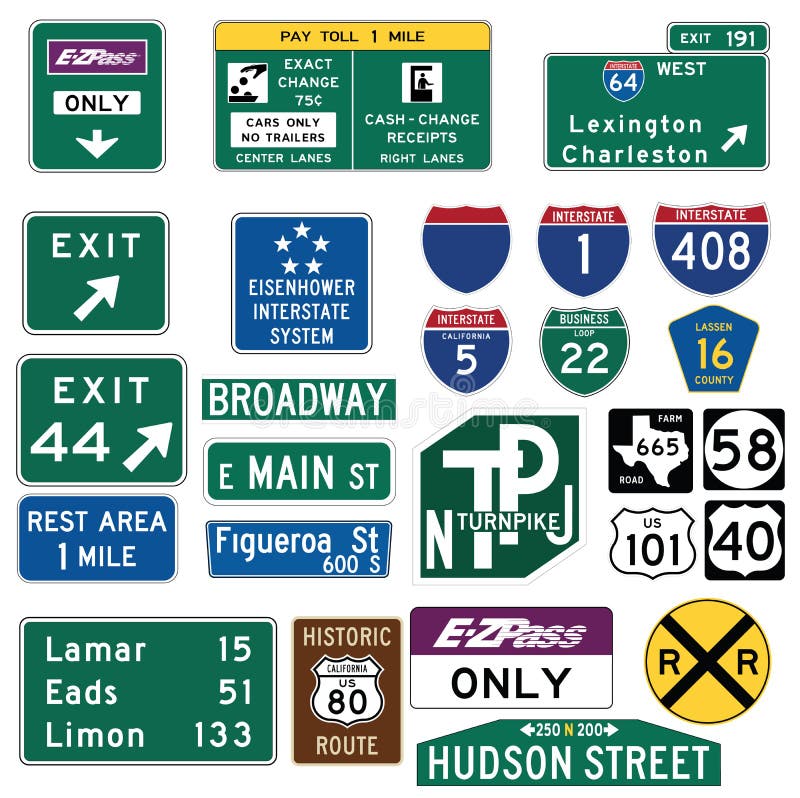
Free with trial Vector Illustration collection of the select Traffic Signs in the United States, isolated on white background. You can find other road signs in my portfolio. EPS file available. Guide signs are essential to direct road users along streets and highways, to inform them of intersecting routes, rnto direct them to cities, towns, villages, or other important destinations, to identify nearby rivers and streams, parks, forests, and historical sites, and generally to give such information as will help them along their way in the most simple, direct manner possible. rnrnIn the United States, road signs are, for the most part, standardized by federal regulations, most notably in the Manual on Uniform Traffic Control Devices (MUTCD) and its companion volume the Standard Highway Signs (SHS). There currently are no plans for adopting the Vienna Convention on Road Signs and Signals standards. Twenty-three states along with the District of Columbia and Puerto Rico use the manual without any alterations, 20 states have adopted it in conjunction with a supplemental volume, and seven states have a state version in substantial conformance to the MUTCD. There are also localized versions that are used in large cities such as New York City which use a naming system compatible with the MUTCD and/or state supplement. The MUTCD and SHS establish seven general categories of signs for road and highway use. rnrnIncluded illustrations are select examples of the MUTCD Guide Signs categories. rn. Vienna vectors Traffic Guide Signs in the United States. Vector Illustration collection of the select Traffic Signs in the United States, isolated on white background. You can. Vector Illustration collection of the select Traffic Signs in the United States, isolated on white background. You can find other road signs in my portfolio. EPS file available. Guide signs are essential to direct road users along streets and highways, to inform them of intersecting routes, rnto direct them to cities, towns, villages, or other important destinations, to identify nearby rivers and streams, parks, forests, and historical sites, and generally to give such information as will help them along their way in the most simple, direct manner possible.rnrnIn the United States, road signs are, for the most part, standardized by federal regulations, most notably in the Manual on Uniform Traffic Control Devices (MUTCD) and its companion volume the Standard Highway Signs (SHS). There currently are no plans for adopting the Vienna Convention on Road Signs and Signals standards. Twenty-three states along with the District of Columbia and Puerto Rico use the manual without any alterations, 20 states have adopted it in conjunction with a supplemental volume, and seven states have a state version in substantial conformance to the MUTCD. There are also localized versions that are used in large cities such as New York City which use a naming system compatible with the MUTCD and/or state supplement. The MUTCD and SHS establish seven general categories of signs for road and highway use.rnrnIncluded illustrations are select examples of the MUTCD Guide Signs categories.rn
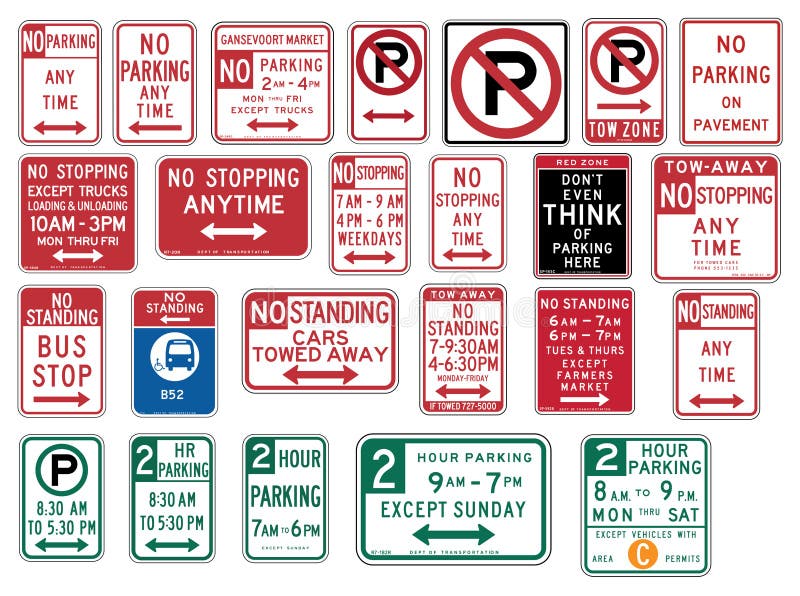
Free with trial Vector Illustration collection of the select Traffic Signs in the United States, isolated on white background. You can find other road signs in my portfolio. EPS file available. rnrnIn the United States, road signs are, for the most part, standardized by federal regulations, most notably in the Manual on Uniform Traffic Control Devices (MUTCD) and its companion volume the Standard Highway Signs (SHS). There currently are no plans for adopting the Vienna Convention on Road Signs and Signals standards. rnTwenty-three states along with the District of Columbia and Puerto Rico use the manual without any alterations, 20 states have adopted it in conjunction with a supplemental volume, and seven states have a state version in substantial conformance to the MUTCD. There are also localized versions that are used in large cities such as New York City which use a naming system compatible with the MUTCD and/or state supplement. The MUTCD and SHS establish seven general categories of signs for road and highway use. rnrnIncluded illustrations are select examples of the following MUTCD categories:rn-- R7 Series: Parkingrnrn. Vienna vectors Traffic Signs in the United States - No Parking. Vector Illustration collection of the select Traffic Signs in the United States, isolated on white background. Vector Illustration collection of the select Traffic Signs in the United States, isolated on white background. You can find other road signs in my portfolio. EPS file available.rnrnIn the United States, road signs are, for the most part, standardized by federal regulations, most notably in the Manual on Uniform Traffic Control Devices (MUTCD) and its companion volume the Standard Highway Signs (SHS). There currently are no plans for adopting the Vienna Convention on Road Signs and Signals standards.rnTwenty-three states along with the District of Columbia and Puerto Rico use the manual without any alterations, 20 states have adopted it in conjunction with a supplemental volume, and seven states have a state version in substantial conformance to the MUTCD. There are also localized versions that are used in large cities such as New York City which use a naming system compatible with the MUTCD and/or state supplement. The MUTCD and SHS establish seven general categories of signs for road and highway use.rnrnIncluded illustrations are select examples of the following MUTCD categories:rn-- R7 Series: Parkingrnrn
Free with trial Healthy lungs. Vector illustration of healthy lungs consisting of green leaves. Vienna vectors Healthy lungs. Vector illustration of healthy lungs consisting of green leaves
Free with trial Vector_city icons. Vector silhouette of the cities. Vienna vectors Vector_city icons. Vector silhouette of the cities
Free with trial Vector Europe Stamps. A high detail collection of Travel Stamps concepts, with traditional symbols from all major countries of Europe. Vienna vectors Vector Europe Stamps. A high detail collection of Travel Stamps concepts, with traditional symbols from all major countries of Europe
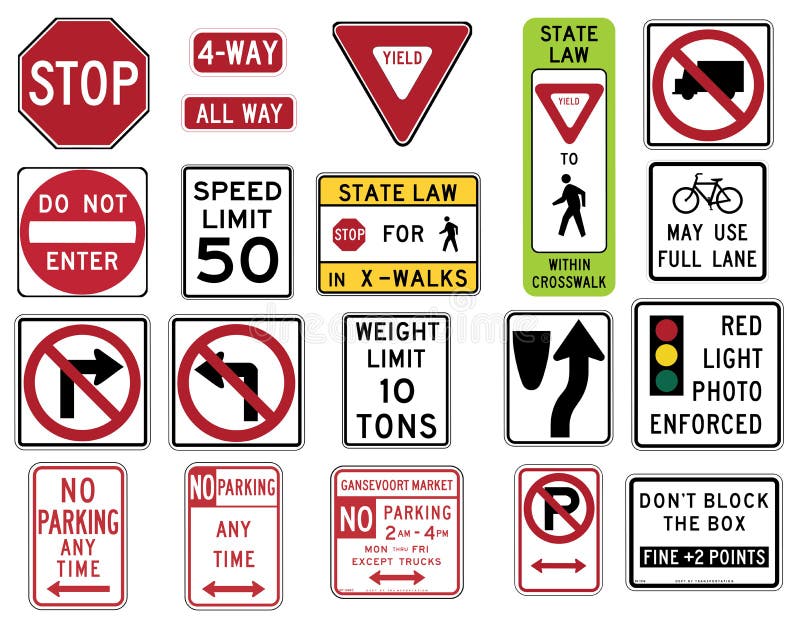
Free with trial Vector Illustration collection of the select Traffic Signs in the United States, isolated on white background. You can find other road signs in my portfolio. EPS file available. In the United States, road signs are, for the most part, standardized by federal regulations, most notably in the Manual on Uniform Traffic Control Devices (MUTCD) and its companion volume the Standard Highway Signs (SHS). There currently are no plans for adopting the Vienna Convention on Road Signs and Signals standards. Twenty-three states along with the District of Columbia and Puerto Rico use the manual without any alterations, 20 states have adopted it in conjunction with a supplemental volume, and seven states have a state version in substantial conformance to the MUTCD. There are also localized versions that are used in large cities such as New York City which use a naming system compatible with the MUTCD and/or state supplement. The MUTCD and SHS establish seven general categories of signs for road and highway use. Included illustrations are select examples of the following MUTCD categories: -- R1 Series STOP and YIELD -- R2 Series Speed Limit -- R3 Series Lane Usage and Turns (Left and Right Turn) -- R4 Regulation of Movement -- R5 Series: Exclusionary -- R7 Series: Parking. Vienna vectors Traffic Signs in the United States - Regulatory Series. Vector Illustration collection of the select Traffic Signs in the United States, isolated on white. Vector Illustration collection of the select Traffic Signs in the United States, isolated on white background. You can find other road signs in my portfolio. EPS file available. In the United States, road signs are, for the most part, standardized by federal regulations, most notably in the Manual on Uniform Traffic Control Devices (MUTCD) and its companion volume the Standard Highway Signs (SHS). There currently are no plans for adopting the Vienna Convention on Road Signs and Signals standards. Twenty-three states along with the District of Columbia and Puerto Rico use the manual without any alterations, 20 states have adopted it in conjunction with a supplemental volume, and seven states have a state version in substantial conformance to the MUTCD. There are also localized versions that are used in large cities such as New York City which use a naming system compatible with the MUTCD and/or state supplement. The MUTCD and SHS establish seven general categories of signs for road and highway use. Included illustrations are select examples of the following MUTCD categories: -- R1 Series STOP and YIELD -- R2 Series Speed Limit -- R3 Series Lane Usage and Turns (Left and Right Turn) -- R4 Regulation of Movement -- R5 Series: Exclusionary -- R7 Series: Parking
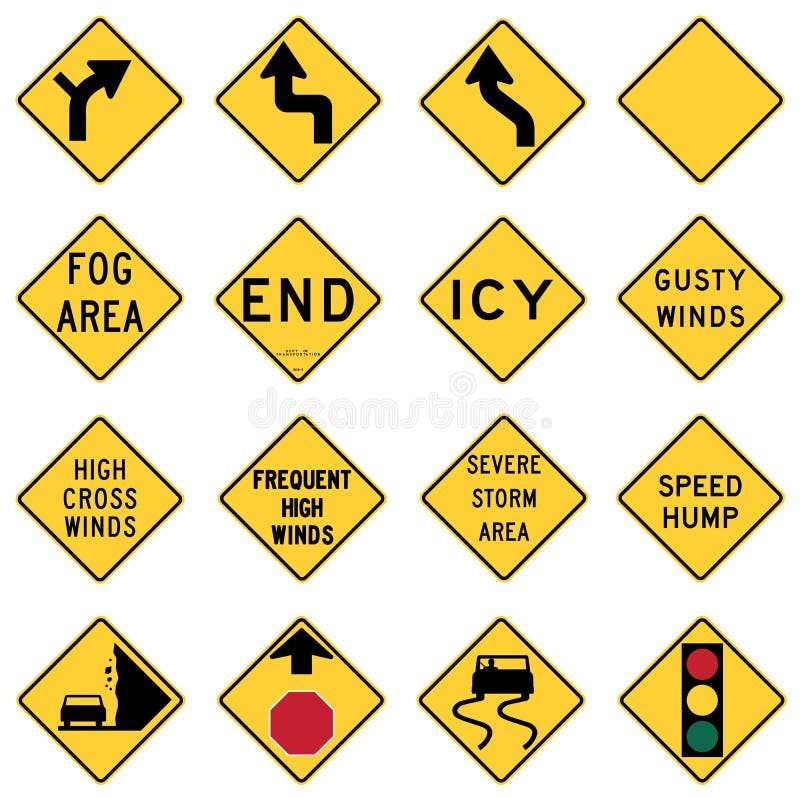
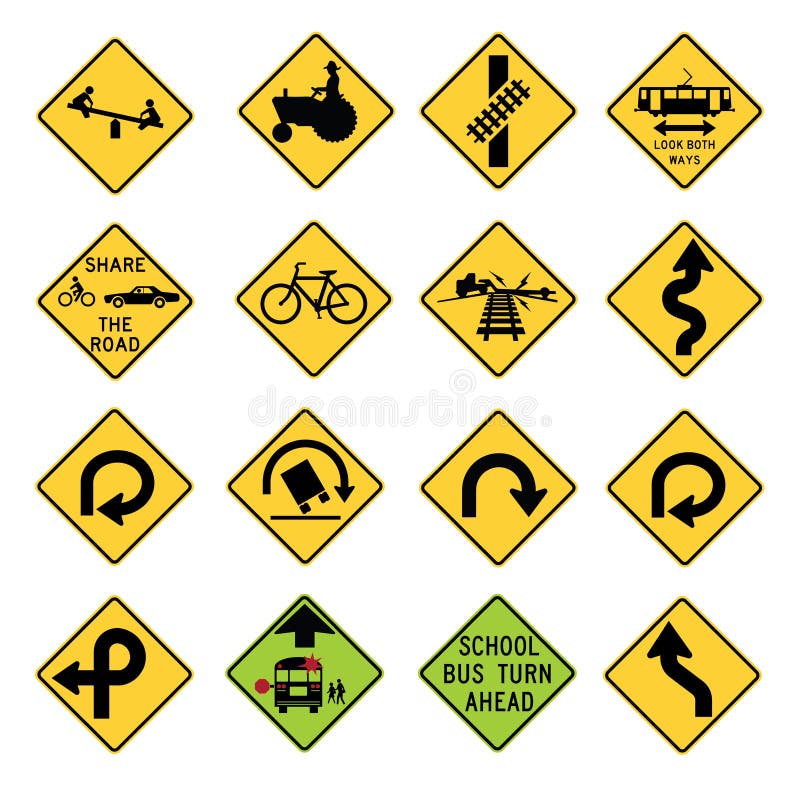
Free with trial Vector Illustration collection of the select Traffic Signs in the United States, isolated on white background. You can find other road signs in my portfolio. EPS file available. Warning signs are found in the W series of the national MUTCD. They highlight existing conditions, such as a curve, school, dead end street, or traffic signal. They can also warn possible danger such as bumps, bicycles, low flying aircraft or emergency vehicles. These signs are either yellow or fluorescent yellow in color and with the exception of a few signs are usually diamond shaped and sometimes have square or rectangular smaller signs or plaques associated with them. Most W series signs can also be found in with orange backgrounds, for temporary use in situations such as construction zones. Some of the temporary use signs are only for use in temporary situations. In the United States, road signs are, for the most part, standardized by federal regulations, most notably in the Manual on Uniform Traffic Control Devices (MUTCD) and its companion volume the Standard Highway Signs (SHS). There currently are no plans for adopting the Vienna Convention on Road Signs and Signals standards. Twenty-three states along with the District of Columbia and Puerto Rico use the manual without any alterations, 20 states have adopted it in conjunction with a supplemental volume, and seven states have a state version in substantial conformance to the MUTCD. There are also localized versions that are used in large cities such as New York City which use a naming system compatible with the MUTCD and/or state supplement. The MUTCD and SHS establish seven general categories of signs for road and highway use. Included illustrations are select examples of the MUTCD Warning Signs categories. Vienna vectors Traffic Warning Signs in the United States. Vector Illustration collection of the select Traffic Signs in the United States, isolated on white background. You. Vector Illustration collection of the select Traffic Signs in the United States, isolated on white background. You can find other road signs in my portfolio. EPS file available. Warning signs are found in the W series of the national MUTCD. They highlight existing conditions, such as a curve, school, dead end street, or traffic signal. They can also warn possible danger such as bumps, bicycles, low flying aircraft or emergency vehicles. These signs are either yellow or fluorescent yellow in color and with the exception of a few signs are usually diamond shaped and sometimes have square or rectangular smaller signs or plaques associated with them. Most W series signs can also be found in with orange backgrounds, for temporary use in situations such as construction zones. Some of the temporary use signs are only for use in temporary situations. In the United States, road signs are, for the most part, standardized by federal regulations, most notably in the Manual on Uniform Traffic Control Devices (MUTCD) and its companion volume the Standard Highway Signs (SHS). There currently are no plans for adopting the Vienna Convention on Road Signs and Signals standards. Twenty-three states along with the District of Columbia and Puerto Rico use the manual without any alterations, 20 states have adopted it in conjunction with a supplemental volume, and seven states have a state version in substantial conformance to the MUTCD. There are also localized versions that are used in large cities such as New York City which use a naming system compatible with the MUTCD and/or state supplement. The MUTCD and SHS establish seven general categories of signs for road and highway use. Included illustrations are select examples of the MUTCD Warning Signs categories.
Free with trial Vector Illustration collection of the select Traffic Signs in the United States, isolated on white background. You can find other road signs in my portfolio. EPS file available. Warning signs are found in the W series of the national MUTCD. They highlight existing conditions, such as a curve, school, dead end street, or traffic signal. They can also warn possible danger such as bumps, bicycles, low flying aircraft or emergency vehicles. These signs are either yellow or fluorescent yellow in color and with the exception of a few signs are usually diamond shaped and sometimes have square or rectangular smaller signs or plaques associated with them. Most W series signs can also be found in with orange backgrounds, for temporary use in situations such as construction zones. Some of the temporary use signs are only for use in temporary situations. In the United States, road signs are, for the most part, standardized by federal regulations, most notably in the Manual on Uniform Traffic Control Devices (MUTCD) and its companion volume the Standard Highway Signs (SHS). There currently are no plans for adopting the Vienna Convention on Road Signs and Signals standards. Twenty-three states along with the District of Columbia and Puerto Rico use the manual without any alterations, 20 states have adopted it in conjunction with a supplemental volume, and seven states have a state version in substantial conformance to the MUTCD. There are also localized versions that are used in large cities such as New York City which use a naming system compatible with the MUTCD and/or state supplement. The MUTCD and SHS establish seven general categories of signs for road and highway use. Included illustrations are select examples of the MUTCD Warning Signs categories. Vienna vectors Traffic Warning Signs in the United States. Vector Illustration collection of the select Traffic Signs in the United States, isolated on white background. You. Vector Illustration collection of the select Traffic Signs in the United States, isolated on white background. You can find other road signs in my portfolio. EPS file available. Warning signs are found in the W series of the national MUTCD. They highlight existing conditions, such as a curve, school, dead end street, or traffic signal. They can also warn possible danger such as bumps, bicycles, low flying aircraft or emergency vehicles. These signs are either yellow or fluorescent yellow in color and with the exception of a few signs are usually diamond shaped and sometimes have square or rectangular smaller signs or plaques associated with them. Most W series signs can also be found in with orange backgrounds, for temporary use in situations such as construction zones. Some of the temporary use signs are only for use in temporary situations. In the United States, road signs are, for the most part, standardized by federal regulations, most notably in the Manual on Uniform Traffic Control Devices (MUTCD) and its companion volume the Standard Highway Signs (SHS). There currently are no plans for adopting the Vienna Convention on Road Signs and Signals standards. Twenty-three states along with the District of Columbia and Puerto Rico use the manual without any alterations, 20 states have adopted it in conjunction with a supplemental volume, and seven states have a state version in substantial conformance to the MUTCD. There are also localized versions that are used in large cities such as New York City which use a naming system compatible with the MUTCD and/or state supplement. The MUTCD and SHS establish seven general categories of signs for road and highway use. Included illustrations are select examples of the MUTCD Warning Signs categories.
Free with trial Anatomy skin Hair. Vector Image Medicine. Vienna vectors Anatomy skin Hair. Vector Image Medicine
Free with trial Anagen catagen telogen. Anatomy skin Hair Cycles of hair follicle. Vienna vectors Anagen catagen telogen. Anatomy skin Hair Cycles of hair follicle
Free with trial City silhouette vector 15. Set of silhouettes of a city of peace. Vienna vectors City silhouette vector 15. Set of silhouettes of a city of peace
Free with trial European Cities skylines set. Vector silhouettes. Vienna vectors European Cities skylines set. Vector silhouettes. European Cities skylines. Vector silhouettes
Free with trial Vector silhouettes of European cities. Detailed silhouettes of European cities part 2. Vienna vectors Vector silhouettes of European cities. Detailed silhouettes of European cities part 2
Free with trial Infographic with coffee types. Recipes, proportions. Coffee menu. Dark background. Vienna vectors Infographic with coffee types. Recipes, proportions. Coffee menu. Vector illustration. Infographic with coffee types. Recipes, proportions. Coffee menu. Dark. Infographic with coffee types. Recipes, proportions. Coffee menu. Dark background
Free with trial Detailed vector poster city map Vienna. For design. Vienna vectors Detailed vector poster city map Vienna. For design
Free with trial Vienna skyline Austria vector drawn sketch. Vienna skyline Austria vintage vector engraved illustration hand drawn sketch. Vienna vectors Vienna skyline Austria vector drawn sketch. Vienna skyline Austria vintage vector engraved illustration hand drawn sketch
Free with trial Streets in Vienna Austria hand drawn illustration. Streets in Vienna Austria hand drawn vector illustration sketch engraved style. Vienna vectors Streets in Vienna Austria hand drawn illustration. Streets in Vienna Austria hand drawn vector illustration sketch engraved style
Free with trial Vienna city map. Map of vienna with all districts, highways, expressways and major roads. Vienna vectors Vienna city map. Map of vienna with all districts, highways, expressways and major roads
Free with trial City Map of Vienna, Austria. Vector map of the city of Vienna, Austria. Vienna vectors City Map of Vienna, Austria. Vector map of the city of Vienna, Austria
Free with trial Vector illustration of the skyline of vienna with most famous landmarks as saint stefan and danube tower with colored beams background. Vienna vectors Vienna skyline with background. Vector illustration of the skyline of vienna with most famous landmarks as saint stefan and danube tower with colored beams. Vector illustration of the skyline of vienna with most famous landmarks as saint stefan and danube tower with colored beams background
Free with trial Austria flag with vienna silhouette. Vector illustration of the skyline of vienna with the colors of the national flag of austria. Vienna vectors Austria flag with vienna silhouette. Vector illustration of the skyline of vienna with the colors of the national flag of austria
Free with trial Vienna skyline. With churches tower and flag. Vienna vectors Vienna skyline. With churches tower and flag
Free with trial Classic Tramway. In the City of Vienna, detailed Vector Illustration. Vienna vectors Classic Tramway. In the City of Vienna, detailed Vector Illustration
Free with trial Grunge rubber stamp. With St. Stephen's Cathedral and the word Vienna, Austria inside. Vienna vectors Grunge rubber stamp. With St. Stephen's Cathedral and the word Vienna, Austria inside
Free with trial 37 landmarks from European capitals. Set of 37 hand drawn landmarks from various European capitals, black ink illustrations. Vienna vectors 37 landmarks from European capitals. Set of 37 hand drawn landmarks from various European capitals, black ink illustrations
Free with trial Bavarian pretzel. With salt. Vector-Illustration. Vienna vectors Bavarian pretzel. With salt. Vector-Illustration
Free with trial Europe map with landmarks. Vector illustration of european map with silhouettes of most visited landmarks upon it. Vienna vectors Europe map with landmarks. Vector illustration of european map with silhouettes of most visited landmarks upon it
Free with trial Panoramic city skylines. With water reflects. Vienna vectors Panoramic city skylines. With water reflects
Free with trial Hand drawn map of Europe. With selected capitals and landmarks, vintage style. Vienna vectors Hand drawn map of Europe. With selected capitals and landmarks, vintage style
Free with trial Infographic with coffee types. Different types of coffee on the dark background. Recipes, proportions. Coffee menu. Vector illustration. Vienna vectors Infographic with coffee types. Different types of coffee on the dark background. Recipes, proportions. Coffee menu. Vector illustration
Free with trial Vector Famous Monument icons Set. A collection of icons of famous places and monuments around the world. Vienna vectors Vector Famous Monument icons Set. A collection of icons of famous places and monuments around the world
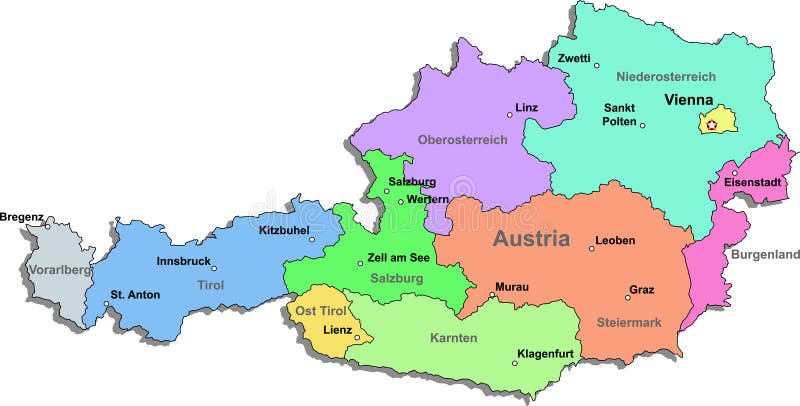
Free with trial Austria map designed in illustration with the regions colored in bright colors and with the main cities. Neighbouring countries are in an additional format (. AI) in the latent layer. Vienna vectors Vector map of Austria. Austria map designed in illustration with the regions colored in bright colors and with the main cities. Neighbouring countries are in an. Austria map designed in illustration with the regions colored in bright colors and with the main cities. Neighbouring countries are in an additional format (.AI) in the latent layer.
Free with trial Hot coffee drinks recipes icons set. Vector and Illustration. Vienna vectors Hot Coffee drinks recipes icons set. Vector and Illustration
Free with trial Austria map of Slovakia with regions borders. Names of the regions, main cities, and neighbouring countries are in an additional format (. AI) in the latent layer. Vienna vectors Austria map. Of Slovakia with regions borders. Names of the regions, main cities, and neighbouring countries are in an additional format (.AI) in the latent
Free with trial City skyline of Europe Colorful illustration. For design. Vienna vectors City skyline of Europe Colorful illustration. For design
Free with trial World landmark silhouettes and banners. Easy to change colour of landmarks. Vienna vectors World Travel. World landmark silhouettes and banners. Easy to change colour of landmarks. World landmark silhouettes and banners. Easy to change colour of landmarks.
Free with trial Travel stamps. Isolated on white, illustration. Vienna vectors Travel stamps. Isolated on white, illustration
Free with trial Famous places, buildings and architecture around the World (set no. 4, white) - Collection of an hand drawn illustrations. Description: Full sized hand drawn illustrations drawing on white background. Vienna vectors Architecture 4. Famous places, buildings and architecture around the World (set no.4, white) - Collection of an hand drawn illustrations. Description: Full sized. Famous places, buildings and architecture around the World (set no.4, white) - Collection of an hand drawn illustrations. Description: Full sized hand drawn illustrations drawing on white background.
Free with trial Vector silhouettes of European famous monuments. Collection of Detailed silhouettes of European famous monuments. Vienna vectors Vector silhouettes of European famous monuments. Collection of Detailed silhouettes of European famous monuments
Free with trial Albert Einstein vector Illustration portrait. Artistic art vector illustration of Albert Einstein with eps file. Vienna vectors Albert Einstein vector Illustration portrait. Artistic art vector illustration of Albert Einstein with eps file
Free with trial Yellow background with two plane shapes and the name of more important cities from all over the world written in various ways with green letters. Vienna vectors Flying around the world. Yellow background with two plane shapes and the name of more important cities from all over the world written in various ways with green. Yellow background with two plane shapes and the name of more important cities from all over the world written in various ways with green letters
Free with trial Airport timetable board, vector format. Vienna vectors Departure board. Airport timetable board, vector format. Airport timetable board, vector format.
Free with trial City symbol. Europe. Set for you design. Vienna vectors City symbol. Europe. Set for you design
Free with trial Albert Einstein simple vector character. Albert Einstein in simple colour vector illustration, ready eps file. Vienna vectors Albert Einstein simple vector character. Albert Einstein in simple colour vector illustration, ready eps file
Free with trial Austria map - federal states. A political map of Austria showing the different federal states. Vienna vectors Austria map - federal states. A political map of Austria showing the different federal states
Free with trial Austria map. Color Austria map with regions on a white background. Vienna vectors Austria map. Color Austria map with regions on a white background
Free with trial Vector High quality illustration of stop sign and go sign isolated on white background. Official Vienna convention international color and size - editable vector eps file available. Vienna vectors Stop go sign. Vector High quality illustration of stop sign and go sign isolated on white background. Official Vienna convention international color and size. Vector High quality illustration of stop sign and go sign isolated on white background. Official Vienna convention international color and size - editable vector eps file available.
Free with trial Highly detailed vector map of Czech and Slovak Republics with administrative regions, main cities and roads. Vienna vectors Czech and Slovak Republics map. Highly detailed vector map of Czech and Slovak Republics with administrative regions, main cities and roads. Highly detailed vector map of Czech and Slovak Republics with administrative regions, main cities and roads.
Free with trial Japanese BENTO, box lunch, bento box, file. Vienna vectors Japanese BENTO, box lunch, bento box. File
Free with trial Famous travel and touristic landmarks. Vector flat illustration. World travel concept. Horizontal banner or poster design elements. Vienna vectors Famous travel and touristic landmarks. Vector flat illustration. World travel concept. Horizontal banner, poster design. Famous travel and touristic landmarks. Famous travel and touristic landmarks. Vector flat illustration. World travel concept. Horizontal banner or poster design elements
Free with trial Watercolor of Viennese coffee with cream and coffee beans. Vienna vectors Viennese coffee. Watercolor of Viennese coffee with cream and coffee beans. Watercolor of Viennese coffee with cream and coffee beans.
Free with trial Outline Famous Landmarks in Europe. Vector Illustration. Business Travel and Tourism Concept. Image for Presentation, Banner, Placard and Web Site. Vienna vectors Outline Famous Landmarks in Europe. Vector Illustration. Business Travel and Tourism Concept. Image for Presentation, Banner, Placard and Web Site
Free with trial Vascular system of the dog vector illustration. Vascular system of the dog medical veterinary science educational vector illustration. Vienna vectors Vascular system of the dog vector illustration. Vascular system of the dog medical veterinary science educational vector illustration
Free with trial Vascular system of the dog vector illustration. Vascular system of the dog medical veterinary science educational vector illustration. Vienna vectors Vascular system of the dog vector illustration. Vascular system of the dog medical veterinary science educational vector illustration
Free with trial The detailed map of the Austria with regions. Vienna vectors The detailed map of the Austria with regions.
Free with trial City cards set, landscape template of flyer, poster, book cover, banner, Berlin, Paris, Tokyo, Istanbul, Brussels New York London Barcelona vector illustrations web design. Vienna vectors City cards set, landscape template of flyer, poster, book cover, banner, Berlin, Paris, Tokyo, Istanbul, Brussels, New. City cards set, landscape template of. City cards set, landscape template of flyer, poster, book cover, banner, Berlin, Paris, Tokyo, Istanbul, Brussels New York London Barcelona vector illustrations web design
Free with trial Panoramic Silhouette Skyline of Basel Switzerland. Vector Illustration of Panoramic Silhouette Skyline of Basel Switzerland. Vienna vectors Panoramic Silhouette Skyline of Basel Switzerland. Vector Illustration of Panoramic Silhouette Skyline of Basel Switzerland
Free with trial Austria. Symbols of cities. Vector set. Vienna vectors Austria. Symbols of cities. Vector set
Free with trial Main European landmarks. Main landmarks and monuments of Europe. Vienna vectors Main European landmarks. Main landmarks and monuments of Europe
Free with trial Vienna City Hall. Vector illustration of the city hall in Vienna, Austria. Vienna vectors Vienna City Hall. Vector illustration of the city hall in Vienna, Austria
Free with trial VIENNA. Vector watercolor VIENNA city illustration. Vienna vectors VIENNA. Vector watercolor VIENNA city illustration
Free with trial Modern Vienna City Skyline Design - Austria. Vector illustration. Vienna vectors Modern Vienna City Skyline Design - Austria. Vector illustration
Free with trial Vienna skyline silhouette with reflection. Landscape Vienna, Austria. Vector illustration. Vienna vectors Vienna skyline silhouette with reflection. Landscape Vienna, Austria. Vector illustration
Free with trial Landmarks of Vienna. Set of monochrome icons. Editable vector illustration. Vienna vectors Vienna icons. Landmarks of Vienna. Set of monochrome icons. Editable vector illustration. Landmarks of Vienna. Set of monochrome icons. Editable vector illustration.
Free with trial Vienna landmarks and monuments. Isolated on blue background in editable vector file. Vienna vectors Vienna landmarks and monuments. Isolated on blue background in editable vector file
Free with trial The hand drawn sketch of State Opera House in Vienna. Vienna vectors The sketch of State Opera House in Vienna. The hand drawn sketch of State Opera House in Vienna. The hand drawn sketch of State Opera House in Vienna.
Free with trial Vienna skyline and landmarks silhouette, black and white design, vector illustration. Vienna vectors Vienna skyline and landmarks silhouette. Vienna skyline and landmarks silhouette, black and white design, vector illustration. Vienna skyline and landmarks silhouette, black and white design, vector illustration.
Free with trial Skyline of Vienna city in linear style. Vienna cityscape line art. All buildings separated with clipping masks. So you can change composition and background. Vienna vectors Vienna skyline banner linear style. Line art. Skyline of Vienna city in linear style. Vienna cityscape line art. All buildings separated with clipping masks. So. Skyline of Vienna city in linear style. Vienna cityscape line art. All buildings separated with clipping masks. So you can change composition and background
Free with trial St. Stephen's Cathedral, Vienna. Historic Centre of Vienna - Saint Stephen's Cathedral and Saint Charles's Church. on white background. Vienna vectors St. Stephen's Cathedral, Vienna. Historic Centre of Vienna - Saint Stephen's Cathedral and Saint Charles's Church. on white background
Free with trial Vienna detailed silhouette. Trendy stylish colorful landmarks. The concept for a web banner. Vienna State Opera, Shpittelau incineration plant by hundertwasser, Twin and DC towers. Vienna vectors Vienna detailed silhouette. Trendy stylish colorful landmarks. The concept for a web banner. Vienna State Opera, Shpittelau incineration plant by hundertwasser
Free with trial Vienna skyline. With churches tower and wheel. Vienna vectors Vienna skyline. With churches tower and wheel
Free with trial Outline Vienna Austria City Skyline with Blue Buildings and Reflections. Vector Illustration. Business Travel and Tourism Concept with Historic Architecture. Vienna Cityscape with Landmarks. Vienna vectors Outline Vienna Austria City Skyline with Blue Buildings and Reflections. Vector Illustration. Business Travel and Tourism Concept with Historic Architecture
Free with trial Vienna map. Detailed vector map of Vienna city administrative area. Poster with streets and water on white background. Vienna vectors Vienna map. Detailed map of Vienna city poster with streets, water. Vienna map. Detailed vector map of Vienna city administrative area. Poster with streets and. Vienna map. Detailed vector map of Vienna city administrative area. Poster with streets and water on white background
Free with trial Line art, Warsaw, Vienna, Prague and Dublin. Line art, skyline with Historic Architecture, vector illustration. Warsaw, Vienna, Prague and Dublin. Vienna vectors Line art, Warsaw, Vienna, Prague and Dublin. Line art, skyline with Historic Architecture, vector illustration. Warsaw, Vienna, Prague and Dublin
 Sign in