Free with trial Data engineering - software engineering approach to designing and developing information systems. Data preprocessing illustrations Data engineering - software engineering approach to designing and developing information systems
Free with trial Data engineering - software engineering approach to designing and developing information systems, text quote concept background. Data preprocessing illustrations Data engineering - software engineering approach to designing and developing information systems, text quote concept background.
Free with trial Data engineering - software engineering approach to designing and developing information systems, text quote concept background. Data preprocessing illustrations Data engineering - software engineering approach to designing and developing information systems, text quote concept background
Free with trial Inspiration showing sign Data Processing, Business concept collection and manipulation of items of data to produce. Data preprocessing illustrations Text sign showing Data Processing. Word Written on collection and manipulation of items of data to produce. Inspiration showing sign Data Processing, Business. Inspiration showing sign Data Processing, Business concept collection and manipulation of items of data to produce
Free with trial Data mining outline icons collection. Discovery, Analysis, Extraction, Pattern, Insights, Clustering, Prediction vector. Data preprocessing vectors Data mining line icons collection. Discovery, Analysis, Extraction, Pattern, Insights, Clustering, Prediction vector and. Data mining outline icons collection. Data mining outline icons collection. Discovery, Analysis, Extraction, Pattern, Insights, Clustering, Prediction vector
Free with trial This data scientist icon encapsulates the essential skills and expertise required to work with big data, from data mining and analysis to statistical modeling and machine learning. With a keen eye for patterns and trends, this expert is a master at turning vast amounts of information into meaningful insights and actionable recommendations. Whether you're looking to improve business performance or enhance scientific research, this data scientist is the key to unlocking the power of big data. Data preprocessing illustrations A data scientist icon representing the skills and expertise needed to work with big data created with Generative AI. This data scientist icon encapsulates the. This data scientist icon encapsulates the essential skills and expertise required to work with big data, from data mining and analysis to statistical modeling and machine learning. With a keen eye for patterns and trends, this expert is a master at turning vast amounts of information into meaningful insights and actionable recommendations. Whether you're looking to improve business performance or enhance scientific research, this data scientist is the key to unlocking the power of big data.
Free with trial This data scientist icon encapsulates the essential skills and expertise required to work with big data, from data mining and analysis to statistical modeling and machine learning. With a keen eye for patterns and trends, this expert is a master at turning vast amounts of information into meaningful insights and actionable recommendations. Whether you're looking to improve business performance or enhance scientific research, this data scientist is the key to unlocking the power of big data. Data preprocessing illustrations A data scientist icon representing the skills and expertise needed to work with big data created with Generative AI. This data scientist icon encapsulates the. This data scientist icon encapsulates the essential skills and expertise required to work with big data, from data mining and analysis to statistical modeling and machine learning. With a keen eye for patterns and trends, this expert is a master at turning vast amounts of information into meaningful insights and actionable recommendations. Whether you're looking to improve business performance or enhance scientific research, this data scientist is the key to unlocking the power of big data.
Free with trial Handwriting text Data Processing, Business overview collection and manipulation of items of data to produce Presenting Project Report Concept, Reporting Business Status. Data preprocessing illustrations Inspiration showing sign Data Processing. Word Written on collection and manipulation of items of data to produce. Handwriting text Data Processing, Business. Handwriting text Data Processing, Business overview collection and manipulation of items of data to produce Presenting Project Report Concept, Reporting Business Status
Free with trial Text caption presenting Data Processing, Business concept collection and manipulation of items of data to produce. Data preprocessing illustrations Inspiration showing sign Data Processing. Word Written on collection and manipulation of items of data to produce. Text caption presenting Data Processing. Text caption presenting Data Processing, Business concept collection and manipulation of items of data to produce
Free with trial Conceptual caption Data Processing, Word for collection and manipulation of items of data to produce Presenting Message About Hitting Target Concept, Abstract Announcing Goal. Data preprocessing illustrations Writing displaying text Data Processing. Internet Concept collection and manipulation of items of data to produce. Conceptual caption Data Processing, Word for. Conceptual caption Data Processing, Word for collection and manipulation of items of data to produce Presenting Message About Hitting Target Concept, Abstract Announcing Goal
Free with trial This data scientist icon encapsulates the essential skills and expertise required to work with big data, from data mining and analysis to statistical modeling and machine learning. With a keen eye for patterns and trends, this expert is a master at turning vast amounts of information into meaningful insights and actionable recommendations. Whether you're looking to improve business performance or enhance scientific research, this data scientist is the key to unlocking the power of big data. Data preprocessing illustrations A data scientist icon representing the skills and expertise needed to work with big data created with Generative AI. This data scientist icon encapsulates the. This data scientist icon encapsulates the essential skills and expertise required to work with big data, from data mining and analysis to statistical modeling and machine learning. With a keen eye for patterns and trends, this expert is a master at turning vast amounts of information into meaningful insights and actionable recommendations. Whether you're looking to improve business performance or enhance scientific research, this data scientist is the key to unlocking the power of big data.
Free with trial This data scientist icon encapsulates the essential skills and expertise required to work with big data, from data mining and analysis to statistical modeling and machine learning. With a keen eye for patterns and trends, this expert is a master at turning vast amounts of information into meaningful insights and actionable recommendations. Whether you're looking to improve business performance or enhance scientific research, this data scientist is the key to unlocking the power of big data. Data preprocessing illustrations A data scientist icon representing the skills and expertise needed to work with big data created with Generative AI. This data scientist icon encapsulates the. This data scientist icon encapsulates the essential skills and expertise required to work with big data, from data mining and analysis to statistical modeling and machine learning. With a keen eye for patterns and trends, this expert is a master at turning vast amounts of information into meaningful insights and actionable recommendations. Whether you're looking to improve business performance or enhance scientific research, this data scientist is the key to unlocking the power of big data.
Free with trial This text mining icon symbolizes the process of uncovering valuable insights and information from unstructured text data. It captures the essence of extracting hidden patterns, trends, and relationships within extensive text datasets, leading to smarter decisions and improvements in business practices. With this icon, you can demonstrate the power of text mining in unlocking the true potential of your data. Data preprocessing illustrations A Text mining icon representing the extraction of valuable information from unstructured text data created with Generative AI. This text mining icon symbolizes. This text mining icon symbolizes the process of uncovering valuable insights and information from unstructured text data. It captures the essence of extracting hidden patterns, trends, and relationships within extensive text datasets, leading to smarter decisions and improvements in business practices. With this icon, you can demonstrate the power of text mining in unlocking the true potential of your data.
Free with trial This icon represents the power of machine learning algorithms to uncover hidden patterns and predict future outcomes through data analysis. It symbolizes the cutting-edge technology that enables businesses to optimize decision-making, improve processes, and unlock new opportunities for growth and innovation. Data preprocessing illustrations A machine learning icon representing the use of algorithms to analyze and predict patterns in data created with Generative AI. This icon represents the power of. This icon represents the power of machine learning algorithms to uncover hidden patterns and predict future outcomes through data analysis. It symbolizes the cutting-edge technology that enables businesses to optimize decision-making, improve processes, and unlock new opportunities for growth and innovation.
Free with trial This icon represents the power of machine learning algorithms to uncover hidden patterns and predict future outcomes through data analysis. It symbolizes the cutting-edge technology that enables businesses to optimize decision-making, improve processes, and unlock new opportunities for growth and innovation. Data preprocessing illustrations A machine learning icon representing the use of algorithms to analyze and predict patterns in data created with Generative AI. This icon represents the power of. This icon represents the power of machine learning algorithms to uncover hidden patterns and predict future outcomes through data analysis. It symbolizes the cutting-edge technology that enables businesses to optimize decision-making, improve processes, and unlock new opportunities for growth and innovation.
Free with trial This icon represents the power of machine learning algorithms to uncover hidden patterns and predict future outcomes through data analysis. It symbolizes the cutting-edge technology that enables businesses to optimize decision-making, improve processes, and unlock new opportunities for growth and innovation. Data preprocessing illustrations A machine learning icon representing the use of algorithms to analyze and predict patterns in data created with Generative AI. This icon represents the power of. This icon represents the power of machine learning algorithms to uncover hidden patterns and predict future outcomes through data analysis. It symbolizes the cutting-edge technology that enables businesses to optimize decision-making, improve processes, and unlock new opportunities for growth and innovation.
Free with trial This icon represents the power of machine learning algorithms to uncover hidden patterns and predict future outcomes through data analysis. It symbolizes the cutting-edge technology that enables businesses to optimize decision-making, improve processes, and unlock new opportunities for growth and innovation. Data preprocessing illustrations A machine learning icon representing the use of algorithms to analyze and predict patterns in data created with Generative AI. This icon represents the power of. This icon represents the power of machine learning algorithms to uncover hidden patterns and predict future outcomes through data analysis. It symbolizes the cutting-edge technology that enables businesses to optimize decision-making, improve processes, and unlock new opportunities for growth and innovation.
Free with trial Predictive Modeling. From preprocessing to deployment. Data preprocessing illustrations Predictive Modeling. From preprocessing to deployment
Free with trial Data mapping outline icons collection. Transformation, Integration, Translation, Synchronization, Extraction, Mapping. Data preprocessing vectors Data mapping line icons collection. Transformation, Integration, Translation, Synchronization, Extraction, Mapping. Data mapping outline icons collection. Data mapping outline icons collection. Transformation, Integration, Translation, Synchronization, Extraction, Mapping
Free with trial Educational tools outline icons collection. Algorithmic, Automated, Classification, Clustering, Cognitive, Data-driven. Data preprocessing vectors Educational tools line icons collection. Algorithmic, Automated, Classification, Clustering, Cognitive, Data-driven. Educational tools outline icons collection. Educational tools outline icons collection. Algorithmic, Automated, Classification, Clustering, Cognitive, Data-driven
Free with trial Data mining outline icons collection. Association, Classification, Clustering, Correlation, Decision, Detection. Data preprocessing vectors Data mining line icons collection. Association, Classification, Clustering, Correlation, Decision, Detection, Extraction. Data mining outline icons collection. Data mining outline icons collection. Association, Classification, Clustering, Correlation, Decision, Detection
Free with trial Machine learning outline icons collection. Algorithmic, Automated, Classification, Clustering, Cognitive, Data-driven. Data preprocessing vectors Machine learning line icons collection. Algorithmic, Automated, Classification, Clustering, Cognitive, Data-driven, Deep. Machine learning outline icons. Machine learning outline icons collection. Algorithmic, Automated, Classification, Clustering, Cognitive, Data-driven
Free with trial Web data linear icons set. Scraping, Extraction, Parsing, Analytics, Crawling, Harvesting, Aggregation vector symbols and line concept signs. Collection,Integration,Cleansing illustration. Data preprocessing vectors Web data linear icons set. Scraping, Extraction, Parsing, Analytics, Crawling, Harvesting, Aggregation line vector and. Web data linear icons set. Scraping. Web data linear icons set. Scraping, Extraction, Parsing, Analytics, Crawling, Harvesting, Aggregation vector symbols and line concept signs. Collection,Integration,Cleansing illustration
Free with trial Web data linear icons set. Scraping, Extraction, Parsing, Analytics, Crawling, Harvesting, Aggregation vector symbols and line concept signs. Collection,Integration,Cleansing illustration. Data preprocessing vectors Web data linear icons set. Scraping, Extraction, Parsing, Analytics, Crawling, Harvesting, Aggregation line vector and. Web data linear icons set. Scraping. Web data linear icons set. Scraping, Extraction, Parsing, Analytics, Crawling, Harvesting, Aggregation vector symbols and line concept signs. Collection,Integration,Cleansing illustration
Free with trial Educational tools outline icons collection. Algorithmic, Automated, Classification, Clustering, Cognitive, Data-driven. Data preprocessing illustrations Educational tools line icons collection. Algorithmic, Automated, Classification, Clustering, Cognitive, Data-driven. Educational tools outline icons collection. Educational tools outline icons collection. Algorithmic, Automated, Classification, Clustering, Cognitive, Data-driven
Free with trial The support machine (SVM) icon is a symbol of the powerful supervised learning algorithm that is used for classification and regression analysis. With its ability to analyze complex data sets and identify patterns, the SVM algorithm is essential for predictive modeling in fields such as medicine, finance, and engineering. This icon serves as a reminder of the value of SVM in machine learning and the vital role it plays in solving real-world problems. Data preprocessing illustrations A Support machine icon representing the supervised learning algorithm used for classification created with Generative AI. The support machine (SVM) icon is a. The support machine (SVM) icon is a symbol of the powerful supervised learning algorithm that is used for classification and regression analysis. With its ability to analyze complex data sets and identify patterns, the SVM algorithm is essential for predictive modeling in fields such as medicine, finance, and engineering. This icon serves as a reminder of the value of SVM in machine learning and the vital role it plays in solving real-world problems.
Free with trial The support machine (SVM) icon is a symbol of the powerful supervised learning algorithm that is used for classification and regression analysis. With its ability to analyze complex data sets and identify patterns, the SVM algorithm is essential for predictive modeling in fields such as medicine, finance, and engineering. This icon serves as a reminder of the value of SVM in machine learning and the vital role it plays in solving real-world problems. Data preprocessing illustrations A Support machine icon representing the supervised learning algorithm used for classification created with Generative AI. The support machine (SVM) icon is a. The support machine (SVM) icon is a symbol of the powerful supervised learning algorithm that is used for classification and regression analysis. With its ability to analyze complex data sets and identify patterns, the SVM algorithm is essential for predictive modeling in fields such as medicine, finance, and engineering. This icon serves as a reminder of the value of SVM in machine learning and the vital role it plays in solving real-world problems.
Free with trial The support machine (SVM) icon is a symbol of the powerful supervised learning algorithm that is used for classification and regression analysis. With its ability to analyze complex data sets and identify patterns, the SVM algorithm is essential for predictive modeling in fields such as medicine, finance, and engineering. This icon serves as a reminder of the value of SVM in machine learning and the vital role it plays in solving real-world problems. Data preprocessing illustrations A Support machine icon representing the supervised learning algorithm used for classification created with Generative AI. The support machine (SVM) icon is a. The support machine (SVM) icon is a symbol of the powerful supervised learning algorithm that is used for classification and regression analysis. With its ability to analyze complex data sets and identify patterns, the SVM algorithm is essential for predictive modeling in fields such as medicine, finance, and engineering. This icon serves as a reminder of the value of SVM in machine learning and the vital role it plays in solving real-world problems.
Free with trial The support machine (SVM) icon is a symbol of the powerful supervised learning algorithm that is used for classification and regression analysis. With its ability to analyze complex data sets and identify patterns, the SVM algorithm is essential for predictive modeling in fields such as medicine, finance, and engineering. This icon serves as a reminder of the value of SVM in machine learning and the vital role it plays in solving real-world problems. Data preprocessing illustrations A Support machine icon representing the supervised learning algorithm used for classification created with Generative AI. The support machine (SVM) icon is a. The support machine (SVM) icon is a symbol of the powerful supervised learning algorithm that is used for classification and regression analysis. With its ability to analyze complex data sets and identify patterns, the SVM algorithm is essential for predictive modeling in fields such as medicine, finance, and engineering. This icon serves as a reminder of the value of SVM in machine learning and the vital role it plays in solving real-world problems.
Free with trial Process of Analytics. Model for Process of Analytics. Data preprocessing illustrations Process of Analytics. Model for Process of Analytics
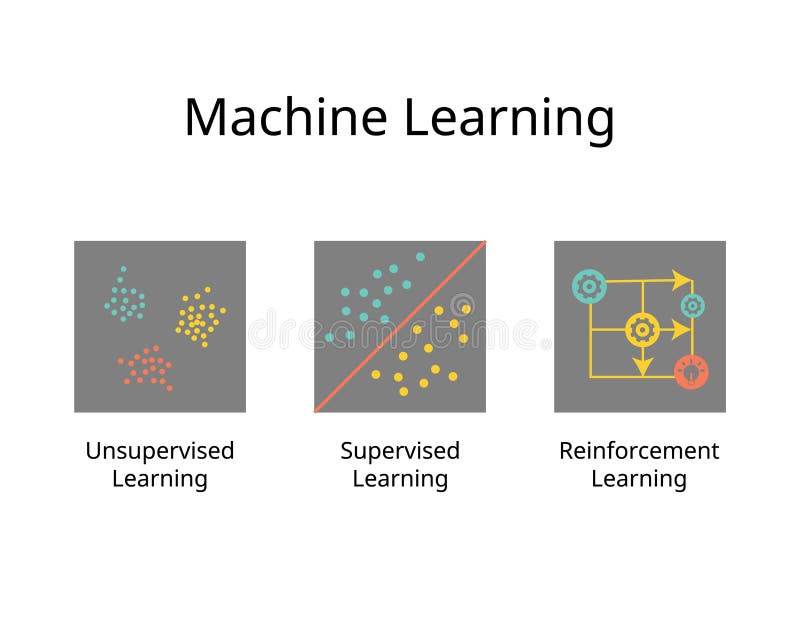
Free with trial Machine Learning for Unsupervised Learning, supervised learning, reinforcement learning. Vector. Data preprocessing vectors Machine Learning for Unsupervised Learning, supervised learning, reinforcement learning. Vector
Free with trial File preview multi colored flat icons on plain square backgrounds. Included white and darker icon variations for hover or active effects. Data preprocessing vectors File preview square flat multi colored icons. File preview multi colored flat icons on plain square backgrounds. Included white and darker icon variations for. File preview multi colored flat icons on plain square backgrounds. Included white and darker icon variations for hover or active effects
Free with trial File preview dark push buttons with color icons. File preview dark push buttons with vivid color icons on dark grey background. Data preprocessing vectors File preview dark push buttons with color icons. File preview dark push buttons with vivid color icons on dark grey background
Free with trial File preview white icons on edged square buttons. In various trendy colors. Data preprocessing vectors File preview white icons on edged square buttons. In various trendy colors
Free with trial File preview flat white icons on round color backgrounds. 17 background color variations are included. Data preprocessing vectors File preview flat white icons on round color backgrounds. 17 background color variations are included
Free with trial Generating an image of a delicious juicy hamburger using AI involves training a model to understand the characteristics of hamburgers and then generating images that resemble them. One approach is to use a Generative Adversarial Network (GAN) to create realistic images. Here's a simplified approach using TensorFlow and Keras: Data Collection: Gather a dataset of images containing various types of hamburgers. Ensure that the images cover different angles, toppings, and variations. Preprocessing: Resize all images to a uniform size and format. Normalize the pixel values if required. Model Training: Train a GAN model on the preprocessed dataset. The GAN consists of a generator network that generates images and a discriminator network that tries to distinguish between real and fake images. Generating Images: Once the model is trained, use the generator network to generate images of hamburgers. You may need to provide some input to the generator network to control the features of the generated images, such as the type of toppings or the amount of sauce. Data preprocessing illustrations Delicious juicy hamburger AI generated. Generating an image of a delicious juicy hamburger using AI involves training a model to understand the characteristics. Generating an image of a delicious juicy hamburger using AI involves training a model to understand the characteristics of hamburgers and then generating images that resemble them. One approach is to use a Generative Adversarial Network (GAN) to create realistic images. Here's a simplified approach using TensorFlow and Keras: Data Collection: Gather a dataset of images containing various types of hamburgers. Ensure that the images cover different angles, toppings, and variations. Preprocessing: Resize all images to a uniform size and format. Normalize the pixel values if required. Model Training: Train a GAN model on the preprocessed dataset. The GAN consists of a generator network that generates images and a discriminator network that tries to distinguish between real and fake images. Generating Images: Once the model is trained, use the generator network to generate images of hamburgers. You may need to provide some input to the generator network to control the features of the generated images, such as the type of toppings or the amount of sauce.
Free with trial Generating an image of a delicious juicy hamburger using AI involves training a model to understand the characteristics of hamburgers and then generating images that resemble them. One approach is to use a Generative Adversarial Network (GAN) to create realistic images. Here's a simplified approach using TensorFlow and Keras: Data Collection: Gather a dataset of images containing various types of hamburgers. Ensure that the images cover different angles, toppings, and variations. Preprocessing: Resize all images to a uniform size and format. Normalize the pixel values if required. Model Training: Train a GAN model on the preprocessed dataset. The GAN consists of a generator network that generates images and a discriminator network that tries to distinguish between real and fake images. Generating Images: Once the model is trained, use the generator network to generate images of hamburgers. You may need to provide some input to the generator network to control the features of the generated images, such as the type of toppings or the amount of sauce. Data preprocessing illustrations Delicious juicy hamburger AI generated. Generating an image of a delicious juicy hamburger using AI involves training a model to understand the characteristics. Generating an image of a delicious juicy hamburger using AI involves training a model to understand the characteristics of hamburgers and then generating images that resemble them. One approach is to use a Generative Adversarial Network (GAN) to create realistic images. Here's a simplified approach using TensorFlow and Keras: Data Collection: Gather a dataset of images containing various types of hamburgers. Ensure that the images cover different angles, toppings, and variations. Preprocessing: Resize all images to a uniform size and format. Normalize the pixel values if required. Model Training: Train a GAN model on the preprocessed dataset. The GAN consists of a generator network that generates images and a discriminator network that tries to distinguish between real and fake images. Generating Images: Once the model is trained, use the generator network to generate images of hamburgers. You may need to provide some input to the generator network to control the features of the generated images, such as the type of toppings or the amount of sauce.
Free with trial Generating an image of a delicious juicy hamburger using AI involves training a model to understand the characteristics of hamburgers and then generating images that resemble them. One approach is to use a Generative Adversarial Network (GAN) to create realistic images. Here's a simplified approach using TensorFlow and Keras: Data Collection: Gather a dataset of images containing various types of hamburgers. Ensure that the images cover different angles, toppings, and variations. Preprocessing: Resize all images to a uniform size and format. Normalize the pixel values if required. Model Training: Train a GAN model on the preprocessed dataset. The GAN consists of a generator network that generates images and a discriminator network that tries to distinguish between real and fake images. Generating Images: Once the model is trained, use the generator network to generate images of hamburgers. You may need to provide some input to the generator network to control the features of the generated images, such as the type of toppings or the amount of sauce. Data preprocessing illustrations Delicious juicy hamburger AI generated. Generating an image of a delicious juicy hamburger using AI involves training a model to understand the characteristics. Generating an image of a delicious juicy hamburger using AI involves training a model to understand the characteristics of hamburgers and then generating images that resemble them. One approach is to use a Generative Adversarial Network (GAN) to create realistic images. Here's a simplified approach using TensorFlow and Keras: Data Collection: Gather a dataset of images containing various types of hamburgers. Ensure that the images cover different angles, toppings, and variations. Preprocessing: Resize all images to a uniform size and format. Normalize the pixel values if required. Model Training: Train a GAN model on the preprocessed dataset. The GAN consists of a generator network that generates images and a discriminator network that tries to distinguish between real and fake images. Generating Images: Once the model is trained, use the generator network to generate images of hamburgers. You may need to provide some input to the generator network to control the features of the generated images, such as the type of toppings or the amount of sauce.
Free with trial File preview flat round icons. File preview flat white icons on round color backgrounds. Data preprocessing vectors File preview flat round icons. File preview flat white icons on round color backgrounds
Free with trial Generating an image of a baseball and a wooden bat using AI involves training a model to understand the characteristics of baseballs and bats and then generating images that combine these elements realistically. Here's a simplified approach using Generative Adversarial Networks (GANs): Data Collection: Gather a dataset of images containing baseballs and wooden bats. Ensure that the images are diverse and cover different angles, lighting conditions, and variations of both the baseballs and bats. Preprocessing: Resize all images to a uniform size and format. Normalize the pixel values if required. Model Training: Train a GAN model on the preprocessed dataset. The GAN consists of a generator network that generates images and a discriminator network that tries to distinguish between real and fake images. Generating Images: Once the model is trained, use the generator network to generate images of baseballs and bats. You may need to provide some input to the generator network to control the features of the generated images, such as the size and position of the baseball relative to the bat. Data preprocessing illustrations Baseball and wooden bat AI generated. Generating an image of a baseball and a wooden bat using AI involves training a model to understand the characteristics of. Generating an image of a baseball and a wooden bat using AI involves training a model to understand the characteristics of baseballs and bats and then generating images that combine these elements realistically. Here's a simplified approach using Generative Adversarial Networks (GANs): Data Collection: Gather a dataset of images containing baseballs and wooden bats. Ensure that the images are diverse and cover different angles, lighting conditions, and variations of both the baseballs and bats. Preprocessing: Resize all images to a uniform size and format. Normalize the pixel values if required. Model Training: Train a GAN model on the preprocessed dataset. The GAN consists of a generator network that generates images and a discriminator network that tries to distinguish between real and fake images. Generating Images: Once the model is trained, use the generator network to generate images of baseballs and bats. You may need to provide some input to the generator network to control the features of the generated images, such as the size and position of the baseball relative to the bat.
Free with trial Generating an image of a baseball and a wooden bat using AI involves training a model to understand the characteristics of baseballs and bats and then generating images that combine these elements realistically. Here's a simplified approach using Generative Adversarial Networks (GANs): Data Collection: Gather a dataset of images containing baseballs and wooden bats. Ensure that the images are diverse and cover different angles, lighting conditions, and variations of both the baseballs and bats. Preprocessing: Resize all images to a uniform size and format. Normalize the pixel values if required. Model Training: Train a GAN model on the preprocessed dataset. The GAN consists of a generator network that generates images and a discriminator network that tries to distinguish between real and fake images. Generating Images: Once the model is trained, use the generator network to generate images of baseballs and bats. You may need to provide some input to the generator network to control the features of the generated images, such as the size and position of the baseball relative to the bat. Data preprocessing illustrations Baseball and wooden bat AI generated. Generating an image of a baseball and a wooden bat using AI involves training a model to understand the characteristics of. Generating an image of a baseball and a wooden bat using AI involves training a model to understand the characteristics of baseballs and bats and then generating images that combine these elements realistically. Here's a simplified approach using Generative Adversarial Networks (GANs): Data Collection: Gather a dataset of images containing baseballs and wooden bats. Ensure that the images are diverse and cover different angles, lighting conditions, and variations of both the baseballs and bats. Preprocessing: Resize all images to a uniform size and format. Normalize the pixel values if required. Model Training: Train a GAN model on the preprocessed dataset. The GAN consists of a generator network that generates images and a discriminator network that tries to distinguish between real and fake images. Generating Images: Once the model is trained, use the generator network to generate images of baseballs and bats. You may need to provide some input to the generator network to control the features of the generated images, such as the size and position of the baseball relative to the bat.
Free with trial Generating an image of a baseball and a wooden bat using AI involves training a model to understand the characteristics of baseballs and bats and then generating images that combine these elements realistically. Here's a simplified approach using Generative Adversarial Networks (GANs): Data Collection: Gather a dataset of images containing baseballs and wooden bats. Ensure that the images are diverse and cover different angles, lighting conditions, and variations of both the baseballs and bats. Preprocessing: Resize all images to a uniform size and format. Normalize the pixel values if required. Model Training: Train a GAN model on the preprocessed dataset. The GAN consists of a generator network that generates images and a discriminator network that tries to distinguish between real and fake images. Generating Images: Once the model is trained, use the generator network to generate images of baseballs and bats. You may need to provide some input to the generator network to control the features of the generated images, such as the size and position of the baseball relative to the bat. Data preprocessing illustrations Baseball and wooden bat AI generated. Generating an image of a baseball and a wooden bat using AI involves training a model to understand the characteristics of. Generating an image of a baseball and a wooden bat using AI involves training a model to understand the characteristics of baseballs and bats and then generating images that combine these elements realistically. Here's a simplified approach using Generative Adversarial Networks (GANs): Data Collection: Gather a dataset of images containing baseballs and wooden bats. Ensure that the images are diverse and cover different angles, lighting conditions, and variations of both the baseballs and bats. Preprocessing: Resize all images to a uniform size and format. Normalize the pixel values if required. Model Training: Train a GAN model on the preprocessed dataset. The GAN consists of a generator network that generates images and a discriminator network that tries to distinguish between real and fake images. Generating Images: Once the model is trained, use the generator network to generate images of baseballs and bats. You may need to provide some input to the generator network to control the features of the generated images, such as the size and position of the baseball relative to the bat.
Free with trial Generating an image of a baseball and a wooden bat using AI involves training a model to understand the characteristics of baseballs and bats and then generating images that combine these elements realistically. Here's a simplified approach using Generative Adversarial Networks (GANs): Data Collection: Gather a dataset of images containing baseballs and wooden bats. Ensure that the images are diverse and cover different angles, lighting conditions, and variations of both the baseballs and bats. Preprocessing: Resize all images to a uniform size and format. Normalize the pixel values if required. Model Training: Train a GAN model on the preprocessed dataset. The GAN consists of a generator network that generates images and a discriminator network that tries to distinguish between real and fake images. Generating Images: Once the model is trained, use the generator network to generate images of baseballs and bats. You may need to provide some input to the generator network to control the features of the generated images, such as the size and position of the baseball relative to the bat. Data preprocessing illustrations Baseball and wooden bat AI generated. Generating an image of a baseball and a wooden bat using AI involves training a model to understand the characteristics of. Generating an image of a baseball and a wooden bat using AI involves training a model to understand the characteristics of baseballs and bats and then generating images that combine these elements realistically. Here's a simplified approach using Generative Adversarial Networks (GANs): Data Collection: Gather a dataset of images containing baseballs and wooden bats. Ensure that the images are diverse and cover different angles, lighting conditions, and variations of both the baseballs and bats. Preprocessing: Resize all images to a uniform size and format. Normalize the pixel values if required. Model Training: Train a GAN model on the preprocessed dataset. The GAN consists of a generator network that generates images and a discriminator network that tries to distinguish between real and fake images. Generating Images: Once the model is trained, use the generator network to generate images of baseballs and bats. You may need to provide some input to the generator network to control the features of the generated images, such as the size and position of the baseball relative to the bat.
Free with trial File preview square flat icons. File preview flat icons on simple color square backgrounds. Data preprocessing vectors File preview square flat icons. File preview flat icons on simple color square backgrounds
Free with trial File preview flat icons on color rounded square backgrounds. 6 bonus icons included. Data preprocessing vectors File preview flat icons on color rounded square backgrounds. File preview white flat icons on color rounded square backgrounds. 6 bonus icons included
Free with trial Machine Learning Cover photo design with typography and wireframe glowing surface along illustration. Data preprocessing illustrations Machine Learning Cover photo design with typography and wireframe glowing surface along illustration.
Free with trial 3D illustration of robot learning describing machine learning concept, Created using AI generative tools. Data preprocessing illustrations Robot learning describing machine learning concept, Created using AI generative tools. 3D illustration of robot learning describing machine learning concept. 3D illustration of robot learning describing machine learning concept, Created using AI generative tools
Free with trial File preview flat round icons. File preview flat white icons on round color backgrounds. 6 bonus icons included. Data preprocessing vectors File preview flat round icons. File preview flat white icons on round color backgrounds. 6 bonus icons included
Free with trial File preview flat framed icons. File preview flat color icons in square frames on white background. Data preprocessing vectors File preview flat framed icons. File preview flat color icons in square frames on white background
Free with trial File preview rounded square flat icons. File preview white flat icons on color rounded square backgrounds. Data preprocessing vectors File preview rounded square flat icons. File preview white flat icons on color rounded square backgrounds
Free with trial File preview color darker flat icons. File preview darker flat icons on color round background. Data preprocessing vectors File preview color darker flat icons. File preview darker flat icons on color round background
Free with trial File preview vivid colored flat icons. In curved borders on white background. Data preprocessing vectors File preview vivid colored flat icons. In curved borders on white background
Free with trial File preview outlined flat color icons. File preview color flat icons in rounded square frames. Thin and thick versions included. Data preprocessing vectors File preview outlined flat color icons. File preview color flat icons in rounded square frames. Thin and thick versions included
Free with trial File preview multi colored flat icons on round backgrounds. Included white, light and dark icon variations for hover and active status effects, and bonus shades. Data preprocessing vectors File preview round flat multi colored icons. File preview multi colored flat icons on round backgrounds. Included white, light and dark icon variations for hover. File preview multi colored flat icons on round backgrounds. Included white, light and dark icon variations for hover and active status effects, and bonus shades
Free with trial File preview flat color icons in round outlines. 6 bonus icons included. Data preprocessing vectors File preview flat color icons in round outlines. 6 bonus icons included
Free with trial File preview flat icons with outlines. File preview flat color icons in round outlines on white background. Data preprocessing vectors File preview flat icons with outlines. File preview flat color icons in round outlines on white background
Free with trial File preview flat white icons in square backgrounds. 6 bonus icons included. Data preprocessing vectors File preview flat white icons in square backgrounds. 6 bonus icons included
Free with trial File preview color glass buttons. File preview white icons on round glass buttons in multiple colors. Data preprocessing vectors File preview color glass buttons. File preview white icons on round glass buttons in multiple colors
Free with trial File preview color glass buttons. File preview icons on round glass buttons in multiple colors. Arranged layer structure. Data preprocessing vectors File preview color glass buttons. File preview icons on round glass buttons in multiple colors. Arranged layer structure
Free with trial File preview color glass buttons. File preview icons on round glass buttons in multiple colors. Arranged layer structure. Data preprocessing vectors File preview color glass buttons. File preview icons on round glass buttons in multiple colors. Arranged layer structure
Free with trial File preview flat color icons with quadrant frames. On white background. Data preprocessing vectors File preview flat color icons with quadrant frames. On white background
Free with trial File preview flat color icons with quadrant frames. On white background. Data preprocessing vectors File preview flat color icons with quadrant frames. On white background
Free with trial File preview flat icons on color rounded square backgrounds. 6 bonus icons included. Data preprocessing vectors File preview flat icons on color rounded square backgrounds. File preview white flat icons on color rounded square backgrounds. 6 bonus icons included
Free with trial File preview rounded square flat icons. File preview flat icons on rounded square vivid color backgrounds. Data preprocessing vectors File preview rounded square flat icons. File preview flat icons on rounded square vivid color backgrounds
Free with trial Intelligent Machines Advancing Artificial Intelligence, Generative AI. Intelligent Machines Advancing Artificial Intelligence. Data preprocessing illustrations Intelligent Machines Advancing Artificial Intelligence, Generative AI. Intelligent Machines Advancing Artificial Intelligence
Free with trial Intelligent Machines Advancing Artificial Intelligence, Generative AI. Intelligent Machines Advancing Artificial Intelligence. Data preprocessing illustrations Intelligent Machines Advancing Artificial Intelligence, Generative AI. Intelligent Machines Advancing Artificial Intelligence
 Sign in