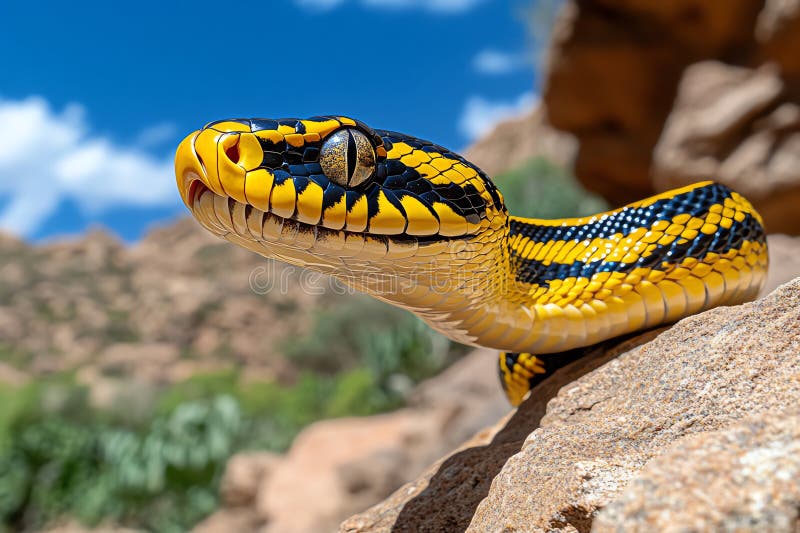
Free with trial Closeup of a Striking Yellow Python Snake with Intricate Scales Patterns and Piercing Eyes This Vibrant Reptile Embodies the Beauty and Danger of the Natural World. Serpent python illustrations Closeup of a Striking Yellow Python Snake with Intricate Scales Patterns and Piercing Eyes This Vibrant Reptile Embodies the. Beauty and Danger of the Natural
Free with trial Vibrant Digital Illustration of a Purple Python Amongst Lush Fantasy Foliage on a Starry Night Background. AI Generative. Serpent python illustrations Vibrant Digital Illustration of a Purple Python Amongst Lush Fantasy Foliage on a Starry Night Background. AI Generative
Free with trial Majestic Green Python Resting on Floating Island Above the Clouds, Fantasy Wildlife Concept Illustration. AI Generative. Serpent python illustrations Majestic Green Python Resting on Floating Island Above the Clouds, Fantasy Wildlife Concept Illustration. AI Generative
Free with trial Snake Python, Golden, and Rocky Terrain visualized in a rugged, rocky landscape where a golden python slithers across the stones, its scales shimmering in the sunlight. Serpent python illustrations Snake Python, Golden, and Rocky Terrain visualized in a rugged, rocky landscape where a golden python slithers across the stones,. Its scales shimmering in the
Free with trial Snake vector icon. Viper symbol, serpent sign, anaconda simple silhouette isolated. On white background. Serpent python vectors Snake vector icon. Viper symbol, serpent sign, anaconda simple silhouette isolated. On white background
Free with trial Snake vector icon. Viper symbol, serpent sign, anaconda simple silhouette isolated. On white background. Serpent python vectors Snake vector icon. Viper symbol, serpent sign, anaconda simple silhouette isolated. On white background
Free with trial Snake vector icon. Viper symbol, serpent sign, anaconda simple silhouette isolated. On white background. Serpent python vectors Snake vector icon. Viper symbol, serpent sign, anaconda simple silhouette isolated. On white background
Free with trial Snake vector icon. Viper symbol, serpent sign, anaconda simple silhouette isolated. On white background. Serpent python vectors Snake vector icon. Viper symbol, serpent sign, anaconda simple silhouette isolated. On white background
Free with trial Snake vector icon set. Viper symbol, serpent sign, anaconda simple silhouette collection isolated on white background. Serpent python vectors Snake vector icon. Viper symbol, serpent sign, anaconda simple silhouette isolated. Snake vector icon set. Viper symbol, serpent sign, anaconda simple silhouette. Snake vector icon set. Viper symbol, serpent sign, anaconda simple silhouette collection isolated on white background
Free with trial Snake vector icon. Viper symbol, serpent sign, anaconda simple silhouette isolated. On white background. Serpent python vectors Snake vector icon. Viper symbol, serpent sign, anaconda simple silhouette isolated. On white background
Free with trial Snake vector icon. Viper symbol, serpent sign, anaconda simple silhouette isolated. On white background. Serpent python vectors Snake vector icon. Viper symbol, serpent sign, anaconda simple silhouette isolated. On white background
Free with trial Snake vector icon. Viper symbol, serpent sign, anaconda simple silhouette isolated. On white background. Serpent python vectors Snake vector icon. Viper symbol, serpent sign, anaconda simple silhouette isolated. On white background
Free with trial Snake vector icon. Viper symbol, serpent sign, anaconda simple silhouette isolated. On white background. Serpent python vectors Snake vector icon. Viper symbol, serpent sign, anaconda simple silhouette isolated. On white background
Free with trial Snake vector icon. Viper symbol, serpent sign, anaconda simple silhouette isolated. On white background. Serpent python vectors Snake vector icon. Viper symbol, serpent sign, anaconda simple silhouette isolated. On white background
Free with trial Snake vector icon. Viper symbol, serpent sign, anaconda simple silhouette isolated. On white background. Serpent python illustrations Snake vector icon. Viper symbol, serpent sign, anaconda simple silhouette isolated. On white background
Free with trial Snake vector icon. Viper symbol, serpent sign, anaconda simple silhouette isolated. On white background. Serpent python vectors Snake vector icon. Viper symbol, serpent sign, anaconda simple silhouette isolated. On white background
Free with trial Snake vector icon. Viper symbol, serpent sign, anaconda simple silhouette isolated. On white background. Serpent python vectors Snake vector icon. Viper symbol, serpent sign, anaconda simple silhouette isolated. On white background
Free with trial Python snake Cartoon illustration. wildlife animal isolated. Reptile cartoon collection. Snake Cartoon character. Serpent python illustrations Python snake Cartoon illustration. Wildlife animal isolated. Reptile cartoon collection. Snake Cartoon character
Free with trial Yellow and white python resting on rock. Close-up of a striking yellow and white python coiled on a dark rock. Serpent python illustrations Yellow and white python resting on rock. Close-up of a striking yellow and white python coiled on a dark rock
Free with trial A python with vivid orange, black, and yellow patterns lies comfortably on a wooden log in its natural habitat. The intricate details of its scales are beautifully highlighted in the setting. Serpent python illustrations Brightly colored python resting on a wooden log in a natural habitat setting, showcasing its vibrant scales and patterns. A python with vivid orange, black, and. A python with vivid orange, black, and yellow patterns lies comfortably on a wooden log in its natural habitat. The intricate details of its scales are beautifully highlighted in the setting.
Free with trial A detailed close-up photograph of a green tree python, showcasing the intricate patterns and vibrant green hues of its scales. dewdrops on the reptile's skin highlight the freshness of its natural rainforest habitat, emphasizing its tranquil and alert stance. Generative AI. Serpent python illustrations Close-Up of a Green Tree Python in Natural Habitat, Ideal for Nature and Wildlife Photography Generative AI. A detailed close-up photograph of a green tree. A detailed close-up photograph of a green tree python, showcasing the intricate patterns and vibrant green hues of its scales. dewdrops on the reptile's skin highlight the freshness of its natural rainforest habitat, emphasizing its tranquil and alert stance. Generative AI
Free with trial Close up of a python in the tree. Close up of a python coiled on a branch in the tree. Generative AI. Serpent python illustrations Close up of a python in the tree. Close up of a python coiled on a branch in the tree. Generative AI
Free with trial Illustration features a vibrant green tree python coiled on a mossy tree branch, set against a backdrop of lush jungle and distant mountains. Serpent python illustrations Green Tree Python Coiled on Mossy Branch in Forest, Serpentine Wildlife. Illustration features a vibrant green tree python coiled on a mossy tree branch, set. Illustration features a vibrant green tree python coiled on a mossy tree branch, set against a backdrop of lush jungle and distant mountains
Free with trial Close up portrait of an alert venomous green python reptile sticking out its distinctive forked tongue in the lush verdant foliage of a tropical jungle or rainforest environment. Serpent python illustrations Close up portrait of an alert venomous green python reptile sticking out its distinctive forked tongue in the lush verdant foliage. Of a tropical jungle or
Free with trial Celestial serpent snake, esoteric tarot or tattoo mystery sacred symbol. Linocut style boho. Occultism and religion, sacred rites and sacrifice. Reptile. Vector illustration. Serpent python vectors Celestial serpent snake, esoteric tarot or tattoo mystery sacred symbol. Linocut style boho. Occultism and religion. Sacred rites and sacrifice. Reptile
Free with trial Closeup of a Vibrant and Beautifully Patterned Yellow Python Snake Coiled and Resting in a Lush Tropical Jungle or Forest Habitat. Closeup of a Vibrant and. Serpent python illustrations Closeup of a Vibrant and Beautifully Patterned Yellow Python Snake Coiled and Resting in a Lush Tropical Jungle or Forest Habitat. Closeup of a Vibrant and
Free with trial Close-Up of a Coiled Python. A close-up photo of a coiled python. The snake's scales are visible and the pattern is intricate. Serpent python illustrations Close-Up of a Coiled Python. A close-up photo of a coiled python. The snake's scales are visible and the pattern is intricate
Free with trial Majestic python lurking in water. Closeup of a vibrant python snake with intricate scales, partially submerged in murky water AI generated. Serpent python illustrations Majestic python lurking in water. Closeup of a vibrant python snake with intricate scales, partially submerged in murky water AI generated
Free with trial Cartoon reticulated python isolated on white background. Vector illustration. Serpent python vectors Cartoon reticulated python isolated on white background. Vector illustration
Free with trial A captivating close-up captures the emerald beauty of a Green Tree Python in its natural habitat Its sleek scales shimmer, showcasing the elegance of this magnificent reptile The vibrant green blends seamlessly with the lush foliage, highlighting its mastery of camouflage This stunning portrait reveals the mesmerizing grace and wild beauty of one of nature's most enchanting creatures AI. Serpent python illustrations Stunning Close Up of a Green Tree Python in its Natural Habitat Capturing the Beauty and Elegance of One of Nature Most. A captivating close-up captures the. A captivating close-up captures the emerald beauty of a Green Tree Python in its natural habitat Its sleek scales shimmer, showcasing the elegance of this magnificent reptile The vibrant green blends seamlessly with the lush foliage, highlighting its mastery of camouflage This stunning portrait reveals the mesmerizing grace and wild beauty of one of nature's most enchanting creatures AI
Free with trial Coiled snake in an infinity shape, likely a Ball Python (*Python regius*). The snake has a dark brown, glossy body with distinct lighter yellowish markings running along its length. The scales appear smooth and tightly packed, reflecting light in places. Its head is positioned in the center, eyes visible, with a focused gaze. Set against a blurred, neutral-toned background, emphasizing the snake's patterns. Ball Pythons are native to West and Central Africa and known for their calm nature. Serpent python illustrations Coiled snake in an infinity shape, likely a Ball Python (*Python regius*). The snake. Has a dark brown, glossy body with distinct lighter yellowish markings. Coiled snake in an infinity shape, likely a Ball Python (*Python regius*). The snake has a dark brown, glossy body with distinct lighter yellowish markings running along its length. The scales appear smooth and tightly packed, reflecting light in places. Its head is positioned in the center, eyes visible, with a focused gaze. Set against a blurred, neutral-toned background, emphasizing the snake's patterns. Ball Pythons are native to West and Central Africa and known for their calm nature.
Free with trial A large snake, possibly a python, rests on cracked, dry earth under bright sunlight. Its patterned scales feature shades of brown and tan, providing camouflage against the arid landscape. The texture of the ground suggests a desert or semi-arid environment. The snake is positioned in a gentle curve, creating a dynamic visual against the barren terrain. No vegetation or other animals are visible, emphasizing the desolate setting. Serpent python illustrations A large snake, possibly a python, rests on cracked, dry earth under bright sunligh. T. Its patterned scales feature shades of brown and tan, providing camouflage. A large snake, possibly a python, rests on cracked, dry earth under bright sunlight. Its patterned scales feature shades of brown and tan, providing camouflage against the arid landscape. The texture of the ground suggests a desert or semi-arid environment. The snake is positioned in a gentle curve, creating a dynamic visual against the barren terrain. No vegetation or other animals are visible, emphasizing the desolate setting.
Free with trial Close up View of an Orange and Black Patterned Python in Water, Exotic Reptile with Detailed Scales Reflecting in Still Pond. AI Generative. Serpent python illustrations Close up View of an Orange and Black Patterned Python in Water, Exotic Reptile with Detailed Scales Reflecting in Still Pond. AI Generative
Free with trial Emerald python coiled on branch wrapped in tight spiral. Serpent python illustrations Emerald python coiled on branch wrapped in tight spiral.
Free with trial Python basking on a sunlit trail, created with generative ai. Serpent python illustrations Python basking on a sunlit trail. Created with generative ai AI generated. python basking on a sunlit trail, created with generative ai
Free with trial A ball python lies relaxed on a cool metal surface, exhibiting distinct color patterns. AI generated. Serpent python illustrations A ball python lies relaxed on a cool metal surface, exhibiting distinct color patterns. AI generated
Free with trial Snake oriental set cartoon. python serpent, scales fangs, slither reptile snake oriental sign. isolated symbol vector illustration. Serpent python illustrations Snake oriental set cartoon vector illustration. Snake oriental set cartoon. python serpent, scales fangs, slither reptile snake oriental sign. isolated symbol. snake oriental set cartoon. python serpent, scales fangs, slither reptile snake oriental sign. isolated symbol vector illustration
Free with trial A close-up view of an orange python showcasing its intricate scales against a smooth background. Ideal for wildlife and nature themes. Serpent python illustrations Orange Python on Smooth Background. A close-up view of an orange python showcasing its intricate scales against a smooth background. Ideal for wildlife and. A close-up view of an orange python showcasing its intricate scales against a smooth background. Ideal for wildlife and nature themes
Free with trial Serpent snake oriental cartoon. scales fangs, slither reptile, danger exotic serpent snake oriental sign. isolated symbol vector illustration. Serpent python illustrations Serpent snake oriental cartoon vector illustration. Serpent snake oriental cartoon. scales fangs, slither reptile, danger exotic serpent snake oriental sign. serpent snake oriental cartoon. scales fangs, slither reptile, danger exotic serpent snake oriental sign. isolated symbol vector illustration
Free with trial A detailed image of a patterned python wrapped around a tree branch against a clean white background. The snake's intricate scales and the textures of the wood are clearly visible. Generative AI. Serpent python illustrations Python coiled on a branch. A detailed image of a patterned python wrapped around a tree branch against a clean white background. The snake's intricate scales and. A detailed image of a patterned python wrapped around a tree branch against a clean white background. The snake's intricate scales and the textures of the wood are clearly visible. Generative AI
Free with trial Spring Festival Poster. Chinese New Year red serpent snake with flowers and green leaves on bright background, copy space, de focused. Cutout flat layered style illustration banner. Serpent python illustrations Spring Festival Poster. Chinese New Year red serpent snake with flowers and green leaves on bright background, copy space, de. Focused. Cutout flat layered. Spring Festival Poster. Chinese New Year red serpent snake with flowers and green leaves on bright background, copy space, de focused. Cutout flat layered style illustration banner
Free with trial The Chinese dragon is a mythical creature in traditional Chinese culture, typically described as a colossal serpent-like being with scales resembling those of a python. It has features such as mane, deer horns, deer ears, hooves, ox whiskers, catfish-like whiskers, the eyes of a deer, and tiger fangs. It is usually a fearsome yet auspicious presence. In Chinese culture, the Chinese dragon is considered a symbol of good fortune, authority, and power, often appearing in festivals and significant events. Serpent python illustrations A highly realistic Chinese dragon in various environments. The Chinese dragon is a mythical creature in traditional Chinese culture, typically described as a. The Chinese dragon is a mythical creature in traditional Chinese culture, typically described as a colossal serpent-like being with scales resembling those of a python. It has features such as mane, deer horns, deer ears, hooves, ox whiskers, catfish-like whiskers, the eyes of a deer, and tiger fangs. It is usually a fearsome yet auspicious presence. In Chinese culture, the Chinese dragon is considered a symbol of good fortune, authority, and power, often appearing in festivals and significant events.
Free with trial The Chinese dragon is a mythical creature in traditional Chinese culture, typically described as a colossal serpent-like being with scales resembling those of a python. It has features such as mane, deer horns, deer ears, hooves, ox whiskers, catfish-like whiskers, the eyes of a deer, and tiger fangs. It is usually a fearsome yet auspicious presence. In Chinese culture, the Chinese dragon is considered a symbol of good fortune, authority, and power, often appearing in festivals and significant events. Serpent python illustrations A highly realistic Chinese dragon in various environments. The Chinese dragon is a mythical creature in traditional Chinese culture, typically described as a. The Chinese dragon is a mythical creature in traditional Chinese culture, typically described as a colossal serpent-like being with scales resembling those of a python. It has features such as mane, deer horns, deer ears, hooves, ox whiskers, catfish-like whiskers, the eyes of a deer, and tiger fangs. It is usually a fearsome yet auspicious presence. In Chinese culture, the Chinese dragon is considered a symbol of good fortune, authority, and power, often appearing in festivals and significant events.
Free with trial The Chinese dragon is a mythical creature in traditional Chinese culture, typically described as a colossal serpent-like being with scales resembling those of a python. It has features such as mane, deer horns, deer ears, hooves, ox whiskers, catfish-like whiskers, the eyes of a deer, and tiger fangs. It is usually a fearsome yet auspicious presence. In Chinese culture, the Chinese dragon is considered a symbol of good fortune, authority, and power, often appearing in festivals and significant events. Serpent python illustrations A highly realistic Chinese dragon in various environments. The Chinese dragon is a mythical creature in traditional Chinese culture, typically described as a. The Chinese dragon is a mythical creature in traditional Chinese culture, typically described as a colossal serpent-like being with scales resembling those of a python. It has features such as mane, deer horns, deer ears, hooves, ox whiskers, catfish-like whiskers, the eyes of a deer, and tiger fangs. It is usually a fearsome yet auspicious presence. In Chinese culture, the Chinese dragon is considered a symbol of good fortune, authority, and power, often appearing in festivals and significant events.
Free with trial The Chinese dragon is a mythical creature in traditional Chinese culture, typically described as a colossal serpent-like being with scales resembling those of a python. It has features such as mane, deer horns, deer ears, hooves, ox whiskers, catfish-like whiskers, the eyes of a deer, and tiger fangs. It is usually a fearsome yet auspicious presence. In Chinese culture, the Chinese dragon is considered a symbol of good fortune, authority, and power, often appearing in festivals and significant events. Serpent python illustrations A highly realistic Chinese dragon in various environments. The Chinese dragon is a mythical creature in traditional Chinese culture, typically described as a. The Chinese dragon is a mythical creature in traditional Chinese culture, typically described as a colossal serpent-like being with scales resembling those of a python. It has features such as mane, deer horns, deer ears, hooves, ox whiskers, catfish-like whiskers, the eyes of a deer, and tiger fangs. It is usually a fearsome yet auspicious presence. In Chinese culture, the Chinese dragon is considered a symbol of good fortune, authority, and power, often appearing in festivals and significant events.
Free with trial The Chinese dragon is a mythical creature in traditional Chinese culture, typically described as a colossal serpent-like being with scales resembling those of a python. It has features such as mane, deer horns, deer ears, hooves, ox whiskers, catfish-like whiskers, the eyes of a deer, and tiger fangs. It is usually a fearsome yet auspicious presence. In Chinese culture, the Chinese dragon is considered a symbol of good fortune, authority, and power, often appearing in festivals and significant events. Serpent python illustrations A highly realistic Chinese dragon in various environments. The Chinese dragon is a mythical creature in traditional Chinese culture, typically described as a. The Chinese dragon is a mythical creature in traditional Chinese culture, typically described as a colossal serpent-like being with scales resembling those of a python. It has features such as mane, deer horns, deer ears, hooves, ox whiskers, catfish-like whiskers, the eyes of a deer, and tiger fangs. It is usually a fearsome yet auspicious presence. In Chinese culture, the Chinese dragon is considered a symbol of good fortune, authority, and power, often appearing in festivals and significant events.
Free with trial The Chinese dragon is a mythical creature in traditional Chinese culture, typically described as a colossal serpent-like being with scales resembling those of a python. It has features such as mane, deer horns, deer ears, hooves, ox whiskers, catfish-like whiskers, the eyes of a deer, and tiger fangs. It is usually a fearsome yet auspicious presence. In Chinese culture, the Chinese dragon is considered a symbol of good fortune, authority, and power, often appearing in festivals and significant events. Serpent python illustrations A highly realistic Chinese dragon in various environments. The Chinese dragon is a mythical creature in traditional Chinese culture, typically described as a. The Chinese dragon is a mythical creature in traditional Chinese culture, typically described as a colossal serpent-like being with scales resembling those of a python. It has features such as mane, deer horns, deer ears, hooves, ox whiskers, catfish-like whiskers, the eyes of a deer, and tiger fangs. It is usually a fearsome yet auspicious presence. In Chinese culture, the Chinese dragon is considered a symbol of good fortune, authority, and power, often appearing in festivals and significant events.
Free with trial The Chinese dragon is a mythical creature in traditional Chinese culture, typically described as a colossal serpent-like being with scales resembling those of a python. It has features such as mane, deer horns, deer ears, hooves, ox whiskers, catfish-like whiskers, the eyes of a deer, and tiger fangs. It is usually a fearsome yet auspicious presence. In Chinese culture, the Chinese dragon is considered a symbol of good fortune, authority, and power, often appearing in festivals and significant events. Serpent python illustrations A highly realistic Chinese dragon in various environments. The Chinese dragon is a mythical creature in traditional Chinese culture, typically described as a. The Chinese dragon is a mythical creature in traditional Chinese culture, typically described as a colossal serpent-like being with scales resembling those of a python. It has features such as mane, deer horns, deer ears, hooves, ox whiskers, catfish-like whiskers, the eyes of a deer, and tiger fangs. It is usually a fearsome yet auspicious presence. In Chinese culture, the Chinese dragon is considered a symbol of good fortune, authority, and power, often appearing in festivals and significant events.
Free with trial The Chinese dragon is a mythical creature in traditional Chinese culture, typically described as a colossal serpent-like being with scales resembling those of a python. It has features such as mane, deer horns, deer ears, hooves, ox whiskers, catfish-like whiskers, the eyes of a deer, and tiger fangs. It is usually a fearsome yet auspicious presence. In Chinese culture, the Chinese dragon is considered a symbol of good fortune, authority, and power, often appearing in festivals and significant events. Serpent python illustrations A highly realistic Chinese dragon in various environments. The Chinese dragon is a mythical creature in traditional Chinese culture, typically described as a. The Chinese dragon is a mythical creature in traditional Chinese culture, typically described as a colossal serpent-like being with scales resembling those of a python. It has features such as mane, deer horns, deer ears, hooves, ox whiskers, catfish-like whiskers, the eyes of a deer, and tiger fangs. It is usually a fearsome yet auspicious presence. In Chinese culture, the Chinese dragon is considered a symbol of good fortune, authority, and power, often appearing in festivals and significant events.
Free with trial The Chinese dragon is a mythical creature in traditional Chinese culture, typically described as a colossal serpent-like being with scales resembling those of a python. It has features such as mane, deer horns, deer ears, hooves, ox whiskers, catfish-like whiskers, the eyes of a deer, and tiger fangs. It is usually a fearsome yet auspicious presence. In Chinese culture, the Chinese dragon is considered a symbol of good fortune, authority, and power, often appearing in festivals and significant events. Serpent python illustrations A highly realistic Chinese dragon in various environments. The Chinese dragon is a mythical creature in traditional Chinese culture, typically described as a. The Chinese dragon is a mythical creature in traditional Chinese culture, typically described as a colossal serpent-like being with scales resembling those of a python. It has features such as mane, deer horns, deer ears, hooves, ox whiskers, catfish-like whiskers, the eyes of a deer, and tiger fangs. It is usually a fearsome yet auspicious presence. In Chinese culture, the Chinese dragon is considered a symbol of good fortune, authority, and power, often appearing in festivals and significant events.
Free with trial The Chinese dragon is a mythical creature in traditional Chinese culture, typically described as a colossal serpent-like being with scales resembling those of a python. It has features such as mane, deer horns, deer ears, hooves, ox whiskers, catfish-like whiskers, the eyes of a deer, and tiger fangs. It is usually a fearsome yet auspicious presence. In Chinese culture, the Chinese dragon is considered a symbol of good fortune, authority, and power, often appearing in festivals and significant events. Serpent python illustrations A highly realistic Chinese dragon in various environments. The Chinese dragon is a mythical creature in traditional Chinese culture, typically described as a. The Chinese dragon is a mythical creature in traditional Chinese culture, typically described as a colossal serpent-like being with scales resembling those of a python. It has features such as mane, deer horns, deer ears, hooves, ox whiskers, catfish-like whiskers, the eyes of a deer, and tiger fangs. It is usually a fearsome yet auspicious presence. In Chinese culture, the Chinese dragon is considered a symbol of good fortune, authority, and power, often appearing in festivals and significant events.
Free with trial The Chinese dragon is a mythical creature in traditional Chinese culture, typically described as a colossal serpent-like being with scales resembling those of a python. It has features such as mane, deer horns, deer ears, hooves, ox whiskers, catfish-like whiskers, the eyes of a deer, and tiger fangs. It is usually a fearsome yet auspicious presence. In Chinese culture, the Chinese dragon is considered a symbol of good fortune, authority, and power, often appearing in festivals and significant events. Serpent python illustrations A highly realistic Chinese dragon in various environments. The Chinese dragon is a mythical creature in traditional Chinese culture, typically described as a. The Chinese dragon is a mythical creature in traditional Chinese culture, typically described as a colossal serpent-like being with scales resembling those of a python. It has features such as mane, deer horns, deer ears, hooves, ox whiskers, catfish-like whiskers, the eyes of a deer, and tiger fangs. It is usually a fearsome yet auspicious presence. In Chinese culture, the Chinese dragon is considered a symbol of good fortune, authority, and power, often appearing in festivals and significant events.
Free with trial The Chinese dragon is a mythical creature in traditional Chinese culture, typically described as a colossal serpent-like being with scales resembling those of a python. It has features such as mane, deer horns, deer ears, hooves, ox whiskers, catfish-like whiskers, the eyes of a deer, and tiger fangs. It is usually a fearsome yet auspicious presence. In Chinese culture, the Chinese dragon is considered a symbol of good fortune, authority, and power, often appearing in festivals and significant events. Serpent python illustrations A highly realistic Chinese dragon in various environments. The Chinese dragon is a mythical creature in traditional Chinese culture, typically described as a. The Chinese dragon is a mythical creature in traditional Chinese culture, typically described as a colossal serpent-like being with scales resembling those of a python. It has features such as mane, deer horns, deer ears, hooves, ox whiskers, catfish-like whiskers, the eyes of a deer, and tiger fangs. It is usually a fearsome yet auspicious presence. In Chinese culture, the Chinese dragon is considered a symbol of good fortune, authority, and power, often appearing in festivals and significant events.
Free with trial The Chinese dragon is a mythical creature in traditional Chinese culture, typically described as a colossal serpent-like being with scales resembling those of a python. It has features such as mane, deer horns, deer ears, hooves, ox whiskers, catfish-like whiskers, the eyes of a deer, and tiger fangs. It is usually a fearsome yet auspicious presence. In Chinese culture, the Chinese dragon is considered a symbol of good fortune, authority, and power, often appearing in festivals and significant events. Serpent python illustrations A highly realistic Chinese dragon in various environments. The Chinese dragon is a mythical creature in traditional Chinese culture, typically described as a. The Chinese dragon is a mythical creature in traditional Chinese culture, typically described as a colossal serpent-like being with scales resembling those of a python. It has features such as mane, deer horns, deer ears, hooves, ox whiskers, catfish-like whiskers, the eyes of a deer, and tiger fangs. It is usually a fearsome yet auspicious presence. In Chinese culture, the Chinese dragon is considered a symbol of good fortune, authority, and power, often appearing in festivals and significant events.
Free with trial The Chinese dragon is a mythical creature in traditional Chinese culture, typically described as a colossal serpent-like being with scales resembling those of a python. It has features such as mane, deer horns, deer ears, hooves, ox whiskers, catfish-like whiskers, the eyes of a deer, and tiger fangs. It is usually a fearsome yet auspicious presence. In Chinese culture, the Chinese dragon is considered a symbol of good fortune, authority, and power, often appearing in festivals and significant events. Serpent python illustrations A highly realistic Chinese dragon in various environments. The Chinese dragon is a mythical creature in traditional Chinese culture, typically described as a. The Chinese dragon is a mythical creature in traditional Chinese culture, typically described as a colossal serpent-like being with scales resembling those of a python. It has features such as mane, deer horns, deer ears, hooves, ox whiskers, catfish-like whiskers, the eyes of a deer, and tiger fangs. It is usually a fearsome yet auspicious presence. In Chinese culture, the Chinese dragon is considered a symbol of good fortune, authority, and power, often appearing in festivals and significant events.
Free with trial The Chinese dragon is a mythical creature in traditional Chinese culture, typically described as a colossal serpent-like being with scales resembling those of a python. It has features such as mane, deer horns, deer ears, hooves, ox whiskers, catfish-like whiskers, the eyes of a deer, and tiger fangs. It is usually a fearsome yet auspicious presence. In Chinese culture, the Chinese dragon is considered a symbol of good fortune, authority, and power, often appearing in festivals and significant events. Serpent python illustrations A highly realistic Chinese dragon in various environments. The Chinese dragon is a mythical creature in traditional Chinese culture, typically described as a. The Chinese dragon is a mythical creature in traditional Chinese culture, typically described as a colossal serpent-like being with scales resembling those of a python. It has features such as mane, deer horns, deer ears, hooves, ox whiskers, catfish-like whiskers, the eyes of a deer, and tiger fangs. It is usually a fearsome yet auspicious presence. In Chinese culture, the Chinese dragon is considered a symbol of good fortune, authority, and power, often appearing in festivals and significant events.
Free with trial The Chinese dragon is a mythical creature in traditional Chinese culture, typically described as a colossal serpent-like being with scales resembling those of a python. It has features such as mane, deer horns, deer ears, hooves, ox whiskers, catfish-like whiskers, the eyes of a deer, and tiger fangs. It is usually a fearsome yet auspicious presence. In Chinese culture, the Chinese dragon is considered a symbol of good fortune, authority, and power, often appearing in festivals and significant events. Serpent python illustrations A highly realistic Chinese dragon in various environments. The Chinese dragon is a mythical creature in traditional Chinese culture, typically described as a. The Chinese dragon is a mythical creature in traditional Chinese culture, typically described as a colossal serpent-like being with scales resembling those of a python. It has features such as mane, deer horns, deer ears, hooves, ox whiskers, catfish-like whiskers, the eyes of a deer, and tiger fangs. It is usually a fearsome yet auspicious presence. In Chinese culture, the Chinese dragon is considered a symbol of good fortune, authority, and power, often appearing in festivals and significant events.
Free with trial The Chinese dragon is a mythical creature in traditional Chinese culture, typically described as a colossal serpent-like being with scales resembling those of a python. It has features such as mane, deer horns, deer ears, hooves, ox whiskers, catfish-like whiskers, the eyes of a deer, and tiger fangs. It is usually a fearsome yet auspicious presence. In Chinese culture, the Chinese dragon is considered a symbol of good fortune, authority, and power, often appearing in festivals and significant events. Serpent python illustrations A highly realistic Chinese dragon in various environments. The Chinese dragon is a mythical creature in traditional Chinese culture, typically described as a. The Chinese dragon is a mythical creature in traditional Chinese culture, typically described as a colossal serpent-like being with scales resembling those of a python. It has features such as mane, deer horns, deer ears, hooves, ox whiskers, catfish-like whiskers, the eyes of a deer, and tiger fangs. It is usually a fearsome yet auspicious presence. In Chinese culture, the Chinese dragon is considered a symbol of good fortune, authority, and power, often appearing in festivals and significant events.
Free with trial The Chinese dragon is a mythical creature in traditional Chinese culture, typically described as a colossal serpent-like being with scales resembling those of a python. It has features such as mane, deer horns, deer ears, hooves, ox whiskers, catfish-like whiskers, the eyes of a deer, and tiger fangs. It is usually a fearsome yet auspicious presence. In Chinese culture, the Chinese dragon is considered a symbol of good fortune, authority, and power, often appearing in festivals and significant events. Serpent python illustrations A highly realistic Chinese dragon in various environments. The Chinese dragon is a mythical creature in traditional Chinese culture, typically described as a. The Chinese dragon is a mythical creature in traditional Chinese culture, typically described as a colossal serpent-like being with scales resembling those of a python. It has features such as mane, deer horns, deer ears, hooves, ox whiskers, catfish-like whiskers, the eyes of a deer, and tiger fangs. It is usually a fearsome yet auspicious presence. In Chinese culture, the Chinese dragon is considered a symbol of good fortune, authority, and power, often appearing in festivals and significant events.
Free with trial The Chinese dragon is a mythical creature in traditional Chinese culture, typically described as a colossal serpent-like being with scales resembling those of a python. It has features such as mane, deer horns, deer ears, hooves, ox whiskers, catfish-like whiskers, the eyes of a deer, and tiger fangs. It is usually a fearsome yet auspicious presence. In Chinese culture, the Chinese dragon is considered a symbol of good fortune, authority, and power, often appearing in festivals and significant events. Serpent python illustrations A highly realistic Chinese dragon in various environments. The Chinese dragon is a mythical creature in traditional Chinese culture, typically described as a. The Chinese dragon is a mythical creature in traditional Chinese culture, typically described as a colossal serpent-like being with scales resembling those of a python. It has features such as mane, deer horns, deer ears, hooves, ox whiskers, catfish-like whiskers, the eyes of a deer, and tiger fangs. It is usually a fearsome yet auspicious presence. In Chinese culture, the Chinese dragon is considered a symbol of good fortune, authority, and power, often appearing in festivals and significant events.
Free with trial The Chinese dragon is a mythical creature in traditional Chinese culture, typically described as a colossal serpent-like being with scales resembling those of a python. It has features such as mane, deer horns, deer ears, hooves, ox whiskers, catfish-like whiskers, the eyes of a deer, and tiger fangs. It is usually a fearsome yet auspicious presence. In Chinese culture, the Chinese dragon is considered a symbol of good fortune, authority, and power, often appearing in festivals and significant events. Serpent python illustrations A highly realistic Chinese dragon in various environments. The Chinese dragon is a mythical creature in traditional Chinese culture, typically described as a. The Chinese dragon is a mythical creature in traditional Chinese culture, typically described as a colossal serpent-like being with scales resembling those of a python. It has features such as mane, deer horns, deer ears, hooves, ox whiskers, catfish-like whiskers, the eyes of a deer, and tiger fangs. It is usually a fearsome yet auspicious presence. In Chinese culture, the Chinese dragon is considered a symbol of good fortune, authority, and power, often appearing in festivals and significant events.
Free with trial The Chinese dragon is a mythical creature in traditional Chinese culture, typically described as a colossal serpent-like being with scales resembling those of a python. It has features such as mane, deer horns, deer ears, hooves, ox whiskers, catfish-like whiskers, the eyes of a deer, and tiger fangs. It is usually a fearsome yet auspicious presence. In Chinese culture, the Chinese dragon is considered a symbol of good fortune, authority, and power, often appearing in festivals and significant events. Serpent python illustrations A highly realistic Chinese dragon in various environments. The Chinese dragon is a mythical creature in traditional Chinese culture, typically described as a. The Chinese dragon is a mythical creature in traditional Chinese culture, typically described as a colossal serpent-like being with scales resembling those of a python. It has features such as mane, deer horns, deer ears, hooves, ox whiskers, catfish-like whiskers, the eyes of a deer, and tiger fangs. It is usually a fearsome yet auspicious presence. In Chinese culture, the Chinese dragon is considered a symbol of good fortune, authority, and power, often appearing in festivals and significant events.
Free with trial The Chinese dragon is a mythical creature in traditional Chinese culture, typically described as a colossal serpent-like being with scales resembling those of a python. It has features such as mane, deer horns, deer ears, hooves, ox whiskers, catfish-like whiskers, the eyes of a deer, and tiger fangs. It is usually a fearsome yet auspicious presence. In Chinese culture, the Chinese dragon is considered a symbol of good fortune, authority, and power, often appearing in festivals and significant events. Serpent python illustrations A highly realistic Chinese dragon in various environments. The Chinese dragon is a mythical creature in traditional Chinese culture, typically described as a. The Chinese dragon is a mythical creature in traditional Chinese culture, typically described as a colossal serpent-like being with scales resembling those of a python. It has features such as mane, deer horns, deer ears, hooves, ox whiskers, catfish-like whiskers, the eyes of a deer, and tiger fangs. It is usually a fearsome yet auspicious presence. In Chinese culture, the Chinese dragon is considered a symbol of good fortune, authority, and power, often appearing in festivals and significant events.
Free with trial The Chinese dragon is a mythical creature in traditional Chinese culture, typically described as a colossal serpent-like being with scales resembling those of a python. It has features such as mane, deer horns, deer ears, hooves, ox whiskers, catfish-like whiskers, the eyes of a deer, and tiger fangs. It is usually a fearsome yet auspicious presence. In Chinese culture, the Chinese dragon is considered a symbol of good fortune, authority, and power, often appearing in festivals and significant events. Serpent python illustrations A highly realistic Chinese dragon in various environments. The Chinese dragon is a mythical creature in traditional Chinese culture, typically described as a. The Chinese dragon is a mythical creature in traditional Chinese culture, typically described as a colossal serpent-like being with scales resembling those of a python. It has features such as mane, deer horns, deer ears, hooves, ox whiskers, catfish-like whiskers, the eyes of a deer, and tiger fangs. It is usually a fearsome yet auspicious presence. In Chinese culture, the Chinese dragon is considered a symbol of good fortune, authority, and power, often appearing in festivals and significant events.
Free with trial The Chinese dragon is a mythical creature in traditional Chinese culture, typically described as a colossal serpent-like being with scales resembling those of a python. It has features such as mane, deer horns, deer ears, hooves, ox whiskers, catfish-like whiskers, the eyes of a deer, and tiger fangs. It is usually a fearsome yet auspicious presence. In Chinese culture, the Chinese dragon is considered a symbol of good fortune, authority, and power, often appearing in festivals and significant events. Serpent python illustrations A highly realistic Chinese dragon in various environments. The Chinese dragon is a mythical creature in traditional Chinese culture, typically described as a. The Chinese dragon is a mythical creature in traditional Chinese culture, typically described as a colossal serpent-like being with scales resembling those of a python. It has features such as mane, deer horns, deer ears, hooves, ox whiskers, catfish-like whiskers, the eyes of a deer, and tiger fangs. It is usually a fearsome yet auspicious presence. In Chinese culture, the Chinese dragon is considered a symbol of good fortune, authority, and power, often appearing in festivals and significant events.
Free with trial The Chinese dragon is a mythical creature in traditional Chinese culture, typically described as a colossal serpent-like being with scales resembling those of a python. It has features such as mane, deer horns, deer ears, hooves, ox whiskers, catfish-like whiskers, the eyes of a deer, and tiger fangs. It is usually a fearsome yet auspicious presence. In Chinese culture, the Chinese dragon is considered a symbol of good fortune, authority, and power, often appearing in festivals and significant events. Serpent python illustrations A highly realistic Chinese dragon in various environments. The Chinese dragon is a mythical creature in traditional Chinese culture, typically described as a. The Chinese dragon is a mythical creature in traditional Chinese culture, typically described as a colossal serpent-like being with scales resembling those of a python. It has features such as mane, deer horns, deer ears, hooves, ox whiskers, catfish-like whiskers, the eyes of a deer, and tiger fangs. It is usually a fearsome yet auspicious presence. In Chinese culture, the Chinese dragon is considered a symbol of good fortune, authority, and power, often appearing in festivals and significant events.
Free with trial The Chinese dragon is a mythical creature in traditional Chinese culture, typically described as a colossal serpent-like being with scales resembling those of a python. It has features such as mane, deer horns, deer ears, hooves, ox whiskers, catfish-like whiskers, the eyes of a deer, and tiger fangs. It is usually a fearsome yet auspicious presence. In Chinese culture, the Chinese dragon is considered a symbol of good fortune, authority, and power, often appearing in festivals and significant events. Serpent python illustrations A highly realistic Chinese dragon in various environments. The Chinese dragon is a mythical creature in traditional Chinese culture, typically described as a. The Chinese dragon is a mythical creature in traditional Chinese culture, typically described as a colossal serpent-like being with scales resembling those of a python. It has features such as mane, deer horns, deer ears, hooves, ox whiskers, catfish-like whiskers, the eyes of a deer, and tiger fangs. It is usually a fearsome yet auspicious presence. In Chinese culture, the Chinese dragon is considered a symbol of good fortune, authority, and power, often appearing in festivals and significant events.
 Sign in