Declineddecrease Images, Pictures And Stock Photos

No matches for declineddecrease. Displaying results for

Search among 110,440 authentic declineddecrease stock photos, high-definition images, and pictures, or look at other tea bags or truck cabs stock images to enhance your presentation with the perfect visual.

Uaxactun is an ancient sacred place of the Maya civilization, located in the Peten Basin region of the Maya lowlands, in the present-day department of Peten, Guatemala. The site lies some 12 miles 19 km north of the major center of Tikal. He coined the name from Maya words Waxac and Tun, to mean `Eight Stones`. A war between Tikal and Uaxactun, in which Uaxactun was defeated by forces led by Fire is Born Siyaj K`ak`, formerly identified as Smoking Frog, ended in 378 AD. The combined political entity of Tikal-Uaxactun dominated the region for the following 180 years. Siyaj K`ak` might have come from Teotihuacan, been the general of the Teotihuacano ruler Spearthrower Owl, and conquered Tikal earlier the same year. After the conquest, Uaxactun was still able to keep elite prerogatives of monument carving, temple erection, and rich burials during most of the Early Classic era. During the Hiatus period between Early Classic and Late Classic, Uaxactun experienced a lack of architectural activity and ceramic production, which coincided with the decline of the power of Teotihuacan and Tikal. By the middle of Late Classic, Uaxactun showed evidences of population increase, new construction, remodeling of old structures, and appearance of new residential areas, plaza groups, and buildings. There was a time of distinctive population decrease towards the end of Late Classic. By the end of Terminal Classic, Uaxactun was virtually abandoned. Declineddecrease stock images, royalty-free photos and pictures


Archaeological Site Drone view: Uaxactun, ancient sacred Maya place and astronomical observatory. Uaxactun is an ancient sacred place of the Maya civilization. Uaxactun is an ancient sacred place of the Maya civilization, located in the Peten Basin region of the Maya lowlands, in the present-day department of Peten, Guatemala. The site lies some 12 miles 19 km north of the major center of Tikal. He coined the name from Maya words Waxac and Tun, to mean `Eight Stones`. A war between Tikal and Uaxactun, in which Uaxactun was defeated by forces led by Fire is Born Siyaj K`ak`, formerly identified as Smoking Frog, ended in 378 AD. The combined political entity of Tikal-Uaxactun dominated the region for the following 180 years. Siyaj K`ak` might have come from Teotihuacan, been the general of the Teotihuacano ruler Spearthrower Owl, and conquered Tikal earlier the same year. After the conquest, Uaxactun was still able to keep elite prerogatives of monument carving, temple erection, and rich burials during most of the Early Classic era. During the Hiatus period between Early Classic and Late Classic, Uaxactun experienced a lack of architectural activity and ceramic production, which coincided with the decline of the power of Teotihuacan and Tikal. By the middle of Late Classic, Uaxactun showed evidences of population increase, new construction, remodeling of old structures, and appearance of new residential areas, plaza groups, and buildings. There was a time of distinctive population decrease towards the end of Late Classic. By the end of Terminal Classic, Uaxactun was virtually abandoned.

Built in 1894 in the neo-Gothic style Vidin was Bulgaria’s second largest synagogue, a testament to the wealth and pride of the local community that had flourished for more than five centuries after its arrival from Spain in the fifteenth century. The synagogue contained a narthex, prayer hall. And lofts all of which were decorated with a combination of classic architectural forms and ancient Je. Declineddecrease stock images, royalty-free photos and pictures
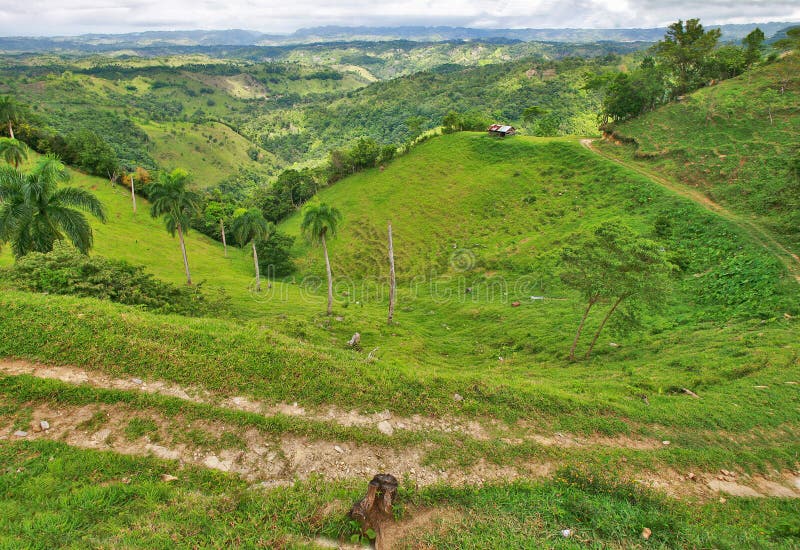
Beautiful views of the landscapes in the mountainous part of the Dominican Republic. Green meadows, tropical undergrowth, mountains, hills, rough greens, agriculture in the Caribbean, palm trees, real estate and land in the Dominican Republic, the Caribbean, the land in the paradise island, a piece of your personal paradise. Santiago. Moca. Declineddecrease stock images, royalty-free photos and pictures
This picture is taken at Chengdu city, China. The red panda Ailurus fulgens, also called the lesser panda, the red bear-cat, and the red cat-bear, is a mammal native to the eastern Himalayas and southwestern China. It has reddish-brown fur, a long, shaggy tail, and a waddling gait due to its shorter front legs; it is slightly larger than a domestic cat. It is arboreal, feeds mainly on bamboo, but also eats eggs, birds, and insects. It is a solitary animal, mainly active from dusk to dawn, and is largely sedentary during the day. The red panda has been classified as Endangered by the IUCN because its wild population is estimated at less than 10,000 mature individuals and continues to decline due to habitat loss and fragmentation, poaching, and inbreeding depression, although red pandas are protected by national laws in their range countries. The red panda is the only living species of the genus Ailurus and the family Ailuridae. It has been previously placed in the raccoon and bear families, but the results of phylogenetic analysis provide strong support for its taxonomic classification in its own family Ailuridae, which, along with the weasel, raccoon and skunk families is part of the superfamily Musteloidea. Two subspecies are recognized. It is not closely related to the giant panda. Declineddecrease stock images, royalty-free photos and pictures
Stock Market Graph next to a 10 dollar bill (showing former president Hamilton). Red trend line indicates the stock market recession period. Declineddecrease stock images, royalty-free photos and pictures
This picture is taken at Chengdu city, China. The red panda Ailurus fulgens, also called the lesser panda, the red bear-cat, and the red cat-bear, is a mammal native to the eastern Himalayas and southwestern China. It has reddish-brown fur, a long, shaggy tail, and a waddling gait due to its shorter front legs; it is slightly larger than a domestic cat. It is arboreal, feeds mainly on bamboo, but also eats eggs, birds, and insects. It is a solitary animal, mainly active from dusk to dawn, and is largely sedentary during the day. The red panda has been classified as Endangered by the IUCN because its wild population is estimated at less than 10,000 mature individuals and continues to decline due to habitat loss and fragmentation, poaching, and inbreeding depression, although red pandas are protected by national laws in their range countries. The red panda is the only living species of the genus Ailurus and the family Ailuridae. It has been previously placed in the raccoon and bear families, but the results of phylogenetic analysis provide strong support for its taxonomic classification in its own family Ailuridae, which, along with the weasel, raccoon and skunk families is part of the superfamily Musteloidea. Two subspecies are recognized. It is not closely related to the giant panda. Declineddecrease stock images, royalty-free photos and pictures
Brain scan visualization with contrasting regions, adjacent to 'ALZHEIMER'S' text, illustrating neural degeneration associated with the disease. Declineddecrease stock images, royalty-free photos and pictures
The photo presents a fragment of the night, illuminated street with tenement building in th background, and lit old tyle street clock in the front. Declineddecrease stock images, royalty-free photos and pictures